


The public outcry and widespread boycott of Halong Canfoco products erupted after Hai Phong police discovered 130 tons of pork infected with african swine fever had been "legalized" through falsified documents and stored at the Halong Canfoco warehouse. Test results confirmed the samples were positive for african swine fever, with two tons of the contaminated meat already processed into finished products.
This discovery sparked immediate and widespread reactions. On social media platforms like TikTok and Facebook, hundreds of videos depicting consumers discarding Halong Canfoco products into trash bins garnered millions of views. The "Pate Cot Den" product, once heavily promoted by key opinion leaders, became a focal point of criticism. In Hanoi, major supermarket chains including WinMart, GO!, and Lotte Mart swiftly removed all related products from their shelves on the afternoon of 8/1. At a supermarket on Linh Lang street, Giang Vo ward, Hanoi, staff continuously checked inventory and refused sales to customers. Thanh Loan, an employee there, stated, "We immediately recalled products to await further instructions and ensure customers cannot access any suspicious items."
Tension gripped the 50-year-old woman's family in Ngo Quyen ward, Hai Phong, on the evening of 7/1. After instructing her daughter to "throw away all the canned meat and pate mother just sent," Hong proceeded to call relatives in her hometown to apologize and ask them to destroy the ten boxes of pate she had sent as New Year's gifts. For over 15 years, Hong, a loyal customer, viewed Halong canned goods as a safe, albeit pricier, option. "I always chose the most expensive type, trusting the long-standing brand. It turns out, all this time, I might have been buying unsafe food for my own family," she lamented.
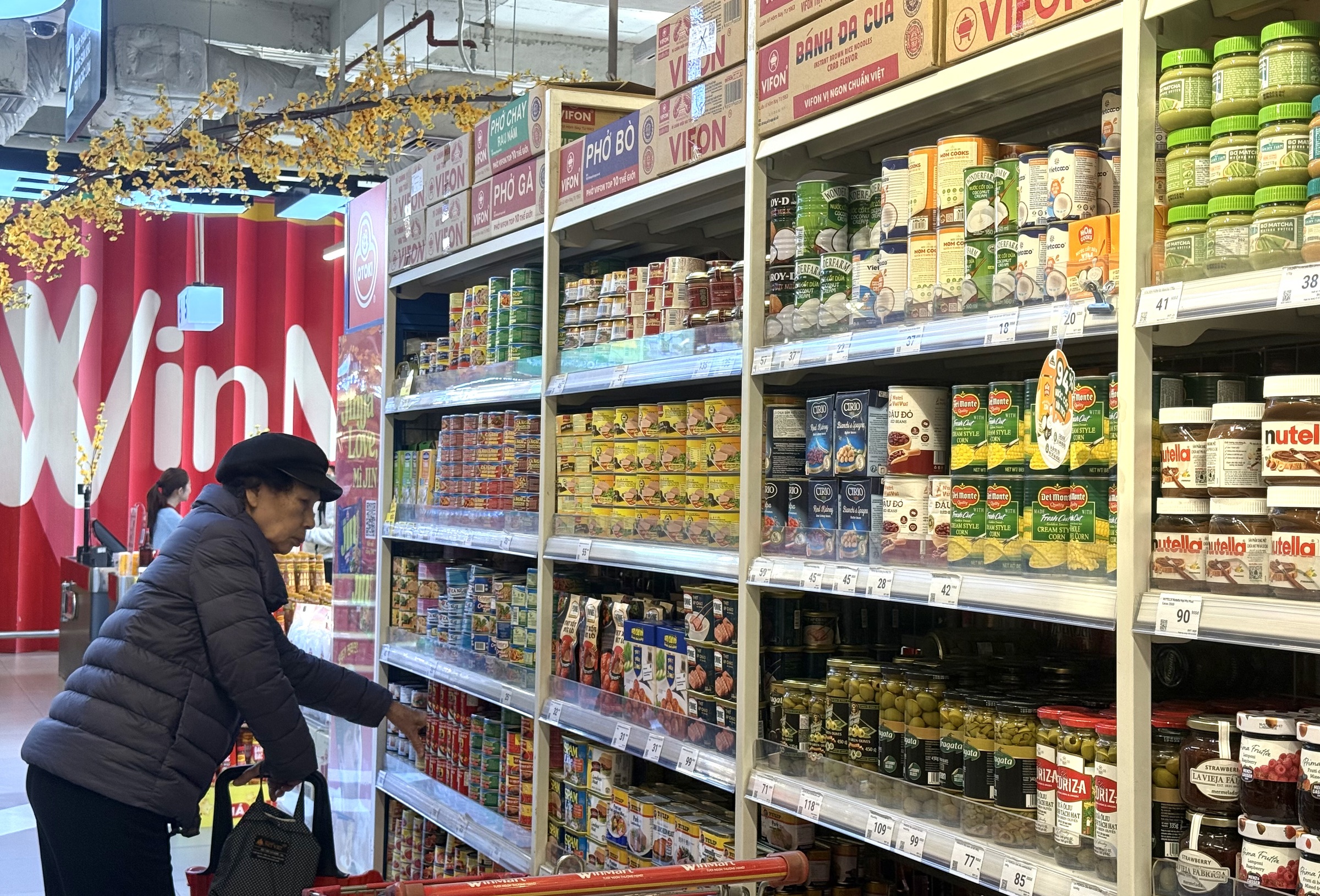 |
A resident purchasing instant canned products at a supermarket on Tran Dang Ninh street, Hanoi, on the afternoon of 8/1. *Photo: Quynh Nguyen*
Sharing a similar sentiment, Hai Ly, 35 years old, residing in Germany, had to personally dispose of a carton containing 30 cans of pate and ground meat she had brought from Vietnam. In 12/2025, she had painstakingly carried these food items thousands of kilometers to serve as gifts and for personal consumption. "I intended to offer these local specialties to my Western friends, but before I could send them, I heard the terrible news. Eating them is frightening, but throwing them away feels like a waste of effort," Ly said on the morning of 8/1, after discarding goods worth millions of VND.
The boycott extended beyond individual consumers to distribution channels. In Sam Son, Thanh Hoa, Nguyen Thi Huong, owner of AZMart grocery store, collected all over 20 boxes of Halong pate from her shelves on the night of 7/1. Priced at 25,000-30,000 VND per box, this product had been a bestseller at her store. "Knowingly selling contaminated products means aiding wrongdoing. I would rather incur a loss than harm my customers," the store owner affirmed, adding that she would cease selling the brand until a final safety conclusion is reached.
Nguyen Thi Huong collecting over 20 Halong Canfoco products displayed on shelves, temporarily ceasing sales at her store in Sam Son, Thanh Hoa, on the evening of 7/1. *Source: @tiemtamhoamevoi*
In response to the crisis, Halong Canfoco explained that they were victims of deception by a supplier, and the nine individuals indicted were not company employees. The enterprise committed that the non-compliant raw material had been quarantined and had not reached the market.
However, this explanation has not been sufficient to reassure the public. Assoc. Prof. Dr. Nguyen Duy Thinh, a former lecturer at the Institute of Biotechnology and Food Technology, Hanoi University of Science and Technology, warned that people have valid reasons for concern, and a boycott is a legitimate self-defense reaction against the risk of contaminated food. According to Thinh, although industrial heat treatment in canning can destroy bacteria, toxins from diseased or dead pigs can persist. "Toxins do not completely disappear at high temperatures. Consuming these products carries potential risks of digestive system inflammation and chronic poisoning," the expert analyzed. Specifically, consuming these products poses a risk of prolonged digestive inflammation, potentially leading to pre-cancerous lesions due to residual toxins. Recommendations from WHO and FAO state that infected raw materials must be biologically destroyed, and their entry into the food chain is strictly prohibited to protect public health. He advised those who have consumed the products to monitor their health and seek medical attention if they experience any unusual symptoms.
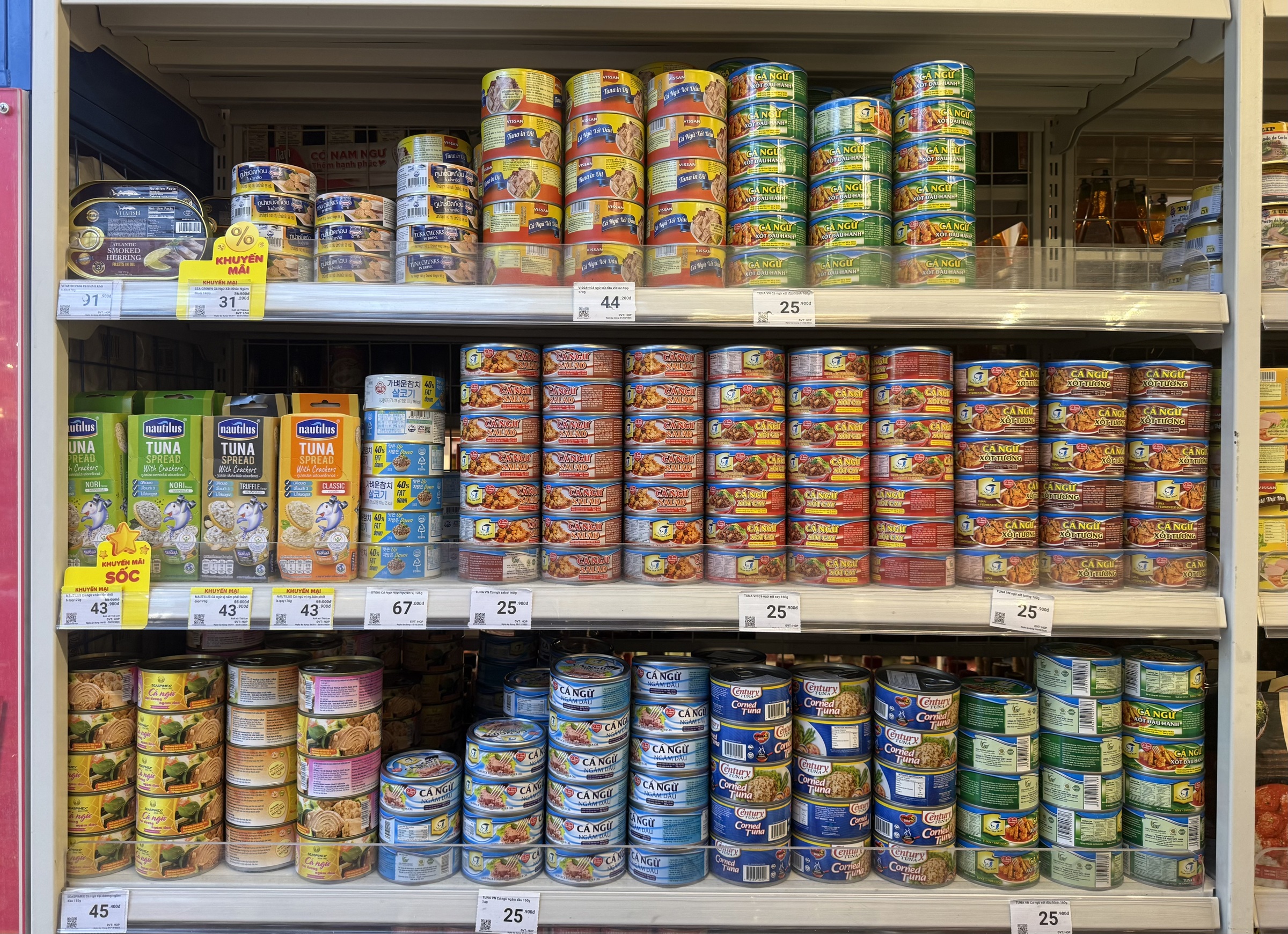 |
Winmart supermarket on Tran Dang Ninh street, Hanoi, removing all Halong Canfoco products from sales shelves, on the afternoon of 8/1. *Photo: Quynh Nguyen*
Expanding on the issue, Assoc. Prof. Dr. Nguyen Duy Thinh emphasized that authorities need to thoroughly trace the source of pathogens to protect livestock and national food security. Strict, deterrent penalties for raw material fraud are essential to restore market trust. "Food is not just business; it is conscience. When trust is betrayed by blocks of diseased meat, the price for businesses will be far greater than financial figures," Thinh stated.
Quynh Nguyen





