


A fire at a Da Nang gas station on 2/5, which killed two people, underscored the significant risks of transporting power storage devices. The incident involved an automobile carrying 20 battery packs and accumulators in its trunk. Video footage from the scene showed a fierce blaze that took 15 minutes to extinguish.
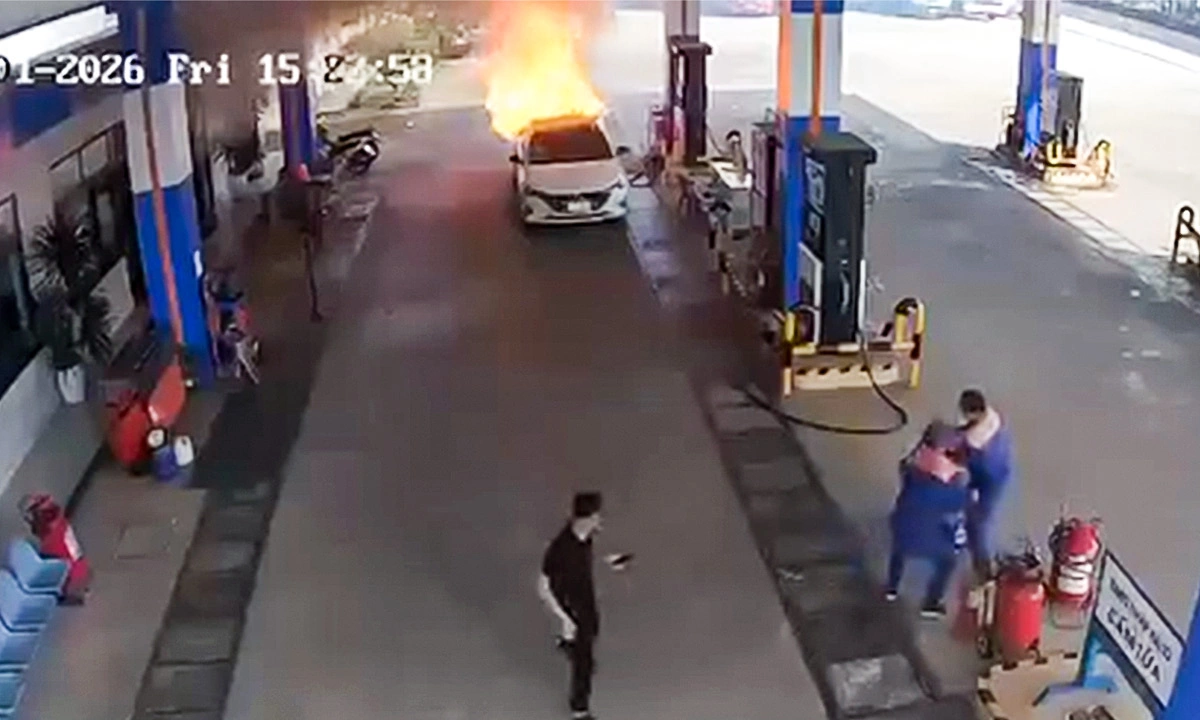 |
The automobile carrying more than 20 battery packs and accumulators exploded at a Da Nang gas station on 2/5. Photo:Security camera |
Associate Professor Doctor Ngo Van Xiem, former Deputy Head of the University of Fire Prevention and Fighting, stated that transporting fully charged lithium-ion batteries and accumulators in a car trunk poses a major risk. A car trunk is an enclosed space where temperatures can reach 60-70 degrees Celsius in summer. At this temperature, the electrolyte inside lithium-ion batteries vaporizes. Vehicle movement causes vibrations, and if uninsulated terminals come into contact with metal, they can generate sparks, leading to a fire.
When an incident occurs, increased pressure ruptures the battery casing. The fire erupts immediately due to a thermal runaway reaction, causing adjacent cells to continuously explode. Since the combustion process generates its own heat and oxygen internally, extinguishing these fires with water or traditional foam is ineffective.
The substantial risks associated with lithium-ion batteries have led the aviation industry to classify them as dangerous goods. Passengers must carry such devices in their hand luggage, allowing cabin crew to respond quickly if an incident occurs, rather than storing them in checked baggage compartments.
In daily life, power storage devices are widely used. Associate Professor Doctor Do Van Dung, Vice Chairman of the Ho Chi Minh City Automobile Association, categorizes these devices into two main groups.
The low-voltage battery group includes alkaline batteries (such as AAA, AA, 9V batteries) used for small devices like remote controls, toys, smoke detectors, and smart keys.
The high-capacity group utilizes lithium technology, providing power for electric vehicles, phones, and power banks. Additionally, the market offers Lithium LiFePO4 (LFP) variants specifically for solar power systems or new-generation electric vehicles, which allow for deep charging and discharging, offering high durability and safety.
"Many residential fires recently originated from improper use of lithium-ion batteries," said Mr. Dung.
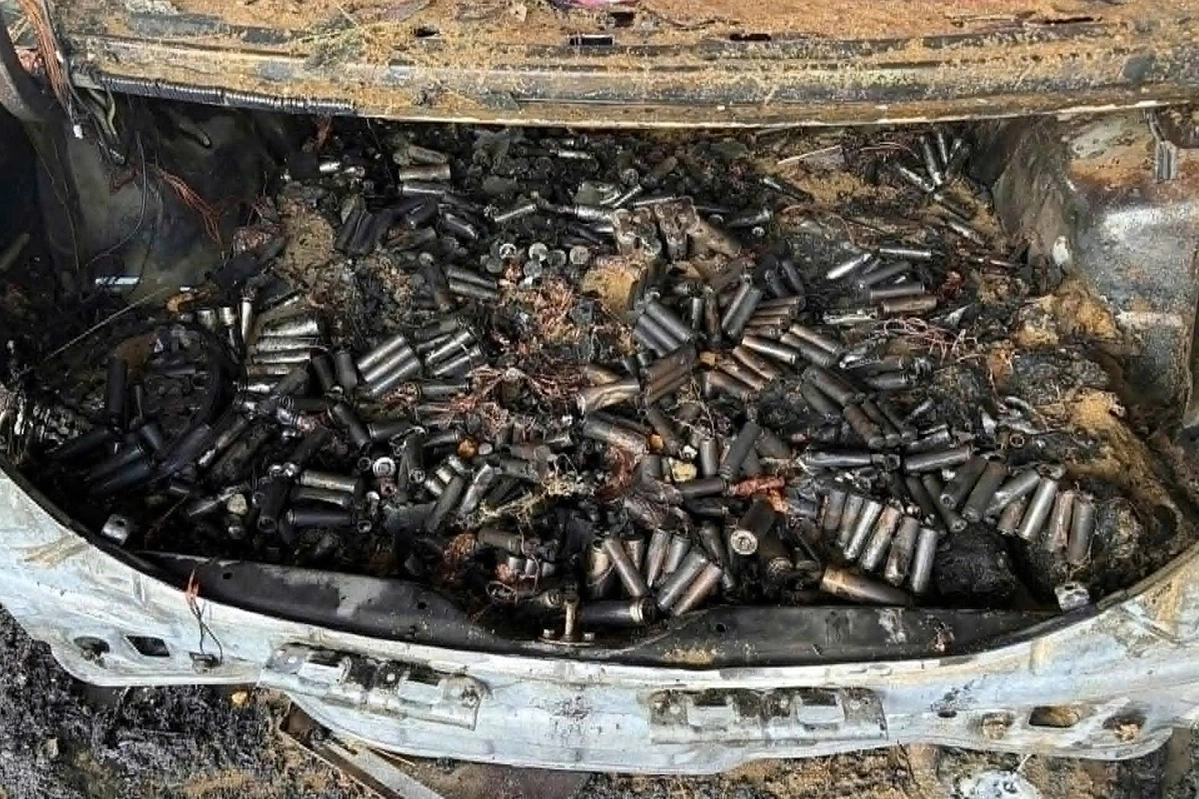 |
An automobile carrying dozens of battery packs caught fire at a gas station in Da Nang. Photo:Nam De |
According to experts, common user errors include unsupervised overnight charging, placing devices on heat-retaining and flammable surfaces such as beds, mattresses, or sofas. For power banks, users often keep them in bags, near water, or under pillows/blankets, creating hazards.
Second, many people plug in electric vehicles for charging immediately after long drives when the battery is still hot.
Third, using unregulated chargers, plugging multiple devices into a single outlet causing overload, or using swollen, cracked, or damaged batteries accelerates the degradation of the battery structure.
Experts advise users to be aware of dangerous signs: swollen or deformed battery casings, or liquid leakage. A device that feels burning hot to the touch even when not charging, accompanied by a chemical or burning plastic smell, indicates imminent danger.
If a device sparks or emits smoke, evacuation is the top priority. Residents should close room doors to contain toxic smoke and call 114 to report a "lithium battery fire". Absolutely do not throw water on a battery fire.
Lithium battery fires are complex; they can easily reignite even after the surface flames are extinguished. Therefore, never use ordinary water to fight such fires, as it can intensify the chemical reaction and cause a more powerful explosion. The optimal extinguishing method involves using molecular encapsulation water-based fire extinguishers. In parking lots, management should provide buckets of damp sand and shovels to cut off oxygen and absorb heat in case of an incident.
To ensure safety, Associate Professor Doctor Do Van Dung advises consumers to purchase genuine devices equipped with a battery management system (BMS) and international safety certifications. Maintain battery capacity between 20-80%, avoiding continuous 100% charging.
Colonel Ngo Van Xiem further noted that when transporting loose batteries, terminals must be securely wrapped with insulating material, fixed in an insulated container, and not fully charged.
Bao Nhien


