Typically, cleaning solutions quickly flow to the bottom of the toilet bowl, reducing their cleaning effectiveness. To address this, a cleaning method suggests pouring ice cubes into the toilet before adding chemicals.
Experts at Tom's Guide state this method offers three benefits.
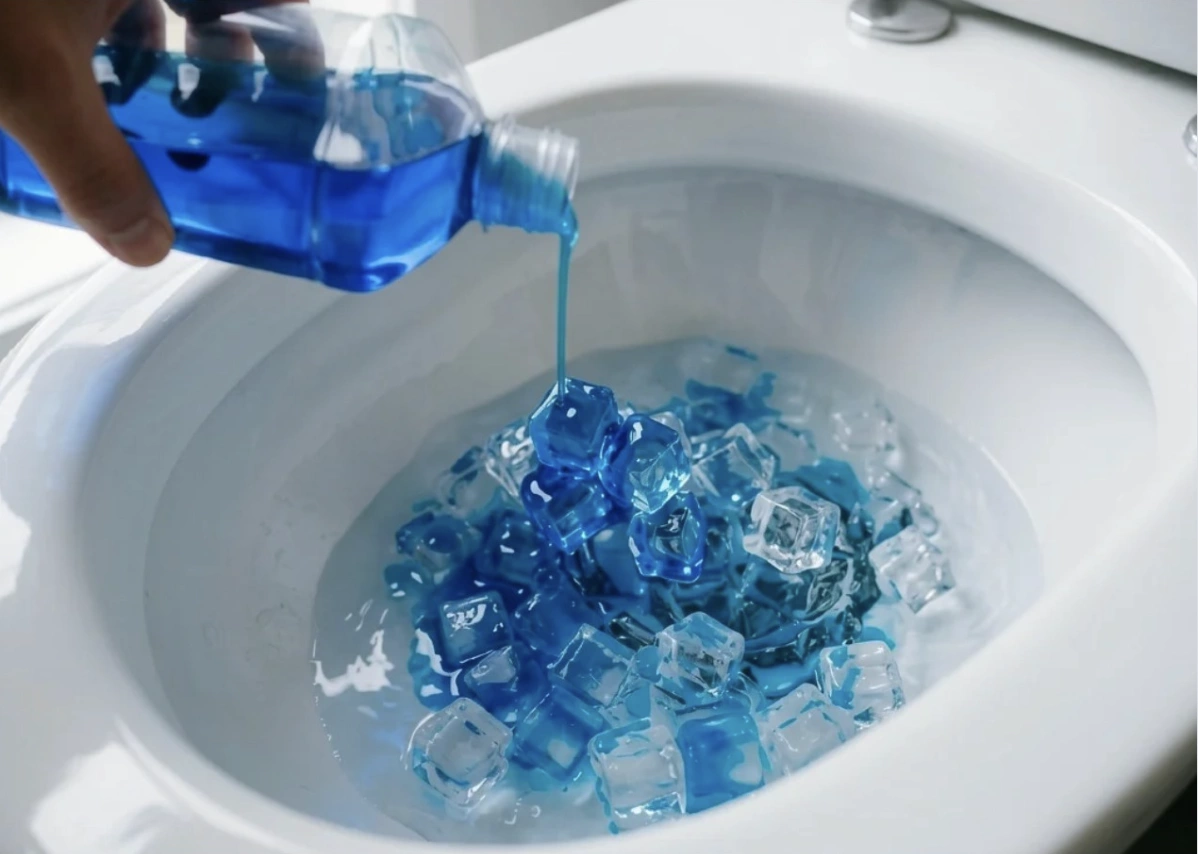 |
Pouring ice cubes into the toilet helps clean more effectively. Photo: Clever Life Hacks. |
Pouring ice cubes into the toilet helps clean more effectively. Photo: Clever Life Hacks.
Firstly, it prolongs the retention of cleaning chemicals. As the water level in the toilet bowl rises, excess water drains automatically. However, ice cubes, being solid, float on the water's surface, creating a barrier that keeps the cleaning solution in contact with the bowl's sides. This process extends the time for the chemicals to penetrate and break down stains.
Secondly, it provides a mild abrasive action. During cleaning, ice cubes act as a gentle abrasive. The friction from the ice helps scrape away mold and mineral deposits clinging to the enamel surface. When flushed, the melting ice continues to scrub the pipe walls, dislodging internal grime.
Thirdly, it offers odor neutralization. Cold ice has the ability to absorb airborne odors. Leveraging this property, many restaurants and bars often place ice in urinals. Recreational vehicle (RV) users also employ ice cubes to clean and reduce odors in their waste tanks.
For the cleaning process, users should pour a bowl of ice cubes into the toilet, ensuring the ice floats on the water's surface without overflowing the rim. Next, pour the cleaning solution directly onto the ice layer and let the mixture sit for 15 minutes. Afterward, scrub the bowl's interior with a brush and flush the toilet.
According to experts, ice cubes are similar in size to typical solid waste, so they will flush through the plumbing system and melt into liquid. Users should note not to use oversized ice blocks to prevent localized blockages and to avoid mixing different cleaning chemicals simultaneously.
Video: Clever Life Hacks.
By Bao Nhien (Source: GoodIs/Tom's Guide)