Xiaobai began collecting scrap bottles in Guangzhou approximately seven years ago, according to Xinmin Evening News. Zhang, Xiaobai's owner, recounts how the dog once held an empty plastic bottle on the street, and a homeless person traded a piece of braised meat for it. From that moment, Xiaobai associated bottle collection with earning food, prompting him to go out daily in search of bottles.
Each day, Xiaobai embarks on three bottle-hunting trips: once in the morning, once at noon, and once in the evening. Each excursion lasts between 20 and 30 minutes. Upon spotting a bottle, he promptly runs to retrieve it. If a bottle contains water, Xiaobai uses his two front paws to steady it, then twists the cap with his teeth to empty the water, flattens the bottle, and carries it home.
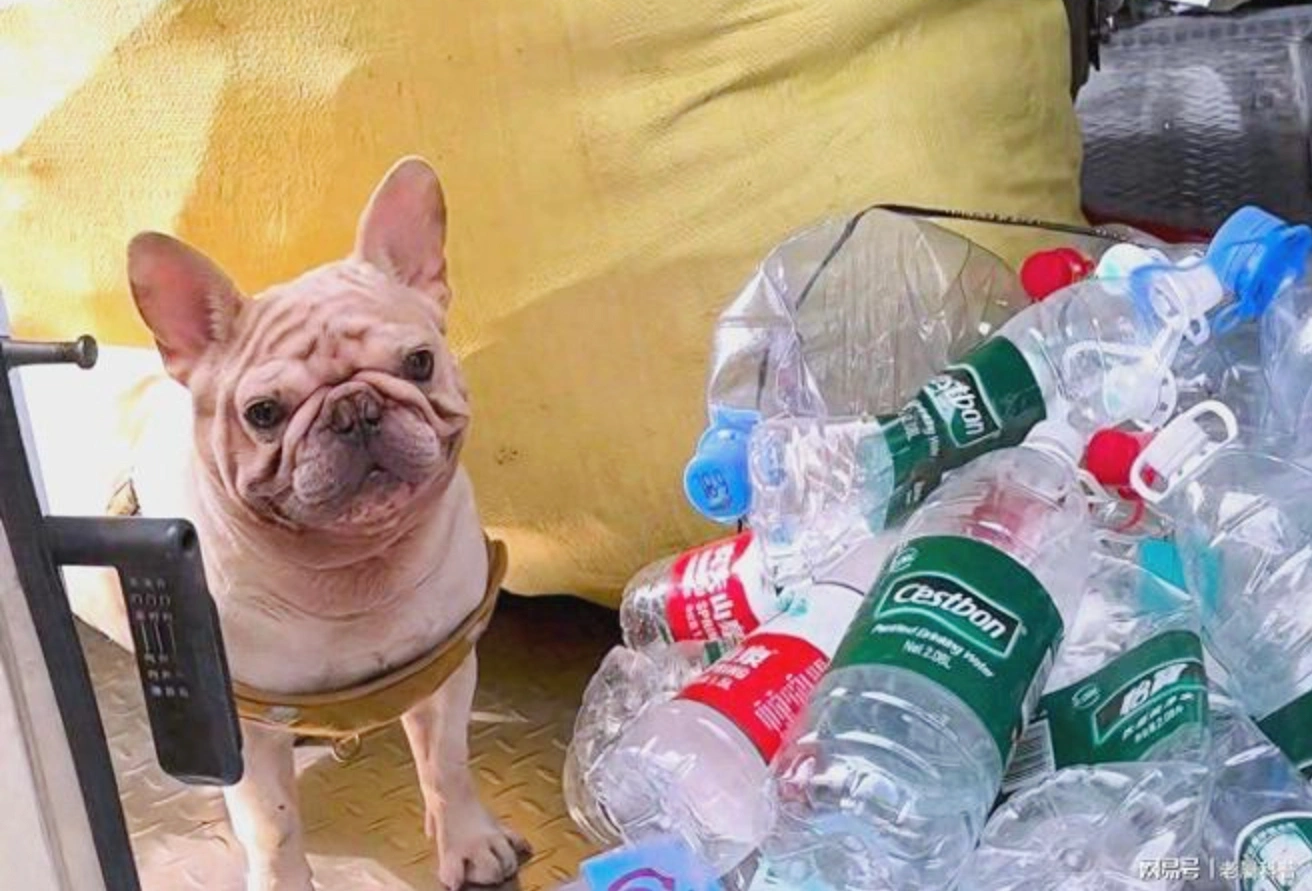 |
The dog with his "spoils" after a day's work. Photo: 163 |
Zhang once tried to stop Xiaobai from collecting bottles, but the dog refused to eat. "My family runs a business; we are not in need, nor do we let him go hungry. However, collecting bottles is Xiaobai's passion, so I let him continue", Zhang stated.
Initially, the collected bottles yielded about 20 yuan (approximately 3 US dollars) daily. After five years, Xiaobai had accumulated 10,000 yuan (about 1,400 US dollars). For the past two years, many local residents have started collecting bottles in advance, waiting for Xiaobai to pass by. His income from selling recyclables now exceeds 1,000 yuan (about 138 US dollars) each month. During the five-day holiday period in early May, the dog earned 216 yuan (about 30 US dollars).
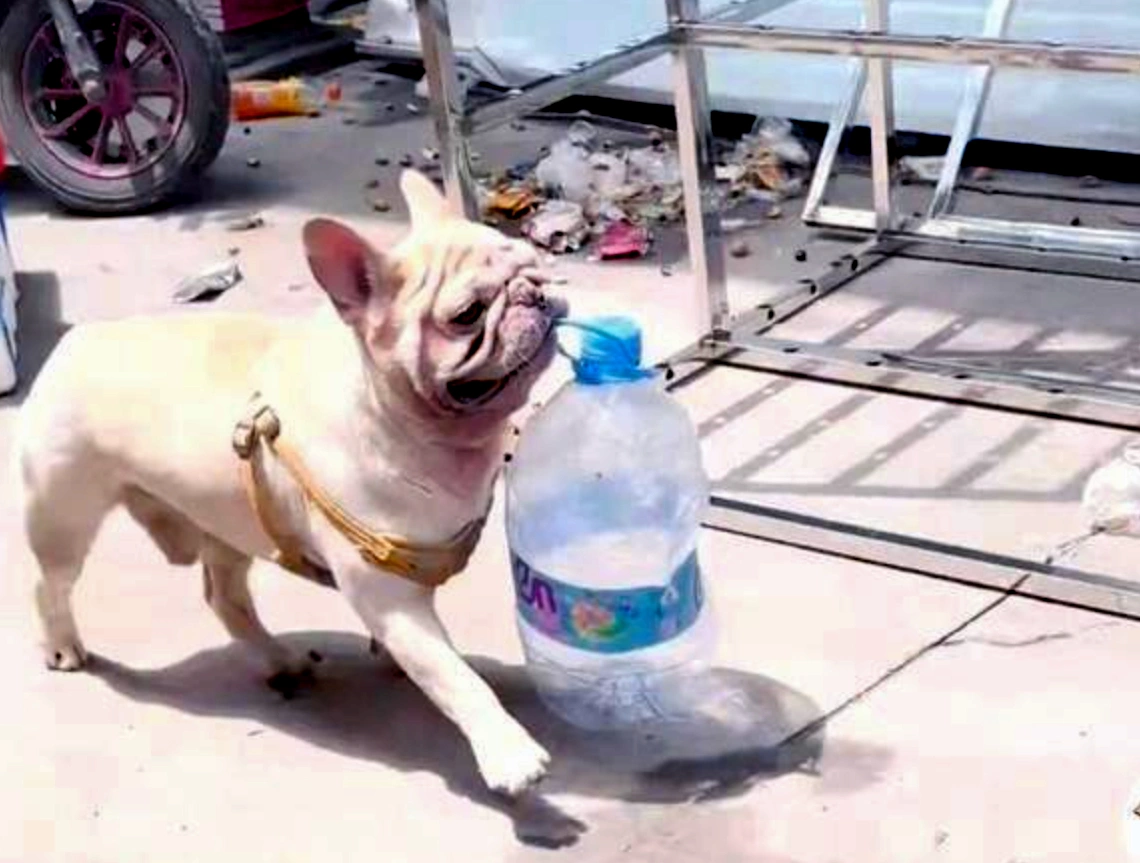 |
Xiaobai collects scrap bottles on the streets of Guangzhou. Photo: 163 |
However, the largest source of revenue comes from social media. The "Gou Xiaobai" channel has attracted over 270,000 followers and 6,27 million likes. According to Zhang's statistics, the dog has generated nearly 100,000 yuan (about 14,000 US dollars) in revenue.
Zhang has established a separate account for Xiaobai's earnings. From this account, he allocates 30% for the dog's living expenses, 30% for a contingency fund, and the remaining 40% is donated to animal rescue organizations and used to purchase food for stray cats in the local area.
Bao Nhien (According to World Journal, 163)