According to TikTok Shop, both the number of buyers and shopping-related searches increased by approximately 50%. This outcome reflects the increasingly diverse shopping behaviors of users on the platform.
"While discovery commerce initially helped users find new products through short videos, live streams, or creator content, the search function has become the next step for those wanting to delve deeper into an item or brand before purchasing," a company representative stated.
This search trend was noted last year, with revenue generated from this feature on TikTok Shop increasing by 55%, while revenue from the Shop Tab—the app's centralized shopping area—grew by 67%.
Transforming search into a growth driver
For this year's 9.9 Double Day campaign, the platform boosted this behavior through the TikTok Choice Award, converting search from a lookup tool into a brand interaction. Users voted for their favorite brands by searching using the syntax "ilove [brand name]", with each valid search counting as one vote.
According to a company representative, this organized approach was logical, transforming a behavior typically closer to the purchase consideration phase into a trigger for community engagement. Instead of passively browsing content from brands or creators, users actively sought out brands they were interested in via the search bar.
This effect was partially reflected in business results. Throughout the campaign, the average increase in searches for brands nominated in the TikTok Choice Award was 15% higher than the platform's overall increase. Additionally, the average GMV generated from searches for this group was 38% higher.
Several brands reported significant growth, including NutiFood GrowPLUS+, which saw its GMV increase by 440% compared to last year's 9.9 Double Day campaign. F.Studio by FPT's sales also tripled compared to this year's 6.6 Double Day campaign.
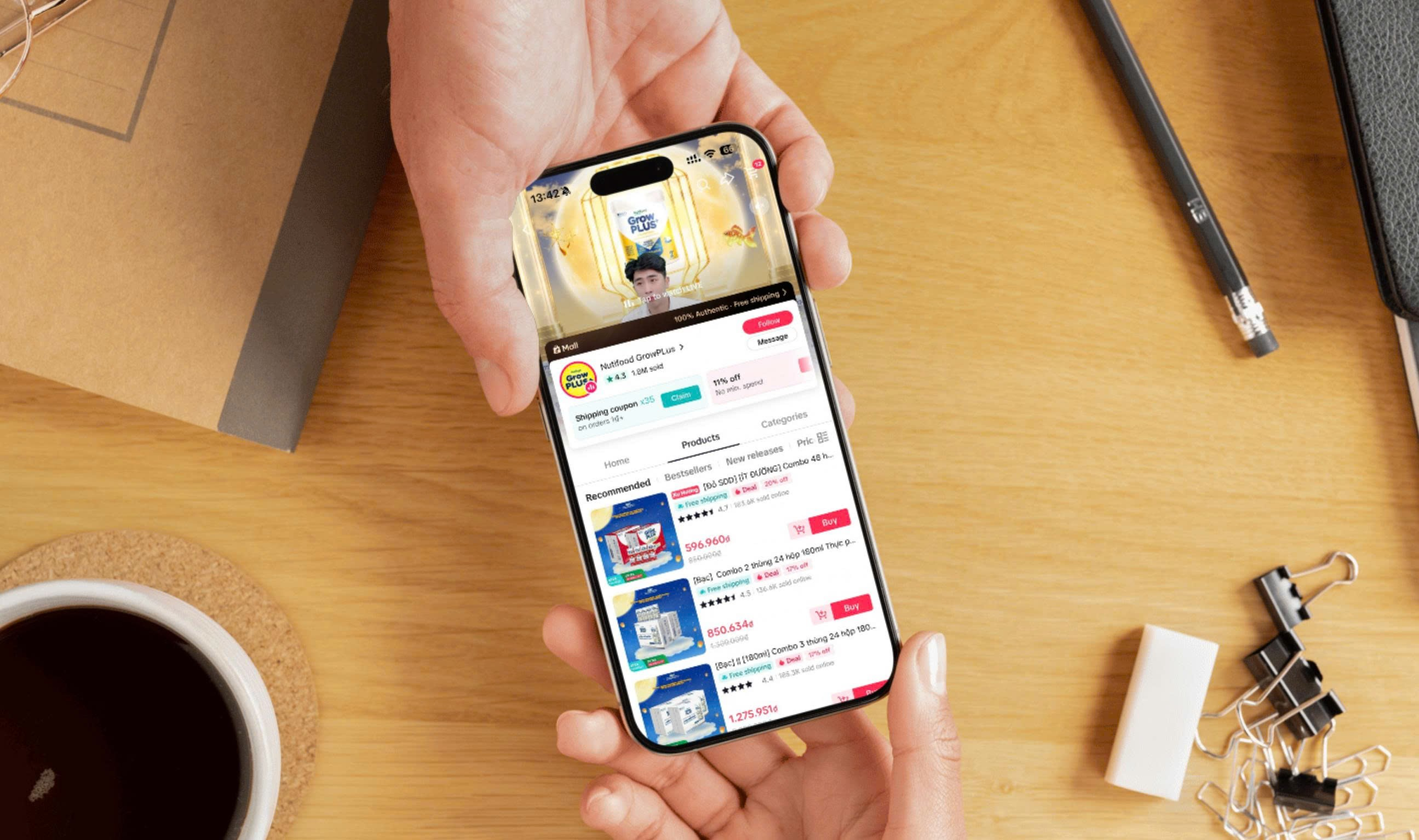 |
Brands participating in the TikTok Choice Award experienced 15% higher search volumes and a 38% higher average GMV increase compared to the platform's overall growth. *Photo: TikTok* |
While these figures alone are insufficient to isolate the impact of search from other Mega Sale factors like promotions, advertising, or live streams, they reveal a notable shift: TikTok Shop users are no longer merely encountering products while browsing content but are increasingly engaging in active searches.
When search becomes part of discovery
This evolution also broadens how the discovery commerce model operates on TikTok Shop. Previously, the "discovery" function was primarily associated with products appearing before users through short videos, live streams, or creator content. Now, the search feature adds a new layer of behavior: users actively return to research products after their interest has been piqued.
In this way, discovery is no longer a passive behavior. A video might introduce a product, but users' subsequent actions—searching for the brand name, viewing related content, or visiting the store—indicate a more active demand. Thus, search acts as a bridge between encountering a product and the pre-purchase consideration process.
 |
The search function becomes a part of discovery commerce. *Photo: TikTok* |
During a discussion with TikTok Shop in July, Huynh Lam Ho, Vice President of the Vietnam E-commerce Association and co-founder and CEO of Haravan, noted that consumers are strongly shifting towards digital environments and discovery trends. Therefore, businesses must build the capacity to generate demand directly on the platform through content, creators, and brand reputation, rather than simply waiting for existing demand.
This distinction helps discovery commerce create new growth potential. Ho also assessed that TikTok Shop holds an advantage in its discovery and entertainment aspects, as commerce occurs while users consume content. "This characteristic previously provided a strong impetus for seller growth on the platform," he added.
From the perspective of a social commerce operator, Bianca Loo, Director of Social Commerce at OnPoint, pointed out that as the market matures, the advantage no longer belongs solely to brands that were simply early adopters on the platform. The ability to create engaging content and compelling narratives to reach the right community is what helps brands differentiate themselves.
Based on this analysis, Bianca Loo emphasized: "Discovery commerce should be viewed as a long-term strategy for brand building and growth, rather than merely a tool for short-term sales increases."
For TikTok Shop 9.9, this model showed an evolution, even advancing a step further. Content helps products be discovered, while the community builds additional trust and interest. Meanwhile, with the search function, users actively delve into their needs before proceeding to a transaction.
Hieu Chau