Thousands of households in Vietnam's central region, particularly in the rice-producing heartland of Phu Yen, face destitution after devastating floods submerged their rice harvests. Farmers are now desperately trying to sell their waterlogged rice at drastically reduced prices, often with no buyers, turning their biggest assets into heavy burdens.
The agricultural sector has suffered extensive damage, with over 80,800 hectares of rice and other crops ruined, primarily in Dak Lak, Khanh Hoa, and Lam Dong provinces. As of the morning of 23/11, the Ministry of Agriculture and Environment reported widespread losses, leaving thousands of families in the South Central Coast rice bowl facing financial ruin.
In Phuoc Luong village, Hoa Xuan Dong commune, Phan Thi Bon, 64, a woman with underlying health conditions, endured four days of hunger and thirst. On the morning of 24/11, as floodwaters receded, she tried to salvage her 6 tons of rice. However, the sacks, heavy with water, were impossible for her to move. The rice, a product of four months of arduous labor by her and her 65-year-old husband, Luong Van Be, had begun to sprout white tendrils. The couple had harvested the rice in August, refusing an offer of 600,000 dong per quintal, hoping for better prices. Instead, the floods arrived, submerging everything.
"For three days we sat on the rooftop, without electricity or water, looking down at the vast expanse of water. My heart ached with regret for our losses," Luong Van Be shared. The once golden husks of their rice have now turned dark gray, with roots intertwined into a solid mass. Their daughter, Van Nhu, from Ho Chi Minh City, is trying to sell the damaged rice on social media for 200,000 dong per bag, including shipping, a stark contrast to its original value of over 500,000 dong, hoping to "earn enough to pay off fertilizer debts."
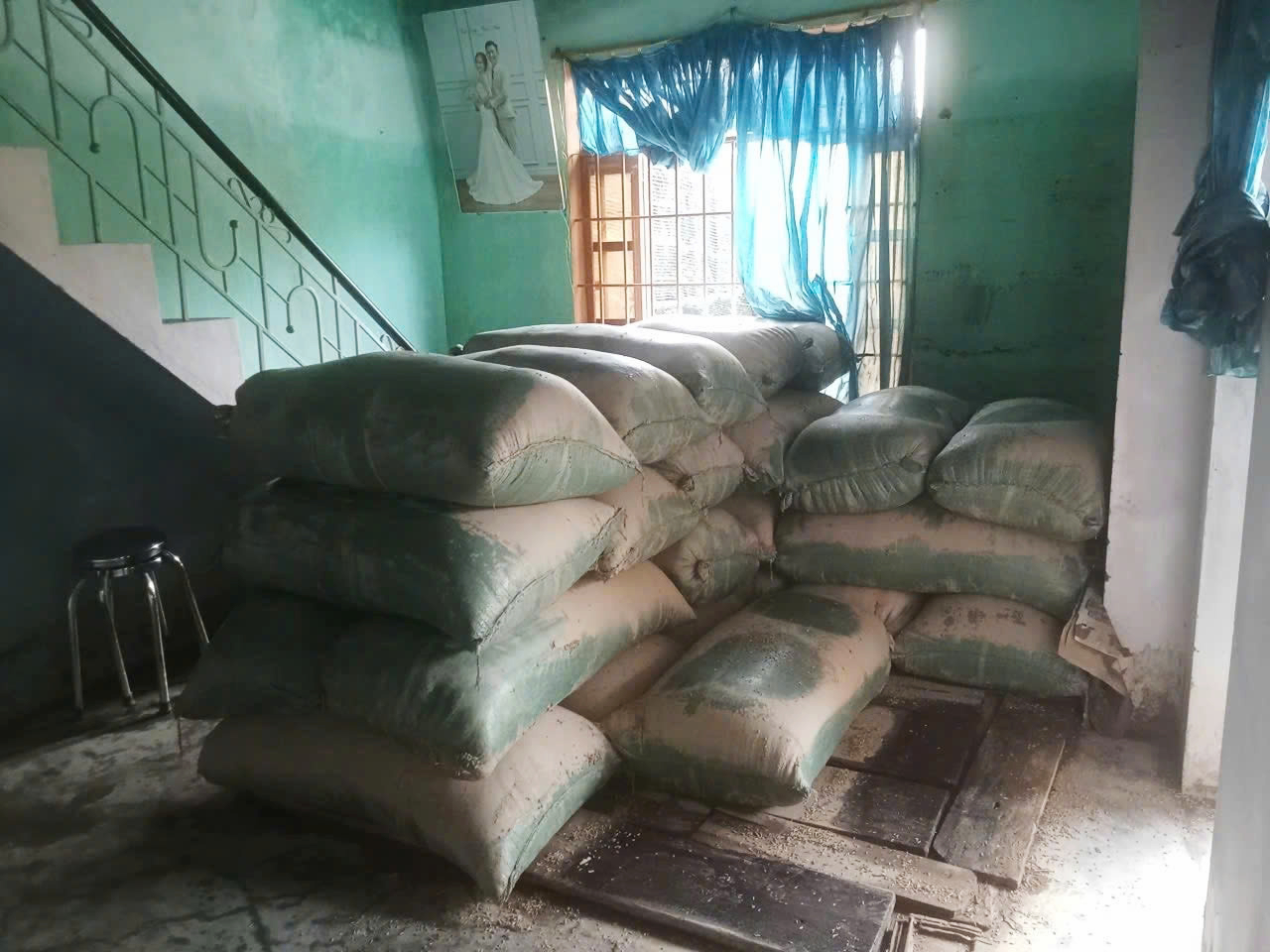 |
6 tons of waterlogged rice from Luong Van Be's family, 65, in Phuoc Luong village, Hoa Xuan Dong, are being sold. Photo: Van Nhu |
A similar tragedy unfolds in Long Phung village, Phu Hoa 2 commune, where Nguyen Dinh Son, 72, faces the complete loss of his "retirement fund." Over 20 tons of rice in his 30-ton warehouse were submerged for three days and nights, now emitting a foul odor and beyond salvage. Son and his wife had stored the rice to sell for a profit, hoping to have money for Tet without relying on their children. His daughter is desperately trying to sell the wet rice for 250,000 dong per bag, less than half its original price, but prospects are dim.
Despite his significant loss, Son took the remaining dry rice from the upper level of his warehouse to mill, dividing it into bags to distribute to neighbors. "Everyone around here has lost everything, we still have some dry rice, so let's share it," Son said.
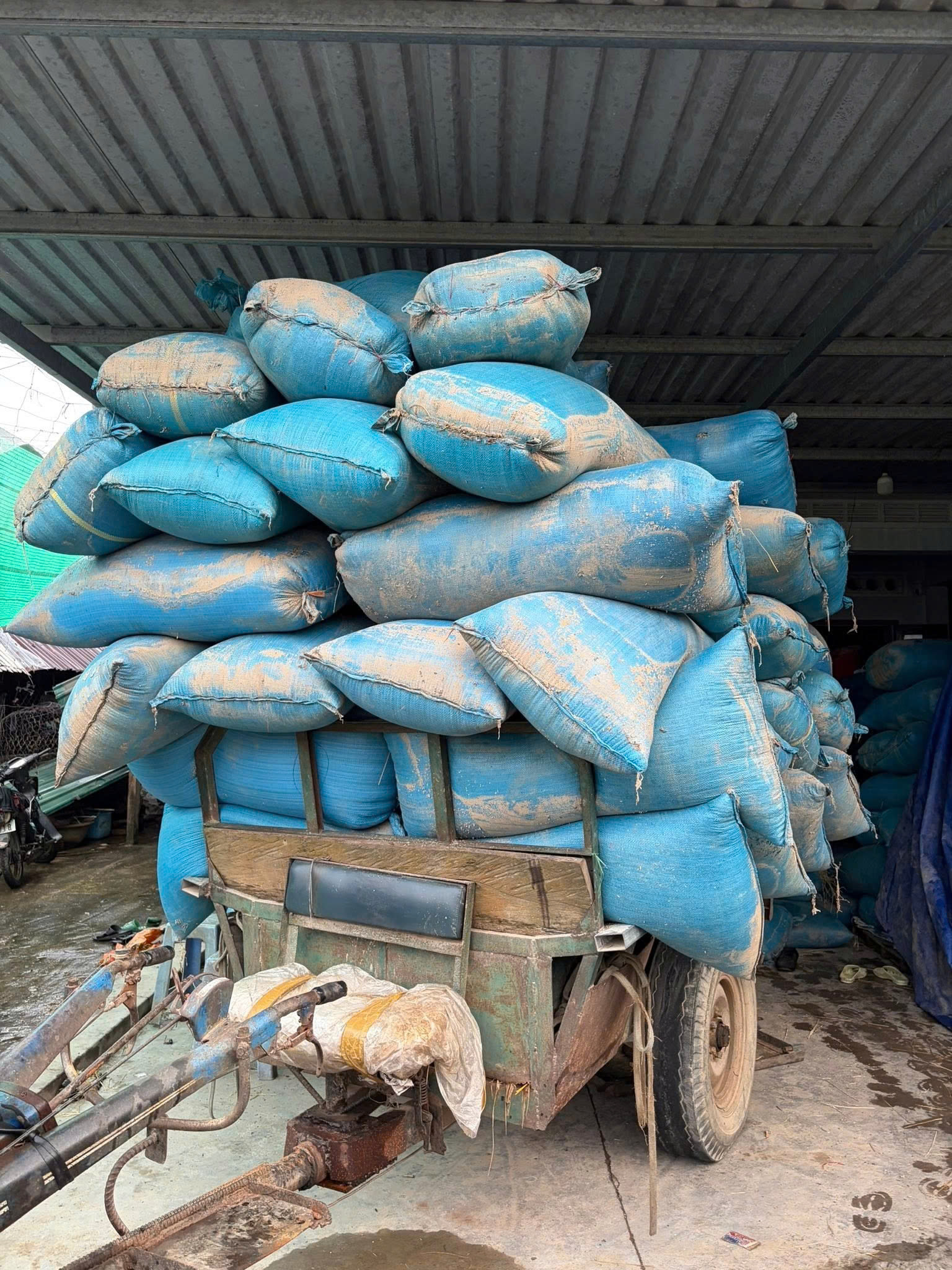 |
A small part of Quynh Huong's family's 70-ton rice warehouse in Phuoc Binh Nam neighborhood, Phu Yen ward, on 24/11. Photo: Provided by interviewee |
In Phuoc Binh Nam neighborhood, Phu Yen ward, Quynh Huong's family, 23, faces the collapse of their rice business. On the night of 19/11, floodwaters surged, submerging nearly 60 tons of rice. "Initially, my father encouraged my mother to wait for the water to recede, hoping we could dry it in the sun and salvage some. But after three days and nights submerged, our last hope vanished," Huong recounted.
Without industrial drying machines, the 60 tons of rice began to ferment, emitting hot steam. Huong posted an urgent appeal online, offering the rice for 200,000 dong per bag. However, after 5 hours, her phone remained silent. The widespread death of livestock and poultry in the area following the floods meant there was almost no demand for wet rice as animal feed.
The dire situation is common across the region. Social media forums from Dong Hoa, Hoa Thinh to Tuy An are filled with posts from farmers trying to "sell rice after floods." Individual losses range from a few tons to hundreds of tons, with selling prices plummeting to one-third or one-half of normal rates.
The Dak Lak Provincial Police announced on the afternoon of 24/11 that the prolonged submersion had rendered all rice and paddy unsalvageable. They stressed that flood-affected residents urgently need rice for cooking, along with cash to repair homes, purchase essential items, and acquire seedlings and livestock to restart their livelihoods.
"Therefore, units are requested to inform officers and soldiers, connect with, and mobilize philanthropists to concentrate resources to support the people in the coming days," the announcement stated.
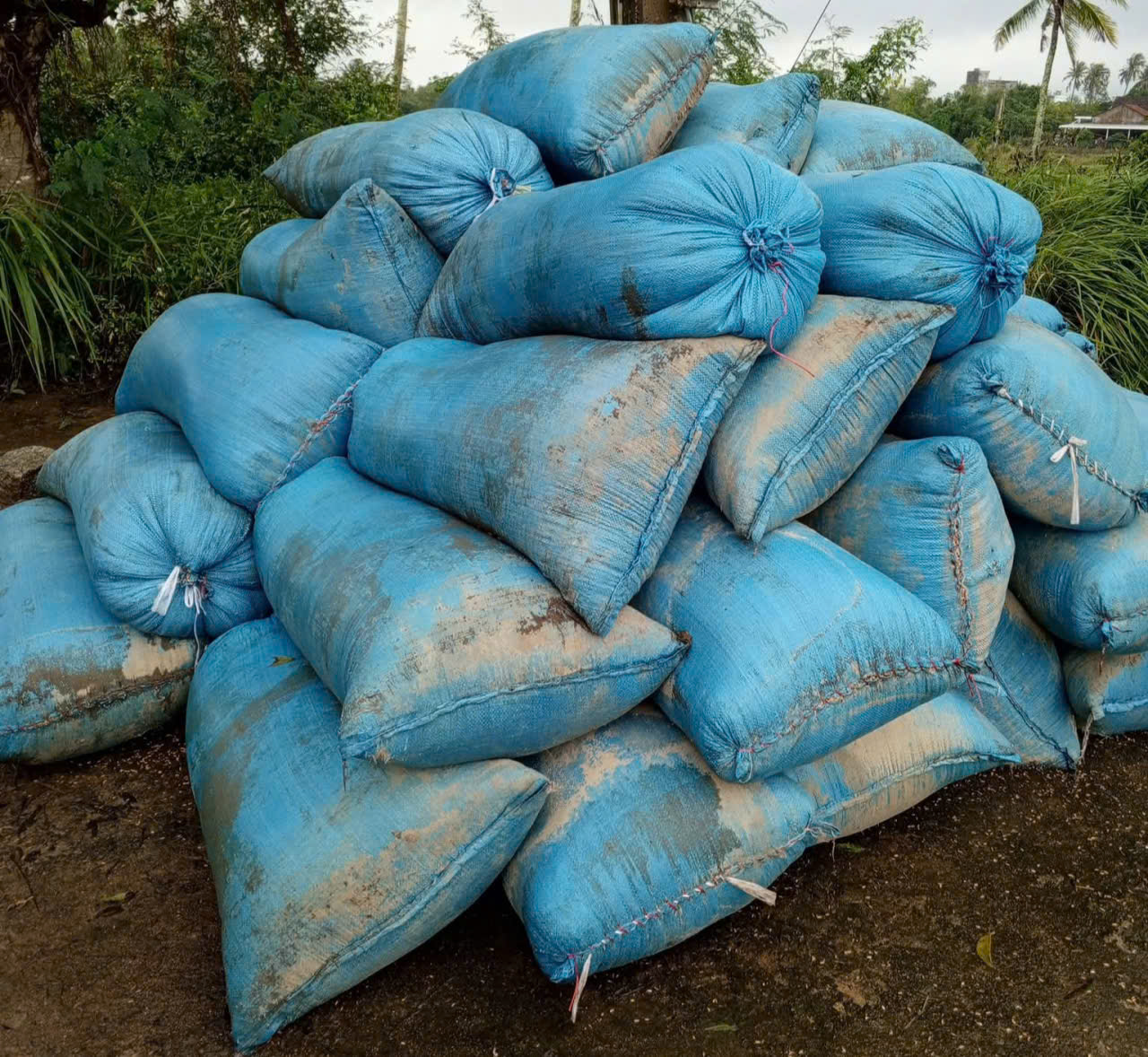 |
The rice left in the garden, waiting for buyers, from Dong Suong's family in Van Loc village, Hoa My commune. Photo: Cao Van Ninh |
Witnessing the farmers' plight, Tran Thi Bich Duyen, a lecturer at Quy Nhon University, has stepped forward to coordinate relief efforts. She is connecting farmers with animal feed manufacturers and industrial drying facilities. Her phone is constantly buzzing with messages from desperate farmers: "Ma'am, I'll sell it for 100,000 dong per bag, as long as someone buys it."
Duyen is also working to coordinate empty returning aid convoys to transport rice to other provinces for consumption. "If not dealt with in the next one to two days, this enormous amount of rice will fully sprout and become an environmental disaster," she warned.
On the evening of 24/11, sporadic rain continued. Messages in the Zalo group dedicated to supporting rice sales kept pouring in: "My family in Phuoc Loc, Hoa Thanh has about 400 bags of wet rice", "My family in Quy Hau village has 50 bags that have sprouted", "Urgently need to sell 15 tons of rice, no electricity for drying."
Thu Phuong's family in Thach Cham, Dong Hoa, mobilized all members to dry 16 tons of rice to remove water, prevent sourness and sprouting, and sell for salvage. Video provided by interviewee
Quynh Duong