Many home cooks routinely wash raw meat purchased from markets or supermarkets under running water before refrigeration. However, health and food safety experts caution that this habit does more harm than good.
A bacterial bomb in your kitchen
Raw meat, especially poultry, often harbors dangerous bacteria such as Salmonella, Campylobacter, and E. coli. According to pediatrician Jayden from Taiwan, rinsing meat directly under water creates tiny droplets carrying these bacteria that splash into the surrounding area.
These bacterial splashes can travel up to 90 cm. This means that sinks, countertops, cutting boards, spice containers, and most critically, nearby ready-to-eat foods like raw vegetables and fruits, are susceptible to cross-contamination.
"When you wash chicken, the water carries 'chicken juice' and all the bacteria within it," explains nutritionist Beth Czerwony of the Cleveland Clinic health system, United States.
While the meat itself will be cooked, the splashed surfaces will not be sterilized. An accidental touch of a contaminated countertop followed by touching your mouth, or consuming contaminated raw produce, can lead to food poisoning, manifesting as high fever, severe abdominal pain, and diarrhea.
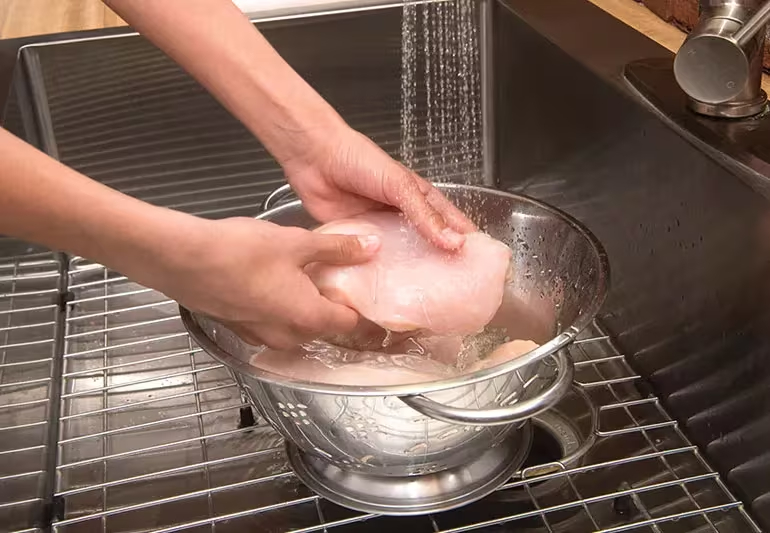 |
Washing meat does more harm than good. *Photo: Healthline*
The US Centers for Disease Control and Prevention (CDC) advises against washing meat before cooking. They emphasize that the only effective method to eliminate bacteria is heat. Poultry should be cooked until its internal temperature reaches a minimum of 74 degrees C, while other meats require an internal temperature above 71 degrees C.
"Any concerns about bacteria will vanish before the chicken is served, provided it is thoroughly cooked," Czerwony adds.
Proper handling: an alternative to washing
If meat appears slimy or dirty, alternative cleaning methods should be used. Consider these approaches:
- Gently pat the surface of the meat dry to remove blood and moisture using kitchen paper towels. Immediately discard the used paper towels.
- Acidic solutions: Some research indicates that soaking meat in lemon juice or white vinegar can reduce surface bacteria. However, this method is not a substitute for thorough cooking.
- Brining: Soaking meat in brine is a personal choice to enhance flavor and does not contribute to food safety by killing bacteria. If brining, ensure it's done in the refrigerator and the liquid is carefully disposed of.
To safeguard family health, experts recommend using separate cutting boards and knives for raw meat and cooked or ready-to-eat foods. After handling raw meat, wash your hands with soap for at least 20 seconds. Subsequently, sanitize the sink and surrounding surfaces with a cleaning solution or hot water after meat preparation.
Bao Nhien (According to Healthline, Yahoo)