A few weeks before taking office at Tesla in 2015, Jon McNeill, former president of global sales and service, called CEO Elon Musk to confess a mistake.
Previously, at SpaceX's office, Musk revealed that Tesla was struggling to meet quarterly sales targets. Investigating the matter, McNeill discovered that thousands of customers had test-driven vehicles, but Tesla's sales team had not followed up to inquire or close sales. This was a "silly bottleneck" because test drivers represent the customer segment with the highest intent to purchase. Although he lacked authority, Jon McNeill still requested to halt test drives and redirected staff to follow up with customers. As a result, sales surged.
"I owe you an apology", McNeill told Musk over the phone. "I interfered with your business, which I had no right to do". After a pause, the billionaire said, "You'll fit in very well here".
Later, the former Tesla president realized this situation was the clearest example of Elon Musk's working style.
**Eliminate unnecessary steps:** Instead of expending resources to find new people for test drives—a lengthy and costly process—close sales immediately with those who have already driven.
**Speed and efficiency over administrative hierarchy:** In Musk's empire, "bureaucracy is almost nonexistent". Musk values individuals who identify problems and dare to make quick decisions to deliver tangible results, rather than those who merely follow procedures, adhere to hierarchy, but miss golden opportunities. McNeill's overstepping of authority was not a thorn in Musk's side, but rather proof that McNeill possessed the "Tesla standard" of decision-making speed.
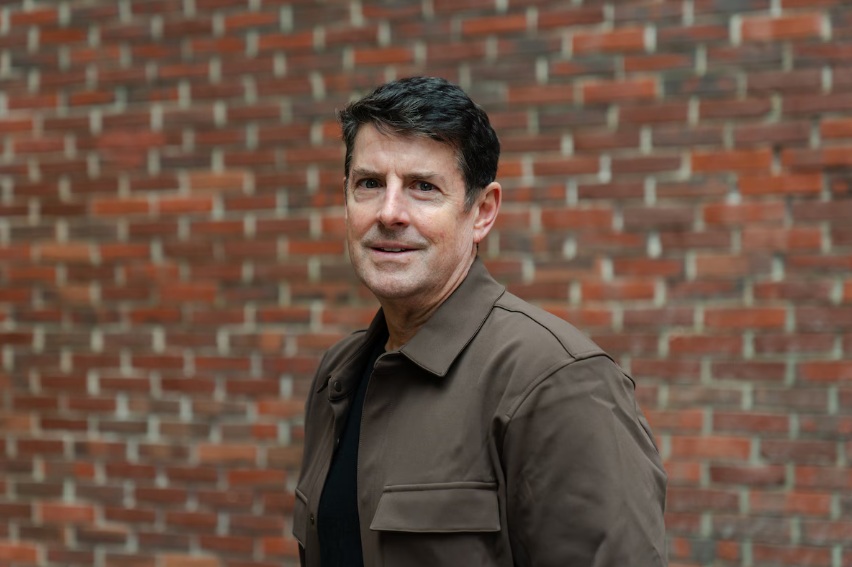 |
Jon McNeill, former Tesla president. Photo: Washington Post. |
Jon McNeill, former Tesla president. Photo: Washington Post.
Elon Musk is unpredictable and frequently fires employees. Companies he runs experience high senior staff turnover due to work pressure. However, the trade-off is the opportunity to realize ambitious goals and accumulate substantial wealth if one stays long enough.
To work within this ecosystem, employees need to understand the leader's principles. During three years of working directly with Elon Musk, McNeill realized his boss's highest motivation was to free up personal time. "Success for Elon is when he only needs to work one day per week at Tesla to return to his greatest passion: rockets", McNeill recounted.
At Tesla and SpaceX, traditional thinking is considered a barrier. Elon Musk stated the company's competitive advantage comes from making decisions faster than others.
In his book, Algorithm, McNeill summarized his former boss's management philosophy based on two principles: questioning every requirement and eliminating unnecessary steps in the process.
However, this freedom comes with risks. Musk accepts rectifiable risks, but if mistakes cause severe damage, he will act decisively.
Working with Musk also demands a clear separation between emotion and work. McNeill recounted finding it difficult to accept when Tesla discontinued some beloved car models to focus resources on new projects. However, for Musk, nostalgia has no place in business.
"He has a very sharp perspective on letting go of the past to move toward the future", McNeill said.
Nhat Minh (According to Washington Post)