Every day around 13:00, many office workers in South Korea bring their personal toothbrushes and toothpaste to the restroom, with some companies even providing dedicated rinsing areas. This widespread post-lunch brushing ritual is more than just a hygiene practice; it is deeply rooted in the nation's cultural, educational, and social norms.
A primary reason for this habit is South Korea's distinctive culinary culture. Many traditional daily dishes are rich in strong ingredients like garlic, onion, chili, and kimchi. The lingering odors from these foods make many individuals feel the need to clean their mouths immediately after eating.
This practice is deeply ingrained, contrasting sharply with norms in other countries. Lee, 39, recounted his experience working in the Netherlands, where he often waited for an empty restroom to brush his teeth, avoiding drawing attention to this unusual habit. Jina Chung, who previously worked in Singapore and the Netherlands, observed: "Brushing teeth next to someone washing their hands is not an appropriate image in the office culture of many countries". She noted that even in Singapore, known for its strongly scented cuisine, post-lunch brushing is not common.
Statistics highlight the prevalence of this routine. According to data from the National Institute of Health of South Korea, 58,6% of men and 67,5% of women in Seoul brush their teeth after their lunch break. A survey by the recruitment platform Saramin further revealed that over 85% of respondents maintain this habit.
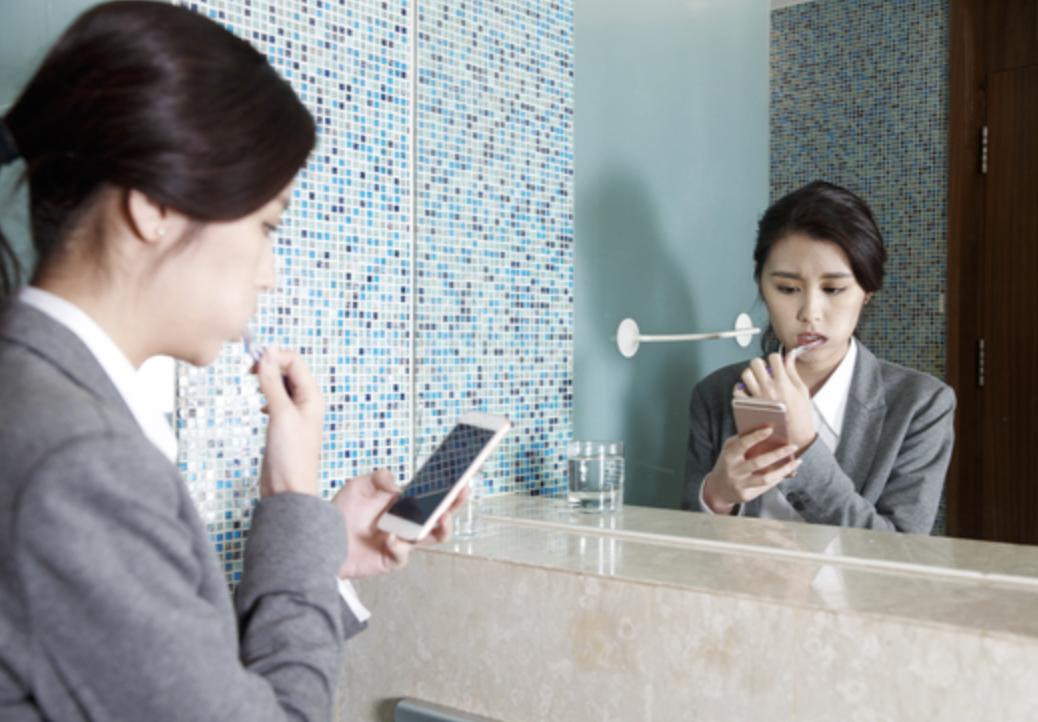 |
Illustration: Korea Joongang Daily |
Beyond cuisine, education plays a significant role. The South Korean government integrates oral care into preschool and primary school curricula, where children bring toothbrushes to school for collective brushing. The Korean Dental Association further reinforced this by launching the "3-3-3 rule" in the 1980s—brushing teeth three times a day, for three minutes after eating, and brushing for at least three minutes each time—which has since become a social norm.
The collective factor, known as Nunchi, also drives this behavior. In a South Korean workplace, when most colleagues brush their teeth after a meal, those who choose not to may be perceived as lazy or unhygienic. This social dynamic encourages conformity.
Professor Lim Myung-ho, from the Department of Psychology at Dankook University, explained that this behavior reflects the collective and family-oriented culture in South Korean society. "Colleagues are often seen as part of an extended family, and the office is an extension of home", he said. According to Professor Lim, most of South Korean society views this habit as an expression of cohesion, responsibility, and loyalty to the collective.
Ngoc Ngan (Source: Korea Joongang Daily)