On the morning of 2/4, Nguyen Thi Ha, 47, purchased an electric motorbike at a dealership on Pham Van Dong street while waiting for technicians to install mirrors on her son's new vehicle.
To make space and gather funds for these two vehicles, Ha sold two petrol motorbikes she bought four years ago for 35 million VND in late March. "Selling the petrol bikes for less than half the purchase price was still satisfying because it almost covered the cost of two new electric vehicles", said Ha, a resident of Xuan Dinh ward.
Her family's shift away from petrol vehicles began last year when her husband upgraded to an electric car. The primary motivation for this transition was economic. With five family members owning four petrol motorbikes, they spent over 15 million VND annually. In contrast, electric vehicles reduce this cost to one-third. "This year, we will gradually phase out our remaining petrol vehicles", Ha stated.
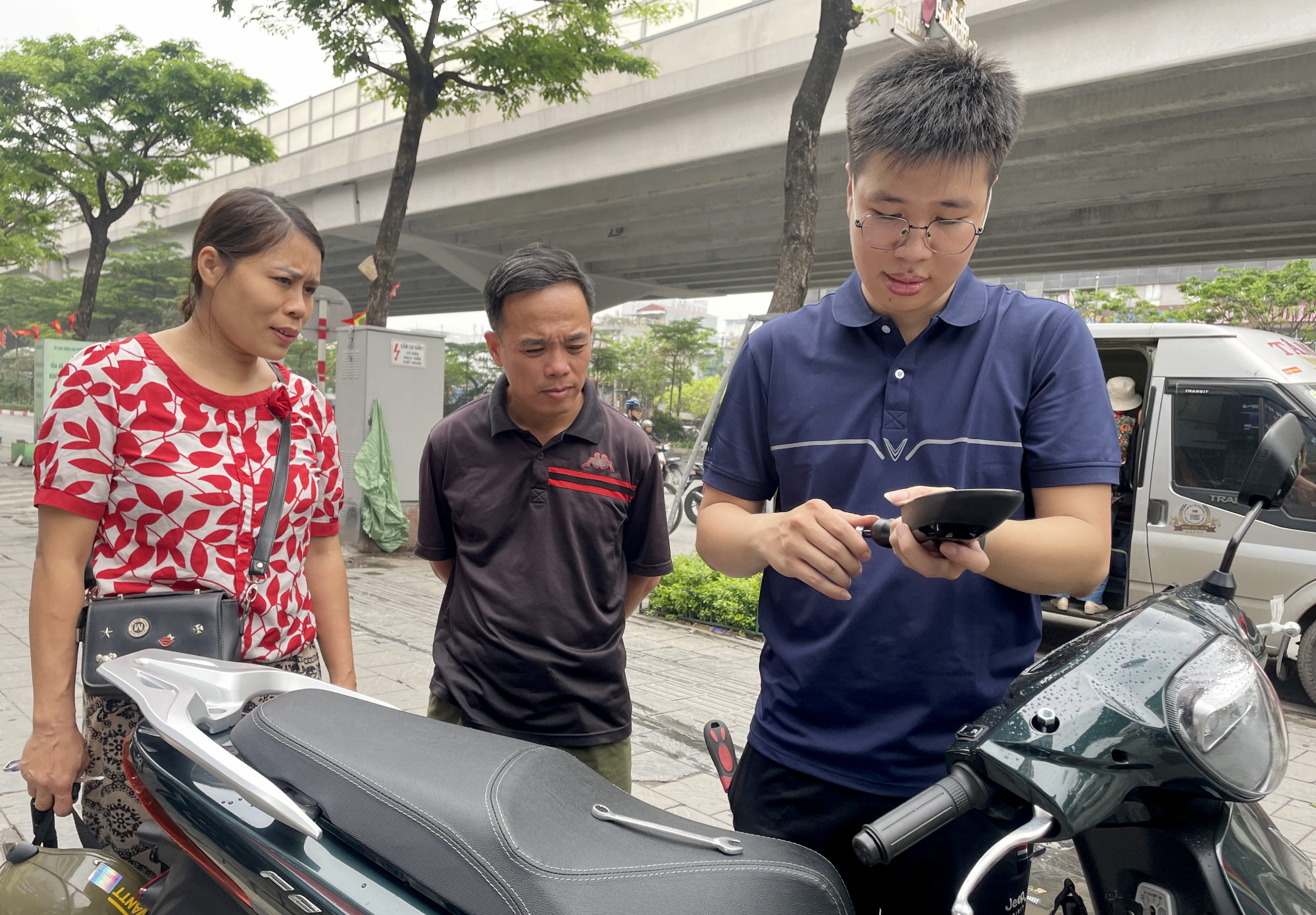 |
Ha and her husband, from Xuan Dinh ward, purchased electric vehicles on the morning of 2/4. *Photo: Phan Duong* |
At noon on 3/4, at an electric motorbike dealership on Le Trong Tan street, Duong Noi ward, Hoa, 36, took delivery of her new electric motorbike. Her family already owned two petrol motorbikes and one car, which met their transportation needs. "I bought this extra one for my husband to commute within Ring Road 1 because the petrol vehicle ban is approaching", Hoa explained.
Her husband commutes approximately 60-70 km daily from their home in Thanh Oai commune to Lac Long Quan street, Tay Ho ward, so the family purchased an additional removable battery. The total cost was around 31 million VND, a price Hoa considered "acceptable", prompting her to finalize the purchase early to avoid potential price increases as the restriction deadline draws near.
Decisions to abandon petrol vehicles, like those made by Ha and Hoa's families, are fueling a strong wave of transition, making the electric vehicle market bustling. Hoang Ha, General Director of VinFast E-motorbike for the Vietnam market, reported that in March, the company received over 135,000 orders nationwide, marking its highest sales ever. In Hanoi alone, over 20,000 electric motorbikes were delivered to customers.
The Manh Phat dealership system added that VinFast's sales in March reached 1,400 units, three times the average of the first two months of the year. Customers in inner-city wards accounted for over two-thirds of these sales. To meet market demand, many dealerships have had to triple their staff, rent additional warehouses, and prepare financial resources.
Other electric vehicle manufacturers have also recorded similar growth. Bui Nguyen Truc Ny, Sales Director at Dat Bike, stated that the company's orders in early March were 10 times higher than the same period last year.
Electric vehicle dealerships observe a clear change in their customer base. In the same period last year, they sold an average of 50-60 vehicles per month, primarily to students. Currently, commuters represent a large proportion, focusing on the 20-30 million VND segment.
 |
Long Thanh Ha, 45, from Mai Dich ward, received her new vehicle on the morning of 2/4. *Photo: Phan Duong* |
This shift is also attracting individuals who traditionally relied on public transport. On the morning of 2/4 at a dealership on Pham Van Dong street, Long Thanh Ha, 45, spent over 20 million VND on an electric motorbike.
Ha has used public transport for many years but decided to buy an electric vehicle for casual outings and coffee trips as they become increasingly common. Ahead of the roadmap to restrict fossil-fuel vehicles, her husband, who frequently works in the inner-city core, plans to sell his Honda SH and switch to an electric vehicle next month.
"The trend in the first three months of the year shows that users no longer consider electric vehicles a backup option, but choose them as their primary mode of transport", said Dat Bike's sales director. The transition process is also decisive. In March, the Manh Phat dealership repurchased nearly 400 petrol motorbikes from customers switching to electric vehicles.
Representatives from manufacturers and dealerships point to four factors driving this wave.
First is the roadmap for restricting motorized vehicles in Ring Road 1. Starting 1/7, Hanoi will pilot a Low Emission Zone, banning petrol motorbikes during specific hours in core wards within Ring Road 1, including Hai Ba Trung, Cua Nam, Hoan Kiem, O Cho Dua, Van Mieu - Quoc Tu Giam, Ba Dinh, Giang Vo, Ngoc Ha, and Tay Ho. This roadmap makes electric vehicles an optimal solution for families with members working in the city center.
Second, technological and infrastructure barriers are gradually being removed. To address concerns about fire and explosion and apartment charging bans, manufacturers have adopted LFP battery technology and developed battery swap models. As of 15/1, VinFast had installed its first 4,500 stations. The company aims to reach 45,000 battery swap stations nationwide in Quarter I. Many electric vehicle models have improved performance; for example, some Dat Bike models can travel 280 km on a single charge and reach speeds of 100 km/h.
Third, incentive policies from manufacturers directly influence families' decisions to switch. Despite rising logistics costs, some electric vehicle companies maintain their selling prices while increasing support for trade-in programs. Additionally, installment purchase policies, free charging, and battery swap services are offered to stimulate demand.
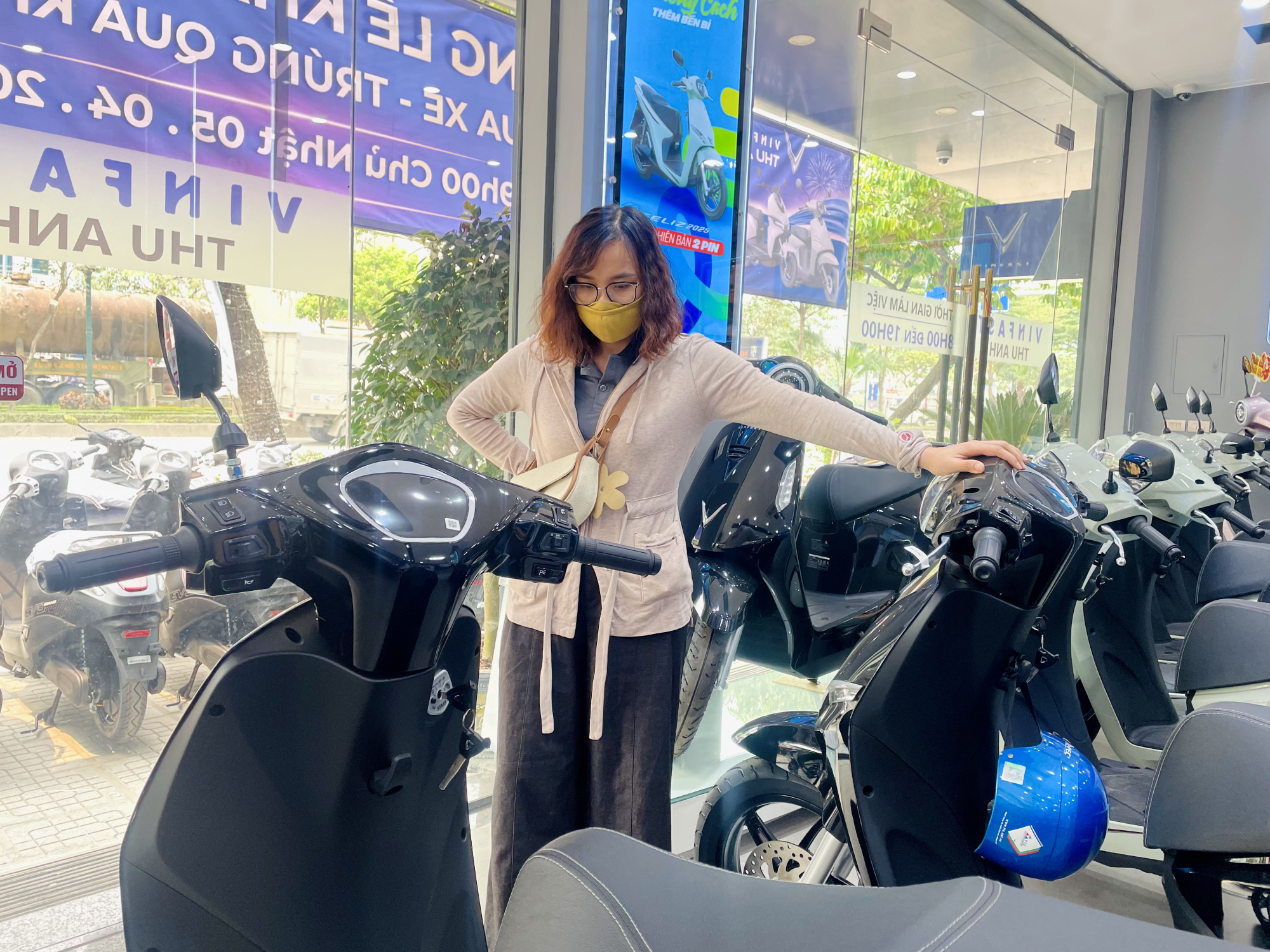 |
Hoa, 36, from Thanh Oai, purchased a vehicle at a dealership in Duong Noi on the noon of 3/4. *Photo: Phan Duong* |
Finally, continuous fluctuations in petrol prices, coupled with the increasing cost of fuel and maintenance for old petrol vehicles, are prompting residents to confidently transition to electric vehicles.
At an apartment complex in Dong Ngac ward, Duc Tuan, 41, noted that fluctuating fuel prices have increased his weekly petrol costs for commuting and taking his children to school from 100,000 - 120,000 VND to 200,000 VND. Currently owning one car and two petrol motorbikes, Tuan plans to buy an electric vehicle this month, sell one old vehicle, and move the other to his hometown. "In a context where everything is increasing, any savings are valuable", he said.
The surge in electric vehicles in his apartment's parking basement clearly illustrates this wave of transition. A few months ago, the electric vehicle parking area had about 30-40 units; now it is packed with around 100, not including those mixed in with petrol vehicles. "Previously, we only saw small vehicles for students; now, models in the 20-30 million VND segment for commuters make up the majority", Tuan observed.
Phan Duong