In urban apartments, home appliances are increasingly chosen based on more than just their function. Size, color, installation method, and the ability to integrate into the overall interior have become important criteria for many consumers.
This trend reflects a shift in how living spaces are used. After an "always-on" lifestyle – constantly connected, working, and pursuing goals – homes are now expected to provide a greater sense of relaxation and balance. The minimalist living trend also places new demands on home appliances: minimizing bulk and creating seamless integration with the space.
According to a Toshiba representative, in modern apartments, "fit-in" design – meaning a snug fit that blends into its installation location – has become a significant criterion. Instead of standalone appliances, users tend to choose products that can integrate with cabinet systems, reducing gaps and maintaining a unified aesthetic for the room.
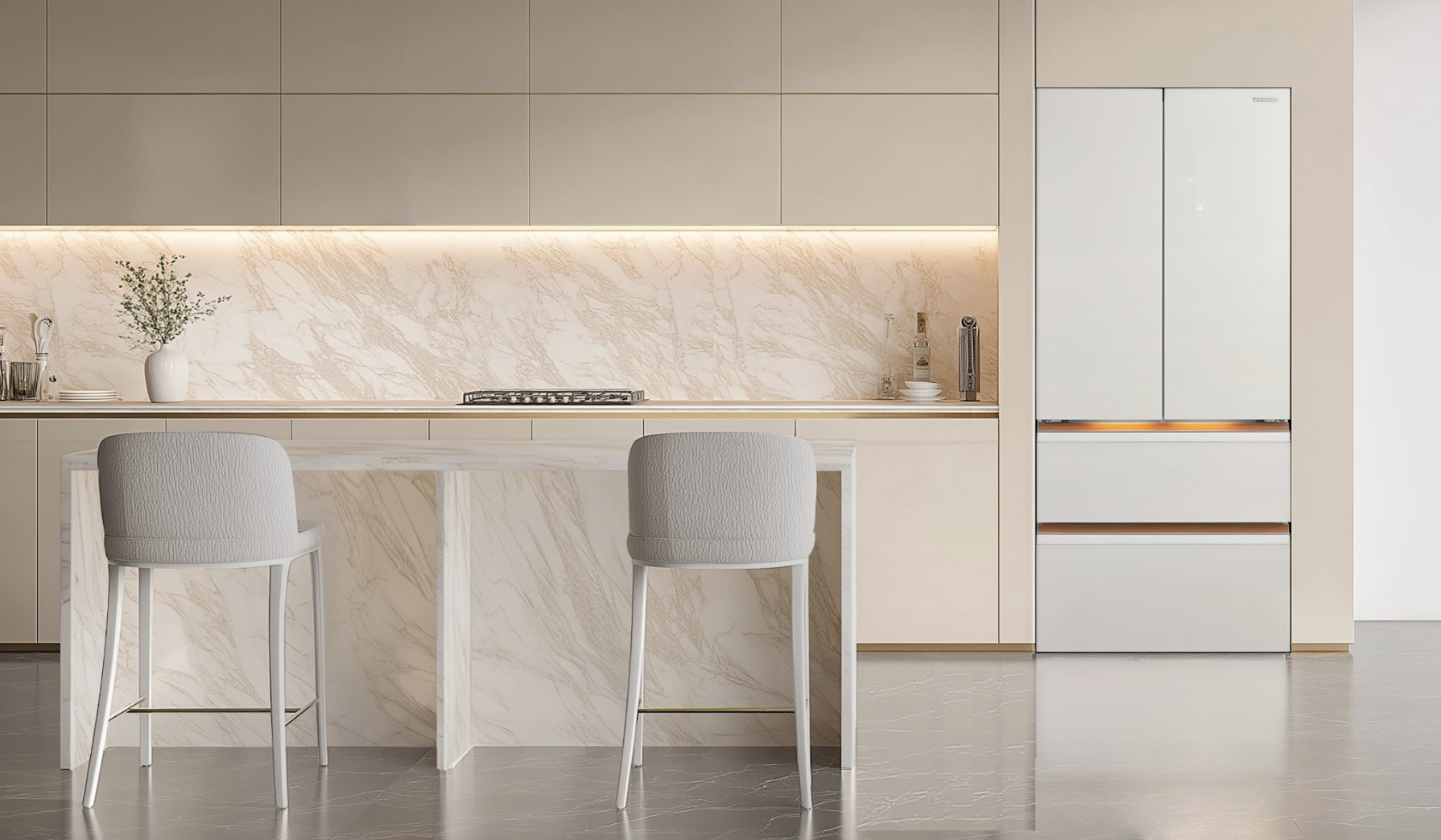 |
Products with a white color scheme can integrate with cabinet systems, minimizing gaps and maintaining a unified aesthetic for the room. *Photo: Toshiba*
This is particularly evident in kitchens, where space is often calculated down to the centimeter. An appliance that protrudes from a cabinet system or leaves large gaps on either side can disrupt the overall layout.
Toshiba embodies this approach through its Japandi Kumo refrigerator series. The product draws inspiration from the Japandi style – combining minimalist spirit with tranquility – and the "Details Matter" philosophy, which emphasizes meticulousness in every detail.
Kumo aims for seamless spaces
The Japandi Kumo has a depth of 600 mm, designed for built-in installation to fit standard kitchen cabinet compartments. The announced side gap is 4 mm.
Toshiba states that bottom heat dissipation technology, combined with hinges that open up to 125 degrees, allows the product to be placed flush against the wall, eliminating the need for a rear gap. This design aims to prevent the appliance body from protruding from the kitchen cabinet system or creating excess space.
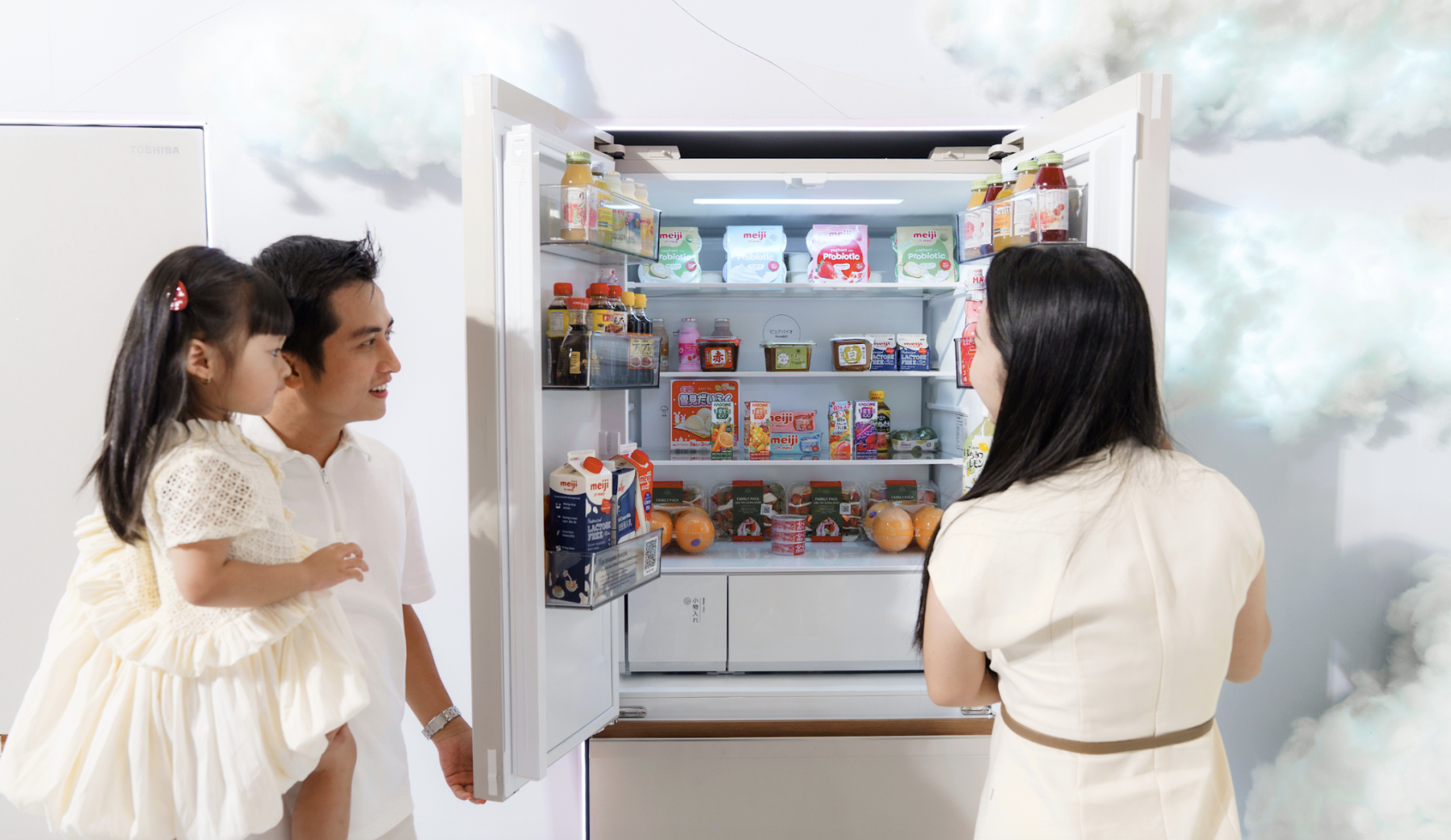 |
Customers learn about the built-in refrigerator design that fits snugly into kitchen cabinets, with hinges that open up to 125 degrees without needing a rear gap. *Photo: Toshiba*
The product's exterior uses a Jade Cloud (cloud white) color, combined with a 9-layer tempered glass surface that resists fingerprints and scratches. The neutral color and flat surface allow the appliance to easily complement minimalist interior styles.
The exterior design is paired with internal preservation technologies. Kumo features two independent cooling systems and two dual fans, which distribute cold air separately between the freezer and refrigerator compartments.
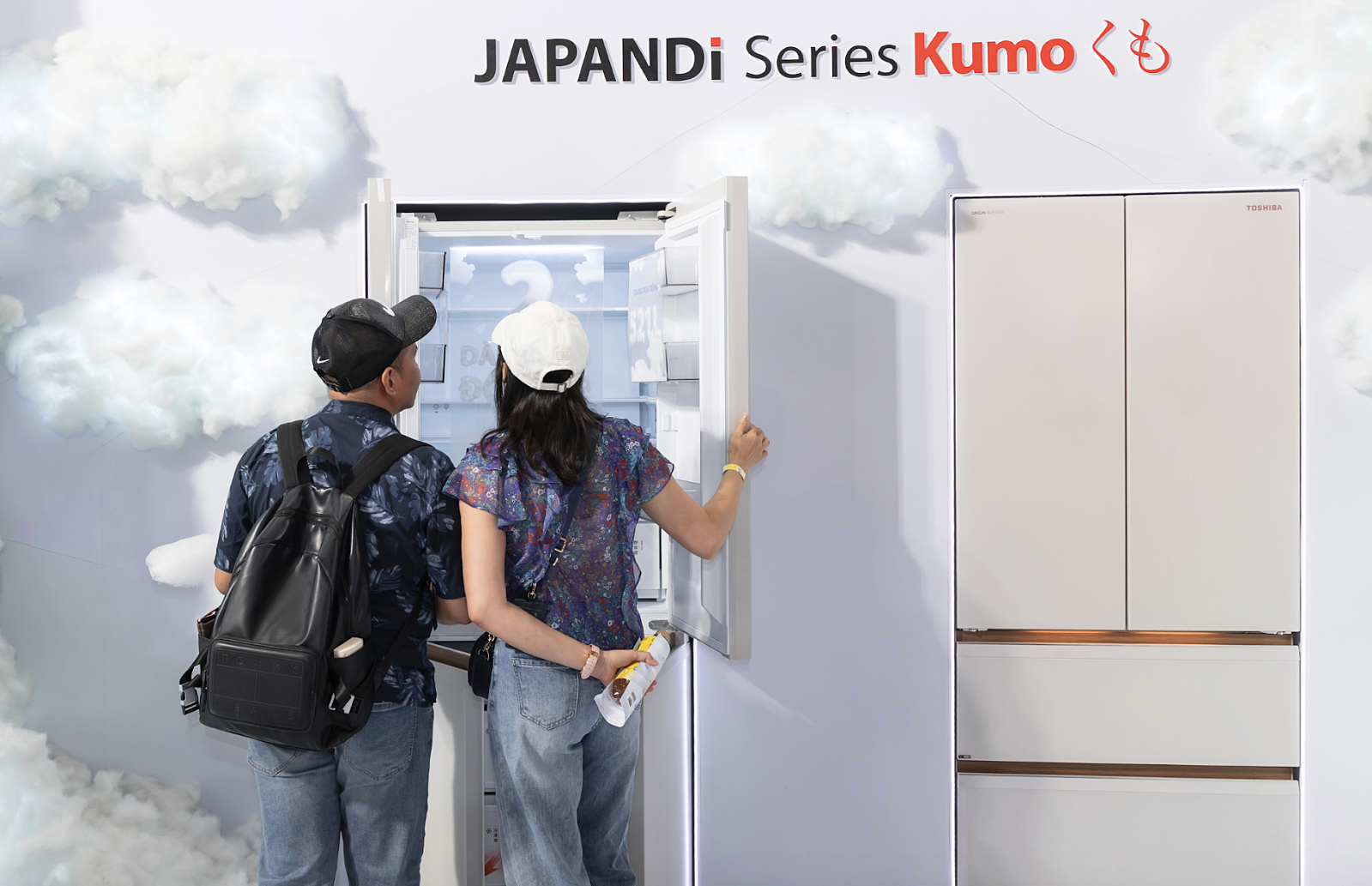 |
Customers learn about Toshiba refrigerators. *Photo: Toshiba*
According to the company, this design helps limit odor mixing between different food groups. The freezer can reach deep freezing temperatures of up to -30 degrees Celsius. Toshiba states that this temperature helps form smaller ice crystals, thereby minimizing the impact on food structure during freezing and thawing.
The product is also equipped with a PureBIO filter that supports deodorization and antibacterial action inside the refrigerator.
From function to experience
Beyond size and design, Toshiba also incorporates interactive details into its products, adhering to the "Details Matter" philosophy.
The welcome light feature automatically illuminates the exterior light when it detects a user approaching the refrigerator. This detail aids visibility in low-light conditions and creates additional interaction during use.
The Japandi Kumo can also connect to the TSmartLife application. Users can remotely monitor and adjust temperatures, and receive alerts if the refrigerator door is not fully closed. The application also provides statistical reports on power consumption to track appliance usage.
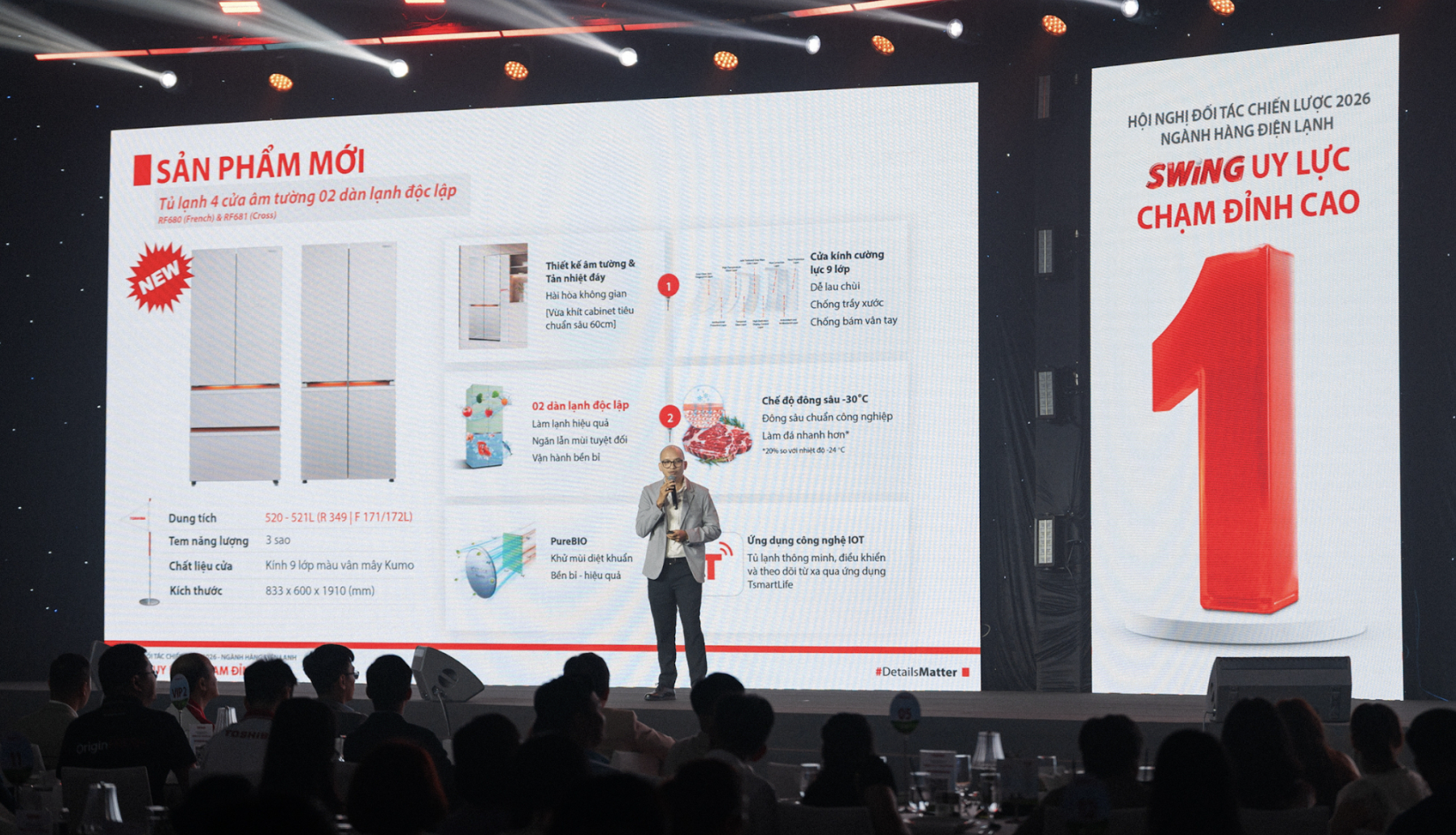 |
A Toshiba representative introduces the product's functions and design. *Photo: Toshiba*
Launched in March, the Japandi Kumo comprises two models: a 520-liter version with two upright and two horizontal doors (GR-RF680), and a 521-liter version with four upright doors (GR-RF681).
From being merely a food preservation device, refrigerators are increasingly considered within the overall context of the kitchen. When design, size, and installation capabilities are calculated alongside interior furnishings, the appliance can meet functional needs while maintaining the tidiness of the living space.
Thai Anh