Many home cooks wonder why restaurant soups, made with the same ingredients, taste sweet and aromatic, yet their homemade versions can be pungent, bitter, or bland.
According to chef Vu Nhat Thong from Eric Cooking Class, this difference originates from the "knife angle" and how food cell structures are handled.
Each onion contains two key components: flavor precursors (sulfoxides) and the alliinase enzyme. In an intact onion, these remain separated within cells. When a knife cuts, cells break, causing the enzyme to react with precursors and produce Syn-propanethial-S-oxide gas. This gas causes eye irritation and the onion's pungent taste.
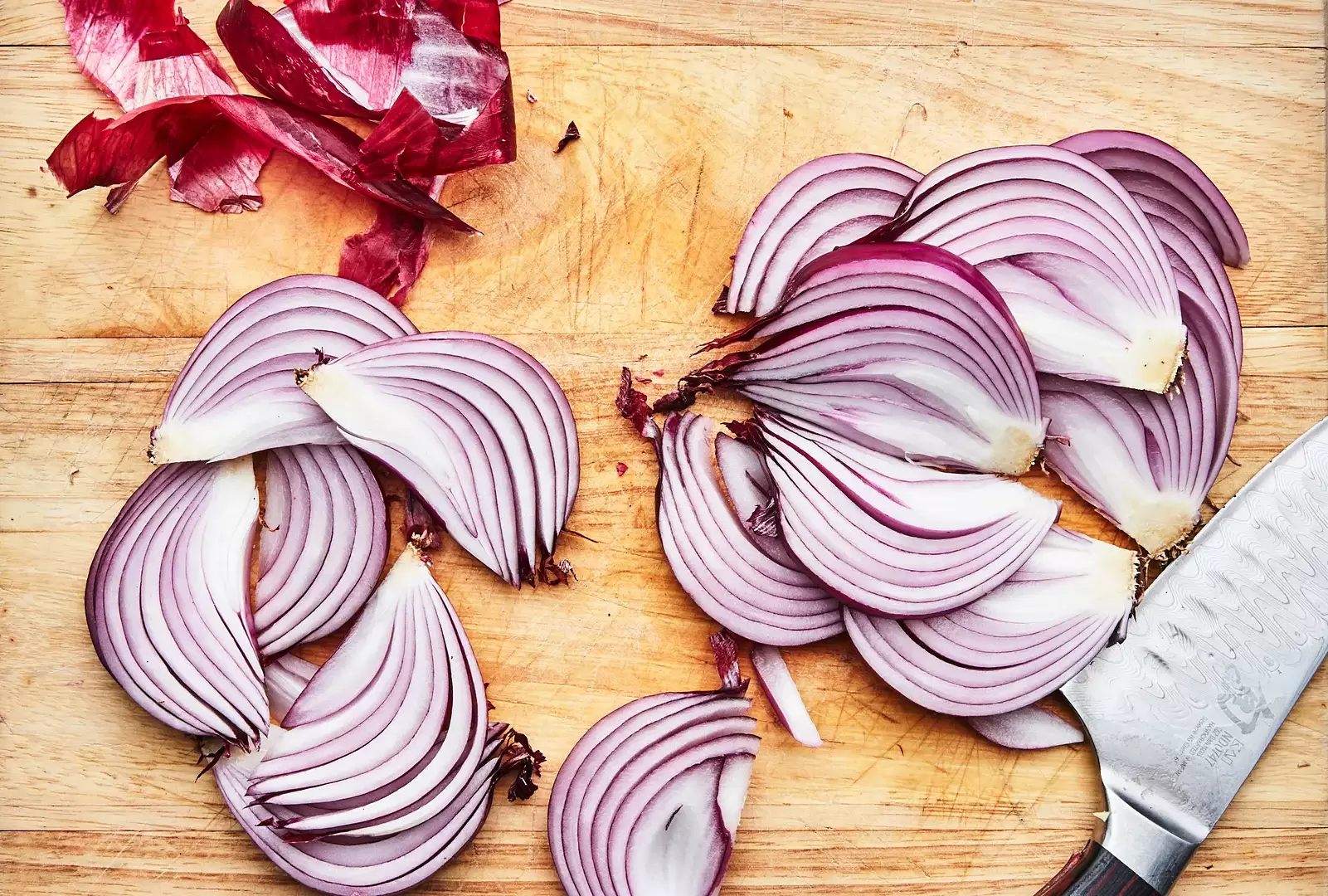 |
Cutting along the grain is suitable for soups. Photo: Bonappetit
The core principle of cutting is simple: more cell damage intensifies the chemical reaction, leading to a stronger, more pungent flavor. Minimizing cell damage, conversely, results in a milder onion taste and preserves its natural sweetness.
To optimize flavor for various dishes, chef Thong categorizes three basic cutting techniques:
- Cutting along the grain: Slice from the root to the tip, following the onion's natural lines. This technique allows the knife blade to glide between cell walls, minimizing structural damage. This method helps onion pieces maintain their shape during prolonged cooking, releases less pungency, and retains natural sweetness. It is ideal for dishes requiring rich sweetness, such as French Onion Soup or caramelized onions.
- Cross-cutting (orbital cut): Slice across the onion's body to create rings. This technique causes significant cell destruction, allowing more sulfur gas to escape. The onion's flavor after this cut becomes pungent and spicy, suitable for adding a flavor accent to salads or burgers.
- Dicing/mincing: This technique completely destroys the cellular structure, allowing flavors to quickly dissolve into the broth. It is appropriate for sauces, porridges, or stir-fries that require an immediate blend of aroma.
Chef Vu Nhat Thong emphasizes that a common mistake is using a dull knife. While a sharp knife makes clean cuts, a dull knife crushes onion cells, causing onion liquid to leak out, making the pieces mushy, watery, and losing their crisp sweetness.
Investing in a sharp knife and maintaining a regular sharpening habit is a prerequisite for ensuring dish quality. A sharp cut locks in the sweet juices within the onion piece, releasing flavor only when diners begin to enjoy it.
Bao Nhien