According to Chef Vu Nhat Thong from the Eric Vu Cooking Class Center in Ho Chi Minh City (HCMC), the yellow-orange substance in shrimp heads is often mistaken for "roe" or "tomalley", but it is actually the hepatopancreas. This organ simultaneously performs two roles: digesting food and filtering, as well as storing substances absorbed by the shrimp from its environment.
If shrimp grow in clean water sources, the hepatopancreas will offer a rich umami flavor. Conversely, in polluted waters, it becomes a site for cadmium accumulation, a heavy metal that can remain in the human body for decades.
International food safety studies indicate that cadmium levels in the hepatopancreas of crustaceans can be many times higher than in the meat. Therefore, Europe advises consumers to limit the consumption of the brown substance in the heads and shells, especially from large marine shrimp and crabs. This is because the longer shrimp live, the greater their potential to accumulate environmental toxins.
However, shrimp heads still contain astaxanthin, an antioxidant that creates their red-orange color, along with fatty acids and free amino acids that contribute a distinctive sweetness to broths.
Notably, the traditional belief that "eating shrimp heads and shells provides a lot of calcium" is inaccurate. In reality, calcium is primarily located in the hard shell and is tightly bound to chitin, a biopolymer that forms the protective exoskeleton of crustaceans. The human digestive system lacks the enzymes to break down chitin, meaning calcium remains locked inside and is expelled intact. Consequently, chewing shrimp shells offers no nutritional value in terms of calcium.
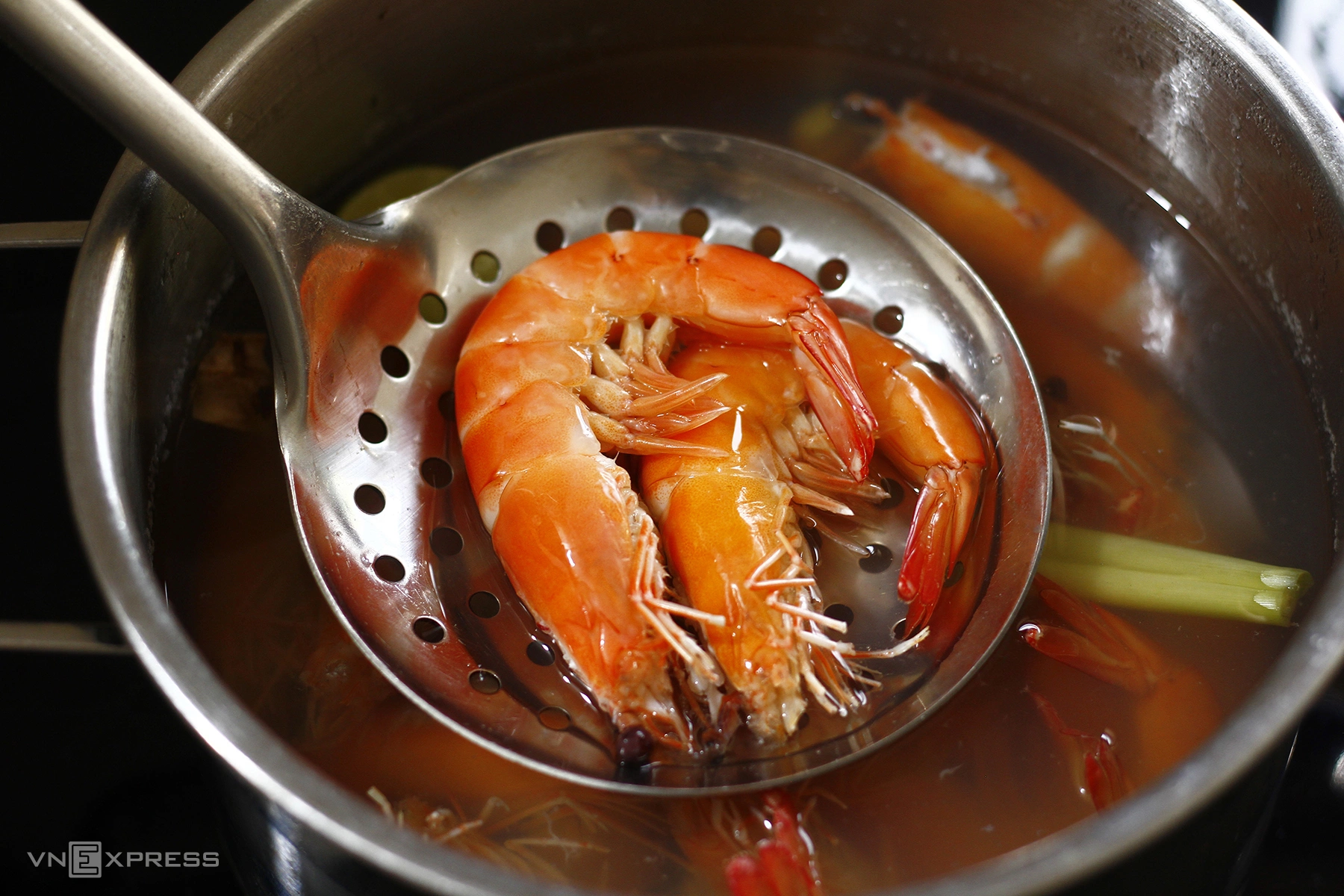 |
Illustration: Bui Thuy |
Safe ways to use shrimp heads
Chef Vu Nhat Thong suggests four principles for consuming shrimp heads to ensure both health and flavor:
For small and medium-sized farmed shrimp (Vannamei shrimp, Black tiger shrimp): Their short life cycle and controlled pond environments reduce the level of toxin accumulation. The heads of these shrimp are safe to pan-fry for oil, use in hot pot broth, or make into sauces.
For large, long-lived marine shrimp and crabs: These should be enjoyed in moderation to avoid the risk of long-term cadmium accumulation in the body.
For pregnant women and young children: According to food safety recommendations, these groups should prioritize eating the shrimp body meat.
Processing by filtering solids: The safest method to extract the distinctive sweet flavor without concern for toxins is to pan-fry shrimp heads for oil or simmer them for broth, then completely filter out the solids. This approach helps retain the essential flavor while maximizing the removal of potentially risky components.
Bao Nhien