According to the U.S. Department of Agriculture (USDA), the food danger zone ranges from 4-60 degrees Celsius.
When meat remains in this temperature range for too long, bacteria such as Salmonella and E. coli can multiply rapidly. The concern is that contaminated food sometimes shows no unusual signs in color or smell. Therefore, the thawing method is of critical importance.
Thawing in the refrigerator
This is the safest method. Meat is transferred from the freezer to the refrigerator's cold compartment and left overnight or longer, depending on its size, until fully thawed.
After thawing, ground meat, poultry, and seafood can be stored in the refrigerator for an additional one to two days. Red meats like beef, pork, lamb, and steak can maintain good quality for an additional three to five days.
Another advantage is that meat thawed in the refrigerator can be refrozen if not used, although its quality may decrease due to moisture loss.
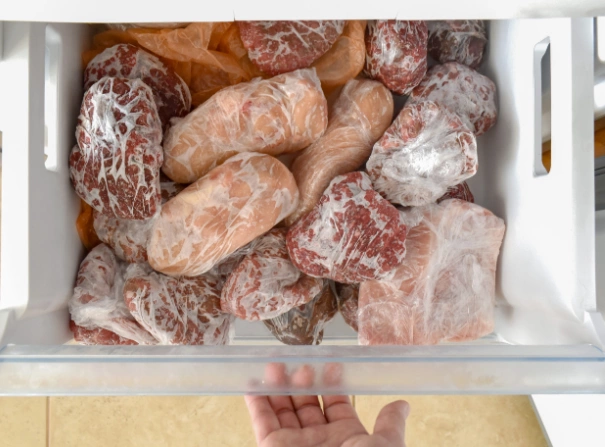 |
Illustration: Goodhousekeeping |
Thawing with cold water
Place the meat in a sealed plastic bag, remove excess air, then submerge it in a bowl or pot of cold water.
Change the water every 30 minutes to maintain a cold temperature. Small pieces of meat, poultry, or seafood weighing approximately 500 g can thaw in one hour or less. Larger cuts, weighing about 1-1.8 kg, may require two to three hours.
A whole frozen turkey can take about 30 minutes per 500 g when thawed using cold water.
Meat thawed by this method should be cooked immediately. It should not be refrozen if uncooked.
Thawing with a microwave
This is the quickest way, capable of thawing small portions of meat in minutes. This method is suitable for chicken breasts, ground beef, or cuts of meat that will be cooked immediately afterward.
Use the "defrost" setting according to your microwave's instructions. If the appliance lacks this setting, select a low power level and thaw in short bursts, checking the meat between cycles.
Avoid operating the microwave at high power or for too long, as some parts of the meat may begin to cook.
Meat thawed in a microwave must be cooked immediately.
Cooking meat from frozen
If there is no time to thaw, some types of meat can be cooked directly from their frozen state. Chicken, ground beef or turkey, and steak can all be prepared this way.
However, cooking time is typically about 50% longer than for thawed meat. This method also makes it challenging to achieve a crispy skin or a seared crust compared to fully thawed meat.
What to avoid is placing frozen meat in a slow cooker. The meat may take too long to pass through the "danger zone", allowing bacteria to develop.
Do not thaw on the countertop
Leaving meat on the kitchen counter or soaking it in hot water is not a safe method. The surface of the meat can quickly reach a temperature favorable for bacterial growth while the interior remains frozen.
The USDA advises against thawing meat at room temperature. Meat that has begun to thaw should not be left out for more than two hours. If the ambient temperature is high, this time may be even shorter.
Therefore, when time allows, thaw meat in the refrigerator's cold compartment. If you need it quickly, use cold water or a microwave. In some cases, meat can also be cooked directly from frozen, provided sufficient time and temperature are ensured for it to cook completely.
Nhat Minh (via Goodhousekeeping)