At 57 years old, Nishida lives like a ghost in Tokyo. He performs odd jobs, sleeps in his office, and uses an alias. No one knows who he is or where he comes from. This is the second time in his life this man has chosen jouhatsu (evaporation) from society.
Nishida first disappeared at 25. Leaving his hometown of Kansai to escape his overbearing father, he moved to Tokyo, earning 600,000 yen per month during the golden age of the 1990s. However, when the crisis hit in 2010, he became bankrupt. That was when he decided to disappear again.
"I inherited this from my mother," Nishida confessed, referring to his mother who also left her family after a business failure.
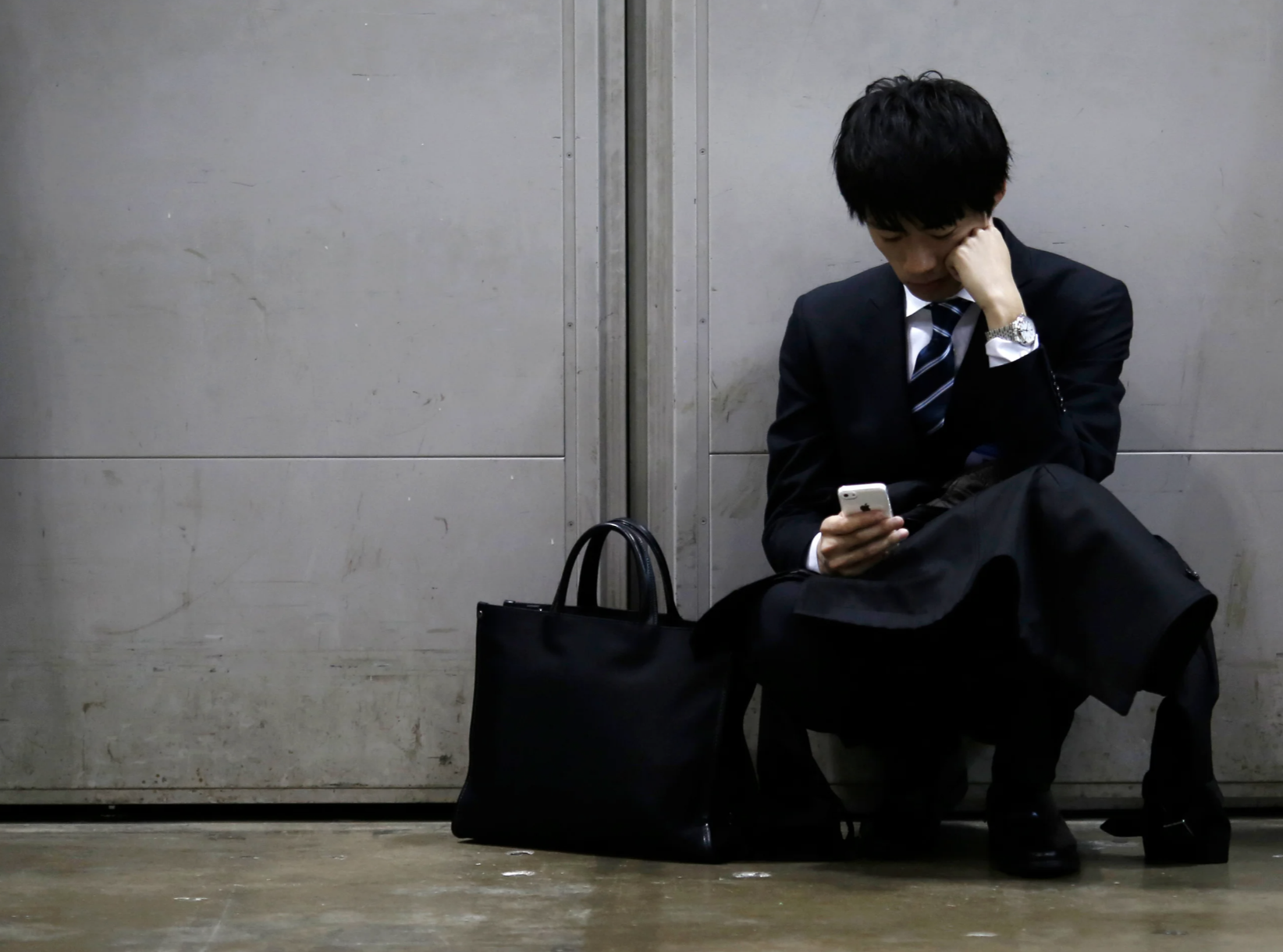 |
Work pressure, debt, and loss of motivation lead approximately 80,000 Japanese people to voluntarily "evaporate" each year. *Photo: Yuya Shino/Reuters*
Nishida is not alone in Japan's underworld. Shogo Nomura, 42 years old, also lives under a friend's identity. Despite being admitted to a top high school in Tokyo, Nomura could not handle the pressure, spiraling into drug use, committing crimes, and being disowned by his family. To make a living and evade the police, he does everything under a false name, from taking driving tests and buying insurance to getting married.
"My only happiness now is secretly meeting my child," Nomura said. He still hopes to find a way out of his current life of selling stimulants, but the door to returning to society seems to have closed tightly.
According to sociology professor Kimio Ito of Kyoto University, the jouhatsu phenomenon reflects the downside of Japan's culture that highly values honor. Many prefer to disappear rather than endure the shame of failure or debt. Leaving is also seen as a way to help family members avoid burdens.
Additionally, the lack of social support channels before 2010 and the police's view of adult disappearances as a "civil matter" inadvertently contributed to this trend. As a result, the economy loses a skilled yet emotionally exhausted workforce. According to Japan's Ministry of Labor, there are approximately 2,000 cases of death or illness each year due to overwork.
However, not everyone who chooses to disappear does so due to tragedy. Yoshihiko Sakai, 53 years old, views it as a form of self-training. After being stranded in Paris at 17, forced to live with undocumented immigrants and learn pickpocketing to survive, Sakai later became a successful photographer. "In trouble? Run away," he concluded strangely about his experience.
According to statistics from the Japanese police, approximately 80,000 people are reported missing each year. The Association for the Support of Missing Persons in Japan states that many families do not even report cases due to shame. In the world of those who "evaporate," they exist parallel to modern society but are completely invisible.
Minh Phuong (According to Japan Today, News Au)