 |
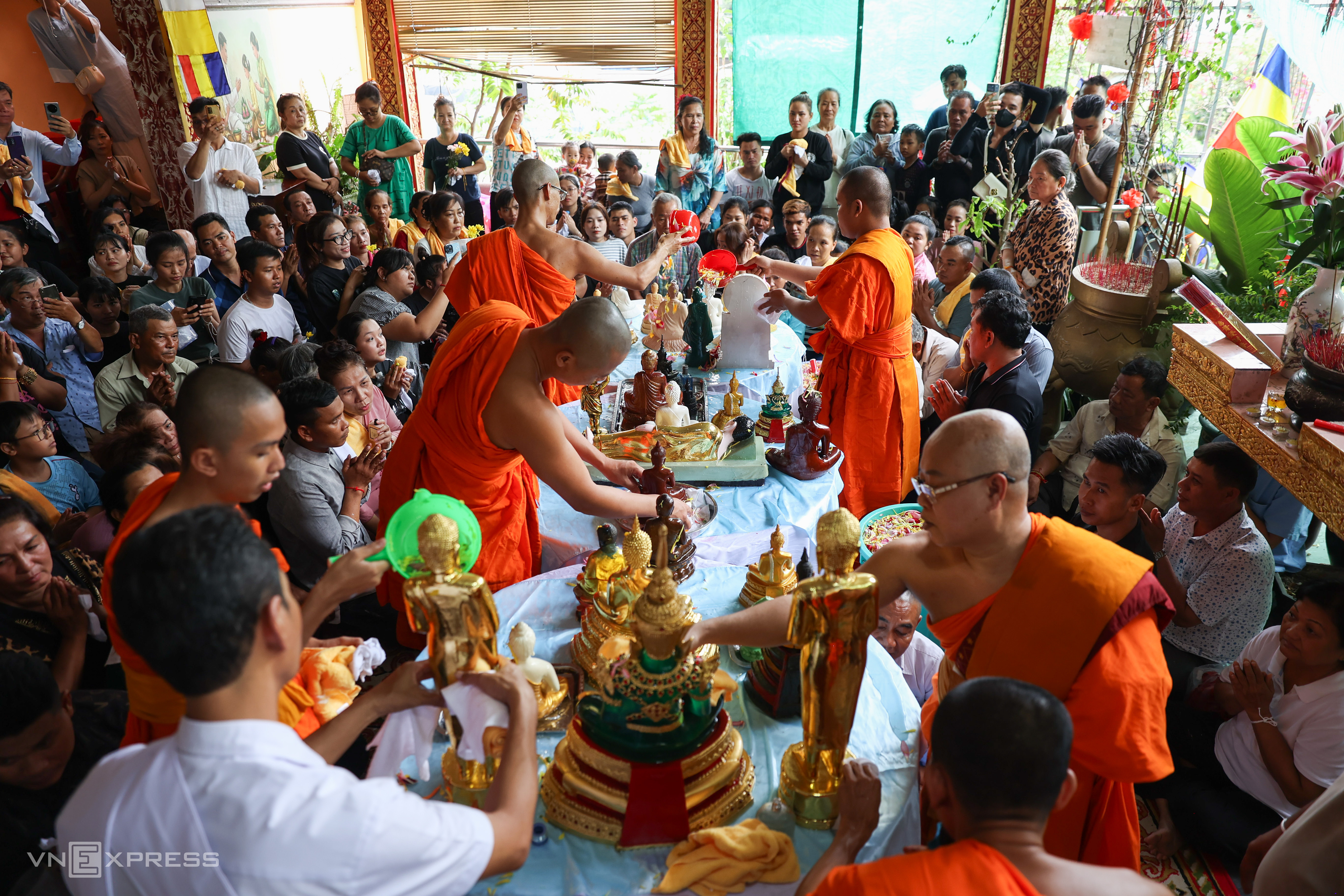
On the final day of Chol Chnam Thmay, hundreds bathed Buddha statues in Pothiwong pagoda's main hall on the afternoon of 16/4.
Chol Chnam Thmay, meaning "entering the new year" in Khmer, is a festival when nature harmonizes, plants flourish, and life thrives. According to the Khmer calendar, the 2026 new year runs from 13 to 16/4.
During the new year, people visit pagodas to pray for peace, offer food to monks, release animals, and build sand mountains. The final day is the most important, featuring rituals of bathing Buddha statues, monks, and parents to accumulate merit, show filial piety, and honor ancestors.
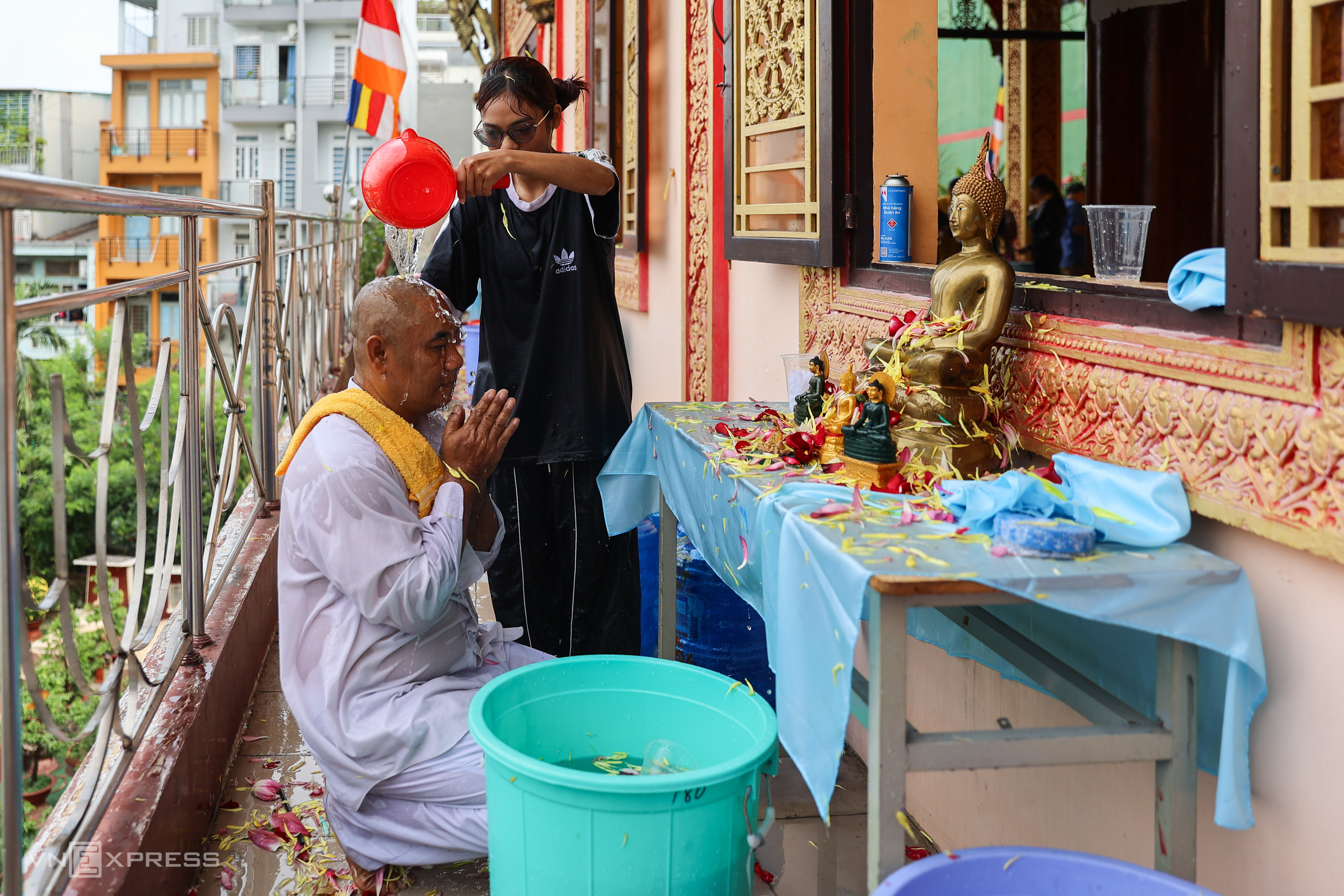 |
Beside the pagoda's main hall, Lam Kim Nhat Tien used buckets of fragrant flower-infused water, offered to Buddha, to bathe her 53-year-old father, Lam Kim Quang.
This custom takes place on the third day of Chol Chnam Thmay and has been maintained by Tien's family for generations. "This expresses filial piety towards parents and grandparents," the 24-year-old said, gently scooping water and slowly pouring it over her father's head.
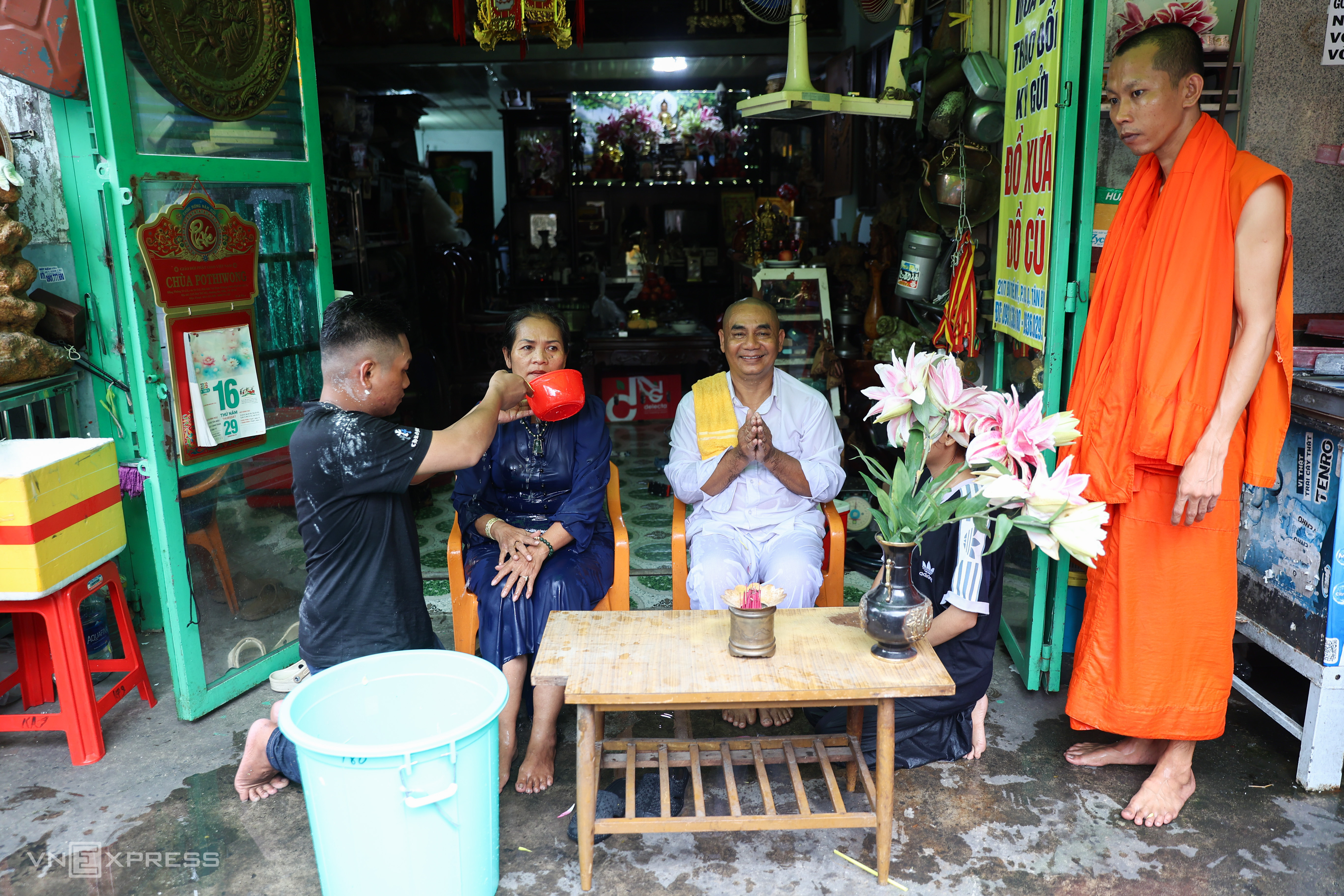 |
Nhat Tien and her father then brought the sacred water home for other children to show respect. With a monk present, 29-year-old Kim Lam Nhat Quang knelt to bathe his parents in turn.
Quang scooped water onto his mother's feet, hands, and body. While bathing her, he softly apologized for any past grievances or sadness he caused during the year, wishing her good health.
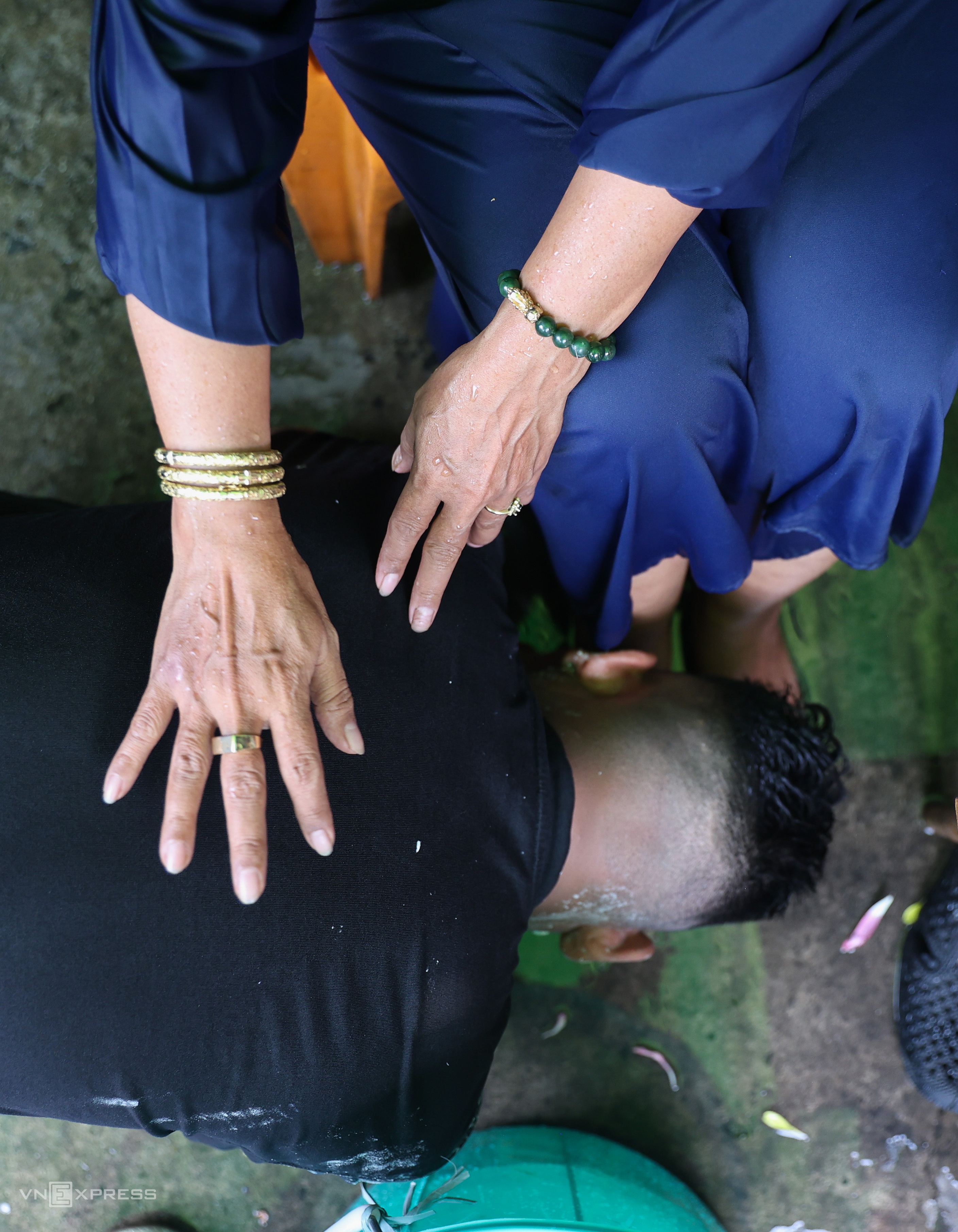 |
At the end of the ritual, children knelt, bowing their heads close to their parents' feet to apologize. In response, the parents' hands gently rubbed their children's backs as a sign of forgiveness.
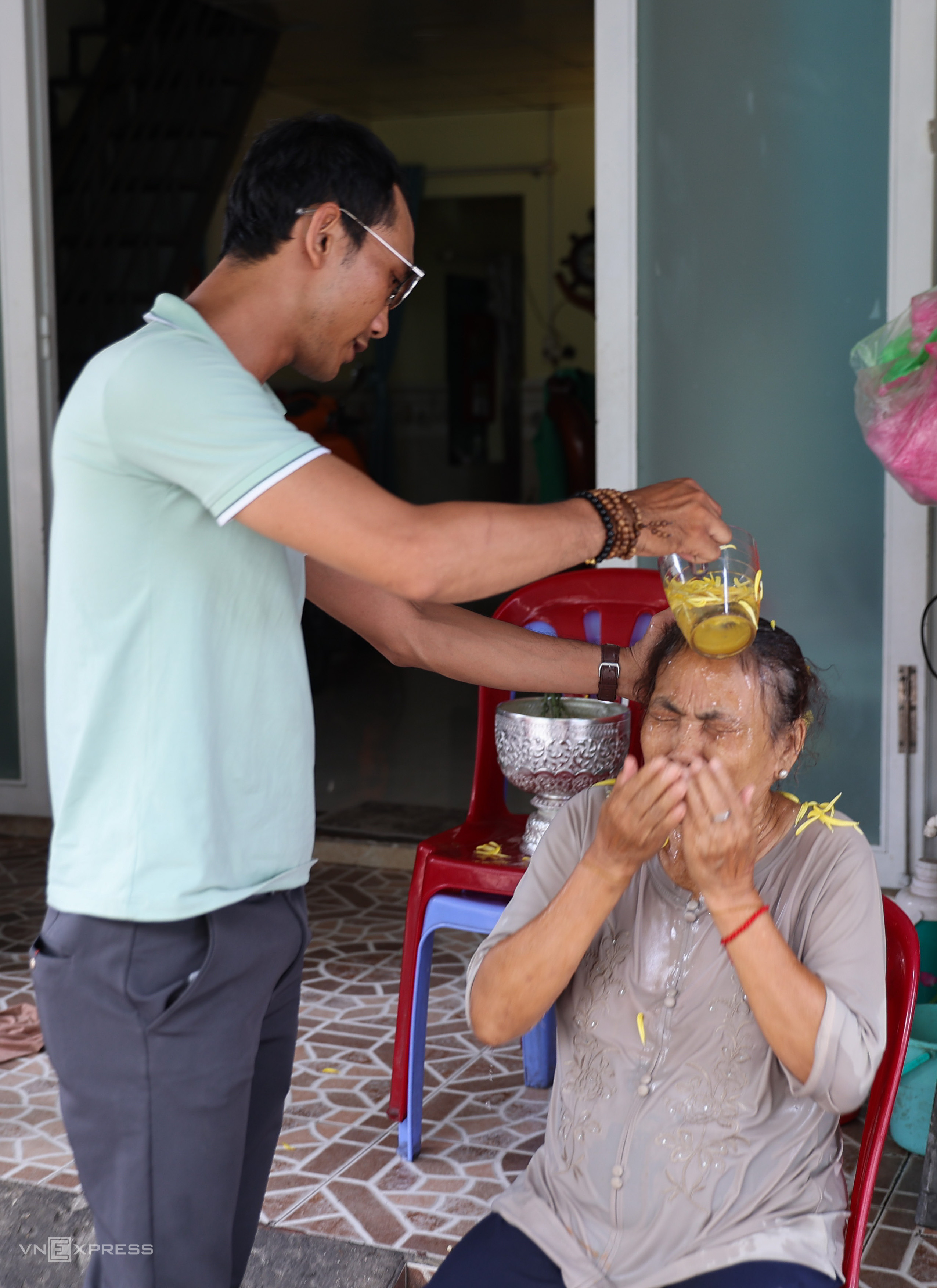 |
One hundred meters away, 69-year-old Dien Thi Cai sat on a chair outside her home as her children and grandchildren took turns bathing her.
Cai's family, originally from Soc Trang, has lived among the Khmer community on Bui The My street for 38 years. Her husband passed away 16 years ago, and 14 family members live together. After her return from the pagoda, her children prepared basins of water with added chrysanthemum petals to bathe her.
Bathing Buddha statues is the most anticipated ceremony during Chol Chnam Thmay. Many Khmer people wait for hours at the pagoda to perform this sacred ritual. Buddha statues from the pagoda and those brought by locals are arranged in rows, fragrant water is poured over their heads, then they are wiped clean. This belief symbolizes purification, washing away "dust" from one's consciousness.
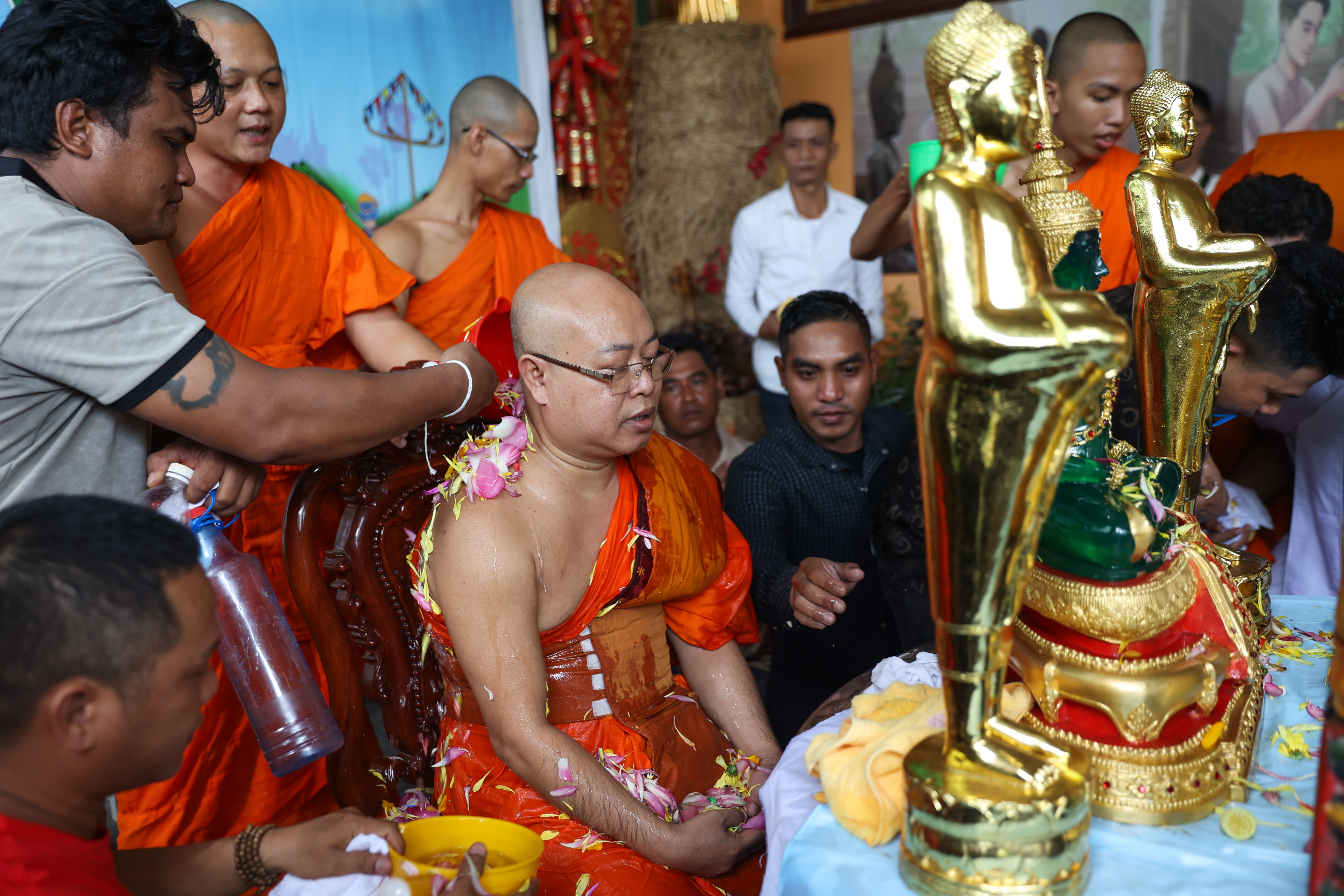 |
After bathing the statues, Buddhists use flower petals to sprinkle water onto elderly monks. In Khmer culture, this bathing ritual symbolizes wishing longevity and blessings upon older monks in the new year.
"The meaning of this ritual is to help people find peace, health, and move towards a better life," shared Most Venerable Nguyen Tri, abbot of Pothiwong pagoda.
 |
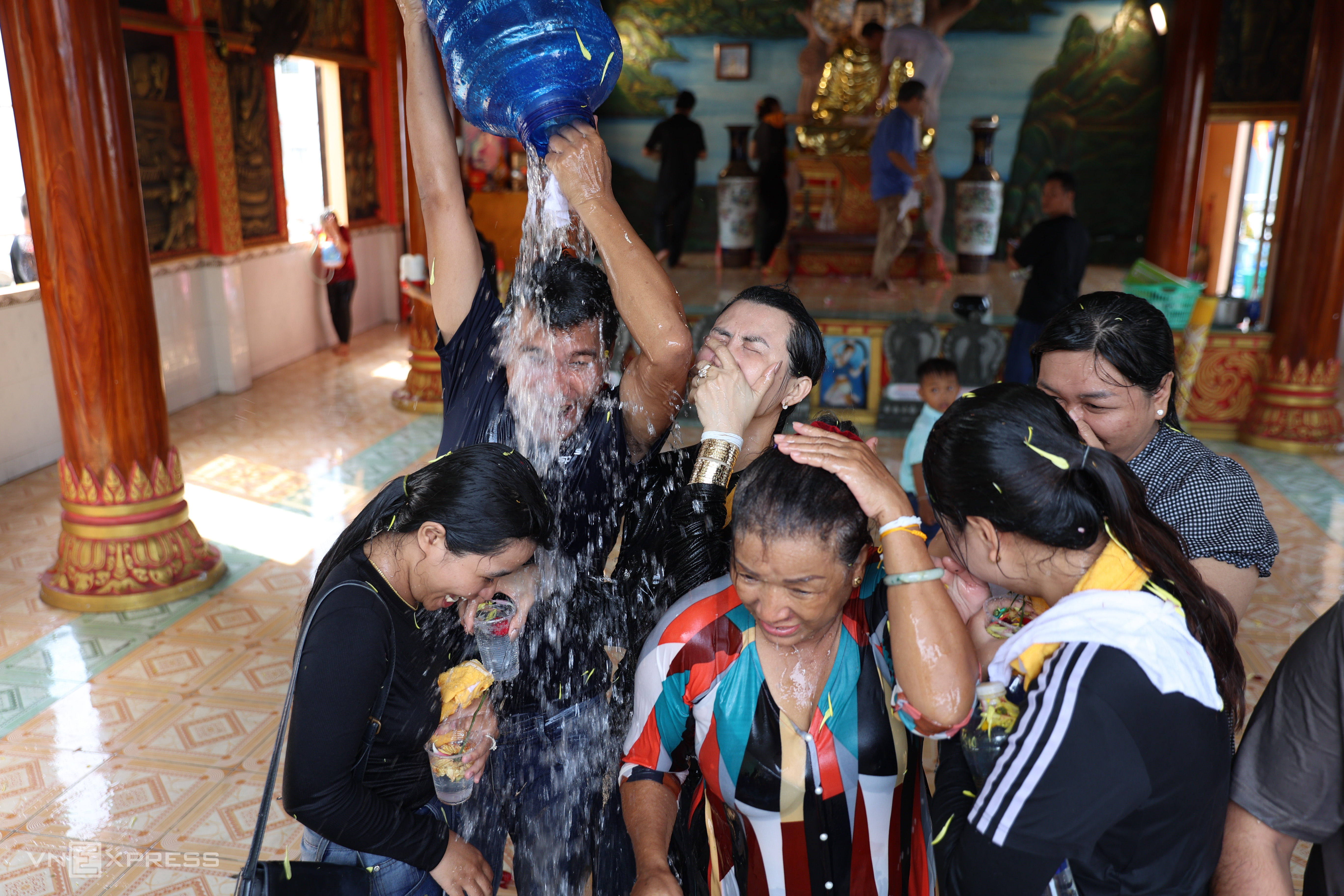 |
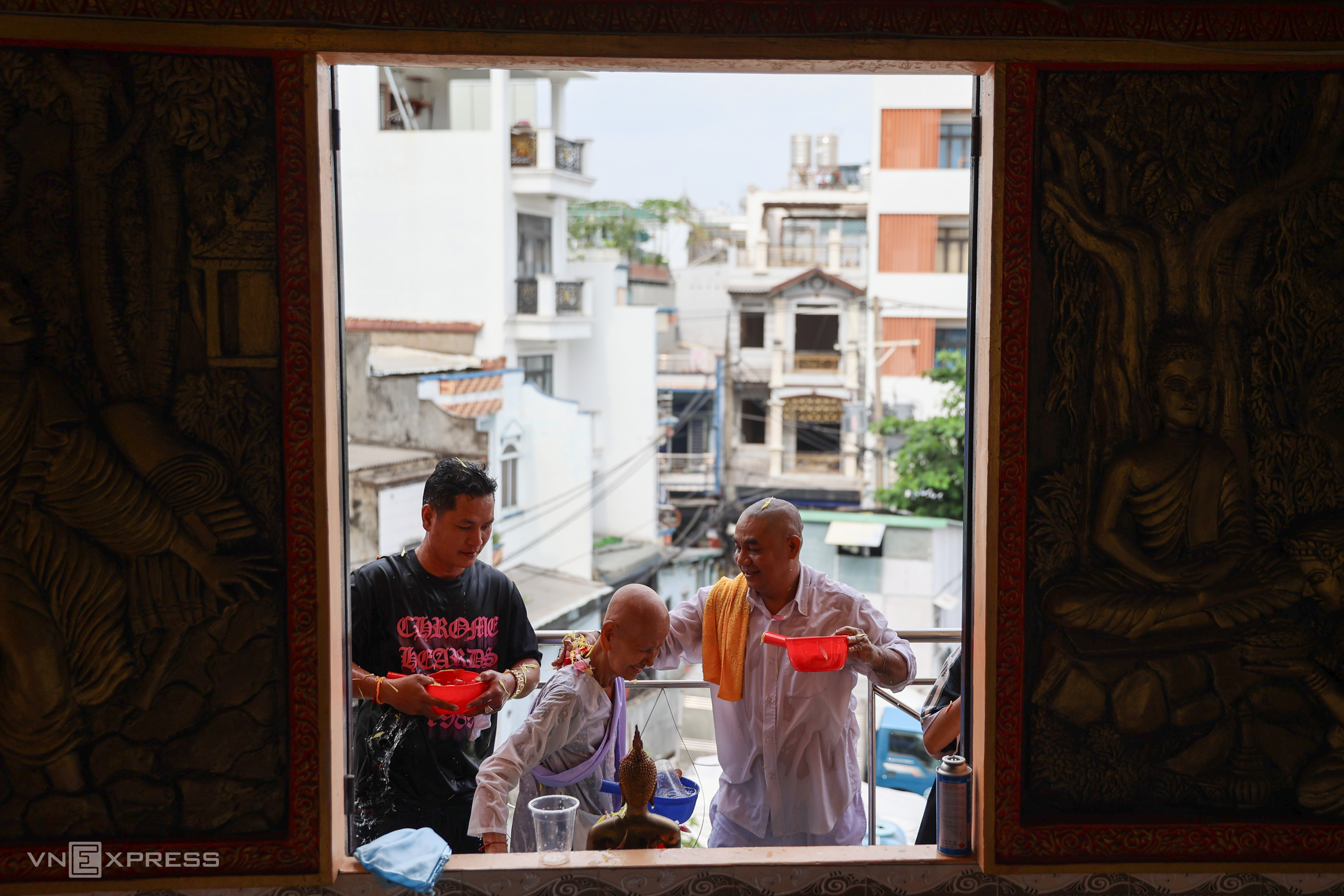
People also bathe each other to cleanse away negativity and pray for luck and good health.
Following the solemn ceremony, the atmosphere became livelier as residents around the pagoda filled the alleys, enthusiastically splashing water and enjoying folk games. As of early 2025, Ho Chi Minh City has over 50,000 Khmer residents. This is one of the city's largest ethnic groups, alongside the Hoa and Cham people, contributing to its cultural diversity. Quynh Tran - Ngoc Ngan