After weeks at sea, the island of St. Lucia in the Caribbean stunned Omar Nok. This marked the 10th stop in the 31-year-old's journey to circumnavigate the globe without flying.
The sailboat was just one of many modes of transport he has used throughout his journey. Last October, Nok departed Cairo, Egypt, beginning his cross-continental adventure. Since then, he has consistently traveled by various means, often relying on the kindness of strangers to continue his no-fly expedition, aiming for a more immersive experience of the world.
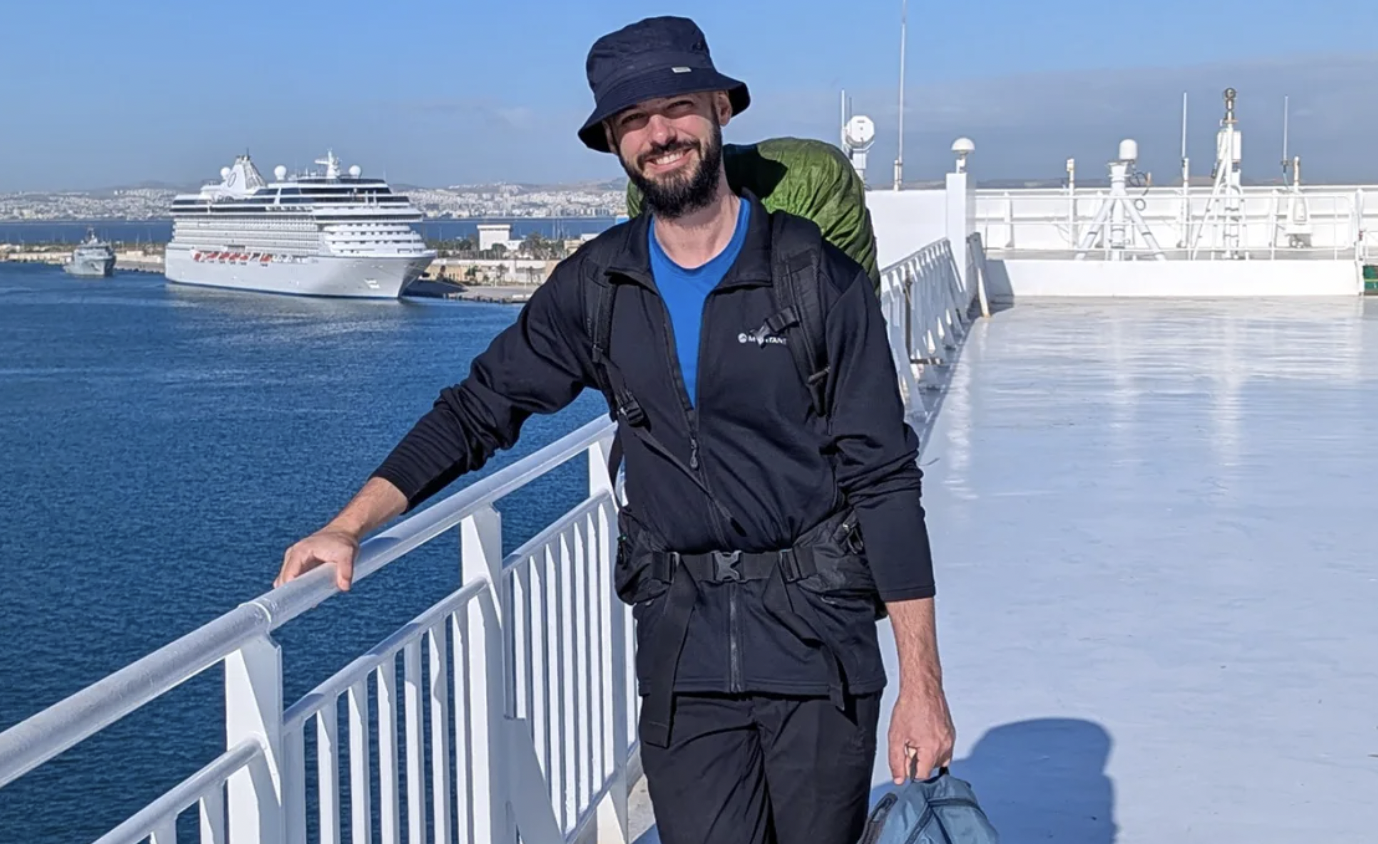 |
Omar Nok, 31, on the deck of a trans-Caribbean vessel. Photo: CNN |
Omar Nok, 31, on the deck of a trans-Caribbean vessel. Photo: CNN
Nok's passion for exploration began in childhood, but truly ignited during a trip to the Balkans in 2018.
In 2022, Nok left his finance job at Amazon to travel full-time. He funded his travels with savings and maintained a minimalist spending style. The idea of a no-fly world journey became clear during a seven-month trip to Japan in 2024.
In the town of Shinshushinmachi, Nok learned about Ikigai, a Japanese philosophy of finding life's purpose through a balance of passion, ability, social needs, and income. From then on, he set his goal: to undertake a long-term, no-fly journey around the world.
Last October, Nok left Egypt and traveled through Libya. Throughout his journey, he documented his experiences on social media, attracting nearly one million followers across Instagram, TikTok, and YouTube, while updating his route via the Polarsteps app.
Thanks to his online community, Nok has received significant support. An Instagram follower, for instance, helped him prepare an invitation letter to apply for a visa for his initial leg to Libya.
Nok has currently completed many segments and reached the Caribbean. He states that the most impressive aspect has been the feedback from his followers. "Someone told me that their faith in humanity has been restored by watching my journey. That's the best part", he said.
The route through northern Libya, specifically the section between Benghazi and Tripoli, presented one of the greatest challenges. This is a segment where most travelers opt to fly rather than travel by land. Nok had to take an overnight bus on a tense journey, navigating numerous checkpoints along the way.
After Libya, Nok continued to Medenine, Tunisia. From there, he traveled through France and Spain, reaching the Canary Islands off the coast of Africa via a 30-hour ferry journey, before sailing across the Atlantic Ocean to the Caribbean.
Throughout his journey, Nok has utilized a wide array of vehicles: buses, trains, trucks, hitchhiking, horses, motorbikes, boats, barges, bicycles, and even a poultry truck.
After arriving in St. Lucia, he headed northwest to the Dominican Republic. Initially, he had planned to travel to the east coast of the US, but visa procedures necessitated a change of plans, redirecting him towards Latin America.
Finding a sailboat to depart the Canary Islands for St. Lucia also proved challenging, as he spent three weeks contacting sailors in Las Palmas, Gran Canaria, to find a vessel for the Atlantic crossing. Currently, he faces similar challenges in the Caribbean, but he believes there is always a way to continue.
Ngoc Ngan (Source: CNN)