Zhao Xiangjie, 33, a technology product director, earns 300,000 yuan (43,000 USD) annually. From a modest background, he owns an apartment in Chengdu and drives a car.
"Why are you still single?" asked matchmaker Jiang Ping after hearing his introduction. Zhao replied, "People often joke that those who 'should not be single' are precisely the ones who are."
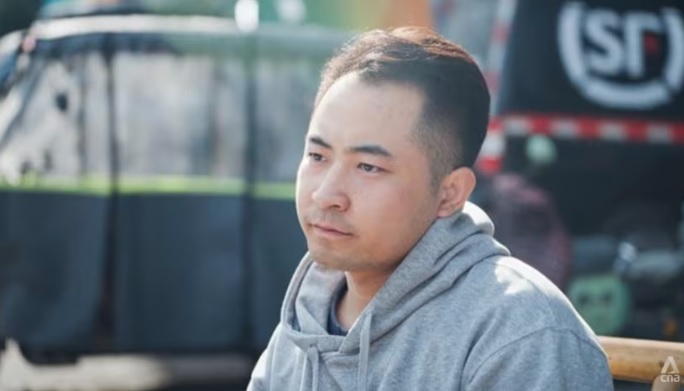 |
Zhao Xiangjie, 33, has struggled to find a partner. *Photo: CNA* |
Zhao's situation is not isolated. While marriage remains a significant life milestone, many young Chinese adults face challenges in finding a partner. Last year, marriage registrations totaled only 6,76 million, nearly half the number from a decade prior. Decades of the one-child policy and a cultural preference for sons have resulted in China having approximately 30 million more men than women.
For men like Zhao, finding a life partner has become a competitive endeavor. They increasingly turn to matchmaking services, a thriving industry that provides counseling and organizes dating events.
In cities and towns, educated individuals in their 20s and 30s register for these services or participate in livestream events to meet suitable matches.
A primary challenge for men struggling to find wives is the limited opportunities to meet potential partners. Meng Weili, 38, a matchmaker in Shanghai, notes that demanding work schedules often restrict young people's social circles to colleagues and friends.
At Meng's company, initial dates are limited to 30 minutes to avoid wasting time if there is no mutual interest. However, with fewer women participating in dating than men, women hold more power in selection. This leads to them becoming more selective, often with higher financial expectations.
Sun Guanle, a matchmaker in Shandong province, stated that women today expect their partners to own a car and a fully paid-off apartment with at least three bedrooms. Ideally, they also seek a job at a state-owned enterprise, earning over 12,000 yuan (1,750 USD) a month, complete with good benefits.
This situation places individuals like Sun Guoxu, 31, in a difficult position. Despite working as a salesperson with an income of 78,000 yuan annually, he was rejected after a first meeting because he was still paying off his home loan. "Previously, clients valued each other as individuals," his matchmaker observed. "Now, everyone wants to marry someone wealthy to avoid years of hardship."
Even men who are financially secure are not guaranteed success. Matchmaker Jiang Ping noted that Zhao's weakness lies in not understanding women's desires.
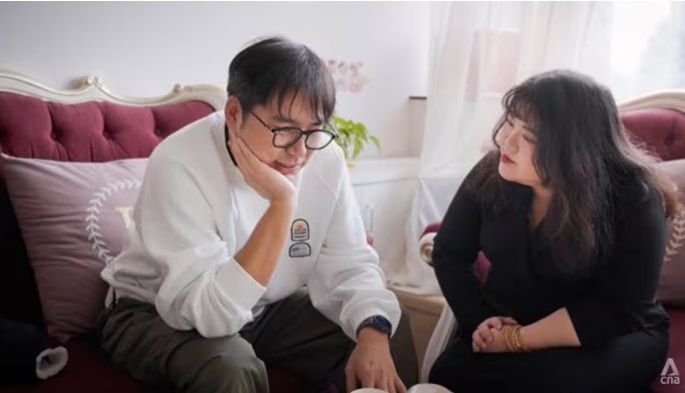 |
Cong converses with matchmaker Meng Weili. *Photo: CNA* |
In Shanghai, Meng provides guidance to introverted clients like Cong, a 33-year-old engineer, on even the smallest details. During one date, Cong embarrassed his match by directly asking about her past relationships. "The goal of the first meeting is to secure a second one," Jiang advised her client, "do not rush to conclusions or touch on sensitive topics."
For Zhao Xiangjie, even after finding a girlfriend, he still sought his matchmaker's advice due to relationship problems. After reviewing his messages, Jiang stated frankly, "You are too eager. The more anxious you are, the more she will avoid you." Ultimately, the relationship ended because the woman realized she only appreciated his kindness, lacking romantic feelings.
Many men restrict their search with specific requirements. They ask matchmakers to find partners who are younger, have a certain appearance, and a compatible personality. Additionally, education is often seen as a measure of intelligence and compatibility. "If marrying someone you do not know well," engineer Cong told his matchmaker, "education is a type of insurance."
Such standards cause men to overlook potentially suitable partners. Chen Yukun, 29, a civil servant in Jiangxi, considers intelligence attractive but rejects those whose "appearance does not meet expectations."
Shifting societal perceptions also contribute to the issue. Jiang Ping, who has worked in matchmaking since 2010 but chose to raise her child alone, believes marriage is a personal choice rather than a mandatory path for everyone.
Some government policies are beginning to adapt to this reality. In Sichuan province, authorities have expanded benefits for single mothers and their children, moving beyond previous provisions that applied only to married couples.
Meanwhile, marriage pressure persists for many men. During the Lunar New Year, Zhao was again questioned by his family. He asked his parents to ease the pressure, but they disagreed. His 64-year-old father believes that in their hometown, marriage remains a key criterion for evaluating an individual, irrespective of professional achievements.
The prolonged search period narrows Zhao's opportunities. Nevertheless, he still hopes to marry, have children, and establish a stable life. "Living alone is truly difficult," he said.
Nhat Minh (According to Channel News Asia)