Under the new regulation, human remains may only be buried in designated areas such as public cemeteries.
The ban was issued just before Qingming Festival, the largest annual occasion for sweeping graves and honoring the deceased in Chinese culture.
China has one of the fastest aging populations globally. Last year, the country recorded 11,3 million deaths, while births reached 7,92 million. This marks a stark contrast to a decade ago, when there were 9,8 million deaths and 16,5 million births.
This demographic trend drives up funeral and burial plot costs. A 2020 survey by UK insurer SunLife found the average funeral cost in China was around 37.400 yuan (over 5.400 USD), equivalent to 86% of a person's annual income. Land costs for burial plots in cemeteries, especially in major cities, can be double that amount, reaching up to 100.000 yuan (about 14.500 USD).
The "ash apartment" phenomenon emerged as a response to these rising costs amid a sluggish real estate market. According to Xinyi Wu, a doctoral student at the University of California, US, the regulation aims to prevent developers and brokers from selling vacant apartments for ash storage.
Local media reports indicate that buying a vacant apartment for ashes can be cheaper than a plot in a public cemetery. Economist Carsten Herrmann-Pillath from the University of Erfurt, Germany, stated that owning an ash apartment is "killing two birds with one stone". He told AFP, "It's both an investment and it helps reduce the ceremonial process."
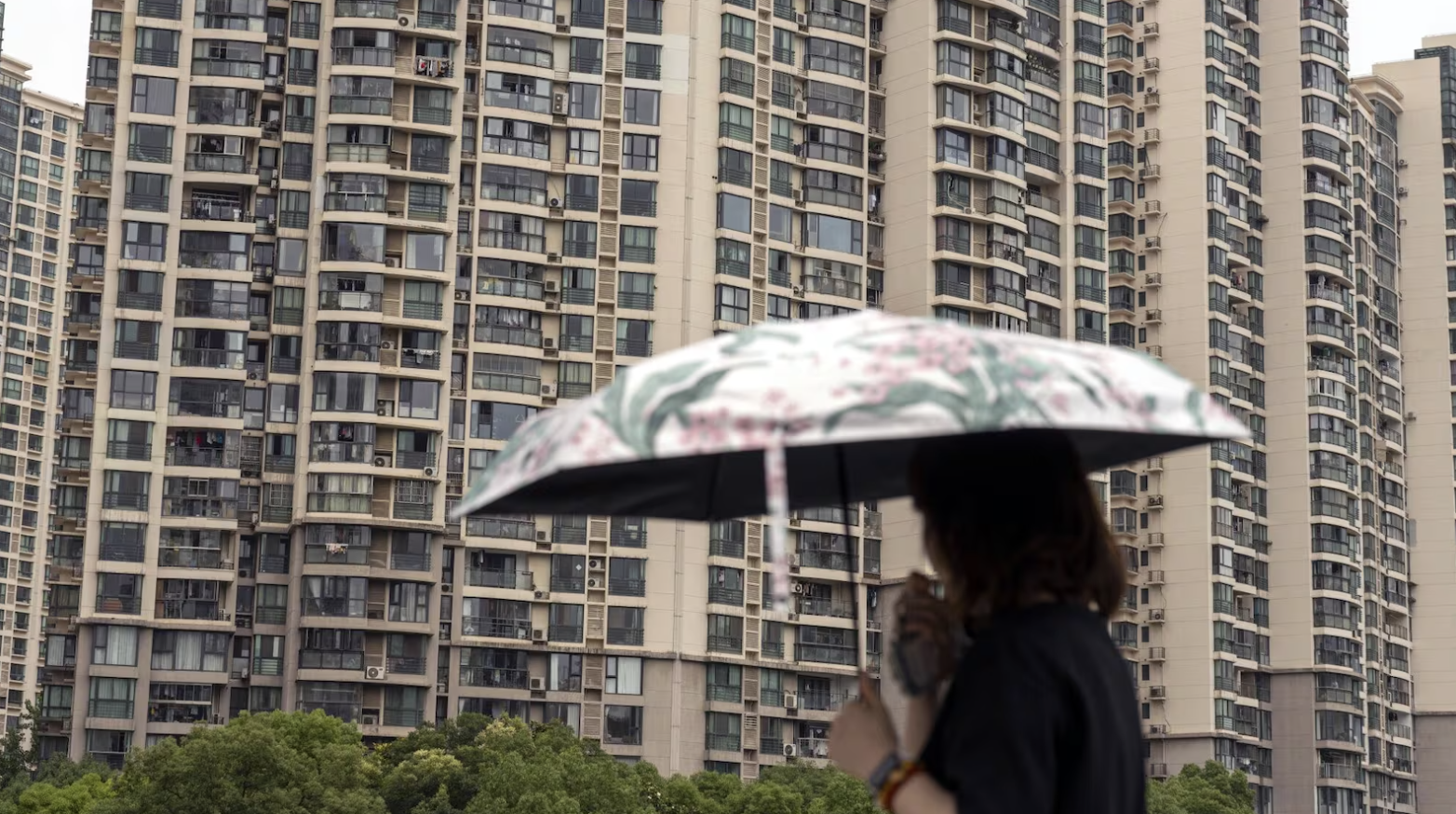 |
High-rise buildings in Shanghai, China. *Raul Ariano/Bloomberg* |
Ms. Zhao from Chaoyang district, Beijing, told ThinkChina that a suburban burial plot costs over 100.000 yuan, with a 20-year lease and management fees. In contrast, a 70-year ownership apartment in Chongli district, Zhangjiakou city, costs only 250.000 yuan.
A Tianjin homeowner with an ash apartment revealed that buyers prefer small, secluded, sparsely populated, and inexpensive residential areas. The property's use is kept secret from neighbors to avoid psychological pressure and disputes.
However, from a legal perspective, using apartments for ash storage is illegal. Zheng Ning, director of the Law Department at the School of Cultural Industry Management, Communication University of China, explained that commercial housing is intended for residential purposes. Storing urns there violates public order principles or good morals in the country's Civil Code. Affected individuals can file complaints with property management companies or initiate lawsuits, demanding restoration of the original use and compensation for emotional distress.
 |
A woman offers flowers at a grave during Qingming Festival in China, 4/2024. *CNS* |
The Chinese government encourages citizens, especially in major cities, to adopt environmentally friendly burial methods. These include "ecological burials" such as scattering ashes at sea. Many local authorities offer financial support to families choosing these methods.
However, implementing such changes is difficult because, in Chinese culture, ancestor worship and owning a tangible burial plot remain core spiritual beliefs.