Man Quynh, a 12-year-old girl, is facing immense challenges, including a recent ovarian cancer diagnosis, the loss of her younger sister, and her parents' divorce. Throughout these trials, Sister Huynh Nu Ngoc Diem, 44, has been a constant source of support, accompanying Quynh through her treatment and helping her find renewed hope.
Six years ago, after their second daughter was diagnosed with heart failure, Nguyen Quoc Cuong, 48, and Hua Thuy Linh, 49, made the difficult decision to entrust their elder daughter, Man Quynh, to the Lai Thieu Ethnic Shelter in Ho Chi Minh City (formerly Binh Duong province). Both Cuong and Linh are blind and earn a living by selling lottery tickets, making it impossible for them to provide adequate care for their children during such a crisis. "I was introduced by an acquaintance, hoping my daughter would have a better life there," the father said. The Lai Thieu Shelter provides care for over 50 ethnic minority and disadvantaged children aged 6 and above.
Three years ago, their second child passed away. The couple's unstable income prevented them from bringing their elder daughter home. The loss of her sister and separation from her parents led the 12-year-old to dream of having a large family with many children in the future, hoping to never feel lonely again. Recently, Cuong and his wife also separated.
In 3/2026, Quynh suddenly experienced severe abdominal pain. Doctors diagnosed her with ovarian cancer, requiring surgery to remove one ovary and four rounds of chemotherapy. During the initial days of chemotherapy, Quynh's hair fell out in clumps. The girl became reluctant to meet people, cried, and wanted to give up. "She pointed to the sky, saying she wanted to go up there," recounted Sister Huynh Nu Ngoc Diem, her direct caregiver.
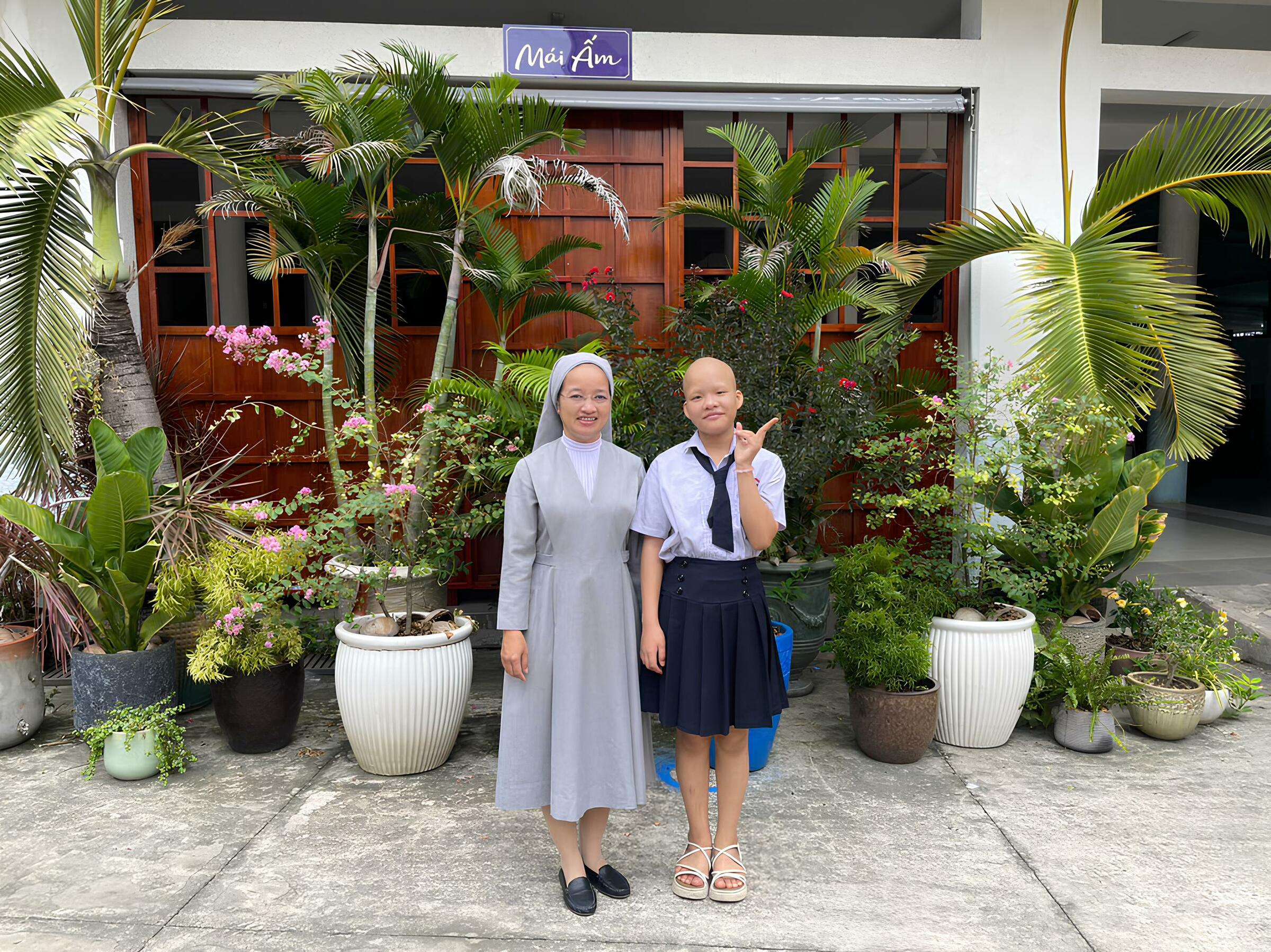 |
Sister Diem and Quynh in front of the Lai Thieu Ethnic Shelter, 8/2026. *Photo: Lai Thieu Ethnic Shelter* |
As Quynh's parents are blind, Sister Diem accompanied her throughout the treatment process. Witnessing Quynh vomit after eating, Sister Diem bought additional milk and nutritional supplements daily. The nun also shared stories with Quynh about a schoolmate who had also battled cancer but had recovered and returned to school, telling her: "You find it difficult now, but everything will pass."
Sister Diem also took Quynh to visit children with blood cancer. The nun explained that after treatment, Quynh could return to the shelter, while other children had to consider the hospital their home. This helped Quynh gradually alleviate her emotional distress. On one occasion, the girl asked: "Can I still have children after this, Sister?" Sister Diem explained that since only one ovary was removed, there was still a chance if the treatment was successful. Quynh then said: "If I cannot have children, I will become a nun to help others, just like you."
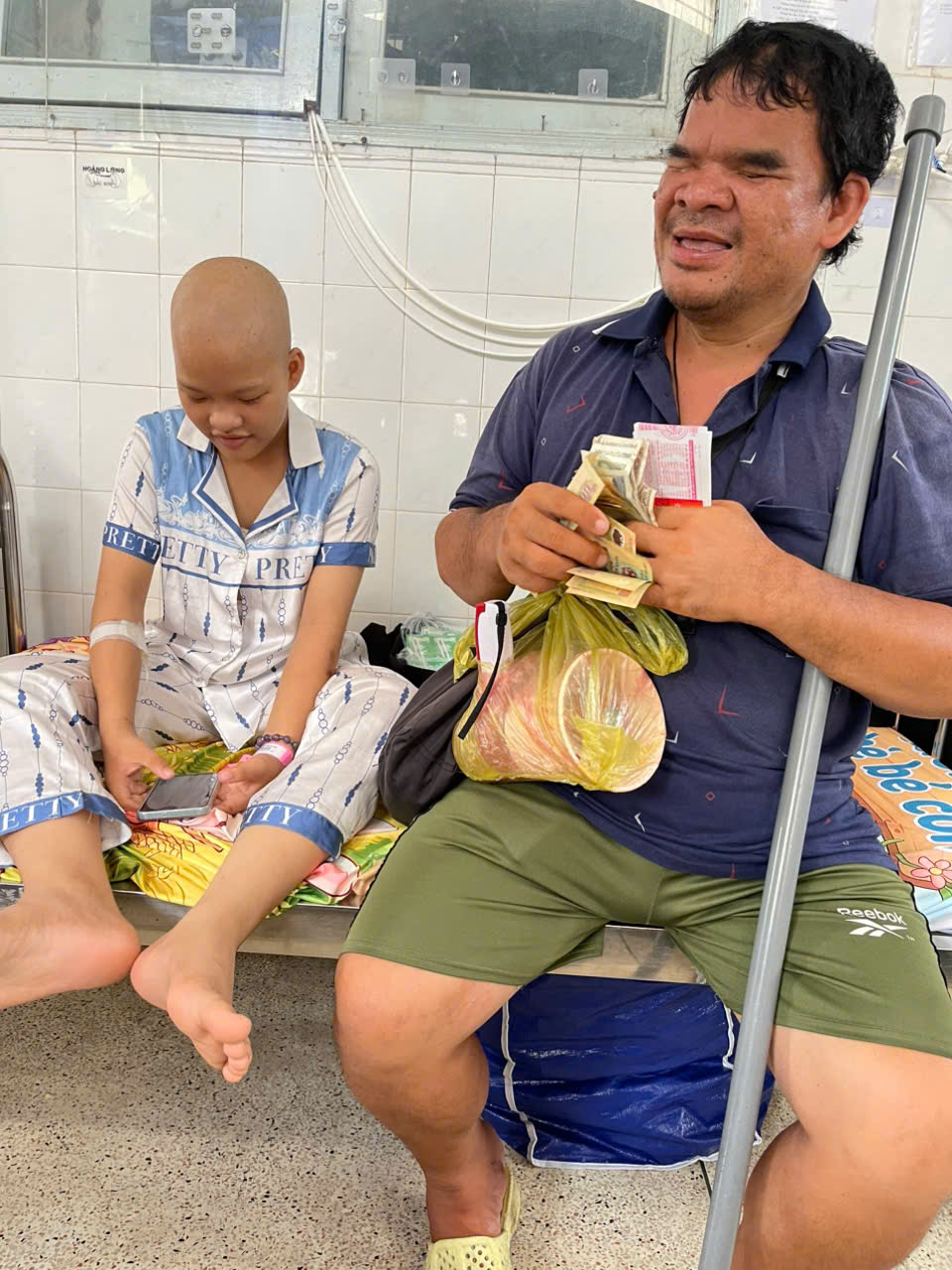 |
Cuong visits his daughter during treatment, 5/2026. *Photo: Lai Thieu Ethnic Shelter* |
Quynh often felt uneasy seeing Sister Diem stay up all night, caring for her like her own child. The nun reassured her, saying that caring for others was her joy and happiness. Once Quynh recovered and returned to the shelter, Sister Diem resumed her hospital visits, taking turns to accompany other children undergoing treatment for tonsillitis, dengue fever, and various other illnesses.
Following her treatment cycles, Quynh returned to the shelter and resumed school. Setting a goal to achieve excellent grades in Literature, she uses this as motivation to attend school every day. From being a stubborn child, Quynh began to change. "Before, she needed reminders several times for anything; now Quynh is proactive. She even takes the initiative to tutor younger children," Sister Diem recounted.
Currently, Quynh still requires monthly follow-up appointments and blood transfusions. Sister Diem continues to transport her. When Quynh's parents travel by motorbike taxi from their rented room to visit their daughter, Sister Diem meets them at the hospital gate and provides additional support for their travel expenses. "My family is very grateful for the protection provided by the shelter and the sisters," Cuong said. The father mentioned that he would wait until his daughter was a little older before bringing her home to live with him. However, his daughter now considers the Lai Thieu Ethnic Shelter her true home.
By Pham Nga