Pon Doikam, a 36-year-old coconut vendor, found blood clots on his tissue after hours of selling coconuts in Chiang Mai's polluted air. "It feels like being stuck in smoke", he said.
Seasonal crop burning, wildfires, and unique weather patterns contribute to an annual "pollution season." Some northern Thailand areas have experienced dense smog, which locals describe as "unprecedented." "I have lived in Chiang Mai since childhood, and this is the worst it has ever been," Pon said, "but I have no choice but to go out daily to earn a living."
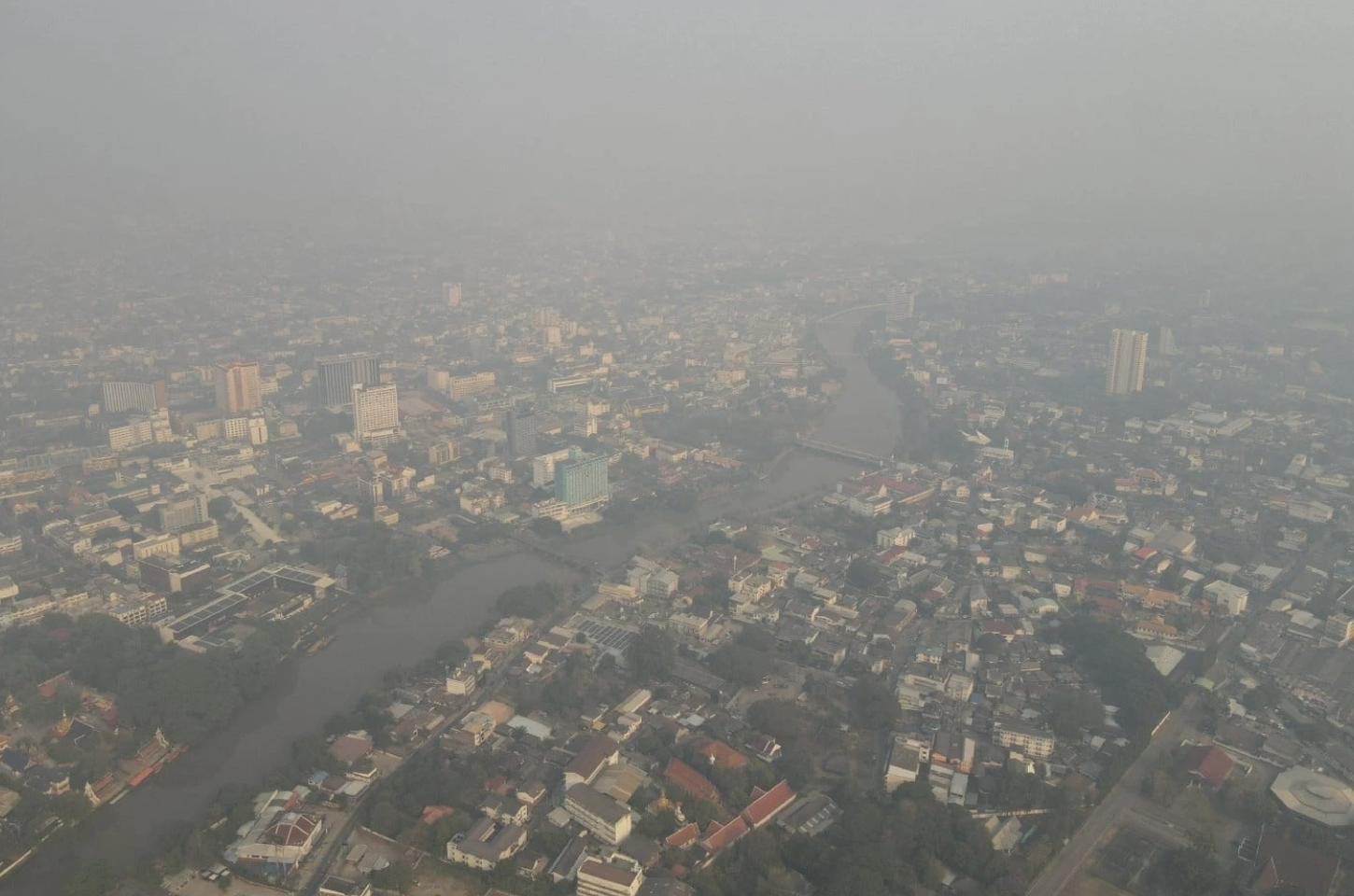 |
An aerial view of Chiang Mai city, northern Thailand, shrouded in air pollution, 31/3. Photo: Reuters |
In the first week of April, Chiang Mai, Thailand's second largest city, consistently topped IQAir's list of the world's most polluted major cities.
In Pai, a town celebrated for its natural beauty, PM2.5 particulate matter concentrations at times surpassed 900 micrograms/m3, which is 60 times the World Health Organization (WHO) recommended limit. The area's hilly terrain exacerbates the problem, trapping smoke and dust while hindering access to wildfire locations.
AFP observed numerous wildfires erupting on hillsides and along roads between Pai and Chiang Mai. Volunteer firefighters like Maitree Nuanja are working with limited resources, relying primarily on donations such as drinking water and masks.
Maitree Nuanja stated that the wildfire control center only provides 20 liters of fuel and lends leaf blowers, which must be returned after the season. "It is so dark and hazy that no one can see anything; this situation has lasted too long", Maitree said. He also expressed concern for his home, located near the forest, and his personal health.
On 1/4, a volunteer firefighter passed away. Local officials suspect the victim succumbed to heat exhaustion and pre-existing health conditions.
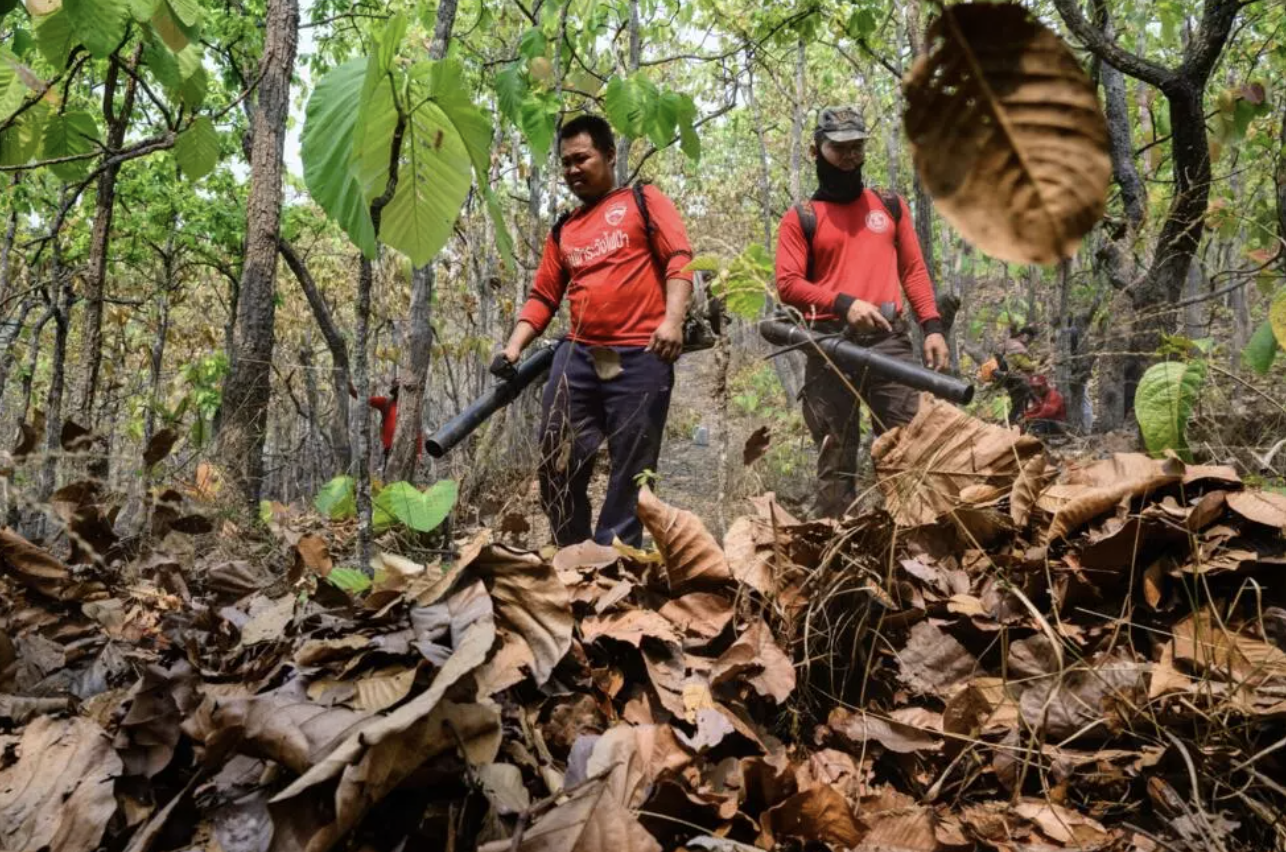 |
Volunteer firefighters use leaf blowers to create firebreaks in a forest in Pai town, northern Thailand, early April. Photo: ANTHONY WALLACE/AFP |
To protect vulnerable groups such as those with underlying health conditions, the elderly, and children, Chiang Mai authorities have installed hundreds of "dust-free rooms," equipped with air purifiers and positive pressure systems to prevent polluted air from entering.
Watwilai Chaiwan, 82, a retired nurse residing in a Chiang Mai nursing home, stated that the pollution makes her hesitant to go outside, as it triggers dizziness and migraines. "This is a problem for the elderly. You have to wear a mask all the time when breathing this air", she remarked.
Some districts in Chiang Mai have declared disaster status to expedite financial assistance.
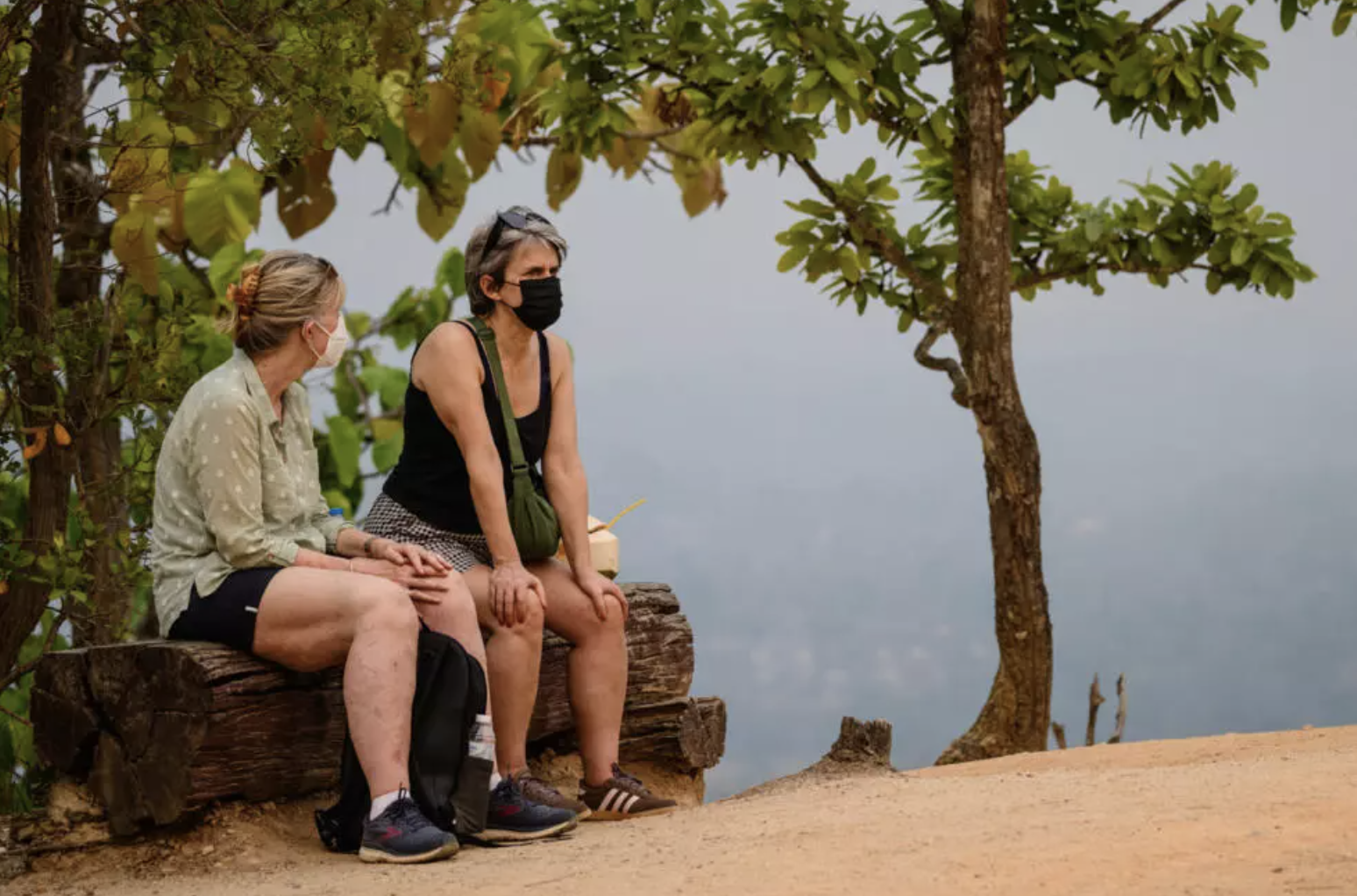 |
Tourists wear masks while visiting Pai Canyon near Chiang Mai, early April. Photo: ANTHONY WALLACE/AFP |
Pollution has also driven tourists away from Chiang Mai. Chakkrawat Wichitchaisilp, a tuk-tuk driver, noted that the streets are unusually quiet compared to the usual bustle of March and April each year.
From a viewpoint overlooking Chiang Mai, the city is almost completely obscured, with only faint outlines of hills visible through the smog and a pale orange sun hanging in the sky. Martin Astill, 57, a British tourist, said, "I took photos from this exact spot, and the sky was a beautiful clear blue then."
Minh Phuong (According to AFP)