During summer, a hot home's stagnant air often worsens the situation. Electric fans can quickly address this problem. Even homes with air conditioning benefit from correctly placed fans to aid heat dissipation.
Optimal fan placement
According to Jon Gilbertsen, an air conditioning technician and President of Chris Heating & Cooling, the best fan placement for maximum cooling requires three factors: positioning it opposite an open window or door; angling the fan slightly upwards; and keeping it at least 50 cm away from walls and furniture.
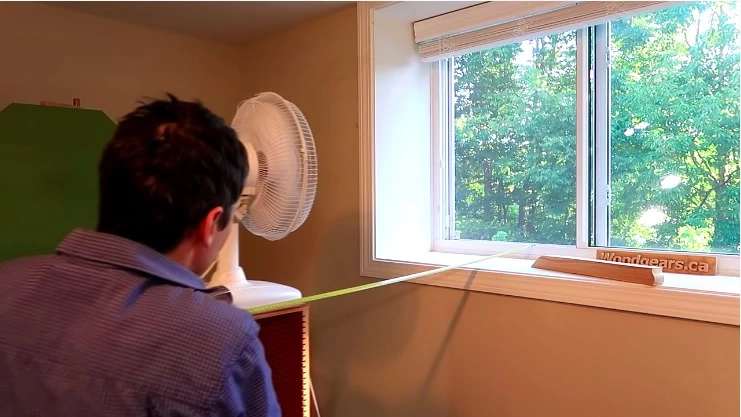 |
Placing a fan 0,5-2 meters from a window offers better cooling than placing it too close. *Aboluowang*
To increase effectiveness, he suggests adjusting fan direction based on the temperature difference between inside and outside the house. If it is cooler outside, direct the fan inwards to draw in cool air. Conversely, if it is hotter outside, direct the fan outwards to expel hot air.
For ceiling fans, users should place them in the center of the ceiling. The fan blades need to be at least 2,1 m from the floor and 45 cm from walls to ensure proper airflow. In summer, homeowners should set ceiling fans to rotate counter-clockwise to optimize cooling.
Mistakes to avoid
The first mistake is placing a fan too close to obstructions. Positioning a standing fan directly against a wall, furniture, or curtains significantly reduces airflow. Obstacles in front block cool air, while those behind prevent sufficient air from entering the fan.
The second mistake is aiming the fan directly at people. Many mistakenly believe that pointing a fan directly at the body cools them faster. However, this only provides temporary relief because it merely circulates the warm air around the body.
The third mistake is directing a standing fan downwards when sitting or lying. This does not speed up cooling; it only pushes air along the floor, causing the airflow to lose strength and hindering circulation.
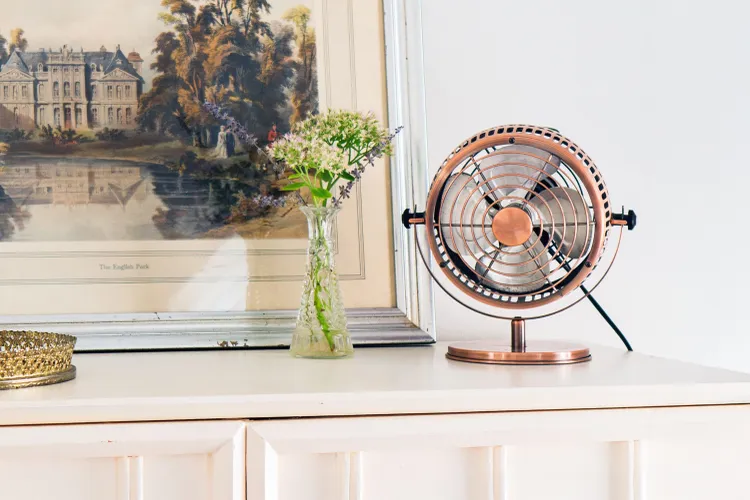 |
Electric fans are a solution for summer heat, but effective placement is key. *The Spruce*
Tips for keeping spaces cool
Dan Simpson, an HVAC technician and co-owner of Air Treatment Heating and Cooling, suggests observing a home's natural airflow and positioning fans with the wind direction.
Additionally, using two fans to create a cross-ventilation system provides a greater cooling effect. Homeowners can place an intake fan on the cooler side of the house (typically north or east) and an exhaust fan on the warmer side (south or west). This combination draws in cool air and expels hot air, creating continuous circulation.
For multi-story homes, Simpson advises placing fans in upper-story windows to blow hot air out. This creates a suction effect, drawing cool air in through lower-story windows and helping to remove hot air that naturally rises within the house.
Bao Nhien (According to The Spruce)