At 4 p.m. on sunday, Hoang Hai, 23, went to a spa 3 km from his home to relax as headaches began to emerge.
Hai is a marketing employee at an import-export company in TP HCM, earning 15 million dong per month. After six months on the job, he says he constantly faces a large workload, from preparing documents to meeting clients. Hai's feeling of dread for sunday, accompanied by headaches, started about four months ago.
His anxiety becomes more pronounced on sunday evenings. Hai often tells friends he regrets that "the weekend ends before I've had a chance to rest", knowing he has to return to work the next morning. The prolonged pressure causes Hai's sleep to be restless, often getting only two hours of sleep many nights.
His outings with friends have also become less frequent. Whenever someone invites him out, he often declines, saying he "just wants to lie down to conserve energy for the new week". He easily becomes irritable and loses motivation, especially at the start of the week.
Hai believes this situation stems from both personal factors and the work environment. He admits he has not managed his work efficiently, leading to many tasks piling up and spilling over into the weekend. Meanwhile, his manager often assigns large tasks on friday afternoon but demands a report for the monday morning briefing. This forces employees to use almost their entire weekend to complete their work.
The phenomenon Hai is experiencing is known as "sunday scaries". The Sleep Foundation in My reports that one-third of adults struggle to sleep on sunday nights due to this syndrome. A LinkedIn survey in 2025 also showed that about 80% of workers have experienced anxiety before the new work week.
In Vietnam, posts about "hating monday" or "fearing sunday" are prevalent on social media. On TikTok, hashtags such as #SundayScaries and #danvanphong (office workers) attract millions of views.
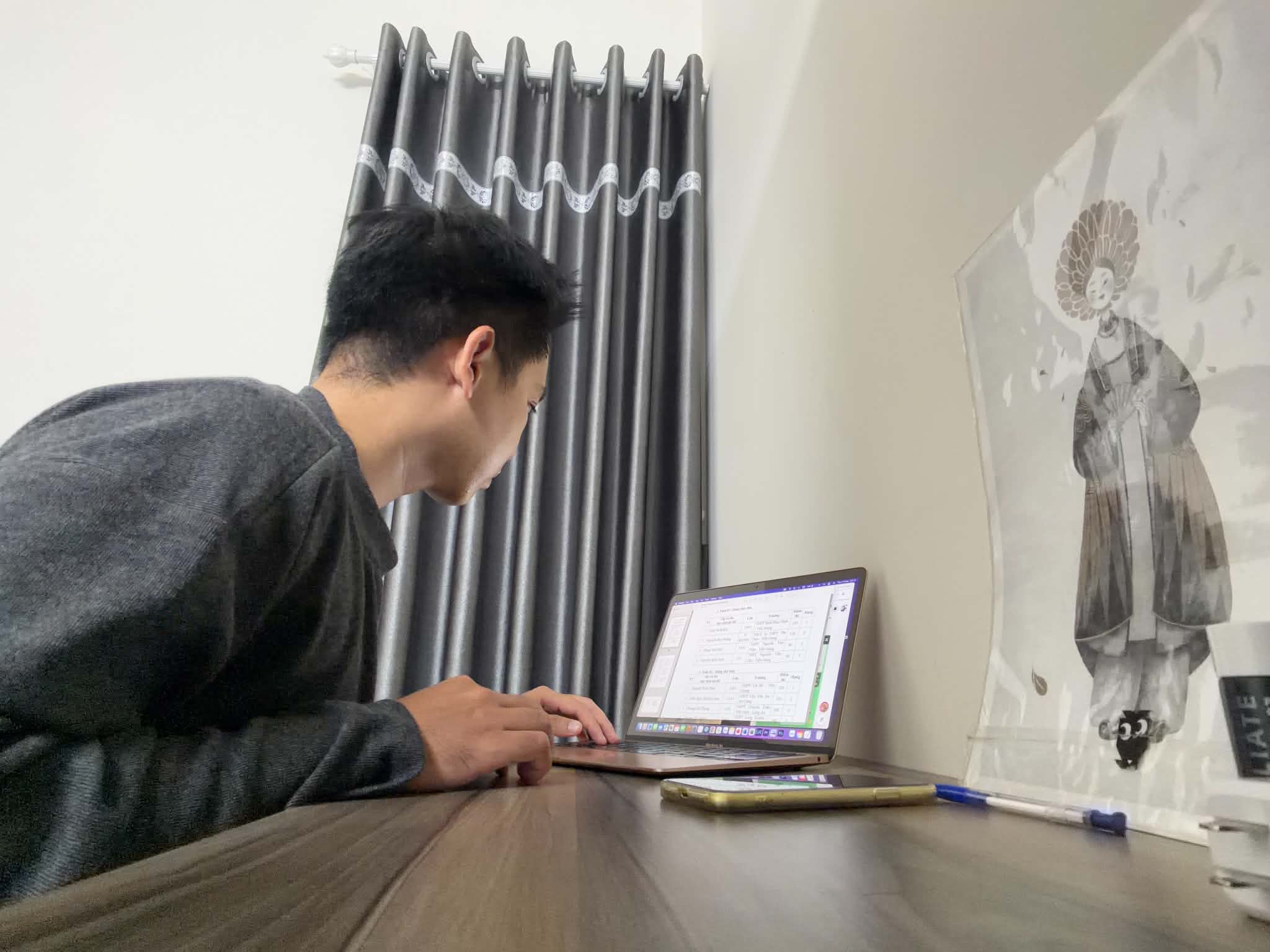 |
Minh Tam working from home in Phu Dinh ward, TP HCM, 5/2026. Photo: Provided by subject
Nguyen The Huy, a master of psychology, lecturer at the University of Banking TP HCM, and director of Viet Mental Health Care Co., Ltd., states that "fearing sunday" is not laziness but a form of anticipatory anxiety. "Many people start feeling stressed as they visualize the pressures that will return at the beginning of the week", Huy says.
The core cause is work overload, key performance indicator (KPI) pressure, monday meetings, and a culture of continuous connectivity through messaging applications, which blurs the line between days off and workdays. Consequently, weekends are no longer a time for rest and rejuvenation but become a period of waiting for pressure to return.
This state is common among young people in large cities who face high living costs, career competition, and the need for self-affirmation.
If prolonged, this syndrome can lead to occupational burnout, creating a cycle: anxiety causes insomnia, leads to inefficient work, results in work backlog, and continues to accumulate pressure for the following weekend.
Minh Tam, 35, a communications employee in Xuan Hoa ward, TP HCM, often feels stressed on sunday afternoons when thinking about the monday briefing. "Monday arrives before sunday even truly begins", he says.
He spends half of sunday catching up on sleep and the other half dealing with work. His phone constantly displays notifications from work group chats. He says last week he had to work at home until 10 p.m. on sunday. This situation has led him to decline social invitations, and his family now calls him midweek instead.
From a management perspective, Anh Tu, director of iGem communications company, recognized this pressure among his employees and decided to change operations. The company now works from monday to saturday morning. Tu implemented a rule against sending work messages on sunday. For urgent issues, he handles them directly rather than delegating to subordinates.
Expert The Huy advises that to overcome this situation, one must correctly identify the fear. Many people think they "fear sunday" but are actually worried about their workload, KPI pressure, and monday meetings. To reduce pressure, employees should prepare lightly for the new week, for example, by spending 15 to 20 minutes listing tasks for monday. This helps the brain regain a sense of control, thereby reducing anxiety. "The skill of disconnecting is a tool to protect mental health", Huy says.
Regarding employers, the psychology expert suggests that leadership should not view this syndrome as a personal emotional issue. If early-week stress occurs, it signals problems in job allocation, after-hours communication culture, or management style. Managers need to proactively observe signs of burnout in their staff, as mental health directly impacts performance and employee retention.
"Reducing pressure before the new week requires effort from both sides", Huy says.
* Character names in the article have been changed.
Ngoc Ngan