 |
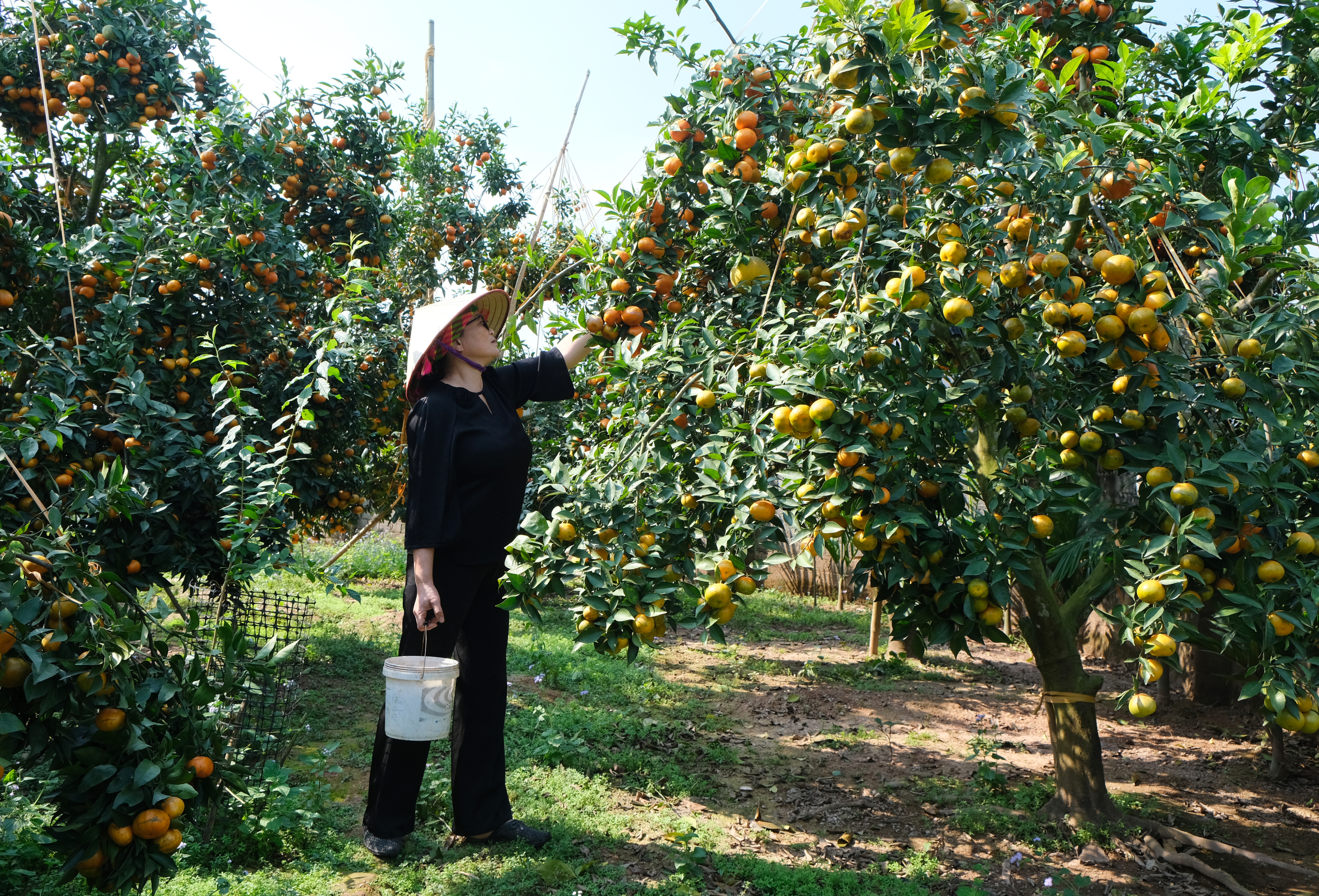
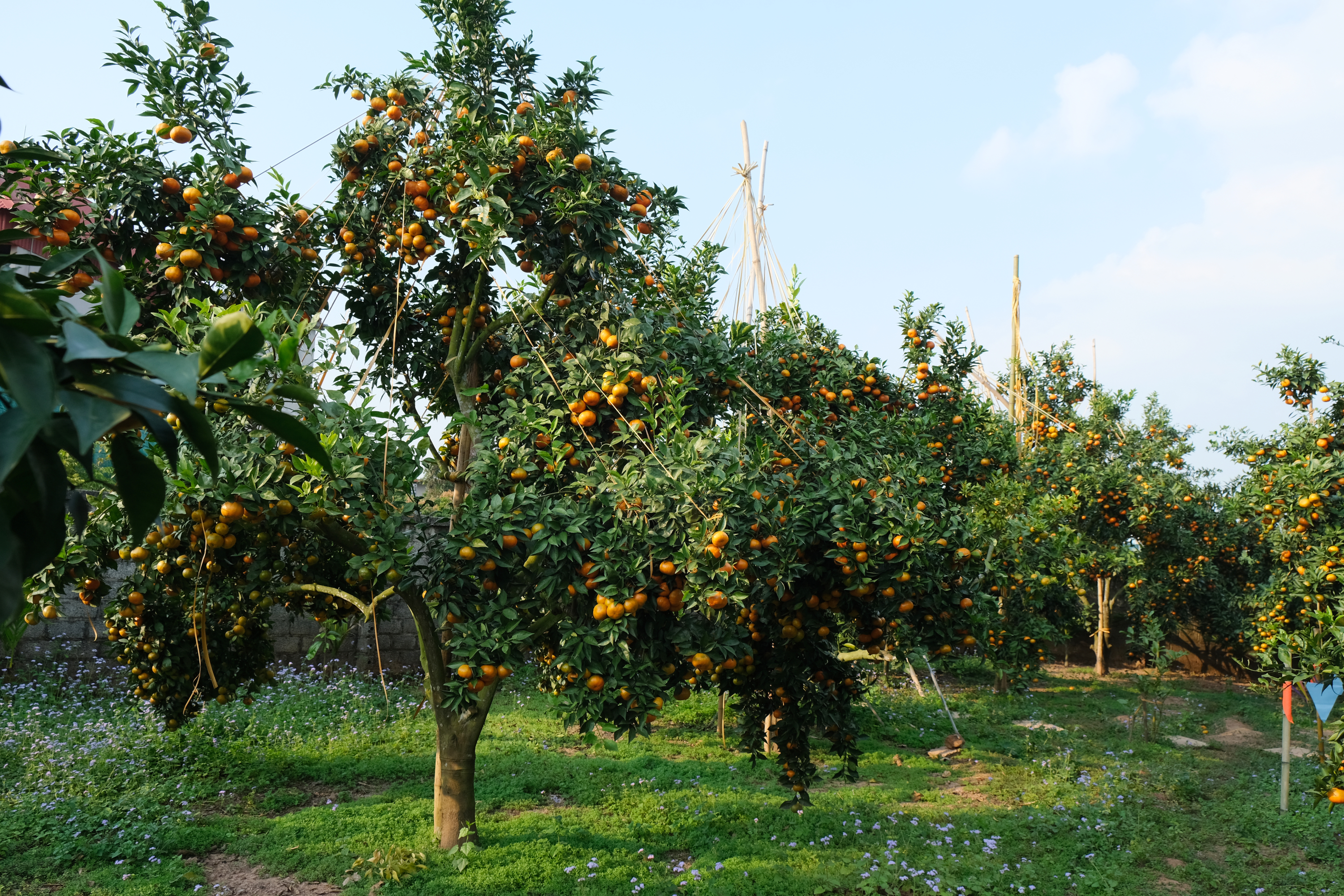
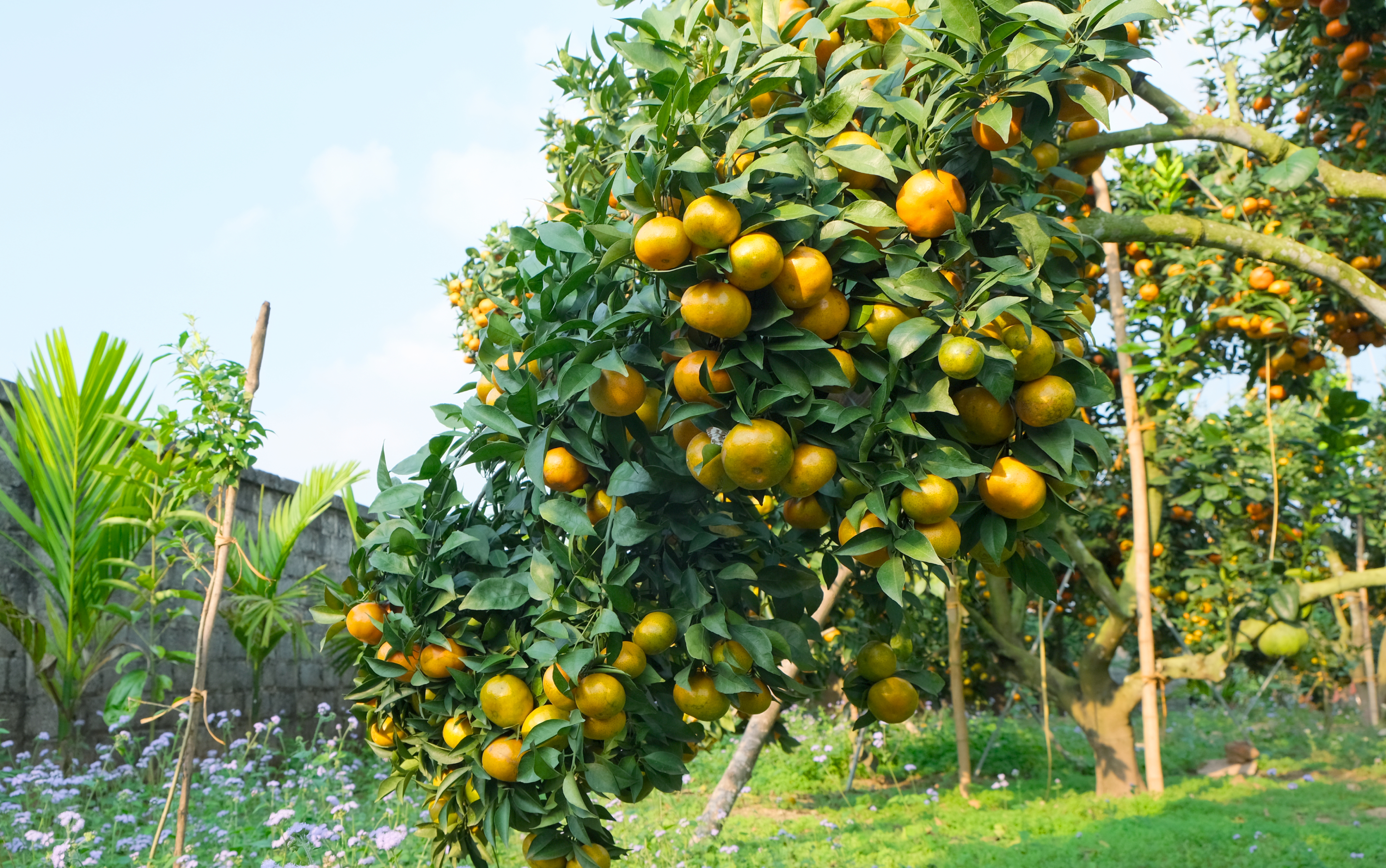
The highlight that makes the garden a sensation is its rare fruitfulness. Among the 48 grafted pomelo trees, 35 meet the standard, yielding 150 kg to 200 kg per tree. Vibrant orange covers the trees from root to tip, even hiding the green of the leaves. |
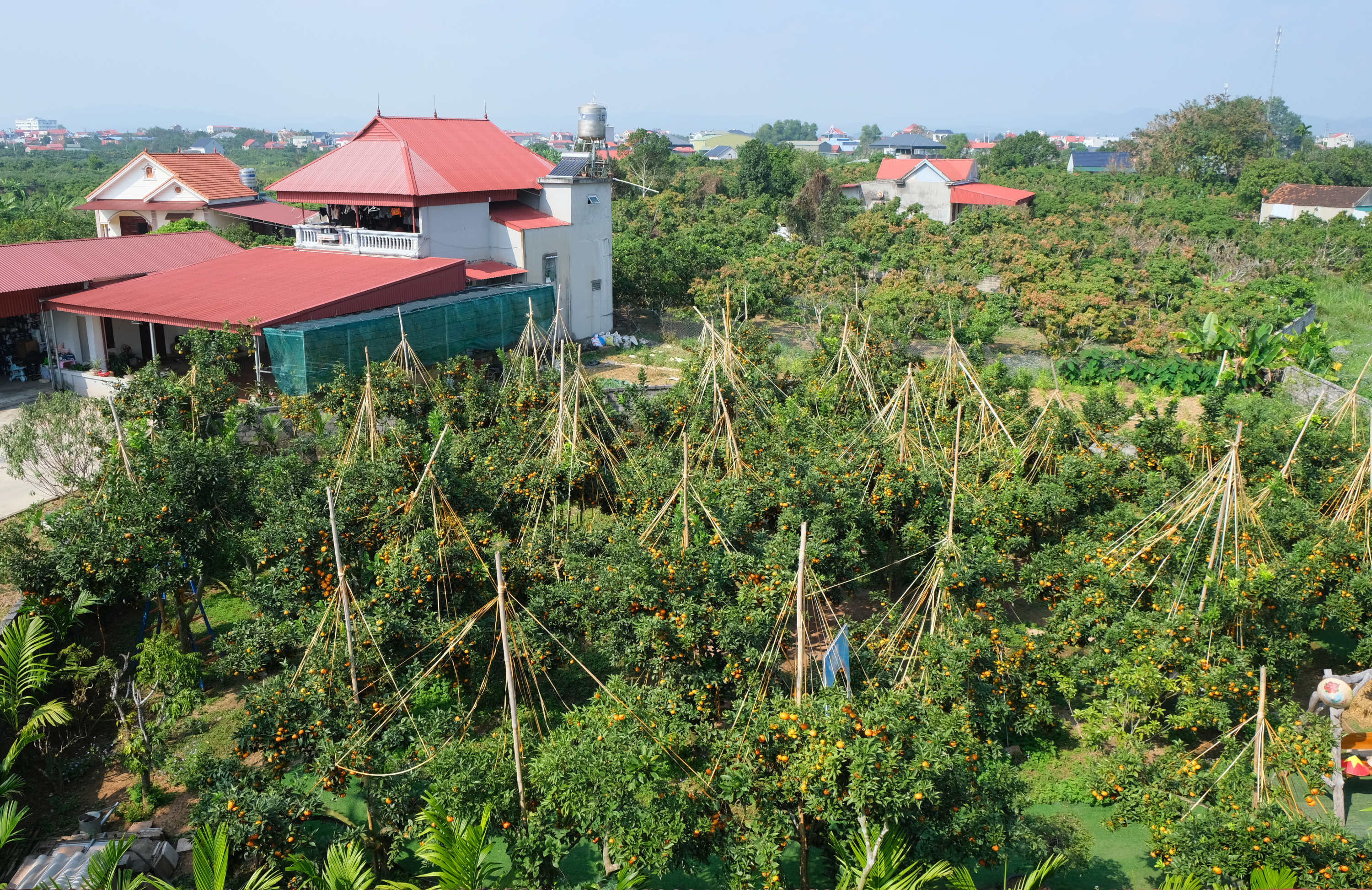
In the final days of the year, a 1,000 m2 garden in Nghia residential group, Chu ward, Bac Ninh province (formerly Luc Ngan, Bac Giang), has become the region's most popular check-in spot. Millions of ripe, reddish-orange Canh oranges, growing from old Dien pomelo trees, create an eye-catching scene.
The garden's main attraction is its unusually abundant fruit. Of the 48 grafted pomelo trees, 35 meet standards, yielding 150 kg to 200 kg of fruit per tree. The vibrant orange color covers the trees from base to tip, obscuring the green leaves.
 |
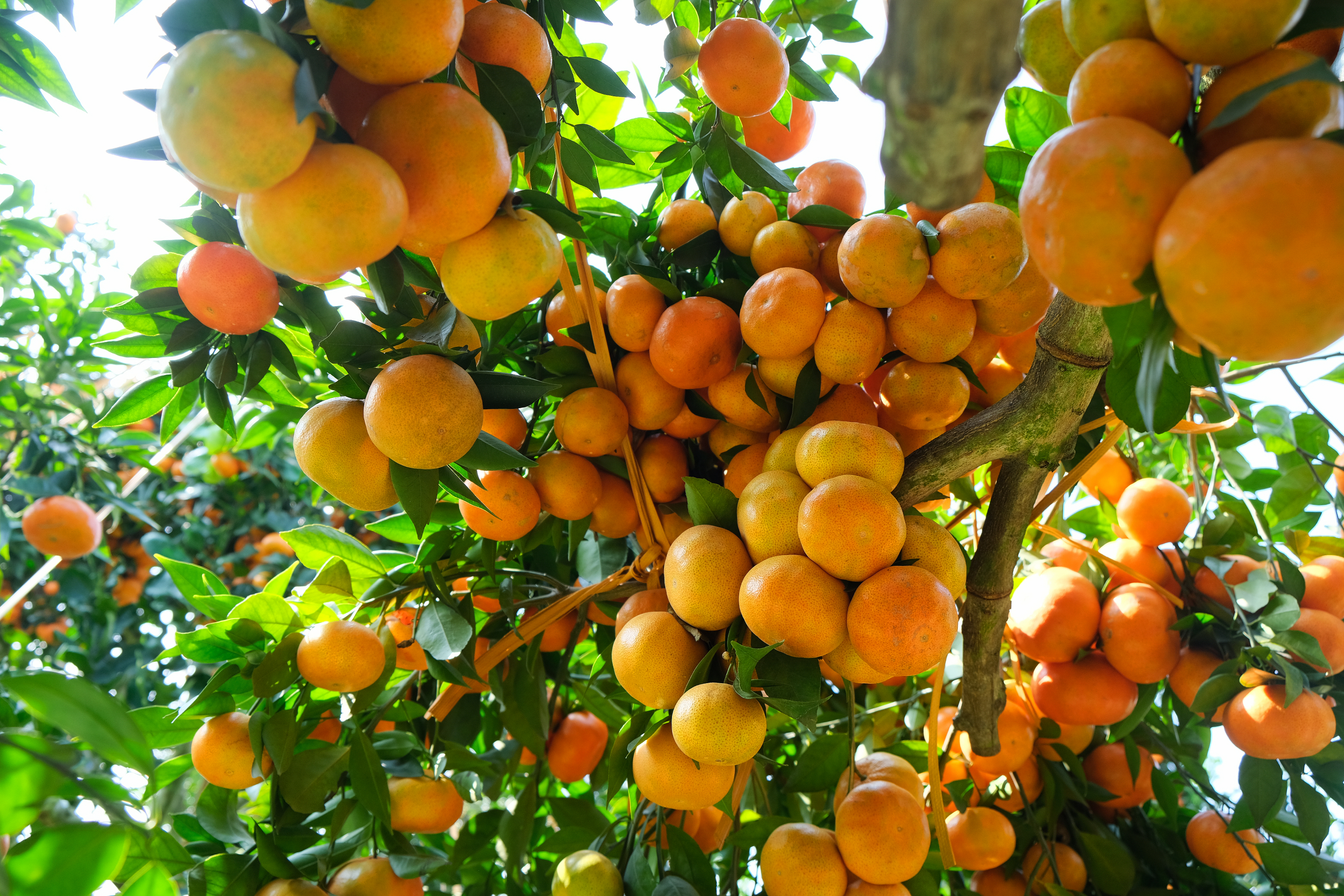
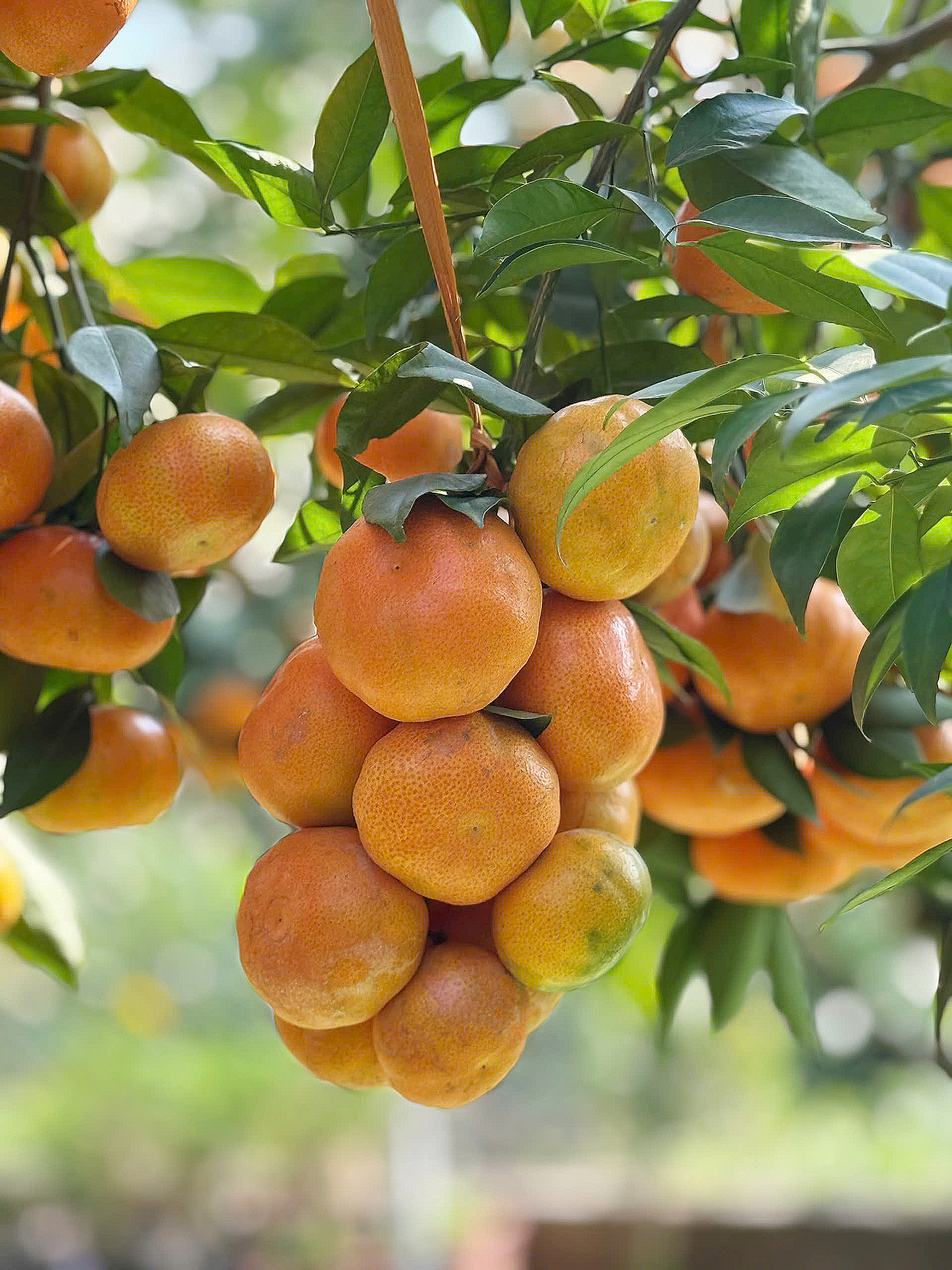
Unlike conventionally grown oranges, the oranges grafted onto pomelo trees in Mr. Dung's garden grow in clusters, packed tightly, with each cluster containing 10-30 fruits, hanging close to the ground or resting on branches. |
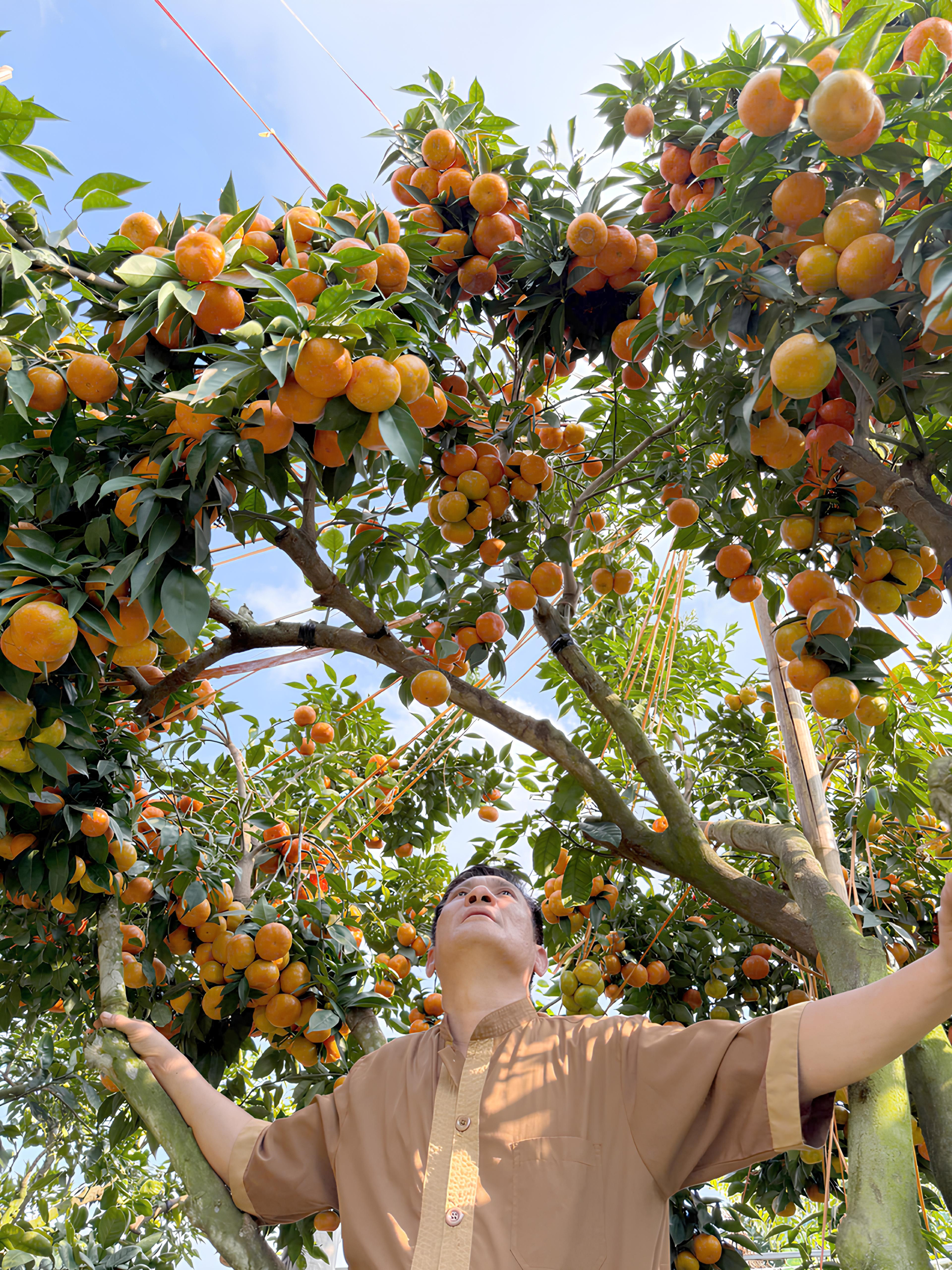 |
To support the heavy load of fruit on the branches, Mr. Dung designed a sturdy support system. Each tree has several bamboo stakes and a network of ropes to brace and prevent branches from breaking under the weight of these "orange grape clusters". |
Unlike conventionally grown oranges, the grafted oranges in Mr. Dung's garden grow in dense clusters, each containing 10-30 fruits, hanging low to the ground or resting on branches.
 |
Seeing her husband working tirelessly day and night, sometimes rushing to the garden in the rain and wind to dig drainage ditches, his wife, Tran Thi Minh Su, 58, felt both anger and affection. At times, she would get upset, scolding him for "not enjoying his old age". Mr. Dung would just smile, "I don't find it hard, I find it joyful". Gradually, as she saw the trees sprout new leaves and bear fruit, she too was drawn into her husband's passion. |
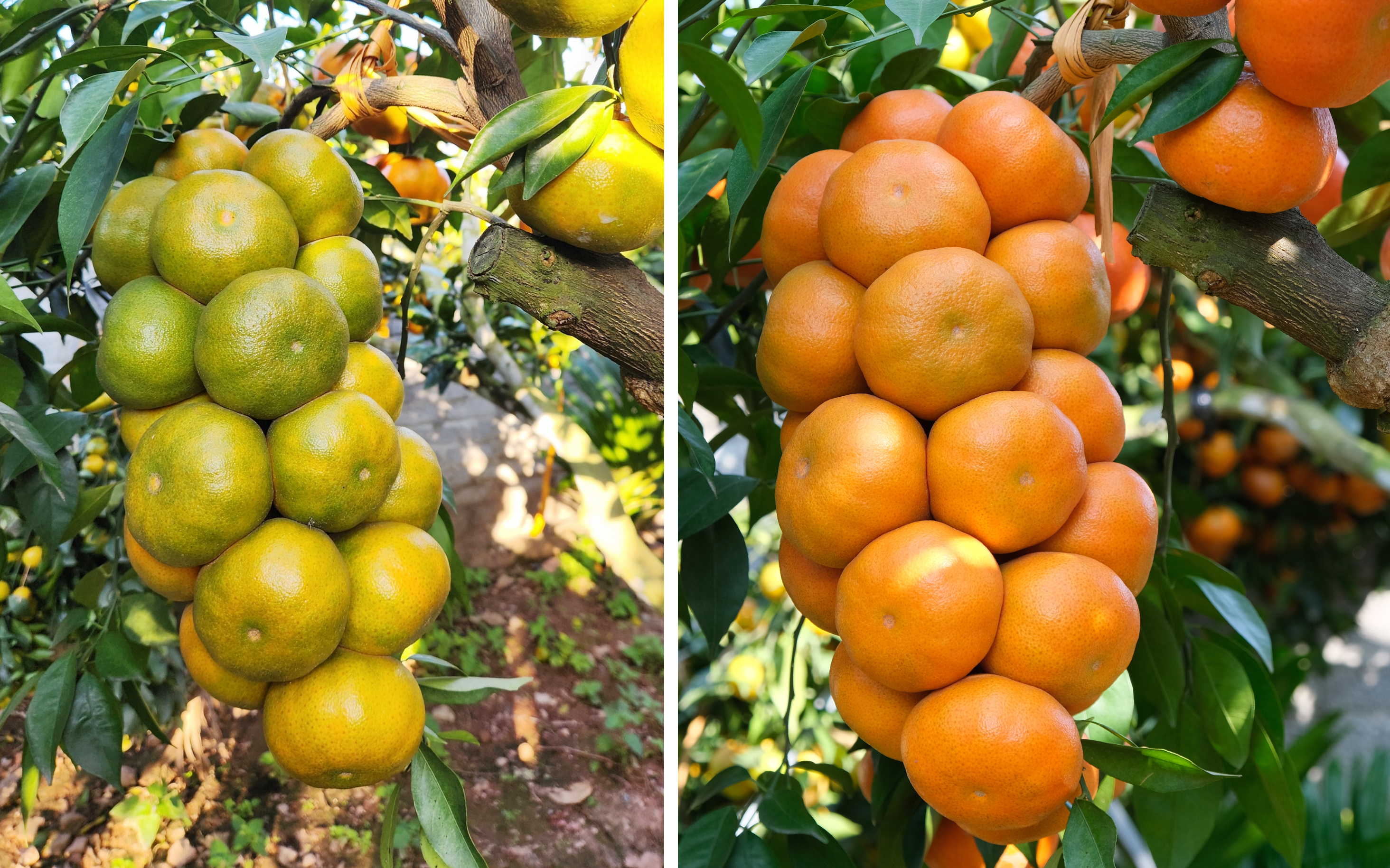
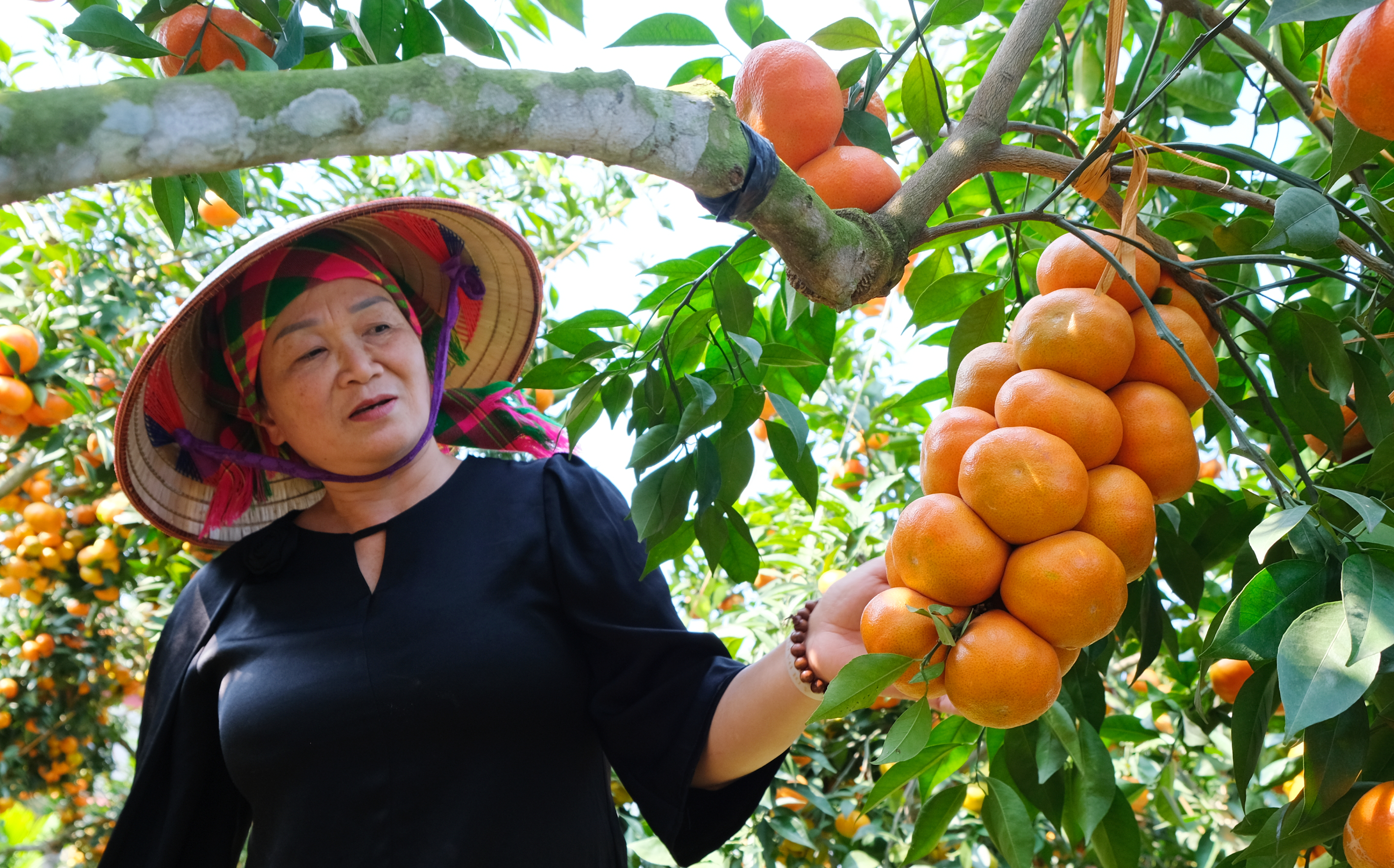
The most remarkable cluster in the garden has 28 fruits packed so tightly there is no space between them, resembling a giant bunch of grapes.
"Many people who see this cluster tell me I must have used superglue to attach the fruits because it looks too unrealistic", Mr. Dung said.
 |
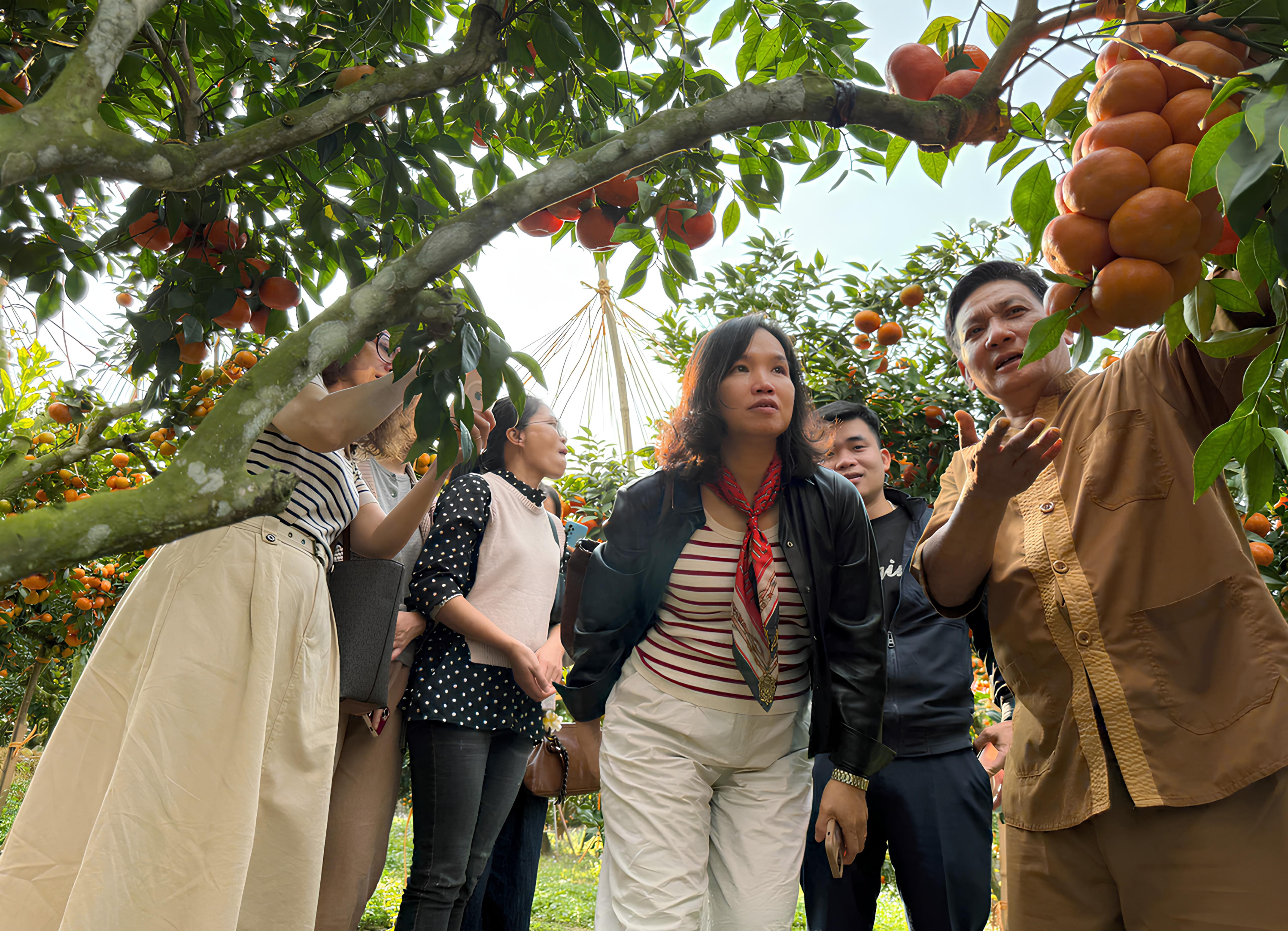
Ms. Dao Minh Ngoc from Ha Noi, who visited the garden with her agency group on 20/12, expressed great surprise. "I am incredibly impressed. I have never witnessed an orange garden with such abundant fruit", she shared. |
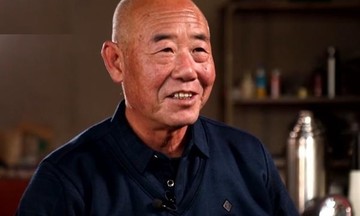
The owner of this unique garden is Nguyen Tien Dung, 59 years old, a retired head of training from a military school. In October 2023, after retirement, he decided to try grafting Canh oranges onto pomelo roots after seeing this model at a friend's house.
"I originally planned to clear the pomelo garden to plant ecological areca palms for an easier retirement, thinking the trees were too old", Mr. Dung shared. "But when I saw traders buying pomelo roots, I investigated and learned they were buying them for grafting orange trees. So I decided to keep my trees and try it myself".
Mr. Dung succeeded on his first attempt.
The secret to these enormous fruit clusters lies in the "luxury menu" Mr. Dung designed. Under each tree, he maintains a load of composted cow manure mixed with wood ash, providing essential nutrients to the roots year-round. To make the fruits plump and sweet, he buys nearly one ton of small fish, ferments them in a tank for liquid fertilizer, and combines this with ground cornmeal and soybeans sprinkled at the base. The total cost for fertilizers alone is about 30 million VND, not including labor.
"But nutrition alone is not enough; for two years, I have been in the garden almost every day, pruning each pomelo sprout and caring for each orange graft more meticulously than a newborn", he said.
 |
The family begins selective harvesting from mid-December in the lunar calendar and continues until Tet Nguyen Dan (Lunar New Year). With 48 pomelo trees grafted with oranges, Mr. Dung's family estimates an income of over 200 million VND this Tet season. |
 |
Seeing the garden's picturesque beauty, Mr. Luyen, Mr. Dung's son-in-law, suggested registering it with the Department of Tourism to open it to visitors. Currently, the family welcomes several groups of visitors daily for free tours and photos. On weekends, the number reaches dozens of groups.
 |
 |
 |
Looking at the vibrant garden in the final days of the year and the countless visitors praising his efforts, Mr. Dung is delighted.
"I do this first to enjoy my retirement, and second, to feel useful even after retiring, to be able to enrich and beautify my homeland", the retired colonel stated.
Quynh Duong