At the Hanoi Culinary Culture Festival 2025 on 19/12, the Organizing Committee decided to recognize the "knowledge of preparing and enjoying La Vong grilled fish" as a national intangible cultural heritage.
As of now, Hanoi currently has 7 dishes recognized as national intangible cultural heritage, including Hanoi pho, Me Tri green rice flakes, Quang An lotus tea, Phu Thuong sticky rice, Thanh Tri steamed rice rolls, the knowledge of preparing Bat Trang ceremonial feasts, and La Vong grilled fish.
Hanoi pho
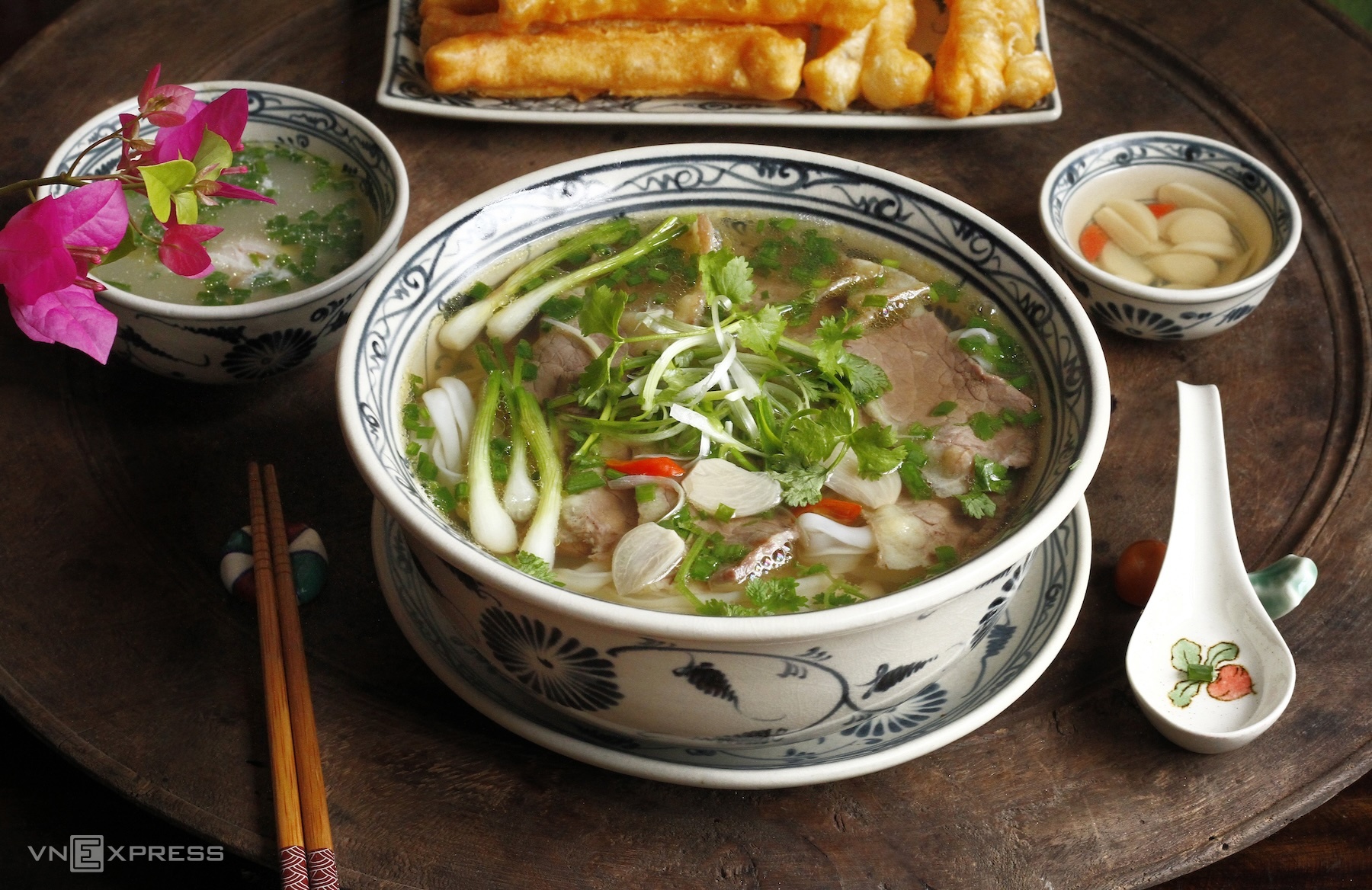
Hanoi pho officially became a national intangible cultural heritage on 9/8/2024. This dish is seen as a system of cultural values, where flavor, preparation techniques, and the way it is enjoyed create a distinct identity.
Hanoi pho was recognized not only for its distinctive flavor but also for its broth recipe, ingredient selection, and the unique way Hanoians enjoy it. A bowl of pho features clear broth, soft noodles, and minimal strong spices, emphasizing the natural sweetness from bones and meat, reflecting Hanoi's pure, delicate, fragrant, and visually appealing culinary characteristics. This balance distinguishes Hanoi pho from many variations found in other regions, making it a standard inherited by many generations.
 |
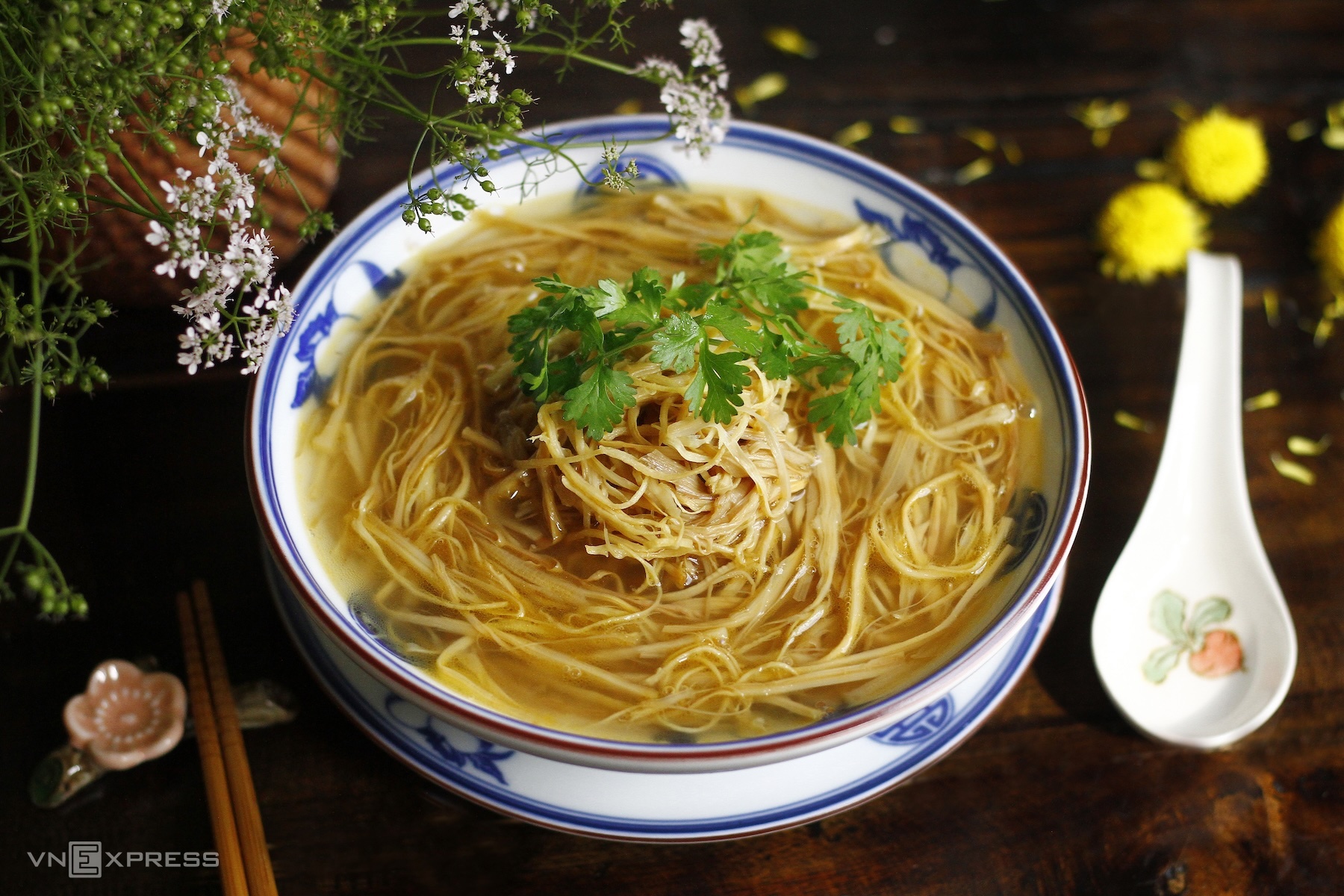
Bat Trang bamboo shoot and squid soup. Photo: Bui Thuy |
La Vong grilled fish
According to some documents, La Vong grilled fish originated around 1871 in Hanoi, created by the Doan family clan. Initially, it was a family heirloom dish, using fresh river catfish combined with ingredients like fermented rice, galangal, turmeric, and shrimp paste, creating a rich flavor served with fresh herbs, roasted peanuts, and vermicelli noodles.
The essence of La Vong grilled fish's Hanoi identity lies not in elaborate display, but in its moderation: just enough seasoning to enhance the aroma, a "two-stage cooking" technique that makes the fish golden crisp outside yet tender and moist inside, and a slow way of enjoying it, prioritizing sensation over appearance.
Each piece of grilled fish reflects the interplay of culinary knowledge, local ingredients, and old urban living habits, clearly embodying the spirit of Hanoi cuisine: refined, measured, and enduring over time.
 |
Me Tri green rice flakes
Green rice flakes are not just an autumn delicacy; they are also the culmination of knowledge in cultivating glutinous rice, traditional processing techniques, and the elegant lifestyle of Hanoians. The craft of making green rice flakes in Me Tri village has a long history, associated with a traditional glutinous rice variety harvested when the grains are still milky, soft, and fragrant.
The process of making green rice flakes demands precision in harvesting time, and patience through each step of roasting, pounding, sifting, and wrapping. Each stage relies on generational experience, sensed by hand and by "listening to the fire, listening to the pestle".
Regarding flavor, Me Tri green rice flakes have a natural light green color, flat grains, are soft and chewy, fragrant with new rice, and have a gentle sweetness that slowly spreads on the tongue. Green rice flakes are not eaten quickly or to satiety, but are typically enjoyed as an elegant treat, associated with the slow pace of old Hanoi life. This combination of local rice varieties, refined processing techniques, and cultural consumption habits has created the unique value of Me Tri green rice flakes.
 |
Phu Thuong sticky rice
Phu Thuong sticky rice is the culmination of culinary knowledge originating from the old Ga village, now Phu Thuong ward, where a traditional folk verse states: "Ga village has an ancient banyan tree / With a cool river for bathing, and the craft of cooking sticky rice".
The distinctive feature of Phu Thuong sticky rice lies in its elaborate steaming process, requiring precise timing, moisture, and steam. Ingredients are carefully prepared, from washing and soaking rice to selecting firm, even beans and peanuts, discarding any moldy ones. The sticky rice is steamed in a traditional steamer, then spread out to release steam, allowed to rest, sprinkled with water, stirred evenly, before being steamed a second time early the next morning. This "two-stage cooking" technique ensures the sticky rice is evenly cooked, soft, chewy, and shiny.
Bat Trang ceremonial feast
The Bat Trang ceremonial feast is a system of culinary knowledge closely tied to the life of the traditional pottery village. Unlike the extravagant feasts in many regions, the Bat Trang feast is built on principles of harmony, standard, and moderation.
In affluent families of the past, Hanoi and Bat Trang Tet (Lunar New Year) feasts often featured an "eight-treasure feast" with six bowls and eight plates, symbolizing abundance and prosperity. Homemakers in the pottery village meticulously prepared each dish, such as bamboo shoot and squid soup, kohlrabi stir-fried with squid, pigeon spring rolls, banh chung (sticky rice cake), and boiled chicken, creating a distinct impression.
The refinement of the Bat Trang feast lies not in the number of dishes but in the balance of rich - fresh - crispy - soft, and between wet and dry dishes, allowing for prolonged enjoyment without feeling satiated. Behind the feast is a history of trade, scholarly traditions, and the prosperous life of the pottery village, where cuisine is elevated to a cultural standard, as meticulous and enduring as the Bat Trang pottery craft itself.
 |
Thanh Tri steamed rice rolls
Traditional Thanh Tri steamed rice rolls have a unique character due to the skillful technique required for steaming, involving precise hand movements, heat, and moisture. The rolls are made from ordinary rice soaked overnight, ground into a fine liquid batter, then diluted just right so that when steamed, it produces a thin, light, soft, non-sticky, and intact layer of rice roll. The rolls are eaten cold, sprinkled with fried shallots, without filling, dipped in a perfectly mixed fish sauce, and served with cinnamon pork sausage or pork meatballs. This preparation method creates a distinct characteristic, different from steamed rice rolls in other localities.
The cultural value of Thanh Tri steamed rice rolls is also shaped by the way it is enjoyed. The rolls are often made and sold on the same day, associated with street vendors, small roadside stalls, or alleyways, becoming a familiar breakfast treat for Hanoians for generations. The simplicity of its ingredients, the meticulousness of its technique, and the moderation of its flavor have elevated Thanh Tri steamed rice rolls beyond an everyday dish, making it a culinary heritage of the Imperial City.
Quang An lotus tea
Quang An lotus tea is one of the most refined symbols of Hanoi's tea appreciation culture. The lotus used to scent the tea must be Bach Diep lotus from Quang An, picked at dawn when the flowers are still dewy, preserving their pure fragrance. The base tea is usually Thai Nguyen strong tea with a mild astringency, serving as a backdrop for the lotus aroma to spread without overpowering it. The scenting process requires patience and precision: separating the lotus stamens, scenting, sifting, and steeping multiple times over several days, relying entirely on the artisans' experience in sensing the aroma. A cup of lotus tea thus has a deep, pure, and lasting fragrance, leaving a purifying and calming effect on the mind.
Bui Thuy