Many home cooks commonly take a hot pan straight from the stove to the sink and run cold water over it. They often believe this helps remove stubborn burnt food without extensive scrubbing. However, experts from renowned kitchenware manufacturers like All-Clad and Calphalon caution that this is one of the most serious mistakes, drastically shortening a pan's lifespan.
From a physical perspective, metal expands when heated and contracts when cooled. When a pan at high temperatures, approximately 200 degrees Celsius, suddenly comes into contact with cold water, it undergoes "thermal shock." The metal molecules rapidly contract, causing permanent structural damage to the pan.
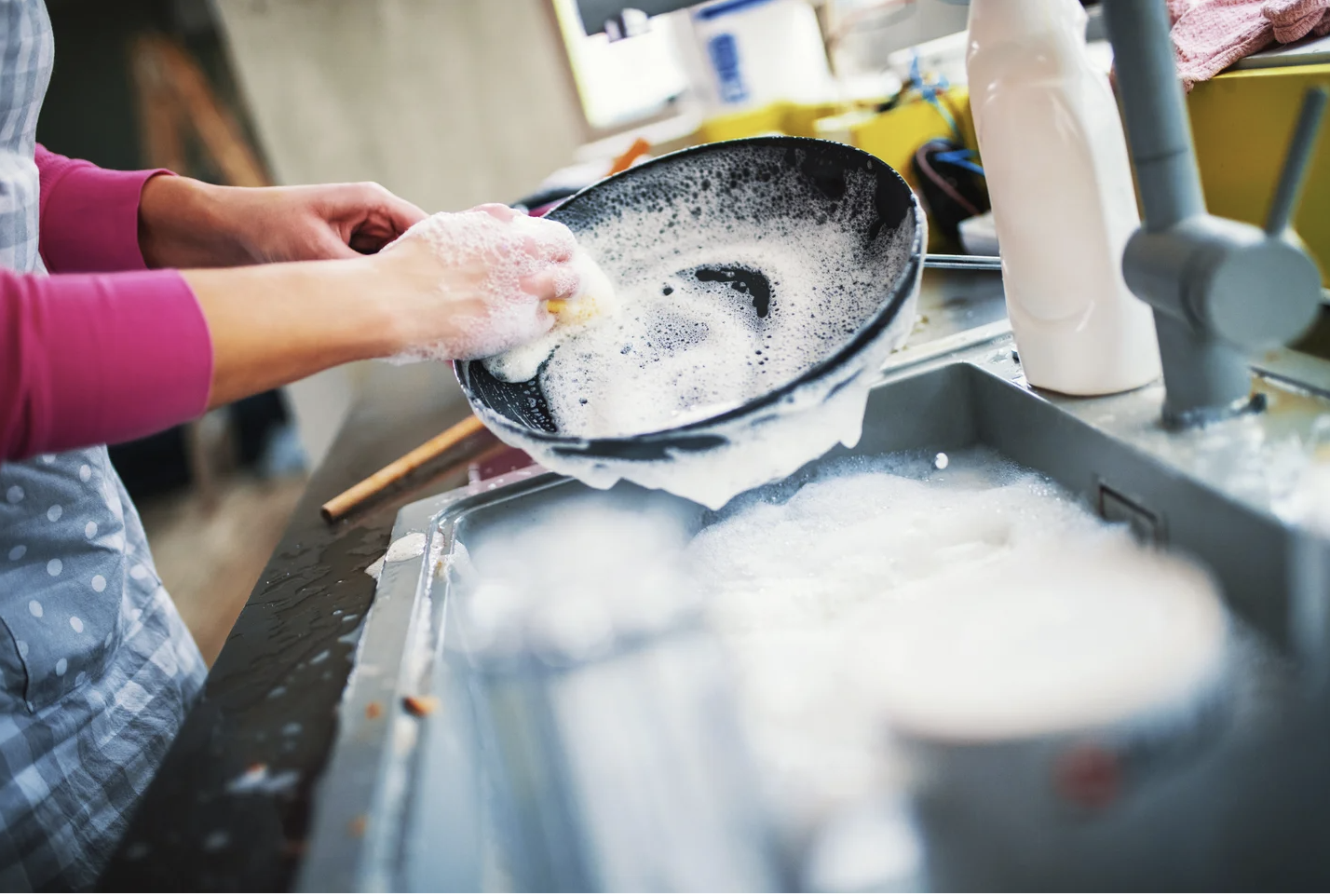 |
Do not wash a hot pan to protect its lifespan. Photo: Foodrepublic
This rapid temperature change leads to several detrimental effects on your cookware.
Warping is the most common consequence. The sudden contraction of the pan's bottom causes it to become uneven, convex, or concave instead of remaining flat. A warped pan will not sit steadily on the stovetop, leading to uneven heat distribution. This results in food burning in some areas while remaining undercooked in others, such as when one half of a pancake burns while the other remains raw.
For non-stick pans, thermal shock poses an even greater risk. The non-stick coating and the underlying metal expand at different rates. When rapidly cooled, the non-stick layer can crack and peel, rendering it ineffective. More concerning, these flaking fragments can mix into your food. Severe damage to the coating may also release harmful chemicals, such as PFAS, which are linked to various health issues, including an increased risk of cancer.
Cast iron, stone, or ceramic pans are particularly vulnerable to cracking. Due to their more brittle material properties compared to stainless steel or aluminum, thermal shock can cause these pans to crack instantly.
To protect your pans, experts advise a golden rule: patience. Allow your pan to cool naturally on the stove until it reaches room temperature before washing. If you need to clean it quickly, use hot water to minimize the temperature difference.
Beyond thermal shock, experts highlight other common mistakes, such as adding salt to cold water. Salt crystals dissolve slowly in cold water and can settle at the bottom, interacting with the metal. This causes "pitting," creating small, permanent indentations on the bottom of stainless steel pots. Therefore, always add salt only after the water has come to a rolling boil.
Stacking non-stick pans to save space can also scratch the surface of the pan below. Furthermore, never use metal scrubbers or harsh abrasive cleaners on non-stick cookware. For cast iron pans, limit the use of soap, preferring hot water for cleaning. After washing, dry the pan immediately and apply a thin layer of oil to prevent rust.
Bao Nhien (According to HuffPost, Tasting Table)