In late june, the French capital recorded its hottest day in history as temperatures hit 40 degrees C. Ahead of a forecast third heatwave expected in early july, city authorities opened three bathing areas along the banks of the Seine River.
Starting from 4/7, Paris residents and visitors have been able to swim in the Seine. This activity continues for the second successive year, officially replacing a century-long ban on bathing.
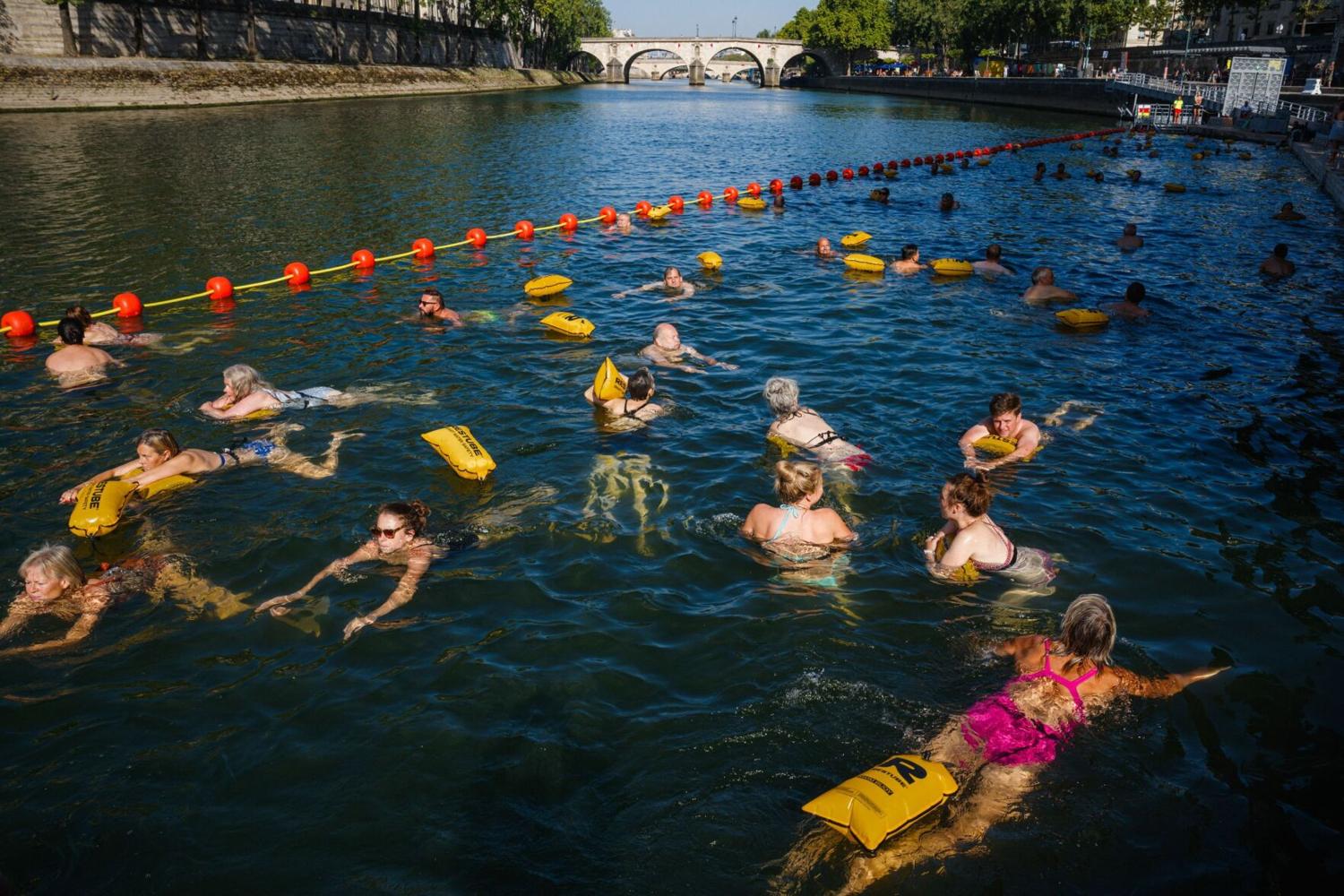 |
Paris residents swim in the Seine River, june. Photo: Dimitar Dilkoff/AFP |
Swimming in the Seine River originated in the 17th century but was prohibited in 1716 due to social customs. By the 19th century, river bathing evolved beyond a simple cooling activity into a prominent sporting and social event. Upscale establishments emerged along the riverbanks, offering restaurants, cafes, and swimming lessons.
The renowned Deligny floating pool even hosted swimming competitions during the 1900 Paris Olympic Games. However, a rise in drownings and waterway traffic accidents led the French government to impose a complete ban on swimming in the Seine in 1923.
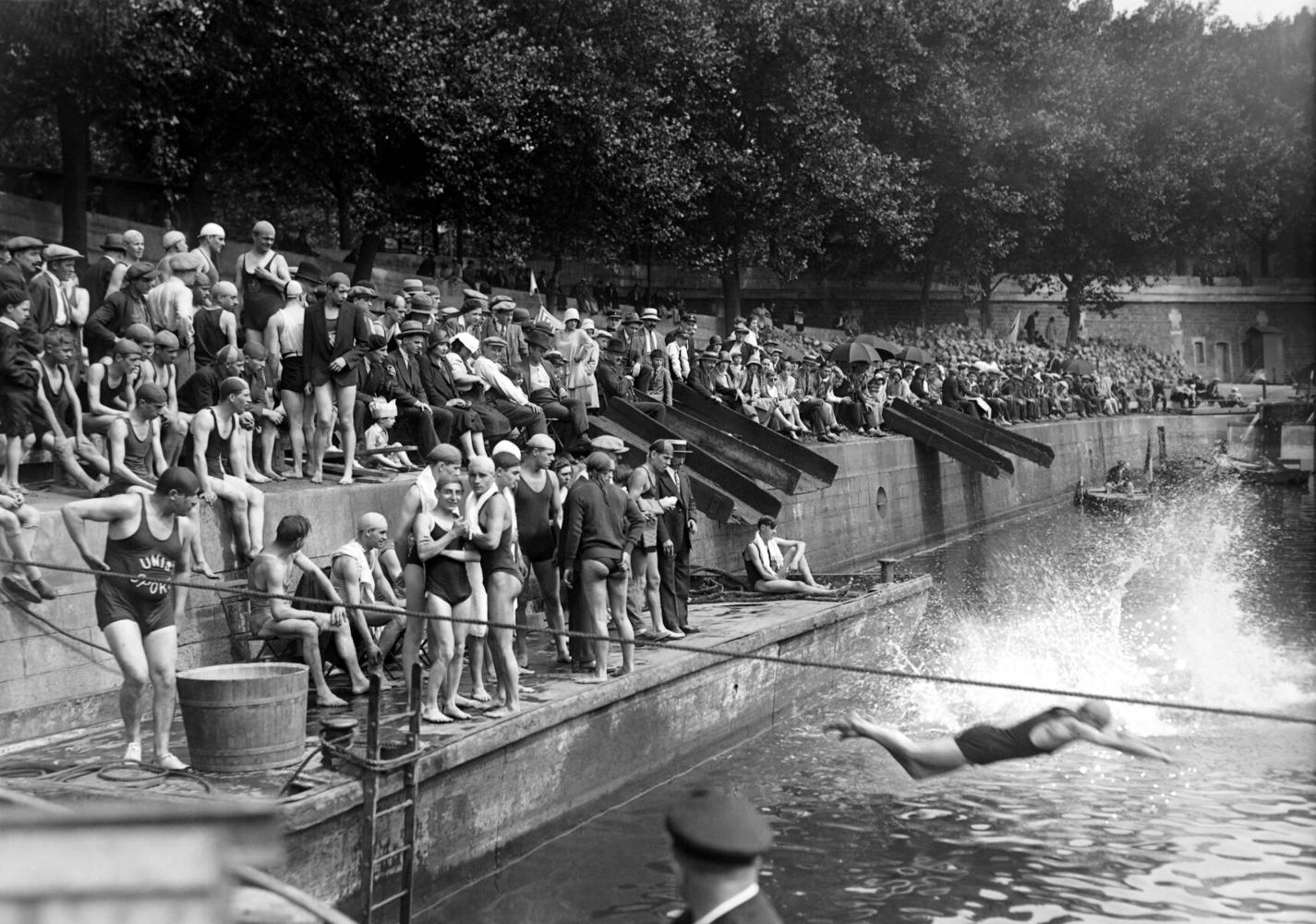 |
People swimming in the Seine River in 1920. Photo: Gamma-Keystone |
According to experts, Paris’s swimming culture gradually disappeared due to severe pollution. The water quality of the Seine River deteriorated significantly throughout the mid-20th century. By the 1970s, the river was likened to an open sewer, with over half of the region’s untreated wastewater discharged directly into it.
In 1970, the river was declared "biologically dead." Efforts to revive the Seine began in the mid-1980s. In 1988, then-Paris Mayor Jacques Chirac famously pledged to swim in the Seine within three years in public view to demonstrate its cleanliness. This promise was repeated on television in 1990 but never fulfilled, becoming a long-running satirical anecdote as the river remained heavily polluted. In 2013, the Paris triathlon competition was canceled because the water quality posed too great a risk to athletes.
In 2016, Paris Mayor Anne Hidalgo relaunched the river cleanup campaign in preparation for hosting the 2024 Paris Olympic Games. The city invested over one billion euro in a massive engineering project to overhaul the capital’s wastewater treatment system, connecting thousands of riverside households to the common treatment network for the first time.
The cleanup campaign was crucial for hosting the triathlon and marathon swimming events at the 2024 Olympics. The psychological barrier that had kept residents from the river for a century was finally broken. Approximately 100,000 people visited to experience the first public bathing season in 2025.
Today, Paris operates three free swimming locations directly in the Seine River. The Bras Marie area is located under the Louis-Philippe bridge near Notre Dame Cathedral. Grenelle, to the west, offers a direct view of the Eiffel Tower and a replica of the Statue of Liberty. The Bercy area features a 67 m long swimming lane in the river.
Visitors should note that the Seine River water has a moss-green color, occasionally has floating debris, and a distinct odor. To ensure safety, these bathing areas use a flag system: a green flag indicates safe swimming, a yellow flag advises caution, and a red flag prohibits swimming. Management also conducts daily E. coli bacteria checks to determine opening status.
While the economic efficiency of this billion-euro project remains a debated topic among generations of Parisian residents, as the next heatwave arrives, the answer will become clearer as more people choose to plunge into the Seine River for coolness.
Mai Phuong (According to CNN)