At a grocery store near Thu's home, dozens of people were jostling to buy instant noodles, dry rations, and bottled water. The sudden surge in demand forced the store owner to limit purchases to two cartons per person.
"Seeing the Central and Northern regions submerged in water, and with another storm forecast, I'm preparing to feel secure", Thu said.
Her daughter took on the task of researching a list of disaster survival items. After three hours, the family finalized an order for dozens of items, including flashlights, life jackets, waterproof backpacks, power banks, and medicine. They also printed out tips learned from the Internet, such as building rafts from 20-liter water bottles or underwater escape skills.
"People say I'm worrying too much, but I believe my family's lives are paramount, and I can't be complacent", the 45-year-old woman shared.
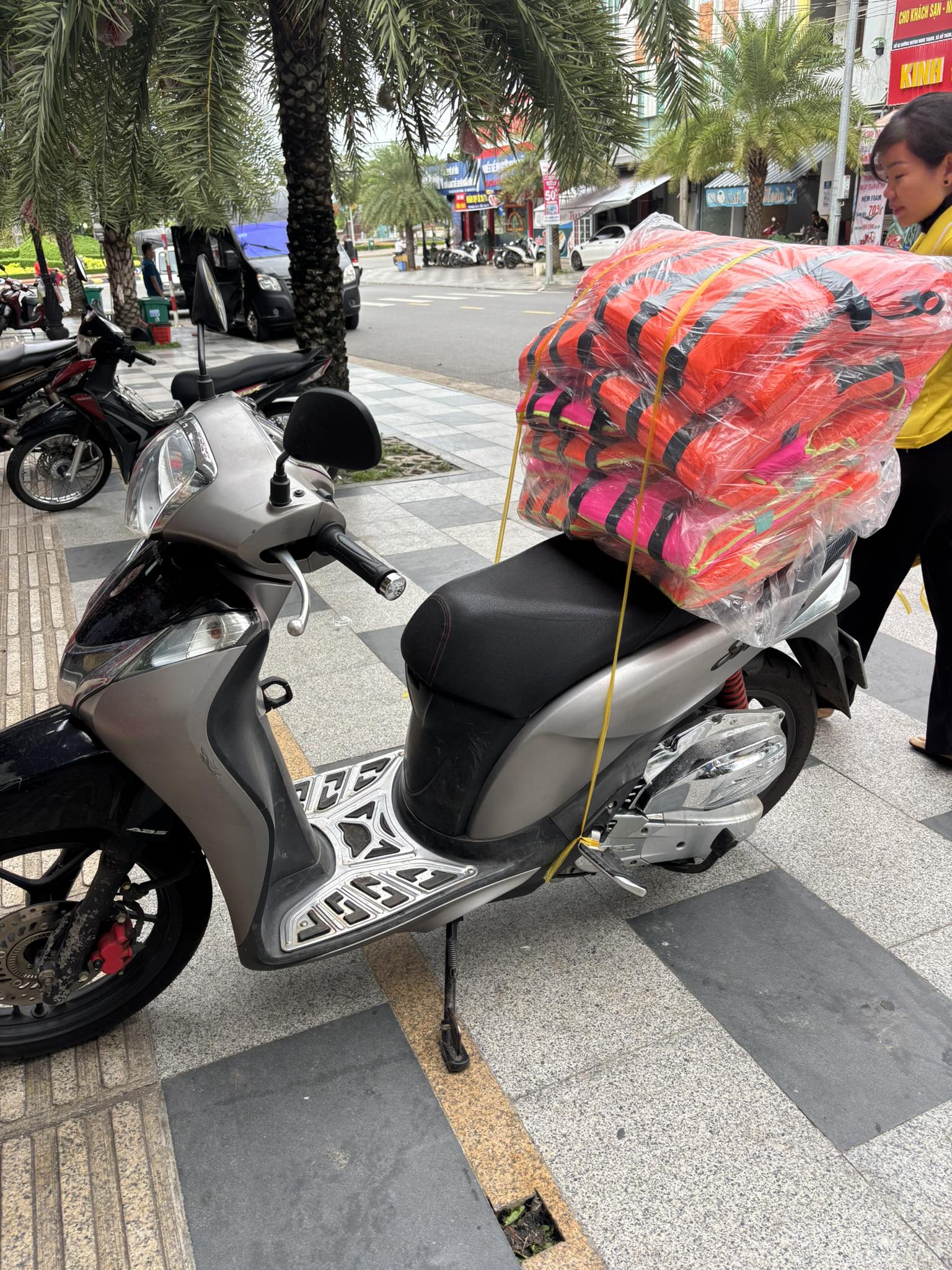 |
Nguyen Ngoc Phuong bought 8 life jackets for her family on 20/11. Photo courtesy of interviewee
Two days prior, in Xuyen Moc commune, Ba Ria - Vung Tau province, Nguyen Ngoc Phuong, 37, also bought 8 life jackets, 8 flashlights, 4 cartons of instant noodles, and 50 eggs.
She explained that the continuous natural disasters, such as storms and floods from the North to the Central region over the past few months, forced her family to learn from experience. "Many people went hungry and cold because they hadn't prepared essential supplies and survival equipment. My family has elderly members and young children, so prevention is better than cure", Phuong said.
On the evening of 24/11, the whole family checked flashlights and stored food in high, dry places. She spent time during dinner reminding her relatives about newly learned survival skills. A photo of her loading 8 life jackets onto a vehicle, shared on social media, attracted hundreds of supportive comments.
"Hearing that the tropical depression could strengthen into a major storm and was expected to hit our living area, everyone was worried and rushed to buy supplies", Phuong added.
This precautionary mindset is not only present among middle-aged people but has also spread among urban youth. On social media, posts sharing survival item lists, from how to distinguish AA and AAA batteries to what a medical kit should contain, have garnered millions of views.
Tran Thi Phuong, owner of an online store in TP HCM, stated that on 24/11, she sold over 1,000 life jackets. "Customers buy mainly out of fear of storms, but they are also willing to spend because they think if not used for storm protection, they can still be useful for swimming or traveling", the store owner said.
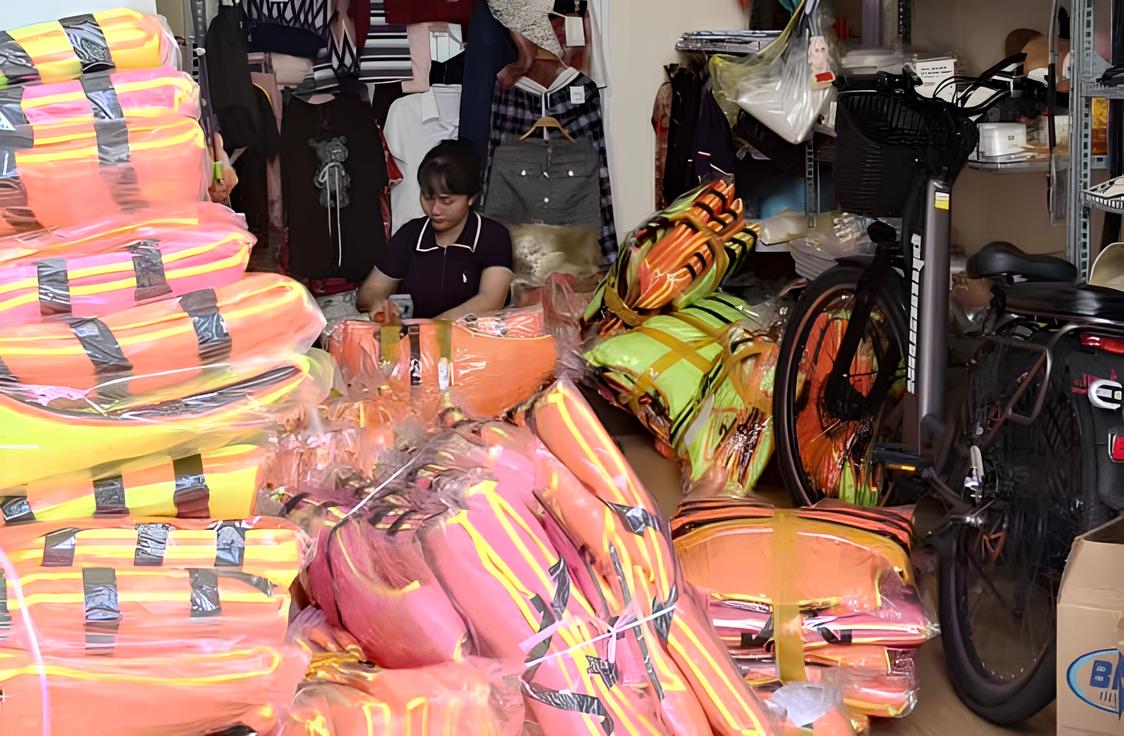 |
Phuong packaging orders for customers on 24/11. Photo captured from security camera
Associate Professor, Doctor Bui Thi An, Director of the Institute for Environment and Community Development, commented that people actively seeking survival solutions is a positive sign of disaster preparedness awareness.
However, she advised people not to panic or rush to over-hoard, which could affect daily life and the market. "Prepare essential items sufficiently for your family with a calm mindset", An said.
Sharing the same view, Pham Thanh Nhan, an expert from Survival Skills Vietnam training organization, believes that when disaster strikes, the survivor is not necessarily the strongest, but the best prepared.
The expert suggests each family prepare a lightweight "survival backpack" containing essential items such as: drinking water, dry rations, canned food, chocolate, coarse salt, warming ginger lozenges; phone and power bank; flashlight with an SOS signal; personal medical kit; lightweight clothing; rain suit, rescue blanket; waterproof zip bags, temporary floatation device; whistle; utility knife or scissors; 10 meters of paracord (standard 7-strand, 0,3 cm, 250 kg load capacity), medical information card; candles or a lighter. These items should be checked regularly to ensure they are always ready.
For urban or riverside residents, besides food, drowning prevention and first aid skills are the most crucial.
"If a 2-meter water level rise is forecast, prepare for a 3-meter scenario", Nhan said, noting that people need to shift their mindset from passive to proactive response, but must maintain order and follow official instructions during evacuation orders.
Song Nga