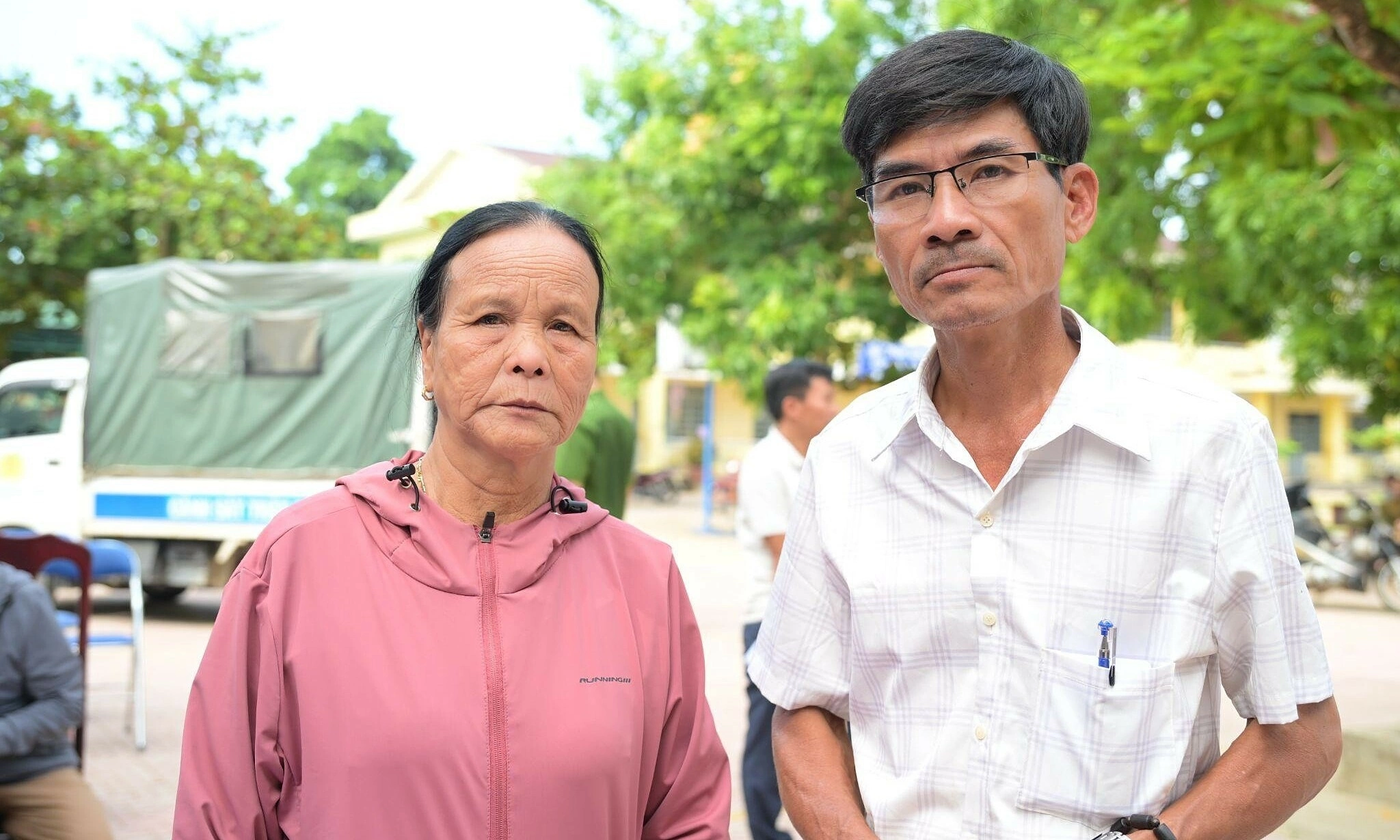
Ms. Hang's wedding in 1996 took place at a small house in Ngoc Ly commune, Tan Yen district, Bac Giang province. Her parents prepared 60 trays of food to celebrate their daughter's marriage. However, when her younger brother, who owned a bridal shop, had outfits ready, the 30-year-old bride declined. She chose to wear simple clothes and light makeup to her new home.
"The children's mother had not been gone long, and I did not want their maternal family to feel sad," explained Ms. Hang, now 60 years old, regarding her decision to forgo a wedding dress for her first marriage.
Lighting incense at her husband's altar and before the photo of Mr. Bieu's deceased wife, she whispered a silent prayer: "Please protect me with good health to raise the children. Do not scare me, or I will run away."
This half-joking, half-serious prayer marked the beginning of the preschool teacher's 30-year journey as a stepmother, filled with ups and downs.
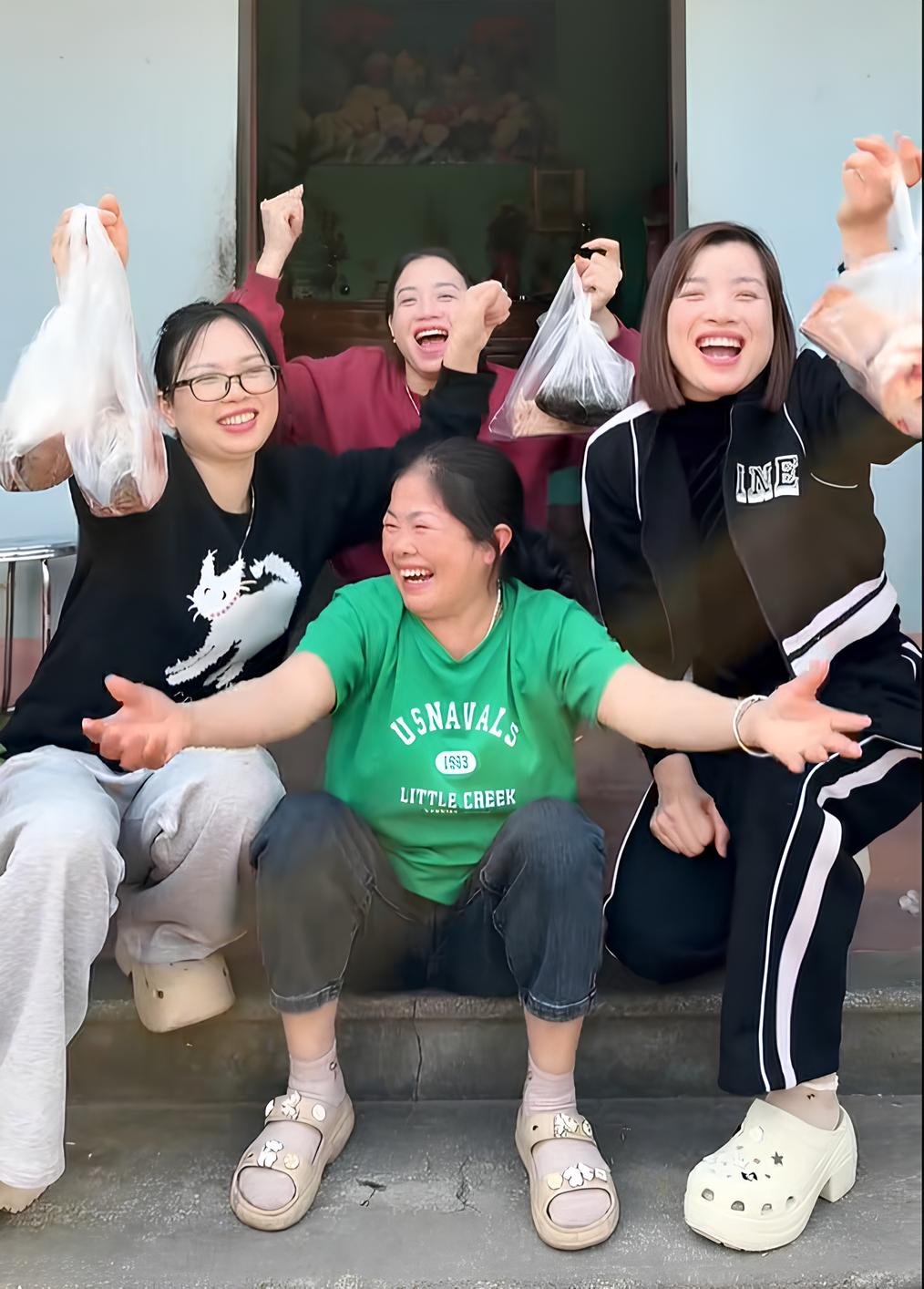 |
Ms. Hang (in blue) with three of her husband's four daughters, early 2026. Photo cut from video
A year prior, 29-year-old Giap Thi Hang was introduced to a man six years her senior, who lived in Lam Cot commune, Tan Yen district, Bac Giang (now Quang Trung commune, Bac Ninh province). He had recently lost his wife and was raising four young daughters alone. "At that time, I was already considered past my prime for marriage, but hearing about his young children, I was scared and immediately refused," she recounted.
However, Mr. Bieu persisted, often cycling 15 km to visit her home. When both the children's maternal grandmother (Mr. Bieu's mother-in-law) and their maternal uncle approached her, Ms. Hang decided to visit the family. She was greeted by four children: the eldest was 12, the two middle ones were 7 and 5, and the youngest, Duong Bac Giang, was less than one year old, held by her sister.
Hearing the adults say, "you will soon have a new mother," the children gathered around Ms. Hang, their eyes confused but longing for affection. "Seeing those children and the kind man, I nodded my head," she said.
After marrying, the 37 kg woman began her daily routine, starting work in the fields at 4 a.m. During office hours, she taught at the preschool. At noon, she rushed home to prepare meals. At that time, rural preschool teachers' salaries were paid in paddy rice, receiving four quintals annually. The family relied on their small plot of land and her teacher's salary, often struggling financially. Three years later, she gave birth to a child with Mr. Bieu, further straining the family's finances.
However, economic pressure was less daunting than the psychological challenges of raising her stepchildren and the societal prejudice against stepmothers. From day one, she told the children: "Out there, people will talk, but if you have agreed to be my children, you must listen to me."
Guiding the teenage girls led to many disagreements. Once, the eldest daughter made a mistake and was scolded by her mother. Feeling resentful, she argued back, then ran to the altar to cry to her birth mother. Seeing this, Ms. Hang felt hurt. As dusk fell, she rode her bicycle to her parents' house. But after a short distance, she looked back to see her husband carrying their youngest child, chasing after her, and she returned.
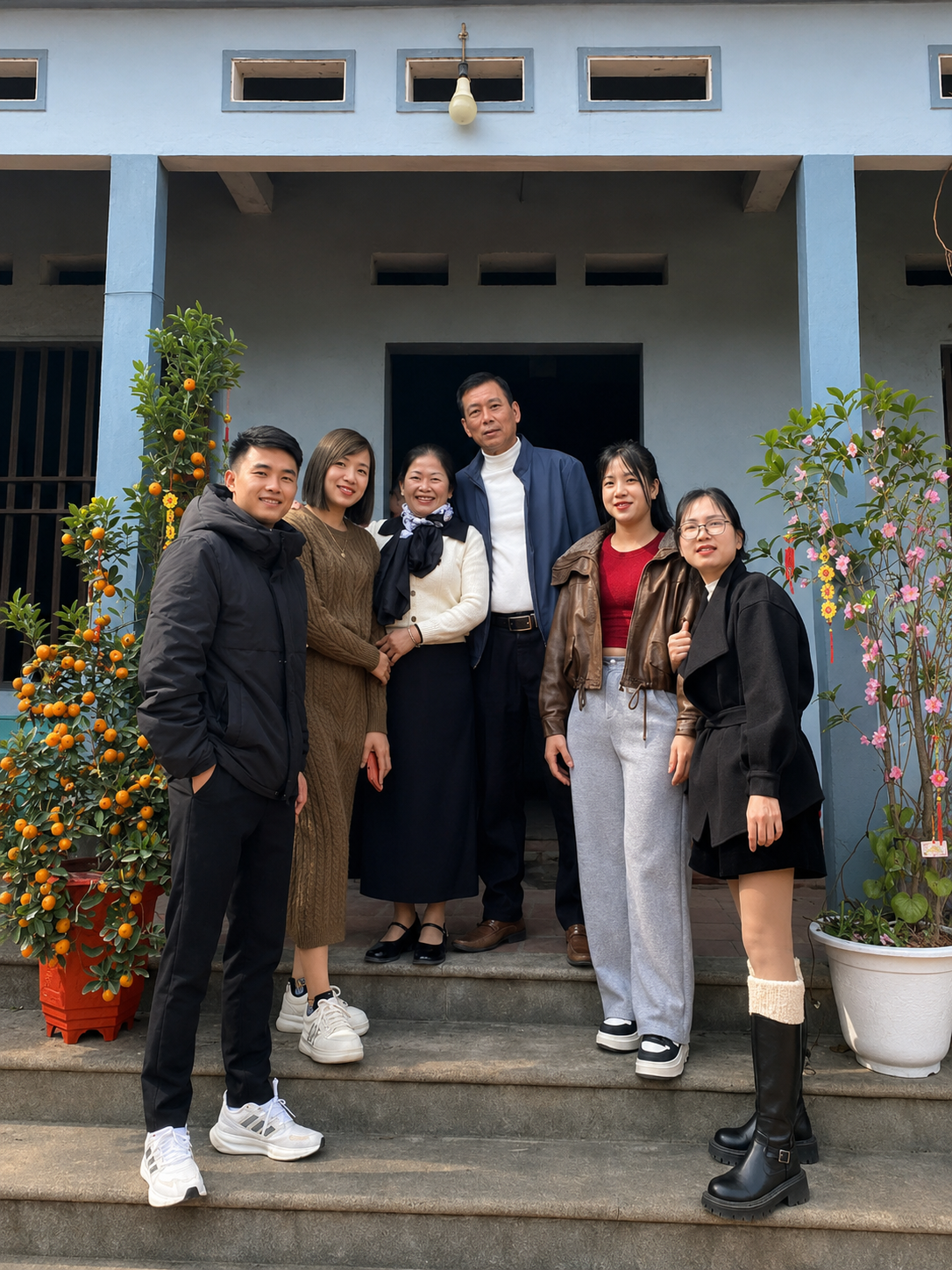 |
Ms. Hang and her husband (in white) with their children, Tet 2026. Family photo
The mother chose to be a friend to her children to gradually understand them. She told the children that if they felt her advice was unfair, they could ask their maternal grandmother and aunts for their opinion. She shared gifts and new clothes equally among all five sisters. This fairness helped bridge any gaps, and the children gradually came to see their stepmother as their own flesh and blood. "Many days, when I rode my bike to my parents' house, I would return to find the children waiting at the gate," she recalled. As they grew into young women, the daughters began confiding in their stepmother about their romantic relationships.
Duong Bac Giang, the youngest daughter, shared that it was not until she was 7 years old, through the words of others, that she learned Ms. Hang was not her birth mother. "When I was little, I was stubborn, and whenever I sulked, I would often say I wanted a different mother. My mother would just smile and comfort me," Giang recounted.
After 30 years, Mr. Bieu's four daughters have all grown up. For each of their weddings, Ms. Hang and her husband carefully prepared the dowry themselves. At the wedding ceremonies, the stepmother was always the first to cry for her daughters, moving the entire family to tears.
Today, Ms. Hang is a grandmother to 9 children. Whenever her daughters are in confinement after childbirth, she brings them home and personally cares for them during the first month. For her, the greatest happiness in her later years is witnessing her husband's four daughters grow up, secure stable jobs, and have peaceful families.
Mr. Bieu often reminds his children to treat their mother well—the woman who weathered life's toughest storms with him and his children. His daughters are closer to their mother than their father. They married within the local area and always call ahead before visiting their maternal relatives: "Is mom home today so I can come over?"
Ten years ago, the youngest daughter, Duong Bac Giang, got married. Her husband had been married before and was raising his own child. Stepping into family life as a stepmother, Giang stated that she applies the lessons learned from how her mother Hang raised her and her sisters.
"She gave me a mother and gave me the courage to be a mother," Giang said.
Ms. Hang and her stepdaughter discuss "stepmother - stepchild" relationships.
Pham Nga