Students receive standard bathrooms after years of bathing in cold streams
For the first time using bathrooms with showers, many students at Bo Trach ethnic boarding school (Thuong Trach commune) were curious, even letting water run from head to toe to experience an unprecedented convenience.
On 3/12, the Hope Foundation, Opella Vietnam, and Enterogermina, a microbial tube probiotic brand, handed over standard sanitation facilities and bathrooms to Bo Trach ethnic boarding school during the School Hygiene Festival. Unlike previous activities, at this school, the two entities also built bathrooms in addition to the usual sanitation facilities. This marks the first time students here have access to modern bathing equipment, including showers and ceramic sinks. The project is currently completing the hot water system.
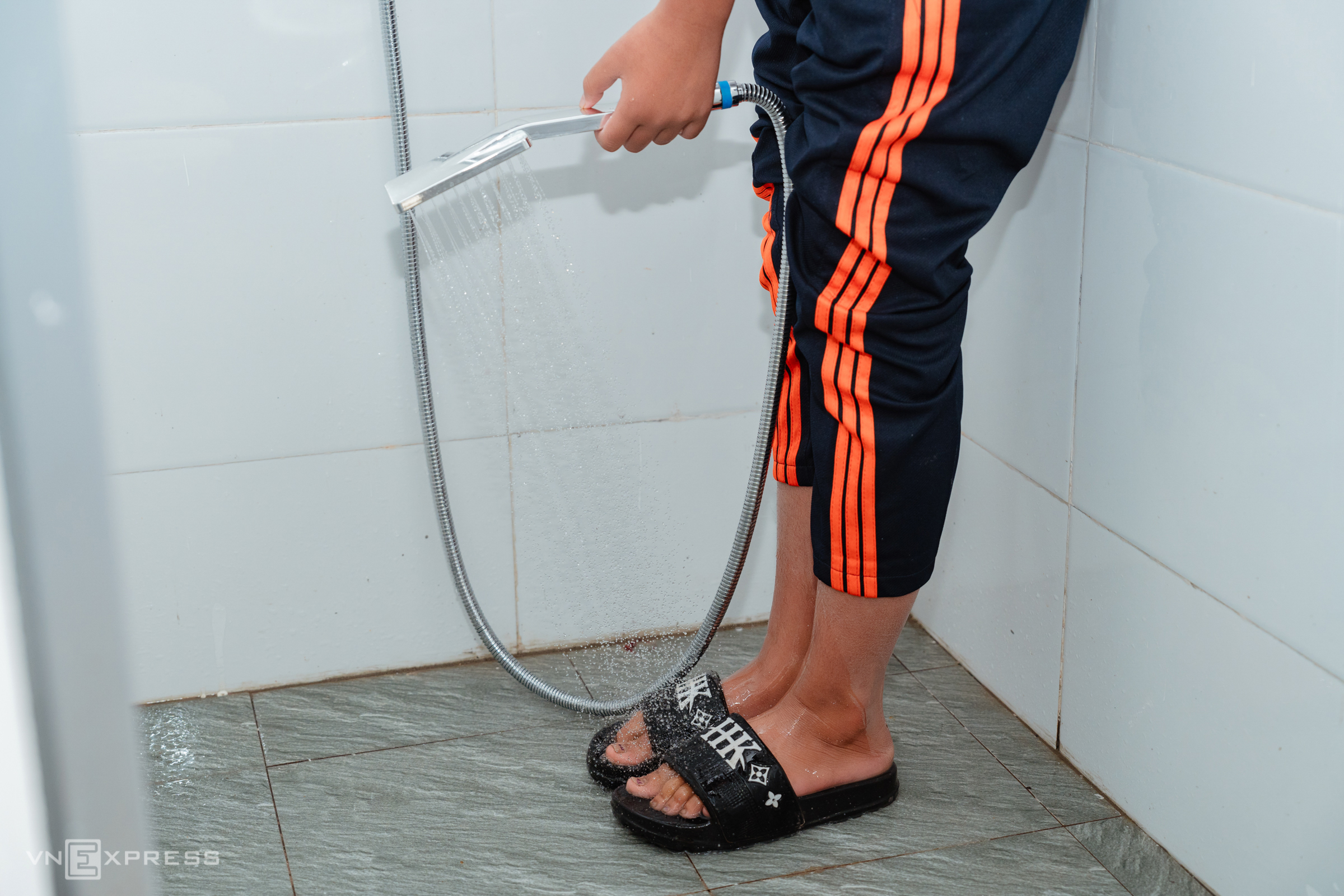
Early morning saw teachers and students at Bo Trach ethnic boarding school busy preparing for the festival amidst the limestone mountains of Phong Nha - Ke Bang National Park. While the head teacher guided students to arrange chairs and rehearse the program, many children excitedly ran to the new bathroom area, gathering around to gaze at it. They chattered, asking how to use each fixture. Many smiled broadly, even as water from the shower soaked them from head to toe.
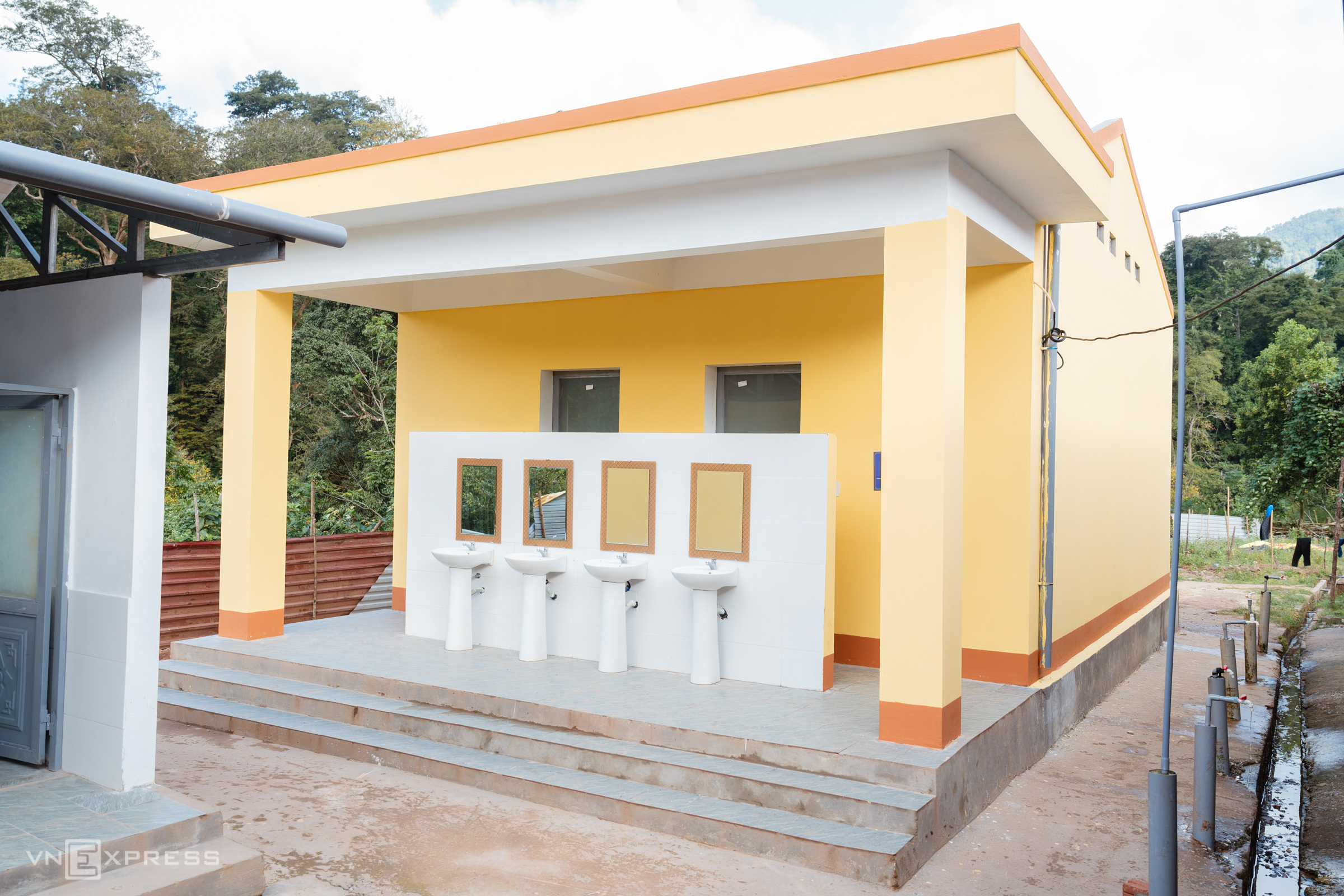 |
The new bathrooms handed over to Bo Trach ethnic boarding school by the Hope Foundation, Opella Vietnam, and Enterogermina, a microbial tube probiotic brand. Tung Dinh.
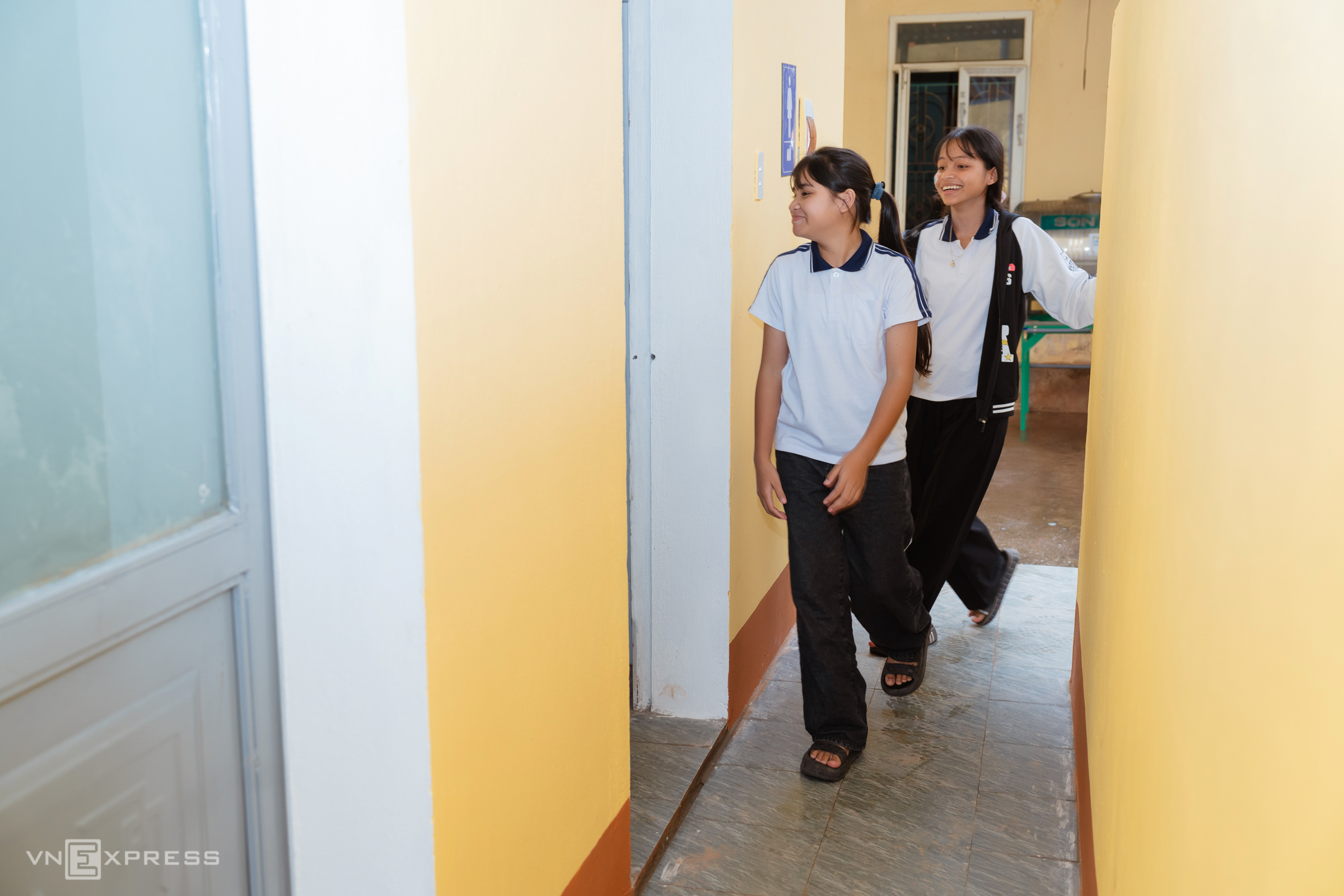 |
Students eagerly rush to see the new bathrooms. Tung Dinh.
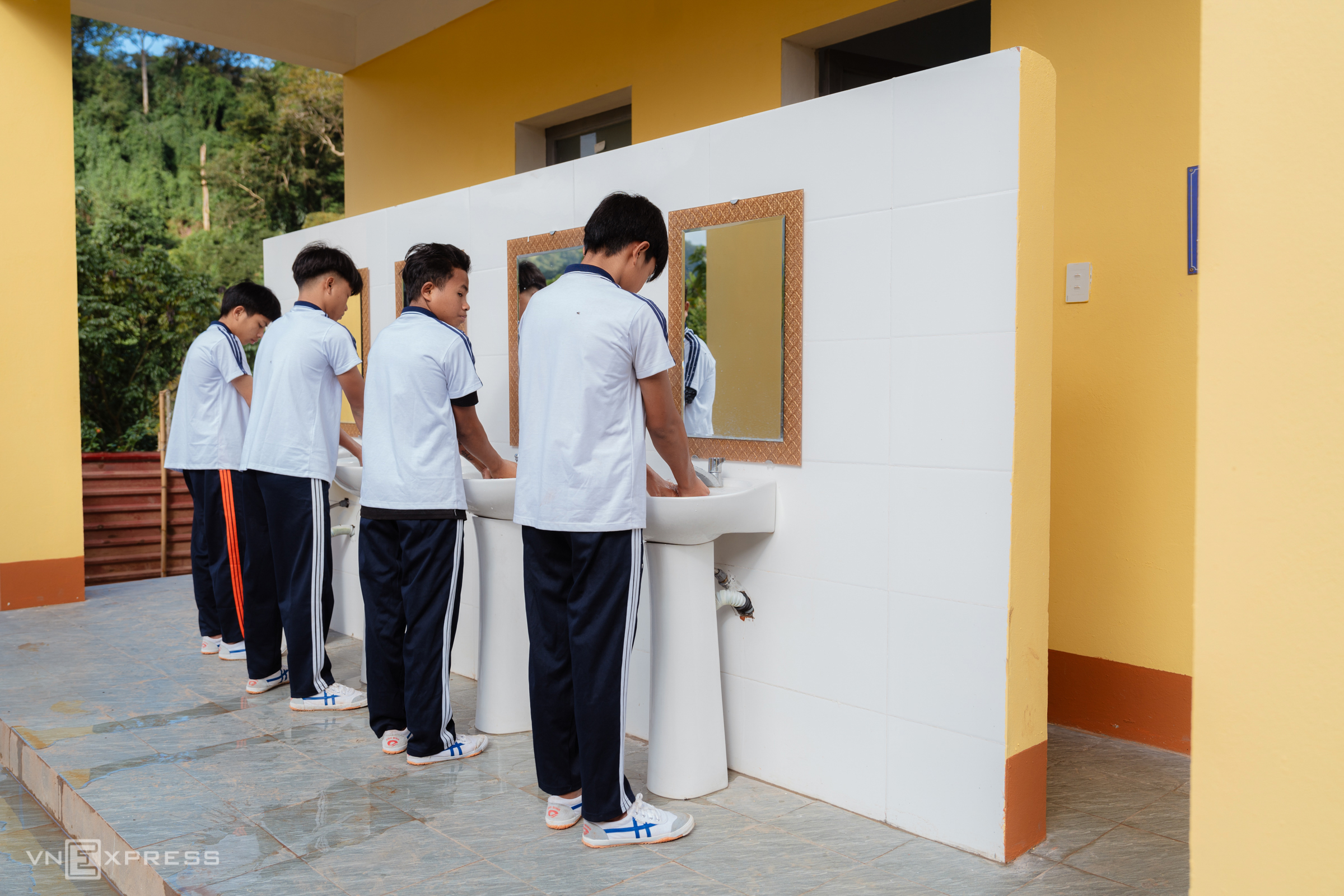 |
A group of male students wash their hands in the area in front of the bathrooms. Tung Dinh.
Explaining the decision to build additional bathrooms for the school, Vu Ngoc Anh, a representative of the Hope Foundation, said that during a survey for constructing toilets in Thuong Trach commune, the Foundation discovered the school lacked bathroom facilities, despite housing hundreds of boarding students.
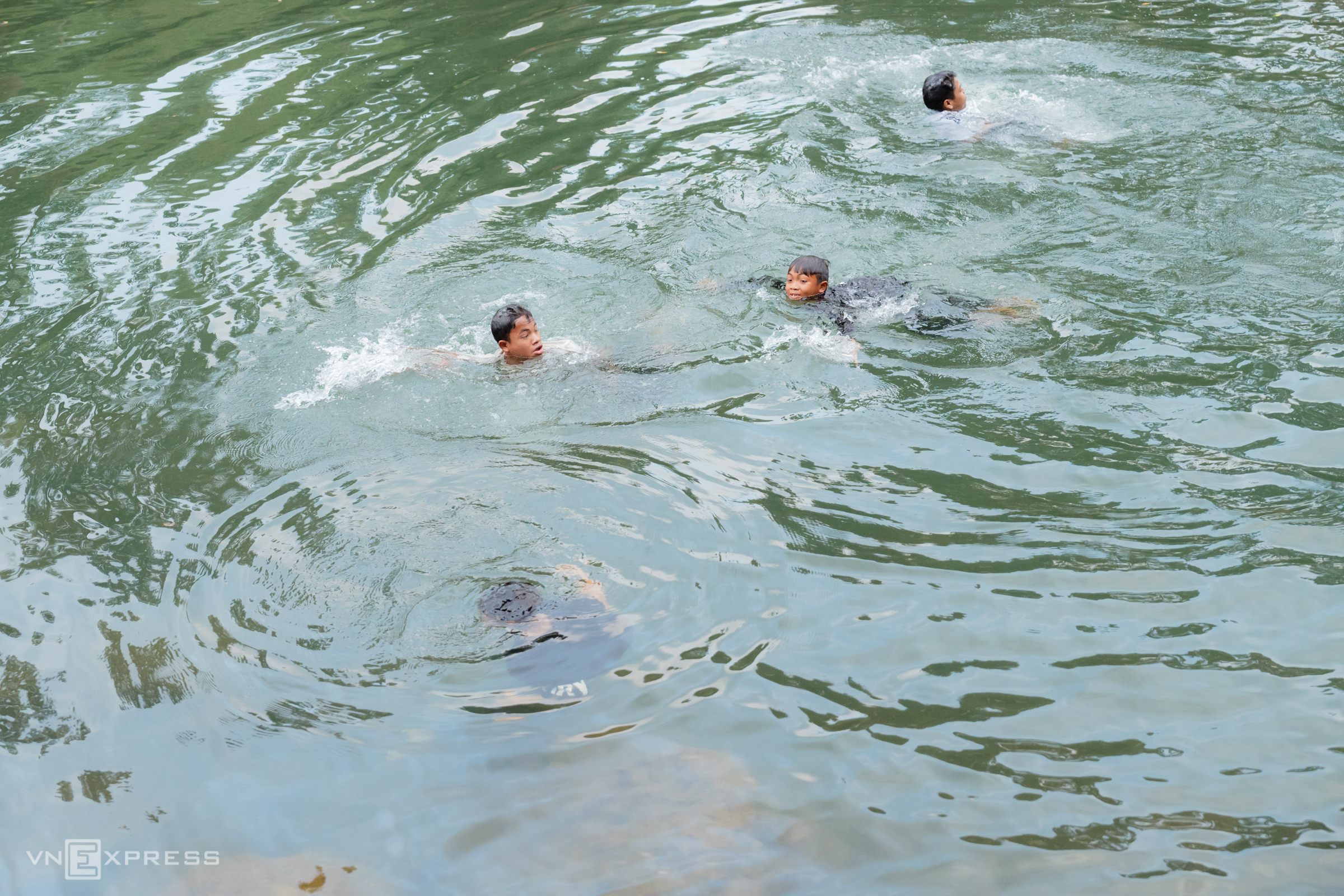
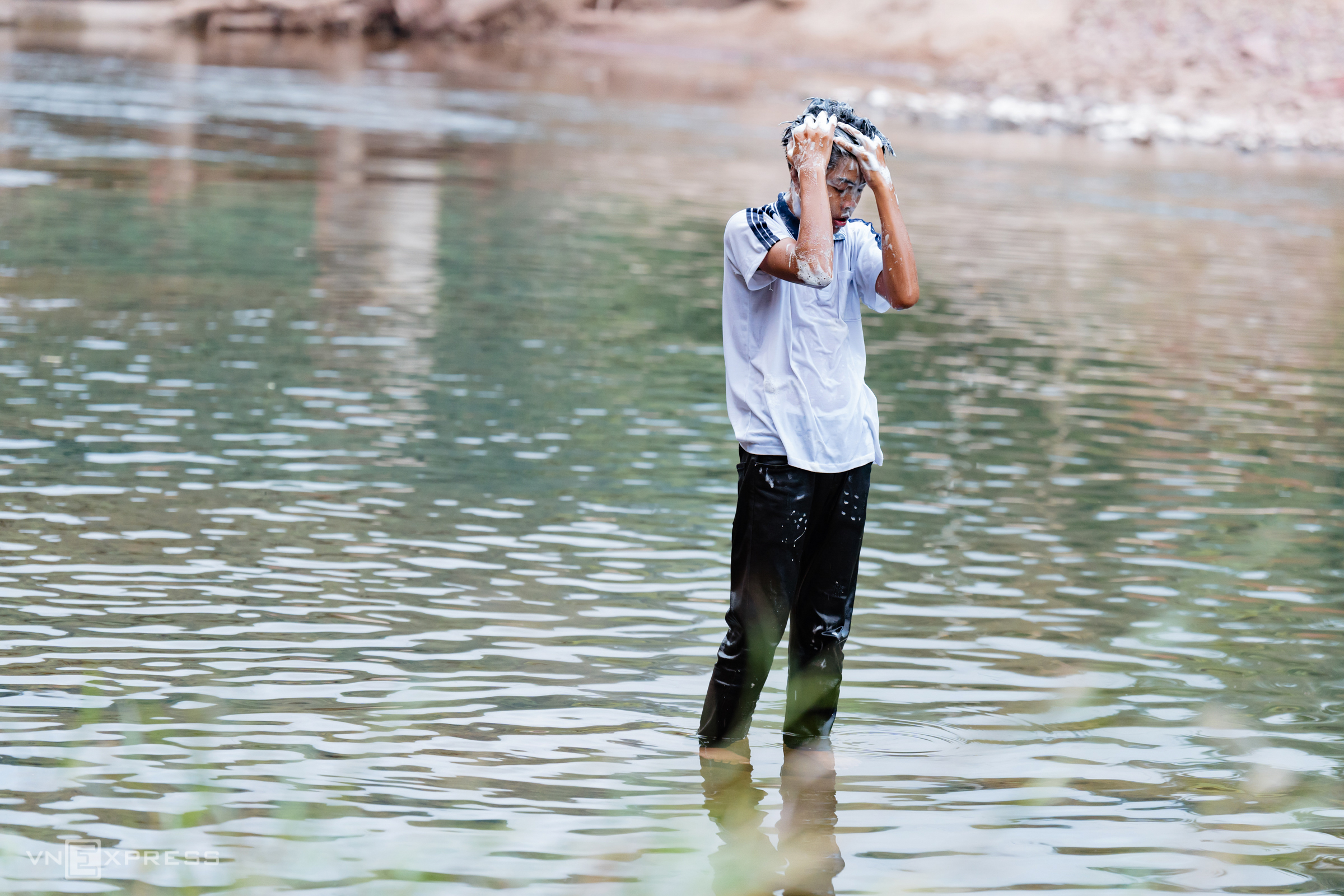
Previously, the school had to use dilapidated toilets as makeshift bathrooms, which could not meet the daily needs of 277 students. As a result, most students went to the nearby stream to bathe, wash their hair, and do laundry.
"We were surprised that even in winter, students still had to bathe in the stream. This greatly affects their health and safety," he added.
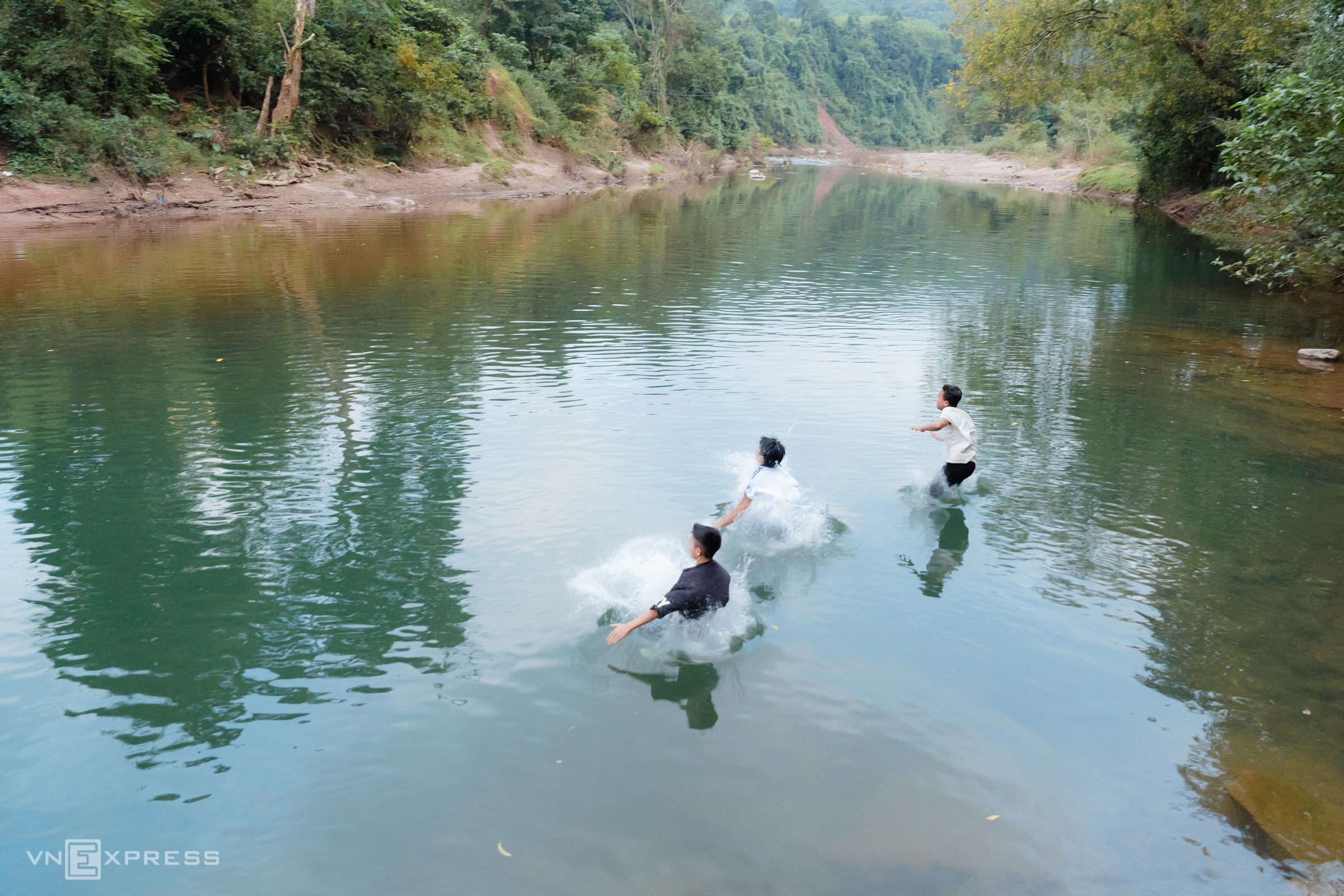 |
Students at Bo Trach ethnic boarding school bathe in the stream near the school. Tung Dinh.
 |
A male student washes his hair in the stream. Tung Dinh.
 |
They all share that they are good swimmers. Tung Dinh.
Nguyen Van Hao, the school’s Vice Principal, shared that students faced significant difficulties in their daily routines. The school previously relied on a generator to pump water. Only earlier this year did the area receive an electricity grid and solar power system. With deteriorating infrastructure and limited water, very few students could bathe at the school.
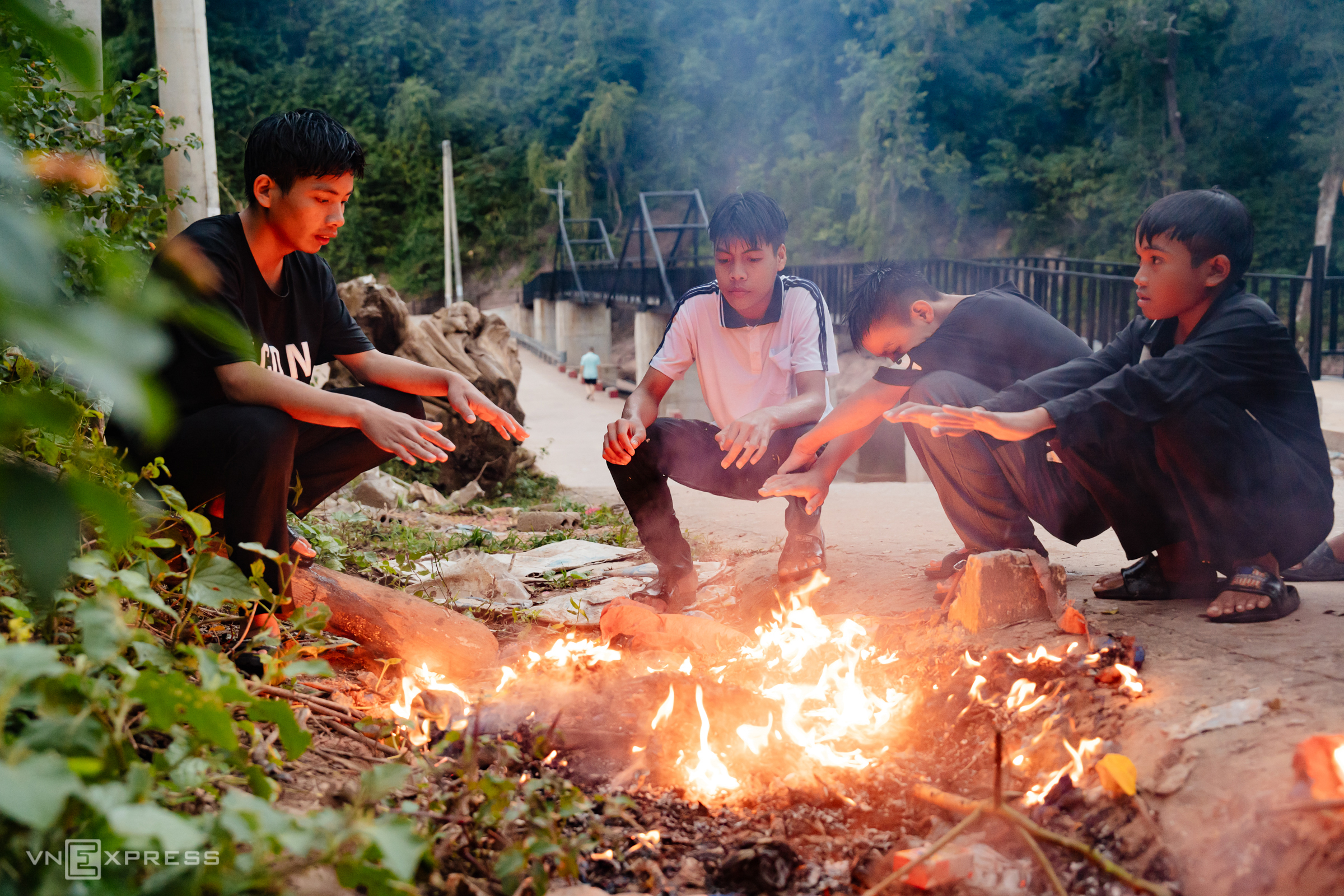
"In winter, to maintain personal hygiene, students still had to go to the stream to bathe and wash. Children are happy to swim, but teachers feel sorrow, worrying about them getting sick, so we tried to improve things bit by bit. The school will burn wood for students to warm up immediately after bathing to prevent colds. During storms, teachers will proactively store rainwater for them to use," Teacher Hao said.
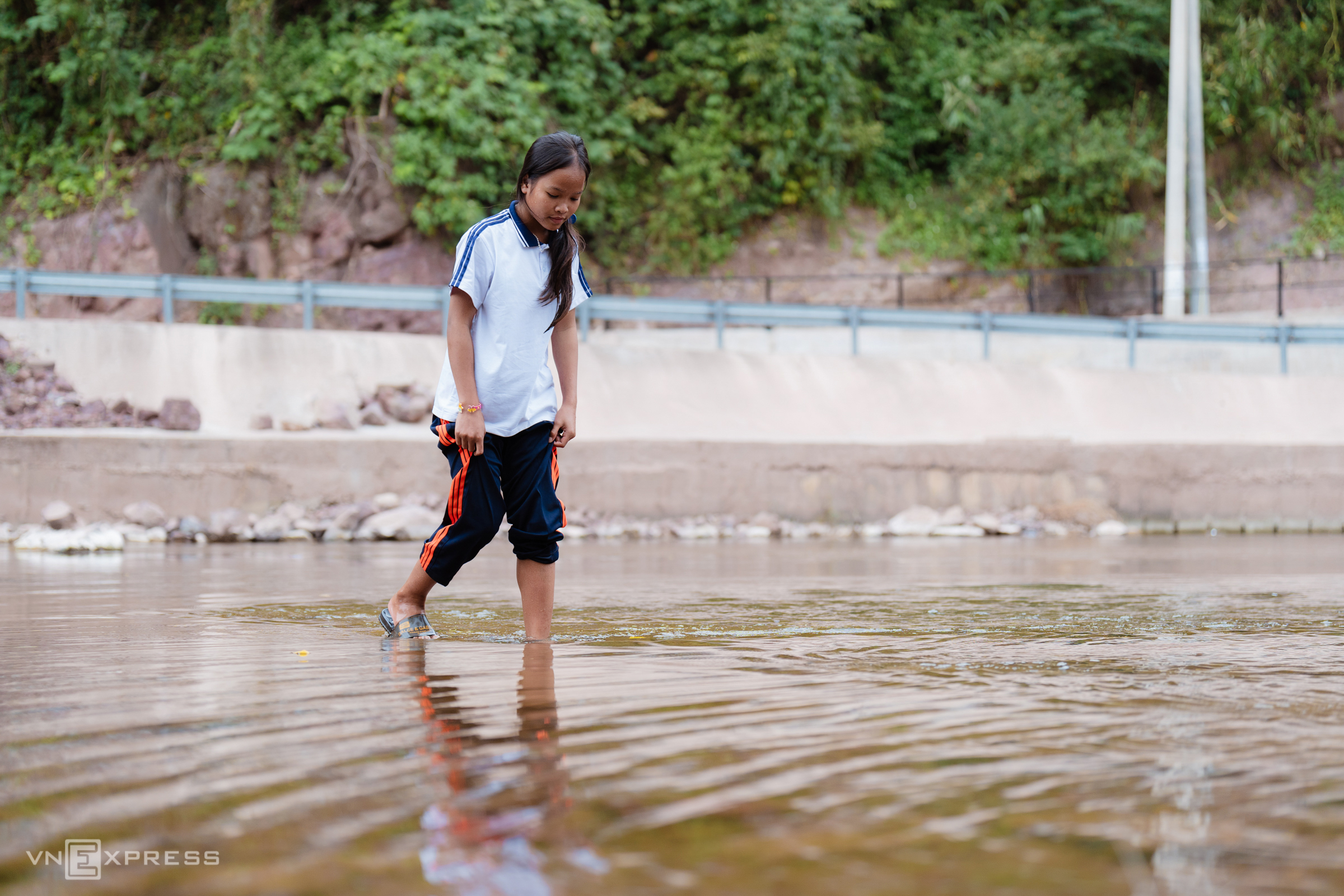 |
Students warm up after bathing before returning to school. Tung Dinh.
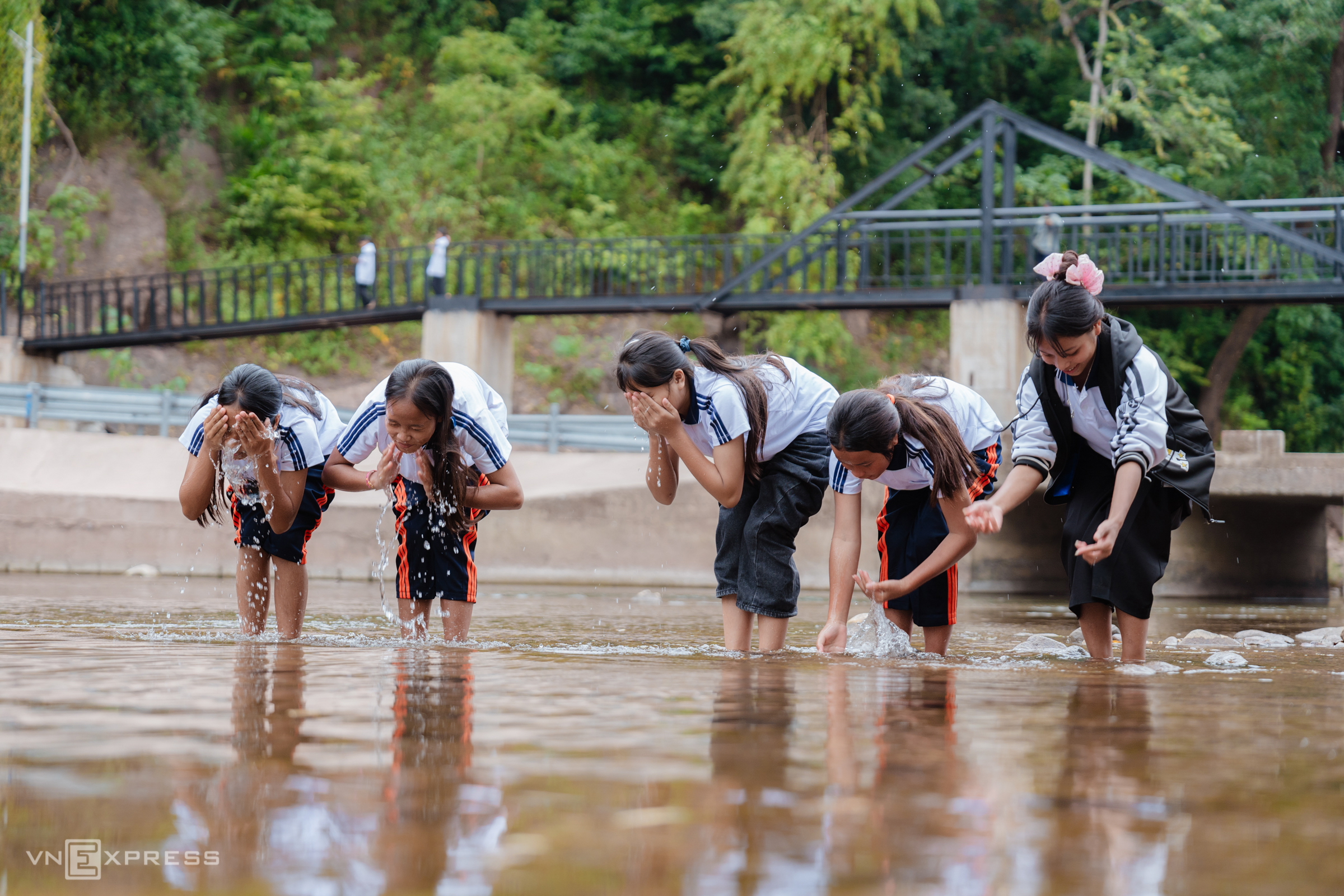
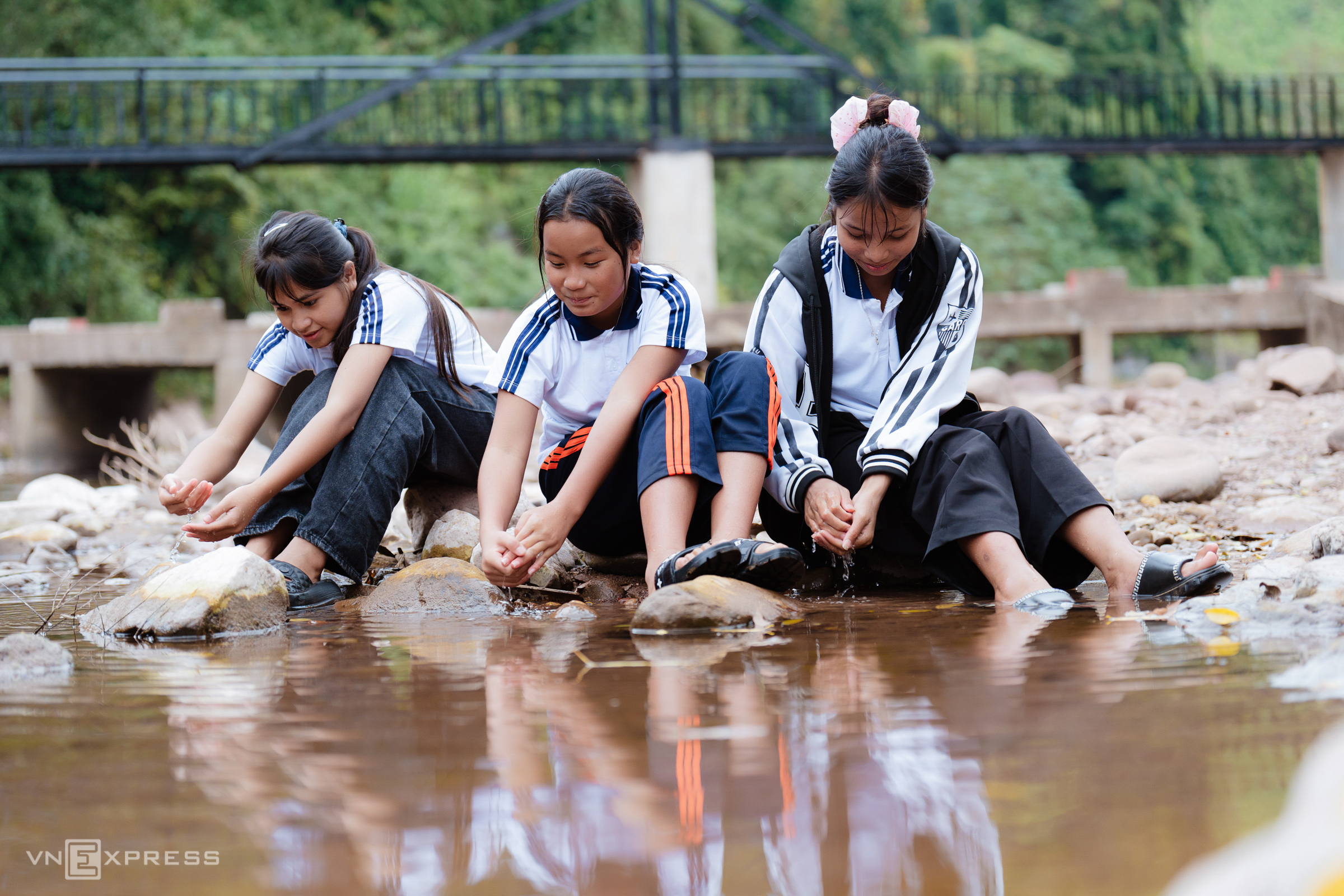
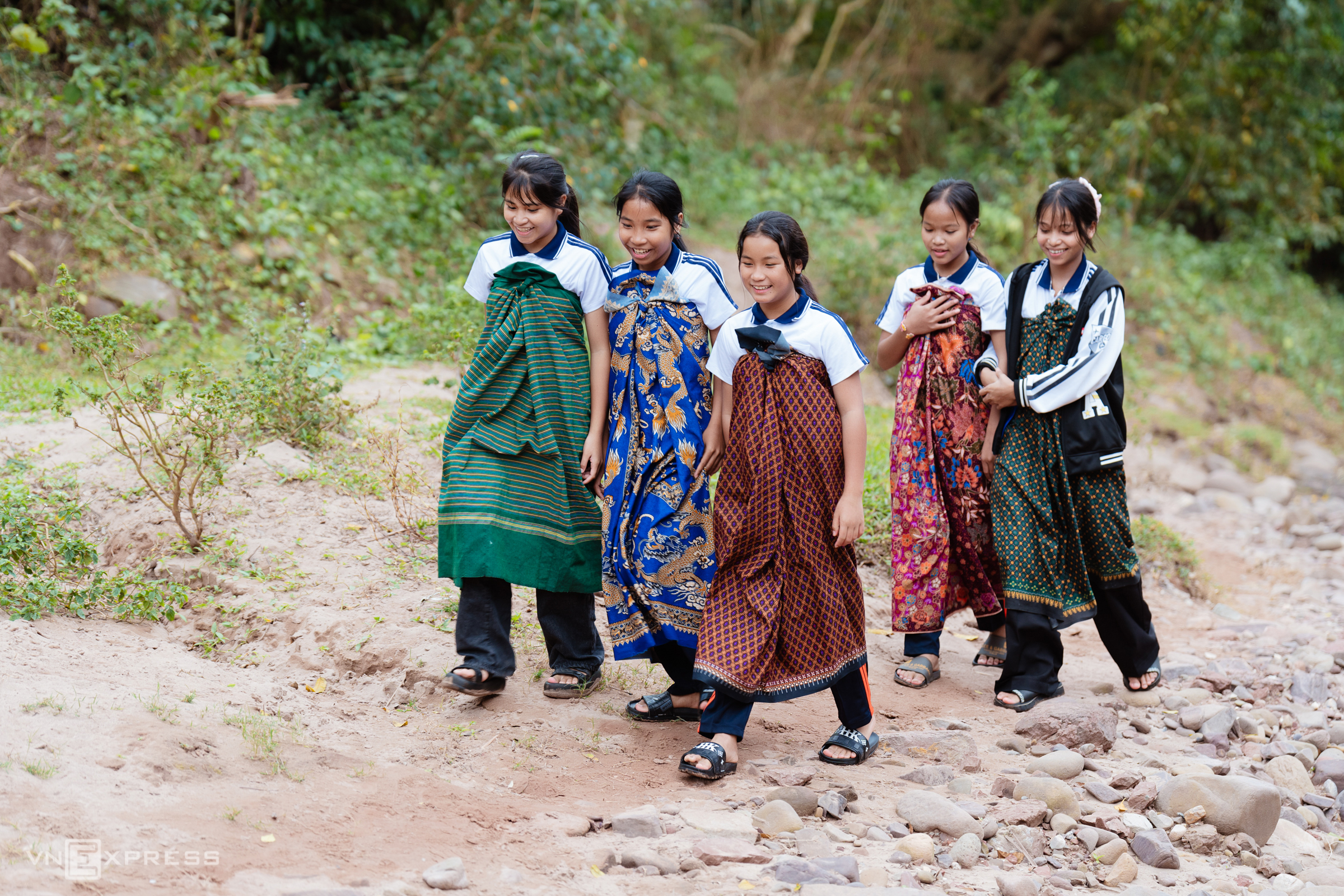
Y Thuy, an 8th grade student, recounted that she and other female students often had to bathe and do laundry in the stream, in the same area as the male students. Teachers would assist or guide them in dividing bathing times for boys and girls. However, Thuy still felt shy and carefully observed her surroundings during personal hygiene.
"Some days we waited for the boys to finish bathing, and it got late and cold, but bathing close to each other felt awkward, so we just had to endure it," the Bru Van Kieu ethnic student shared.
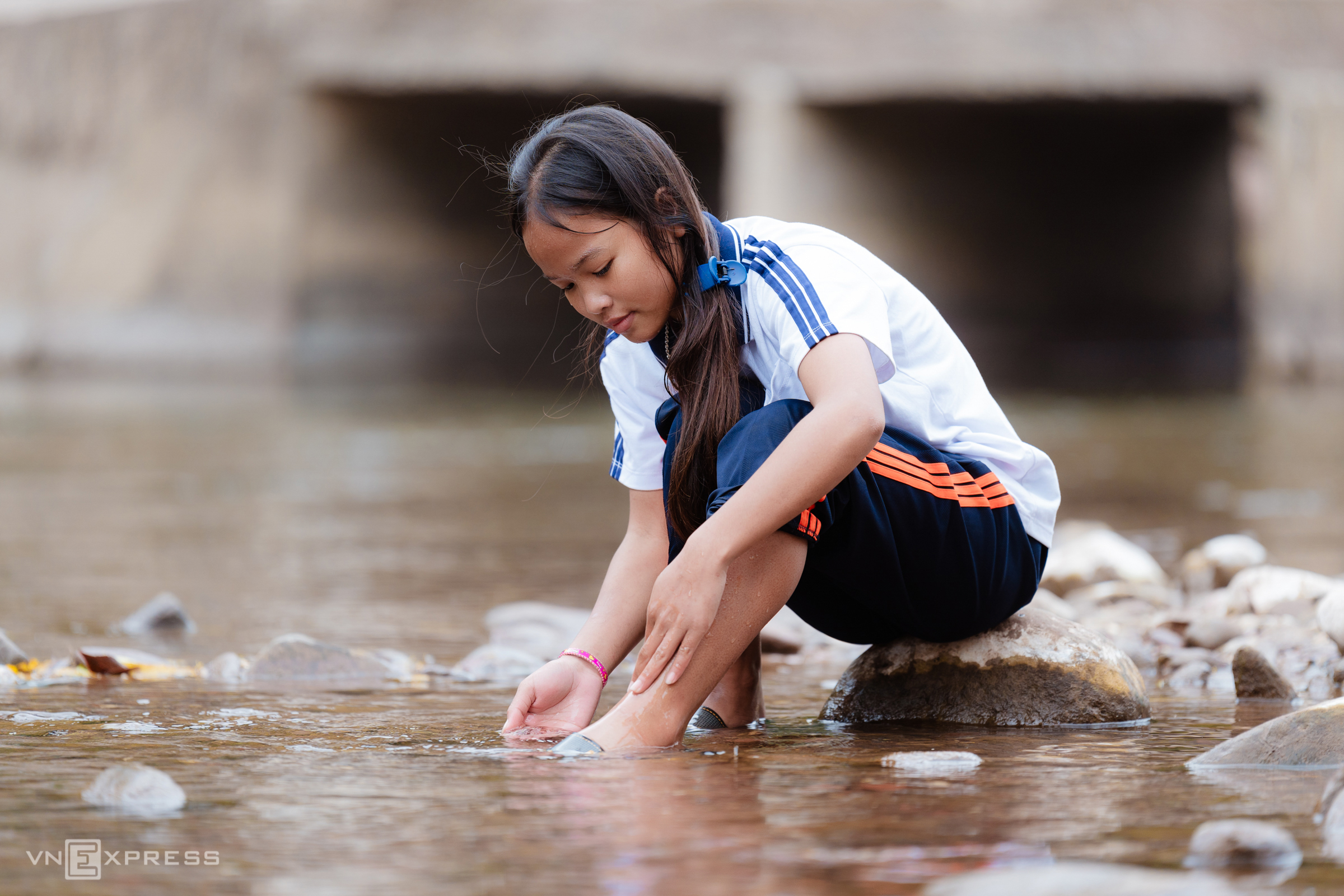 |
Y Thuy goes to the stream to bathe and do laundry after school. Tung Dinh.
 |
Y Thuy goes to the stream to bathe and do laundry after school. Tung Dinh.
 |
A group of female students go to the stream together for personal hygiene. Tung Dinh.
 |
They wash their hands at the stream. Tung Dinh.
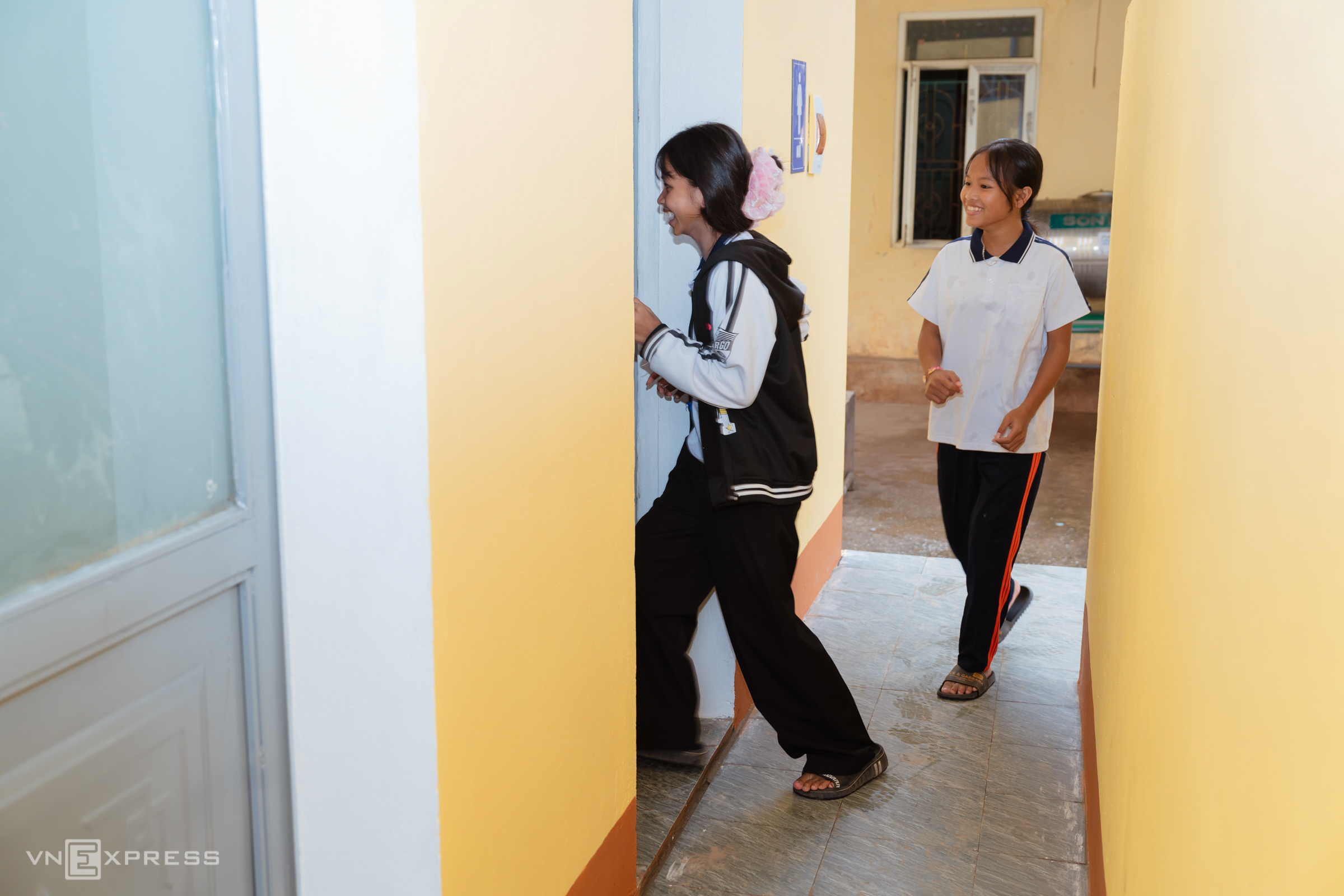 |
After bathing, the group for personal hygiene wraps towels and returns to school. Tung Dinh.
Not only were the bathrooms dilapidated, but the old sanitation facilities were also dysfunctional and frequently clogged. Y Thuy and her friends in rooms near that area often smelled foul odors. "These new toilets and bathrooms are private and odorless. I just tried the bathroom, and for the first time, we saw a shower head from above for washing hair," the girl enthusiastically shared.
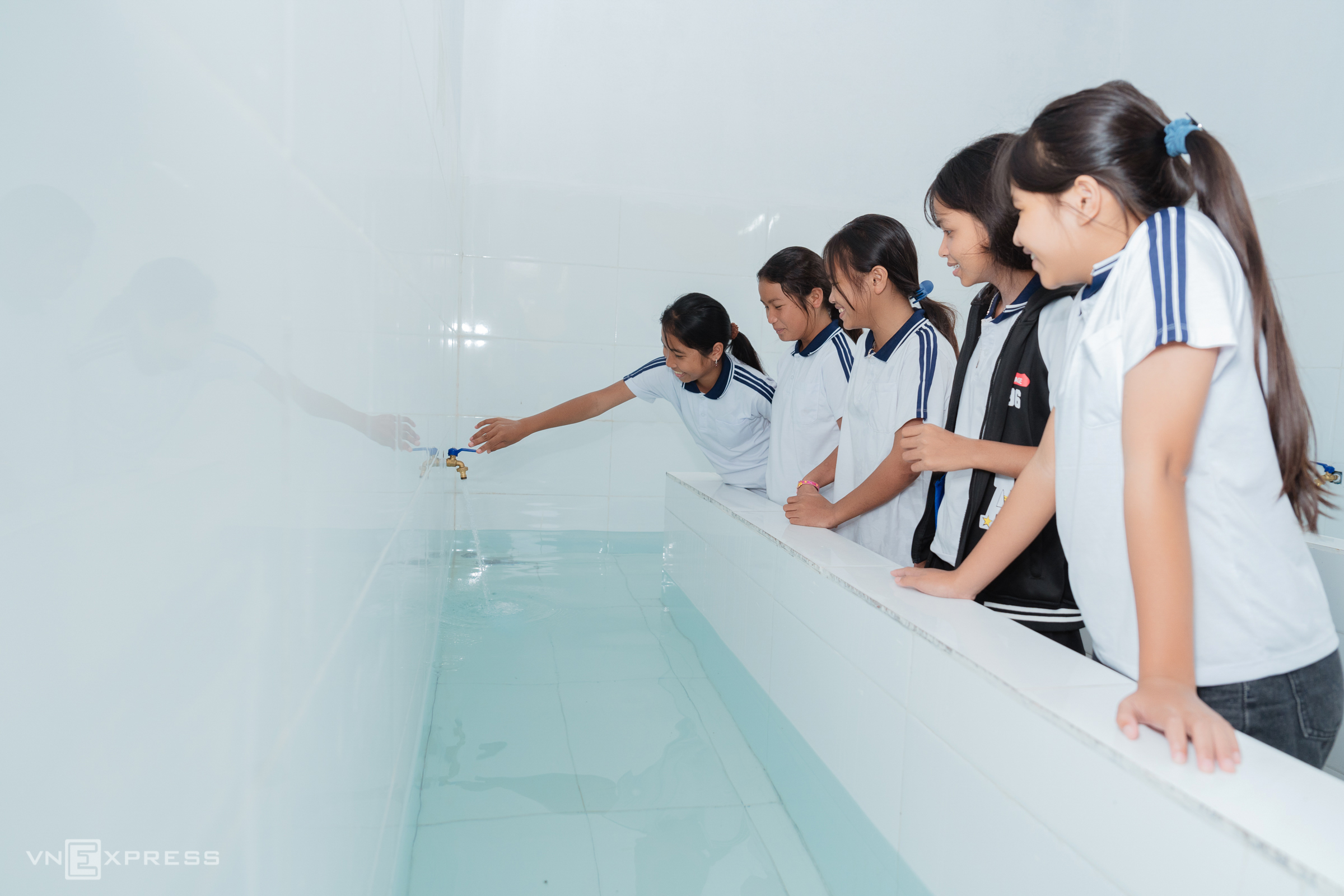 |
Y Thuy and her friends eagerly come to see the new bathrooms. Tung Dinh.
 |
The group of friends are curious about the clean water tank. Tung Dinh.
 |
For the first time, students at Bo Trach ethnic boarding school use showers. Tung Dinh.
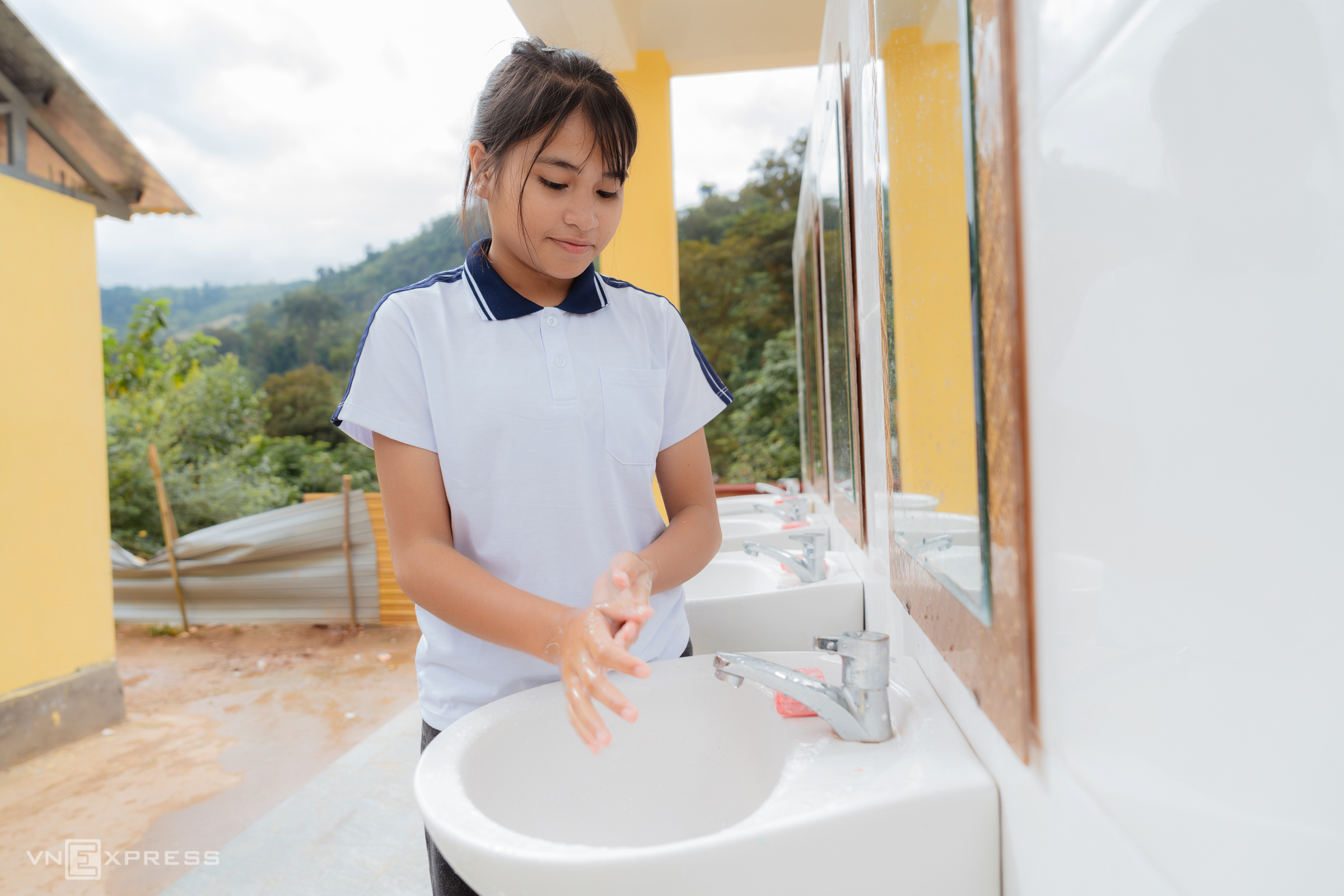
 |
Students wash their hands with soap and look in the mirror to adjust their hair and clothes before returning to class. Tung Dinh.
The new bathrooms are equipped with a water supply and drainage system and private changing areas, separated for males and females. This helps improve personal hygiene conditions, especially during the cold season.
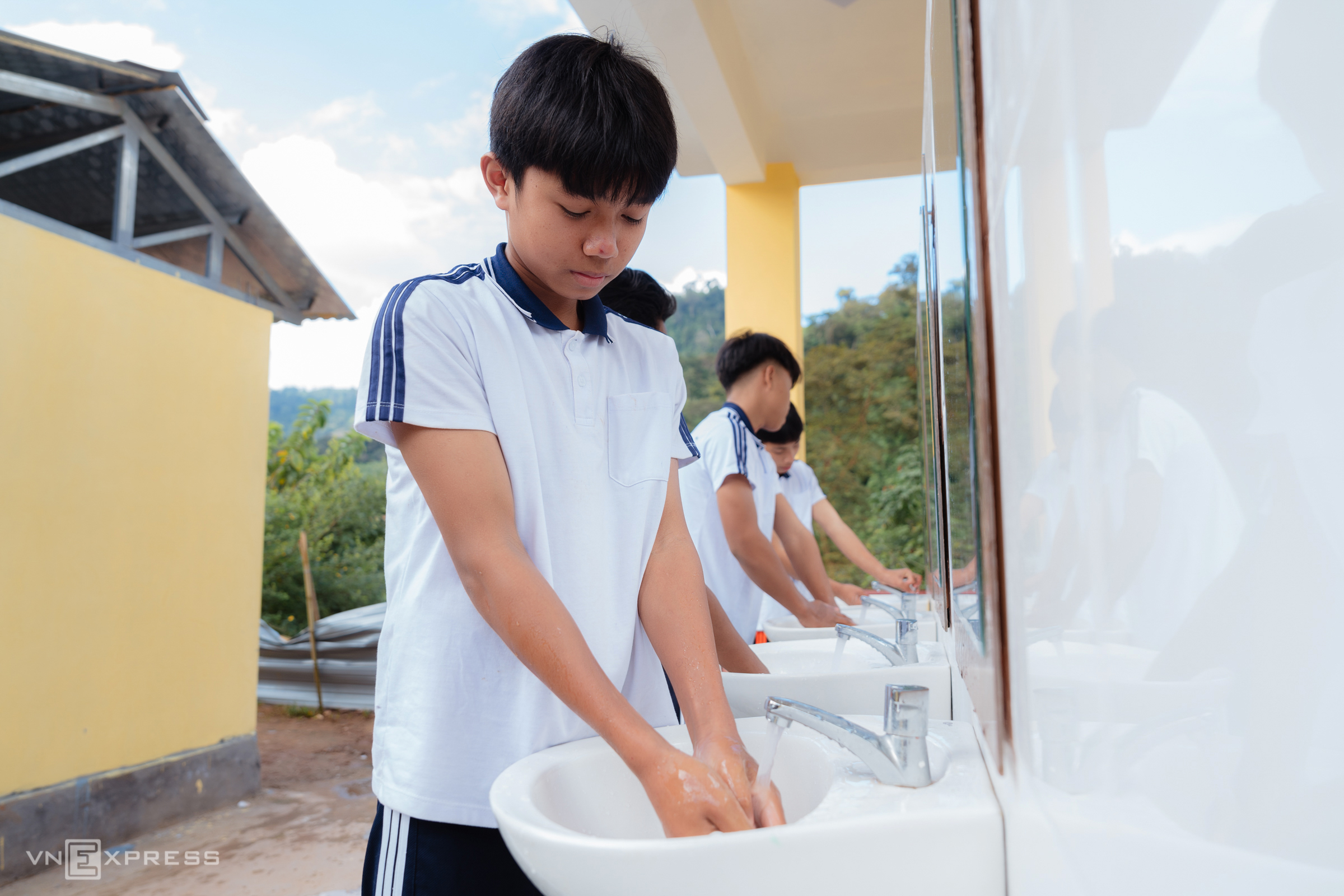 |
The exterior of the bathrooms is also equipped with four additional handwashing basins to naturally encourage children to adopt better hygiene habits, thereby improving the health of children in the highlands. According to Associate Professor Doctor Nguyen Anh Tuan, Deputy Head of the Pediatrics Department at the University of Medicine and Pharmacy, TP HCM, washing hands thoroughly after using the toilet is one of the important measures to prevent intestinal infections and avoid spreading them to others in the community. Tung Dinh.
The Vice Principal of Bo Trach ethnic boarding school affirmed that through the support of the Hope Foundation and Opella Vietnam, students have better conditions and motivation to continue their pursuit of education.
"The school hopes this facility can gradually help students change their habit of bathing in the stream and practice daily hygiene to ensure their health during their stay, daily life, and studies. I hope that in the future, students will receive more attention and support to have better opportunities to attend school," he emphasized.
Vu Ngoc Anh, a representative of the Hope Foundation, added that this is the first time the foundation has built bathrooms in Thuong Trach commune, Quang Tri. The Foundation hopes this facility lays the initial groundwork, helping local communities soon access adequate living conditions and raise awareness about better health protection.
In addition to the bathrooms at Bo Trach ethnic boarding school, the project also constructed 20 sanitation facilities in Bo Trach district, Quang Binh, sponsored by the Hope Foundation, Opella Vietnam, and Enterogermina, a microbial tube probiotic brand.
2025 marks the fourth year Opella Vietnam has partnered with the School Hygiene project, implemented by the Hope Foundation, aiming to improve the learning environment for children. The entity has collaborated on building 80 sanitation facilities, directly supporting over 26,500 students and teachers in Son La, Ha Giang, Yen Bai, Lai Chau, and Quang Binh (including areas now part of Quang Tri).
Mai Thi Thanh Huong, External Affairs Director of Opella Vietnam, shared that one of the company's priorities is to focus on hygiene and clean water, as well as ensuring digestive health for children nationwide. This is why the collaborative activities this year expanded to include building bathrooms for children in highland regions.
"In the future, we commit to accompanying the Hope Foundation on projects related to hygiene and clean water," Ms. Huong affirmed.
Content: Nhat Le - Photos: Tung Dinh - Video: Ngoc Ngoc