Securing a seat is only the first hurdle. Jason constantly worries about inadvertently occupying a spot implicitly understood to belong to a colleague. "Will I have to move when they arrive? Should I take my belongings to every meeting?" he asks. Hierarchy adds to the pressure, as junior staff hesitate to keep a seat if a senior colleague arrives late.
After the Covid-19 pandemic, the "flexible desk" model, where employees do not have fixed seating, has become a widespread trend globally.
In the US, the adoption of flexible desk models doubled from 10% to 20% between 2020 and 2025, according to American design firm Gensler. A global survey by UK-based Leesman also shows that over 60% of office workers no longer have dedicated desks.
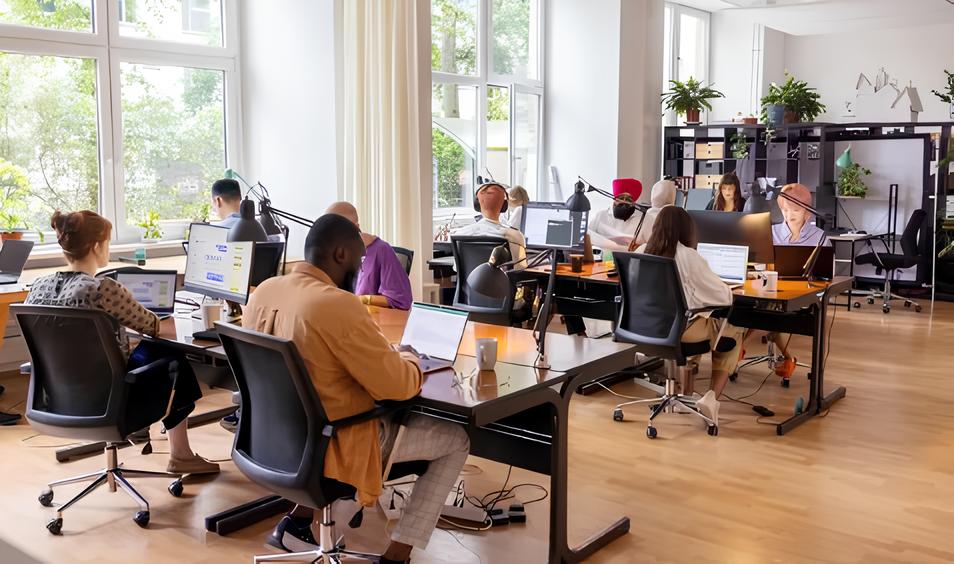 |
Anh minh hoa: Metro
This shift inadvertently sparks unspoken conflicts, similar to Jason's experience. Polly Frier, 29, from the UK, admits she often used "bullet eyes" to defend her preferred desk corner. Over time, that spot became "Polly's desk," an untouchable territory colleagues still referenced even after her departure.
On social media, many express frustration when shared desks are "marked" by colleagues leaving personal belongings overnight, even if they arrive later than others.
Hannah Salton, a career consultant in the UK, explains, "Even in a shared space, if people occupy one spot for over 90% of the time, they develop a sense of ownership." When this implicit agreement is broken, a feeling of territorial invasion arises, creating internal tension.
Conflict intensifies when some companies maintain private offices for leaders, while employees endure the inconvenience of "flexibility."
However, experts believe this trend is difficult to reverse. Effective management is key to resolving the challenges. Brendon Bentley, a business manager in Auckland, New Zealand, successfully implemented this model for 45 employees using 35 desks.
Bentley's company provides personal lockers for employees to store belongings daily, eliminating the habit of "marking" seats. He divided the space into two areas: a common workspace and a quiet zone for focused work. "Even on the busiest days, the office is only 75% full, so there has never been a shortage of seats," Bentley noted.
William Stokes, CEO of the Co-space workspace chain, emphasizes the necessity of a flexible mindset. "No desk truly belongs to an individual. People often choose spots with good lighting or strong Wi-Fi, but they must understand these are shared resources," he said.
Despite this, in the US, where office return rates remain low, resistance to hot desking persists. According to Bloomberg, some businesses are even promoting "private desks" as a special benefit to attract talent.
Nhat Minh (Metro, CNBC)