Chamali Kodikara, director of food safety management at the US Institute of Food Technology, stated that plastic containers degrade quickly both physically and chemically under the effects of high temperatures and cleaning chemicals.
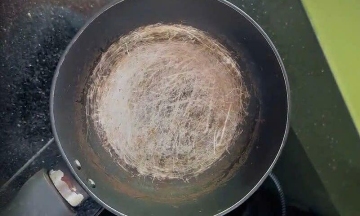
After prolonged use and hundreds of washing cycles, microscopic cracks appear on the plastic surface. These cracks cause plastic particles to flake off and toxic chemicals to leak into food. Simultaneously, food residue easily adheres to these scratches, becoming an ideal environment for bacteria to multiply.
Professor Keith Warriner, from the Food Science Department at the University of Guelph, Canada, emphasized that worn-down plastic containers create conditions for microorganisms to form biofilms. These biofilms can survive regular soap washing or sanitization cycles, increasing the risk of infection. Most notably, *Listeria monocytogenes* is the third leading cause of death from food poisoning in the US.
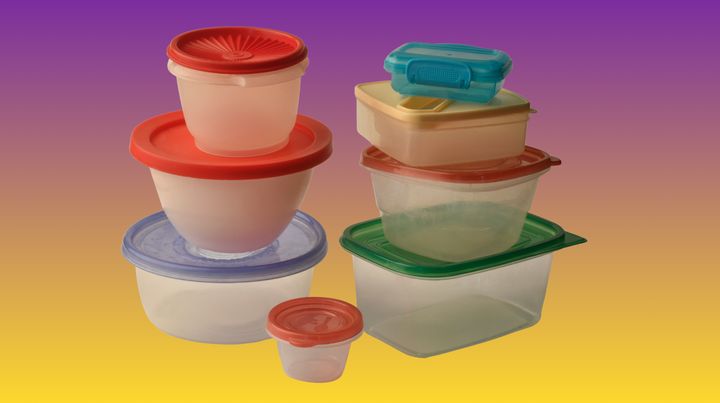 |
Illustration: *HuffPost*
The greatest risk comes from the habit of repurposing single-use plastic containers, such as takeout containers, to heat food in the microwave. According to expert Kodikara, these types of containers are made from thin plastic, which degrades very quickly. When exposed to high temperatures, they release large amounts of microplastics along with additives like flame retardants and plasticizers into the food.
Experts also recommend limiting the use of plastic containers in dishwashers because high water temperatures will alter the plastic structure. Professor Amarat Simonne, a food safety expert at the University of Florida, advises against pouring boiling or hot food into plastic containers.
The leaching of chemicals from plastic also depends on the type of food. Highly acidic foods, such as tomato sauce and lemon, or foods rich in fat, like mayonnaise and butter, have a stronger ability to break down the plastic surface structure.
To minimize risks, Mary M. Johnson, a research specialist at the T.H. Chan School of Public Health, Harvard University, US, guides users to check the "plastic identification codes": numbers from 1 to 7 located within the triangular symbol on the bottom of the container. Below is the classification of safety levels:
Limit use for food storage: code 3 (PVC plastic), code 6 (Polystyrene - foam plastic), and code 7 (Other plastics, often containing BPA).
Safer options: code 1 (PET), code 2 (HDPE), code 4 (LDPE), and code 5 (PP - Polypropylene).
Among these, only code 5 (PP - Polypropylene) is rated for good heat resistance and can be safely used in microwaves. However, expert Johnson recommends that the safest and most sustainable solution for family health is to switch to ceramic, glass, or stainless steel containers. If plastic containers must be used, experts advise replacing them every 6 months or one year of continuous use.
Ngoc Ngan (According to Huffpost)