In Japan, a small plate displaying the family name of the residents, such as Sato, Suzuki, or Yamaguchi, is attached to the front door of every house or ground-floor mailbox. These plates, known in Japanese as "Hyōsatsu", are crafted from various materials like wood, stone, ceramics, or metal.
Beyond simple identification, Hyōsatsu serves as a social marker, mirroring Japan's culture of transparency and emphasizing trust.
Symbol of family and belief
The custom of displaying nameplates originated in 1923 when the postal service faced difficulties reaching ordinary citizens due to population displacement. This was especially true after the Great Kanto Earthquake, which necessitated rebuilding numerous homes. To help postal workers find correct addresses and confirm family residences, the practice of hanging nameplates gained popularity.
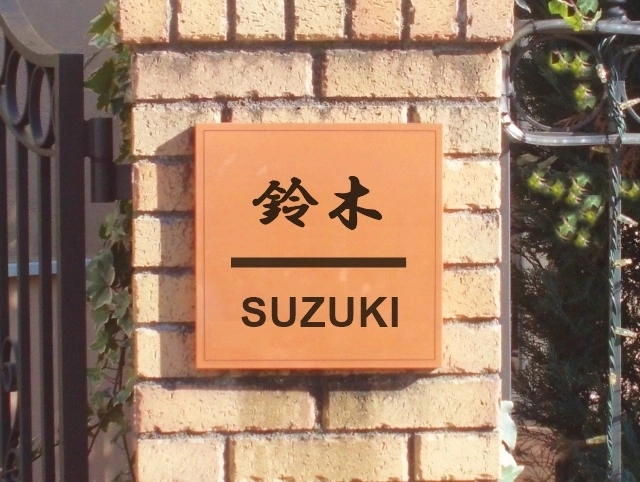 |
A nameplate in front of a Japanese home. *Yunomi* |
Furthermore, common Japanese people only officially adopted surnames in the 19th century. As the government finalized the family name system, people increasingly valued lineage. Publicly displaying their surname on a doorplate became a source of pride, affirming the existence of a family.
In the 2024 study, "The Folklore Surrounding House Nameplates in Contemporary Japanese Society" by Soichiro Sunami of Kanagawa University, Hyōsatsu also carries spiritual significance, similar to a seal or tombstone. As a symbol representing the home, any impact on the plate is believed to directly affect the homeowner's destiny. This culture, in fact, continues the ancient tradition of hanging charms outside doors to ward off evil spirits and bad omens.
Supporting public services and security
Hyōsatsu plays a crucial role in the postal and delivery service systems. Modern Japanese society still maintains the practice of using paper correspondence for important documents such as utility bills, bank statements, insurance notices, or job offers.
Delivery personnel in Japan typically arrive at homes without prior phone calls. If residents are absent, postal workers leave a notice for them to reschedule delivery. In this scenario, confirming the correct address via the nameplate is mandatory. All families must register their residency information with the local post office.
The nameplates also significantly support mapping and security efforts. Thanks to the Hyōsatsu system, Japan's largest mapping company, Zenrin, mobilized 280,000 employees to verify addresses door-to-door, creating a national mapping system with an accuracy of up to 99.6%.
Symbol of a "society of trust"
Hyōsatsu establishes a social boundary. Publicly displaying family names is not seen as a privacy disclosure but rather an affirmation that Japan is a "society of trust" rather than one of caution.
Traditionally, Japanese culture emphasizes the cohesion of neighborhood self-governing associations. Community activities, disaster prevention, and evacuation efforts all rely on resident lists. The nameplate on the door declares that the homeowner is part of the community, lives transparently, and is ready to share collective responsibilities. This openness provides a sense of security for neighbors, patrolling police, and first-time visitors alike.
This "transparency to build trust" logic also explains Japanese communication habits, such as always exchanging business cards with clear personal information upon first meeting, or stating one's name immediately when making a phone call.
Japanese homes often include a designated spot for a nameplate during the design phase, considering it a basic architectural standard. An elaborate nameplate can cost anywhere from 65 USD to hundreds of USD.
In recent years, however, the rate of displaying nameplates has tended to decrease due to concerns about privacy and urban security. Currently, approximately 90% of detached houses and 50% of high-rise apartments in Japan maintain this practice.
In apartment buildings, clearly listing apartment numbers and individual household names on mailboxes can pose a danger to women living alone if they are being stalked. To protect themselves, most modern families choose to display only their surname.
Despite adapting to many changes, Hyōsatsu remains a deeply rooted cultural practice, balancing traditional openness with the caution of contemporary society.
Bao Nhien (Source: 163/Aboluowang)