


France stands out globally for its strict labor laws regarding lunch breaks. Article R.4228-19 of the French Labor Code explicitly prohibits employees from eating meals at their desks.
According to food historian Martin Bruegel, this regulation dates back to the 1890s. During that period, rapid urbanization forced workers to commute long distances, leading them to bring packed lunches and eat directly on factory floors. Factory environments were often unsanitary, harboring tuberculosis bacteria and phosphorus fumes, making the practice of eating with hands on-site a significant health risk.
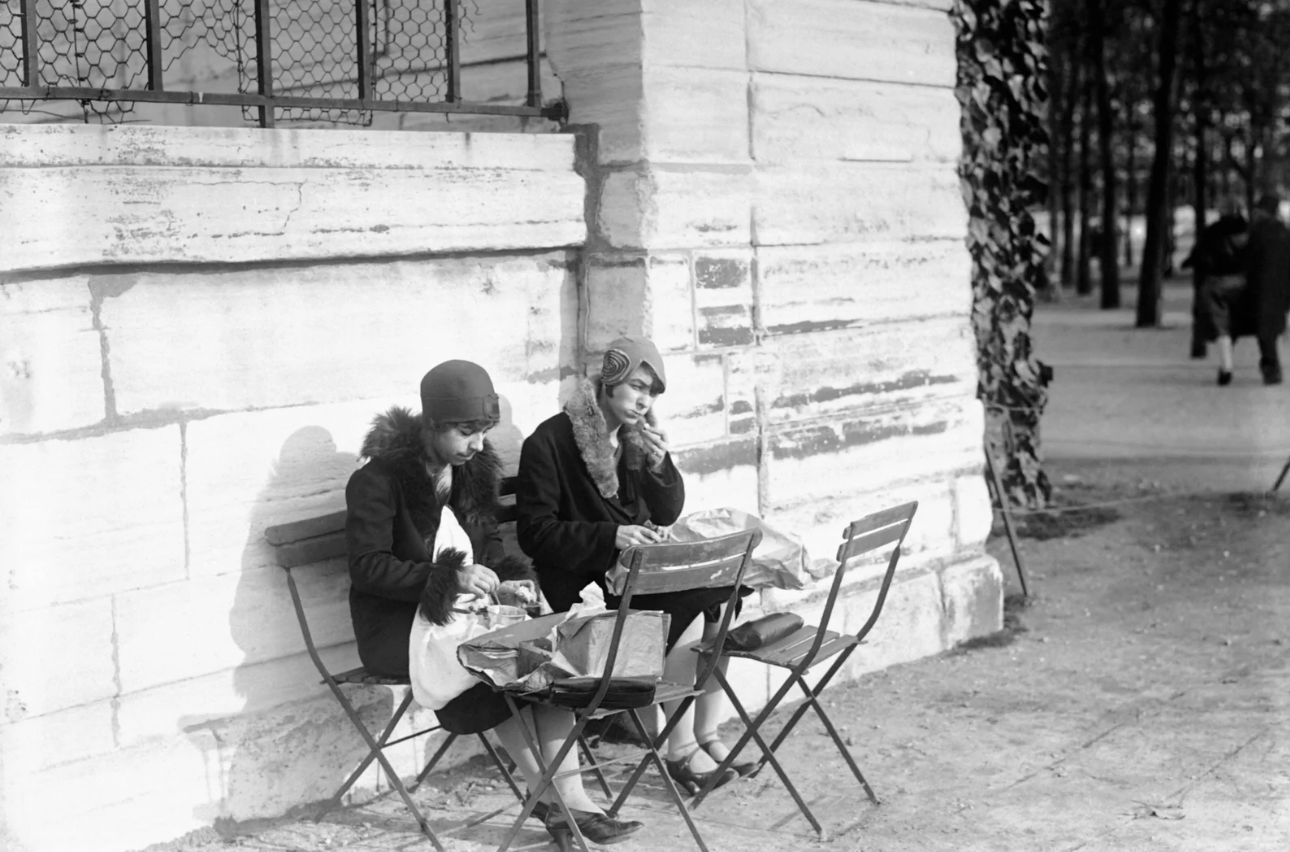 |
Two young women enjoy an outdoor lunch in Paris in 1/1929. *Photo: Gamma-Keystone* |
In 2021, the French Ministry of Labor temporarily eased this rule due to the Covid-19 pandemic. However, the core objective of the law remains to guarantee employees' right to a proper break.
Numerous studies show that short breaks are more effective for sustaining productivity than continuous screen time. Stepping away from one's desk offers relaxation and directly improves mental well-being and nutritional habits.
The consequences of eating at your desk
Many individuals, whether working remotely or in the office, maintain the habit of multitasking during meals. Clinical psychologist Sam Von Reiche notes that while some remote workers use cooking time to break the habit of eating at their desks, the proximity to the kitchen can paradoxically lead to "unconscious eating".
Leanne Redman, an expert at the Pennington Biomedical Research Center in the US, explains that "unconscious eating" occurs when someone continuously consumes food, ignoring satiety signals. Clinical nutritionist Brooke Scheller adds that easy access to snacks at one's desk often results in higher calorie intake.
The benefits of stepping away from your desk
Dr. Scheller states that taking a 30-60 minute break helps prevent burnout and boosts productivity. This break also interrupts the stress caused by prolonged exposure to blue light from electronic devices.
Von Reiche highlights that recharging during a break helps the brain reset, improving focus and creativity. Lunch breaks also address the need for social interaction. She emphasizes that scrolling through social media during a meal cannot replace direct interaction, suggesting employees utilize common areas or parks for meals and fresh air.
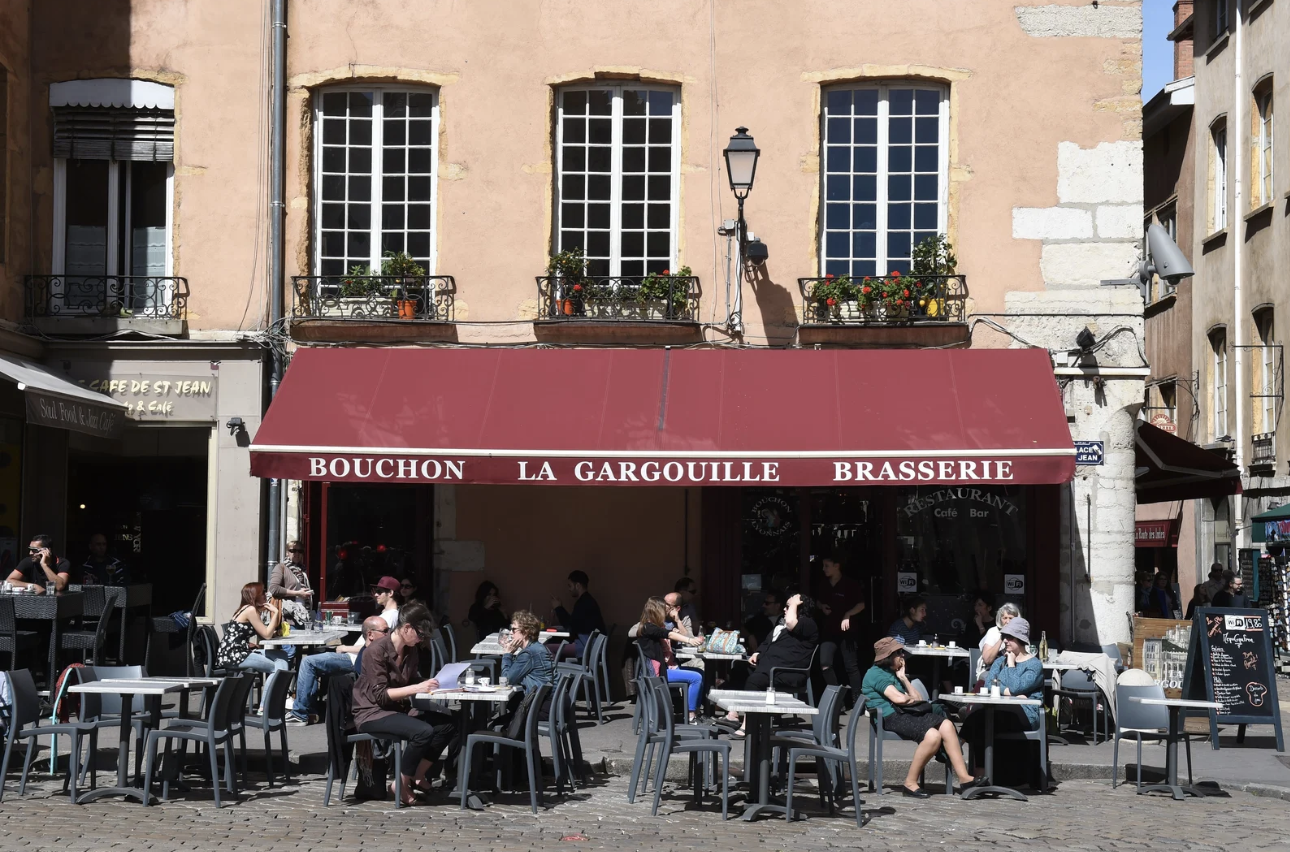 |
French people dine on the terrace of La Gargouille cafe in Saint-Jean Square, Lyon, France, 2016. *Photo: Philippe Desmazes/AFP* |
Solutions for changing habits
To improve health, employees should integrate lunch breaks into their fixed schedules. Redman suggests this habit fosters conscious eating choices. Experts offer several strategies:
Change your environment: Move to a dining table or another area, creating a space separate from your workspace.
Eliminate temptations: Store snacks out of sight to reduce mindless munching.
Simulate a workday: If working from home, pack your lunch and adhere to break times as if you were in the office.
How lunch breaks are utilized significantly impacts quality of life. Von Reiche advises that US office workers should adopt European break habits, abandoning continuous desk work to enhance overall life satisfaction.
By Minh Phuong (Based on Huffpost, NPR)


