Teachers at Bo Trach Ethnic Boarding School and Ban But Sub-school, Thuong Trach Primary School No. 1, welcome many students facing difficult circumstances. These children are orphans or have parents living far away, spending most of their formative years with friends and teachers. Their lives revolve around the school amidst the mountains of Phong Nha - Ke Bang.
 |
Ban But Sub-school, Thuong Trach Primary School No. 1, amidst the Phong Nha mountains. Photo: Ngoc Ngoc
A home for children lacking affection
Most students at Bo Trach Ethnic Boarding School return home on weekends, or once every two to three weeks. Unlike his peers, Dinh Chat, an 8th-grade student, stays at school throughout the academic year. He tearfully recounted his mother's words: "If there's no urgent reason, don't come home; stay at school with your teachers. If you need to, I'll ask someone to pick you up." Following his mother's advice, during his three years at Bo Trach Ethnic Boarding School, he has embraced the school as his second home, diligently studying and living with his teachers on weekends, even when his friends return to their families.
Dinh Chat lost his father early, leaving only his mother, four older sisters, and two younger sisters. His small home, deep in the mountains, is built of decaying wood. His mother struggles to provide enough food for all seven siblings, so attending school is a "lifeline" for the children.
"At home, I don't get enough to eat; if I do, it's just one meal with bamboo shoots. Unlike at school, I get three meals with meat and fish. So I always remember my mother's words: to be good, obey my teachers, and study well at school," said the Bru-Van Kieu ethnic boy.
 |
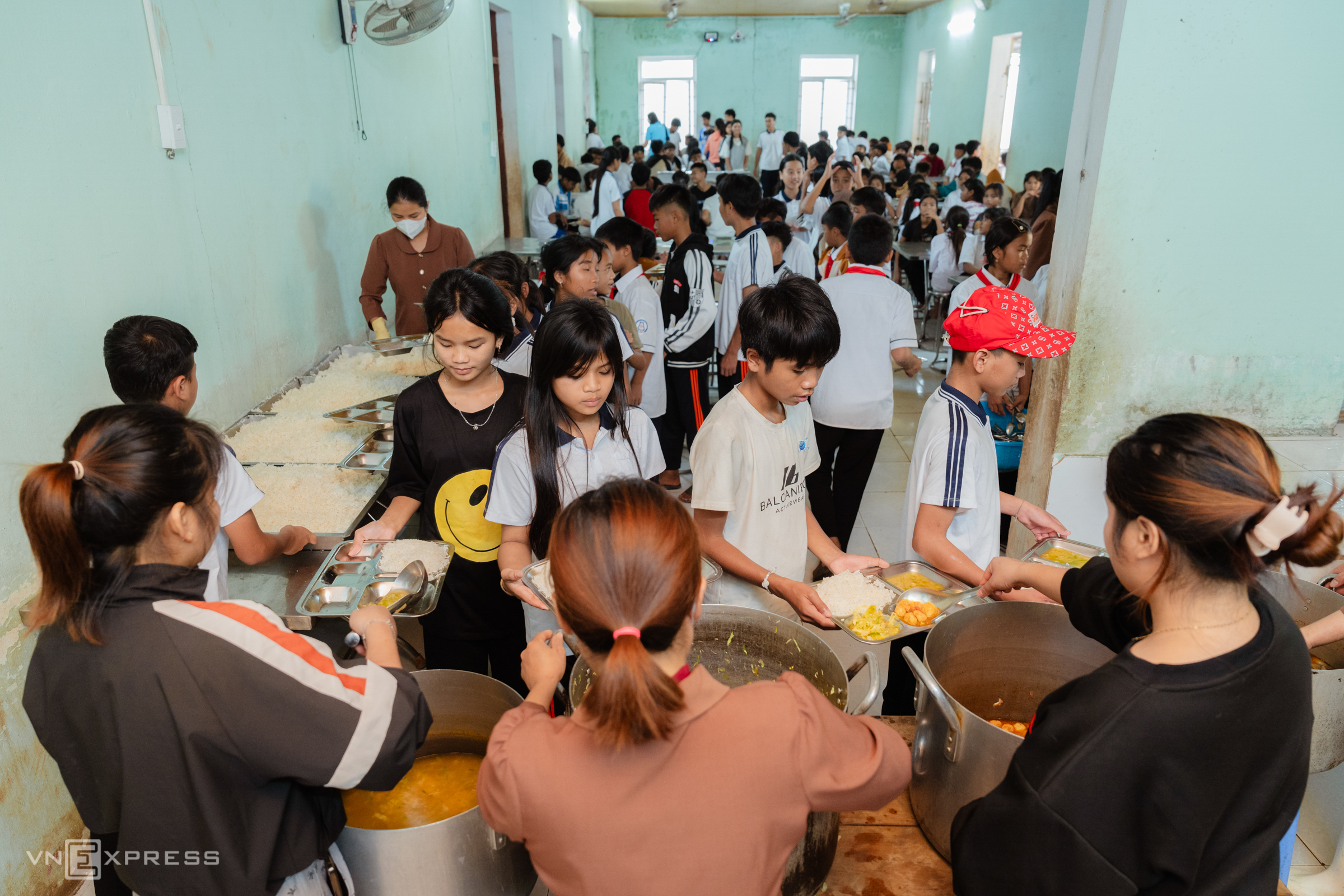
The dining hall for students at Bo Trach Ethnic Boarding School.
 |
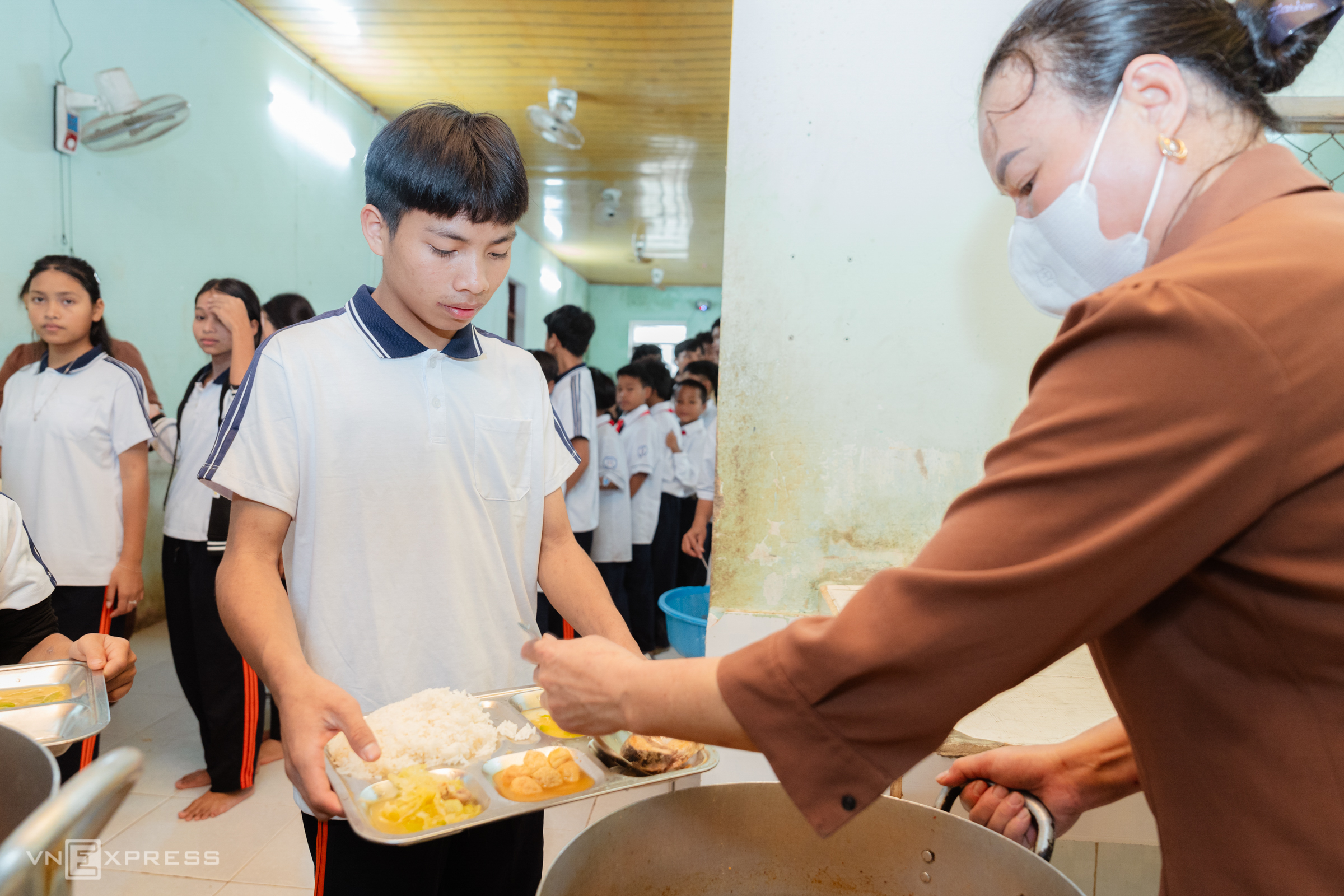
Dinh Chat queues for food with his friends.
 |
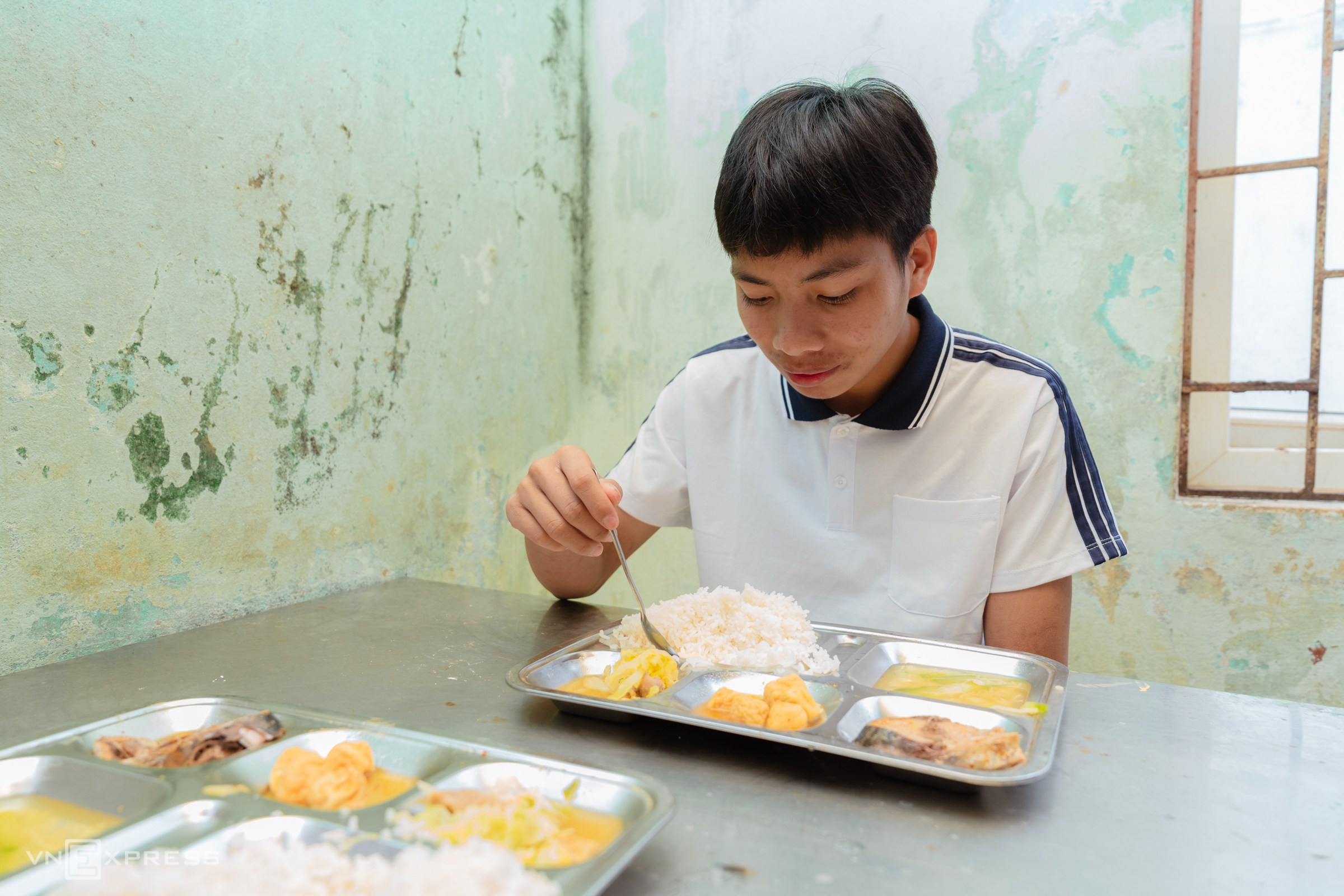
The boy shared that at school, he gets three good meals.
 |
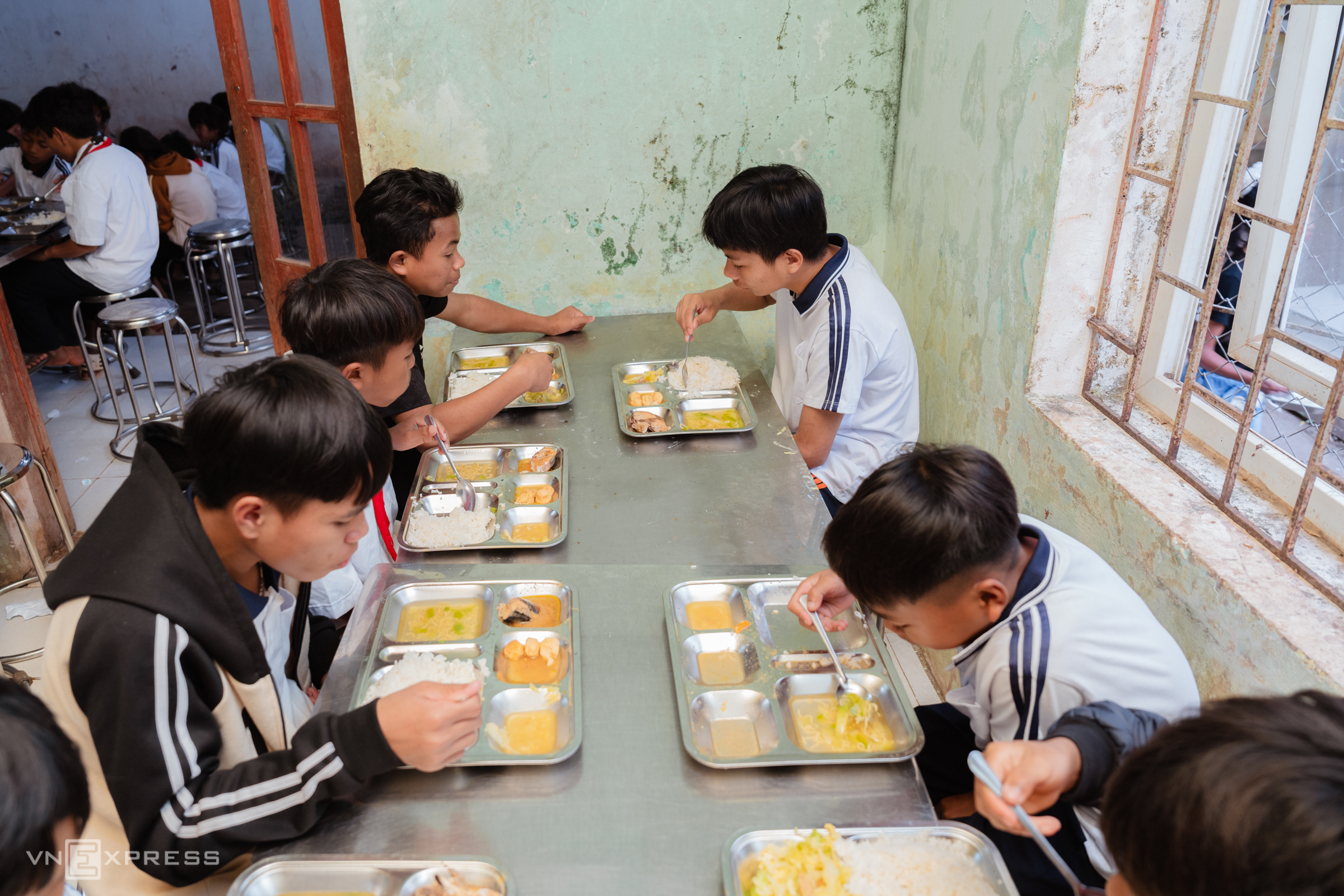
Dinh Chat and his friends eat lunch.
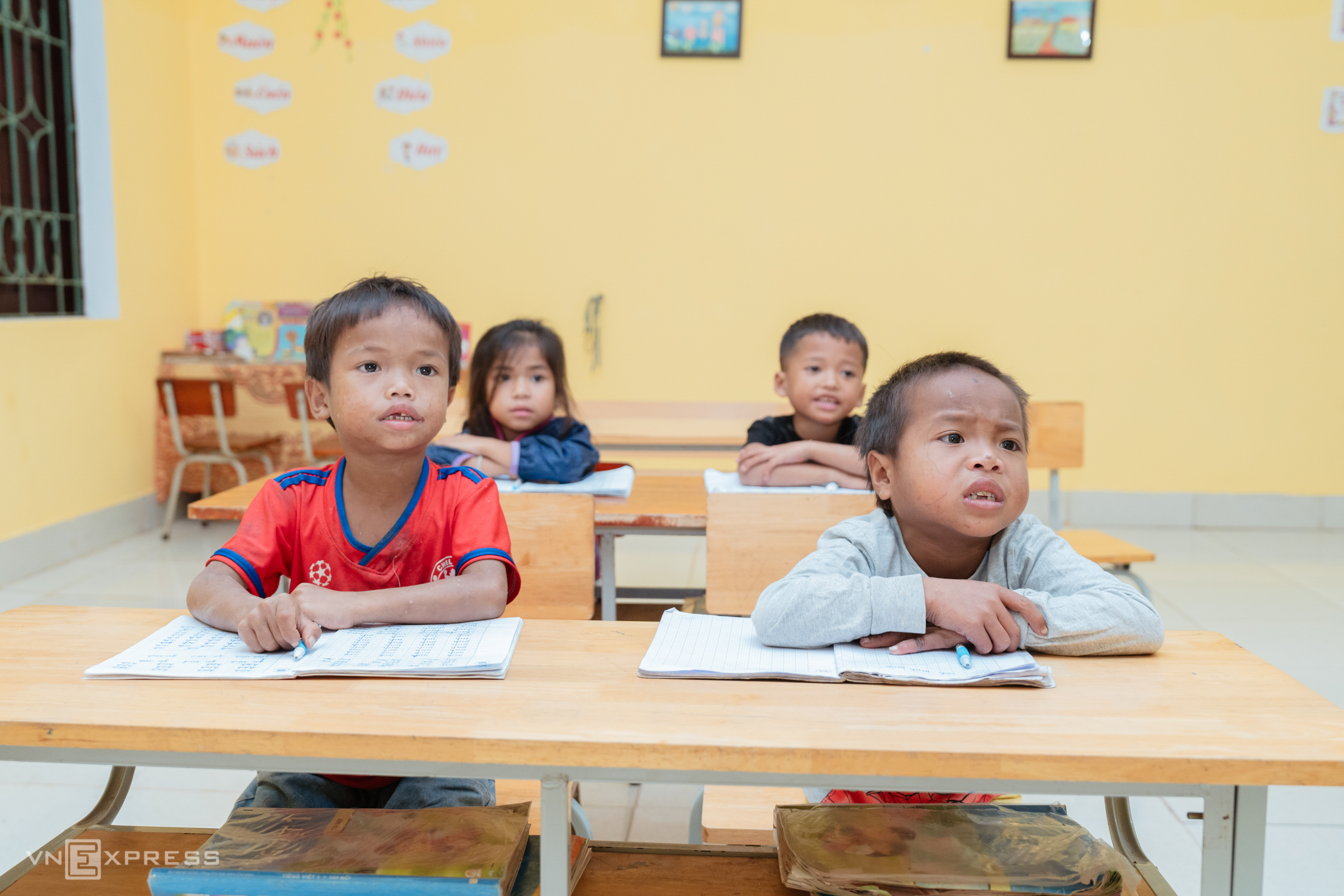
Three kilometers from Bo Trach Ethnic Boarding School, deeper into the villages surrounded by rocky mountains, Ban But Sub-school, Thuong Trach Primary School No. 1, has only 27 students across three classes, taught by three teachers. All students face difficult circumstances, lacking sufficient food and clothing. Each day, the children arrive at school hungry, barefoot, with worn and torn clothes.
The teachers shared that "none of the students at the sub-school are without hardship," but the cases of cousins Dinh Trinh and Dinh Linh are particularly special.
 |
Dinh Trinh and Dinh Linh (from right) at their second home, Ban But Sub-school, Thuong Trach Primary School No. 1.
Ban But is near the school. Teachers at this sub-school frequently visit the children's homes to encourage parents to send their children to school and to bring essential supplies from the lowlands to support families. Tran Thi Thuy Ha, one of the three teachers at the sub-school, recounted a visit where she saw the children looking haggard, the older ones holding the younger, eating sticky rice with salt, prepared by their grandmother or mother for the entire day before they went to work in the fields.
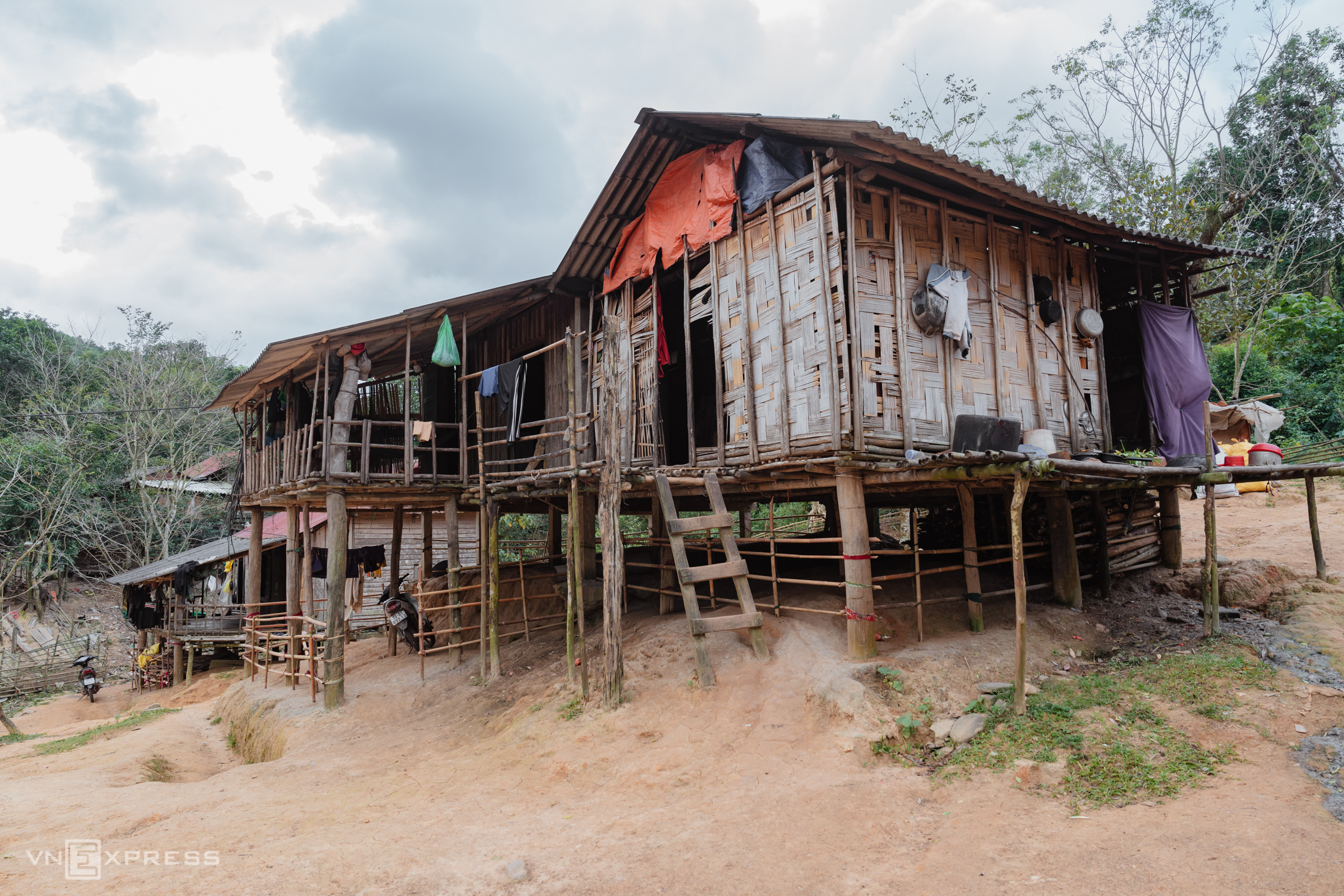
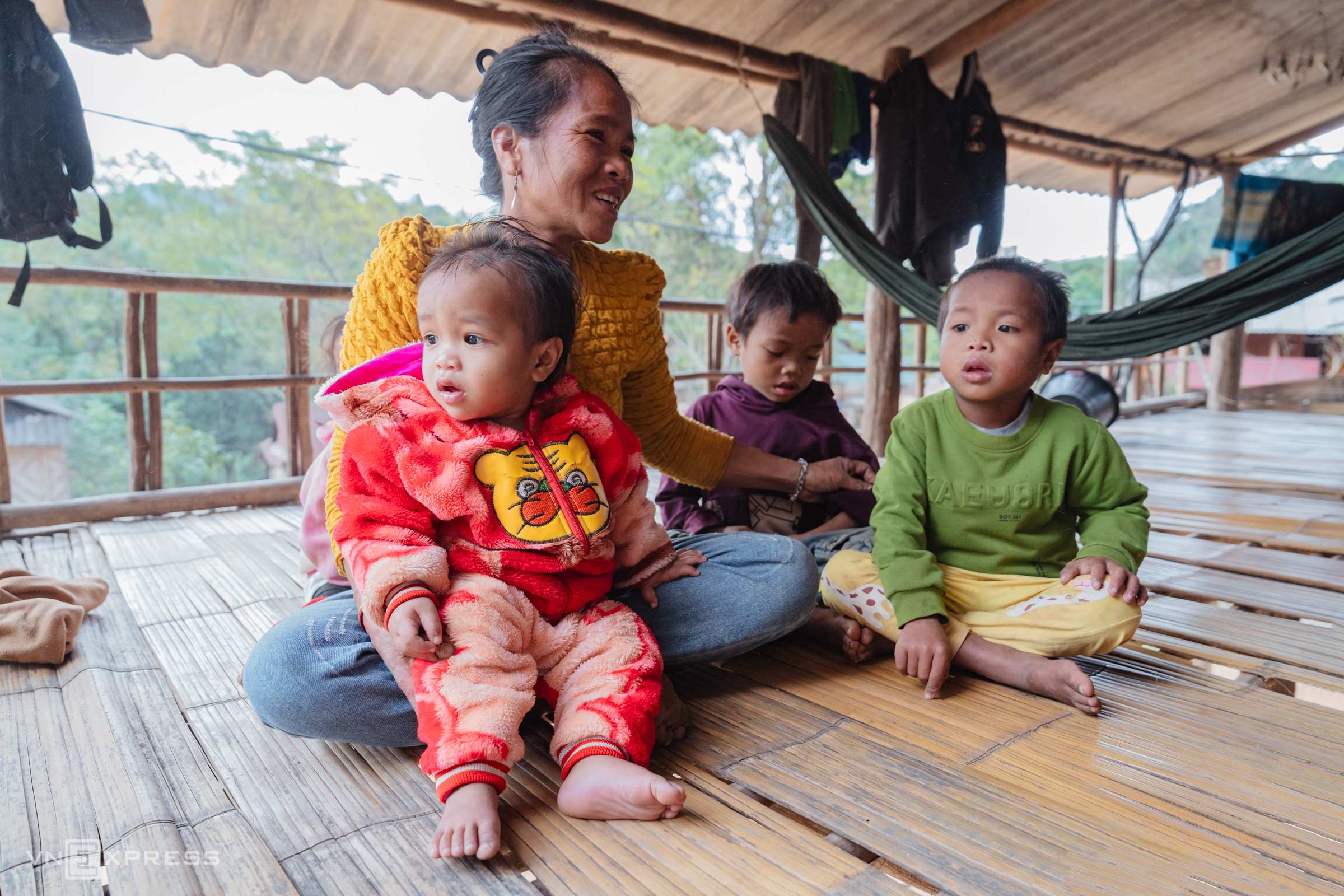
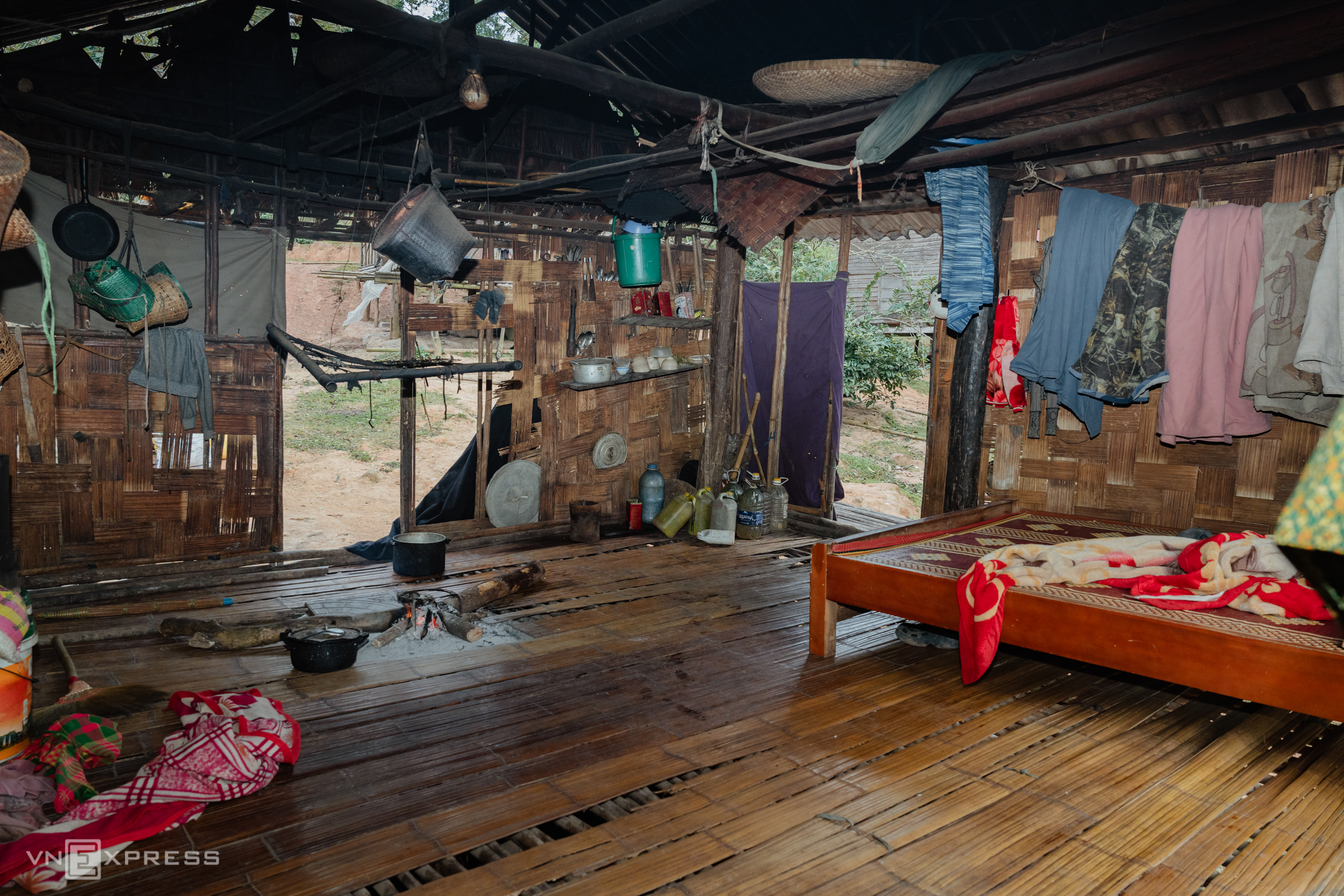
Through these visits, she learned about the circumstances of the two cousins, Dinh Linh and Dinh Trinh. Dinh Linh's mother does not know the child's father. She left her child with her mother, who is Dinh Trinh's mother, and moved to another village to marry. Thus, the two cousins live in a 10-member, four-generation household, in constant poverty.
 |
The home of Dinh Linh and Dinh Trinh's family.
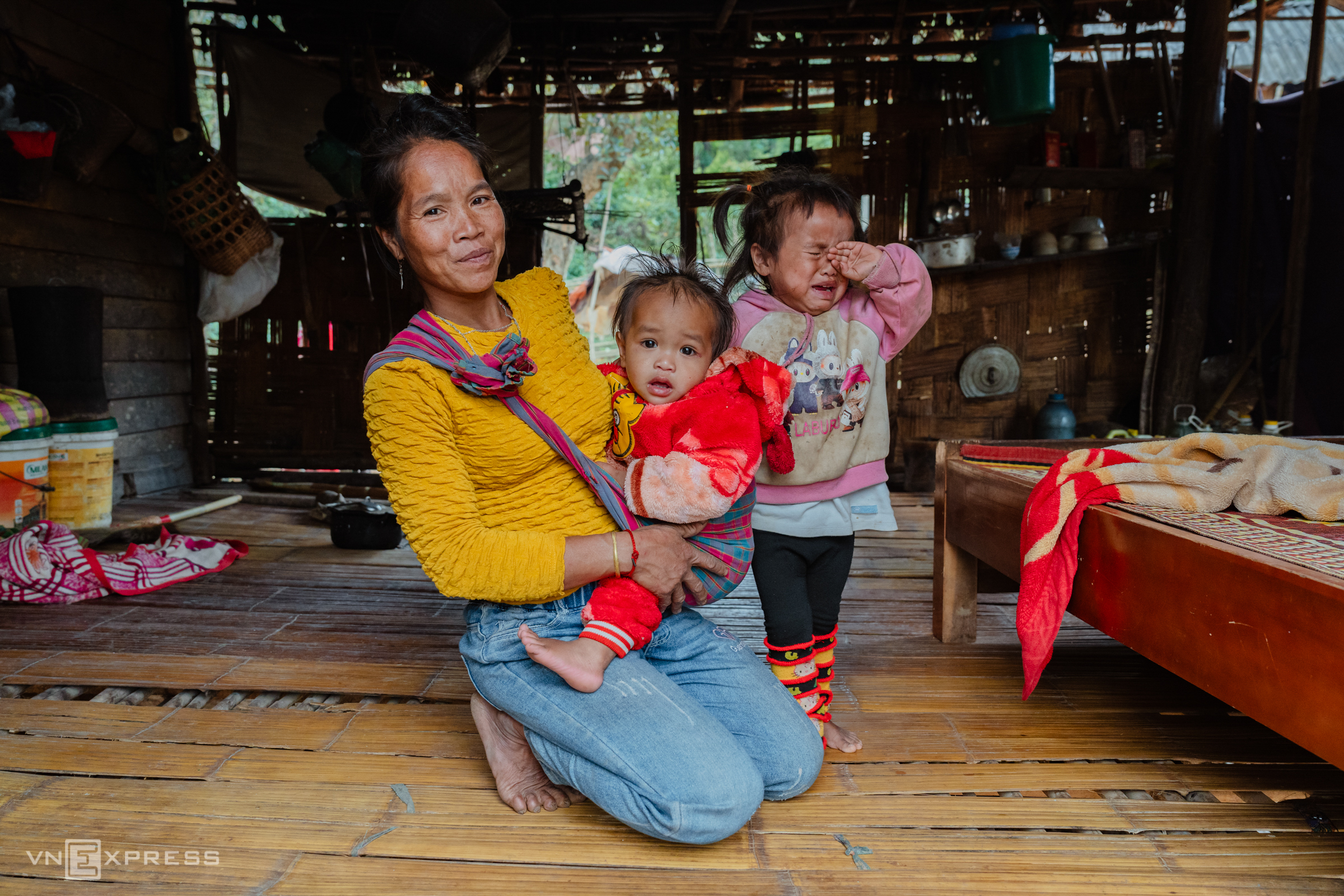 |
Mrs. Y Mom, Dinh Trinh's mother and Dinh Linh's grandmother, raises many children and grandchildren with her husband.
 |
Inside the cousins' home.
 |
Y Mom shared that with Dinh Linh and Dinh Trinh attending school and receiving care from teachers, her burden at home is lighter.
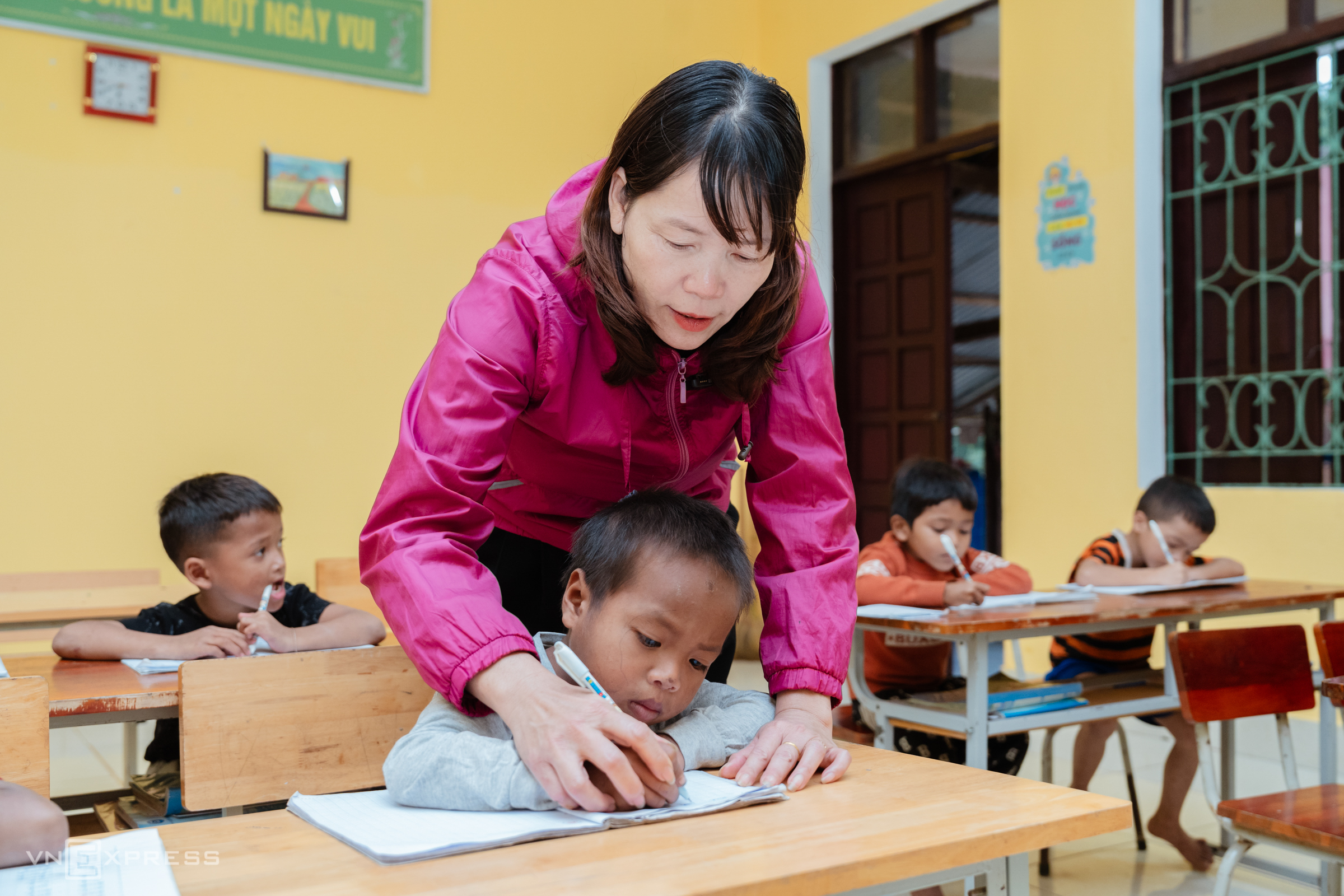
Every day, the two children walk to class to receive extra food from Ms. Ha, who is both their teacher and godmother. Ms. Ha explained that highland children do not communicate like people from the lowlands and do not understand intimacy as they would at home. However, Dinh Trinh and Dinh Linh are very close to her. Dinh Trinh excitedly tells her daily, "Today, father brought bamboo shoots, the whole family ate," or Dinh Linh boasts, "Mother came back from the other village and gave me 200,000 VND."
"Some days, the two cousins would burst into tears as soon as they arrived in class. When asked, we learned they were too hungry. From then on, the school always kept some rice and instant noodles ready. If any child was too hungry, the teachers would feed them before starting lessons," the highland teacher added.
 |
Ms. Ha teaches Dinh Trinh how to write.
Thus, school becomes a home for children lacking affection and basic living conditions. They study, live, and help those around them, treating friends and teachers like parents and siblings. Their childhoods are intertwined with the school.
New life, new habits
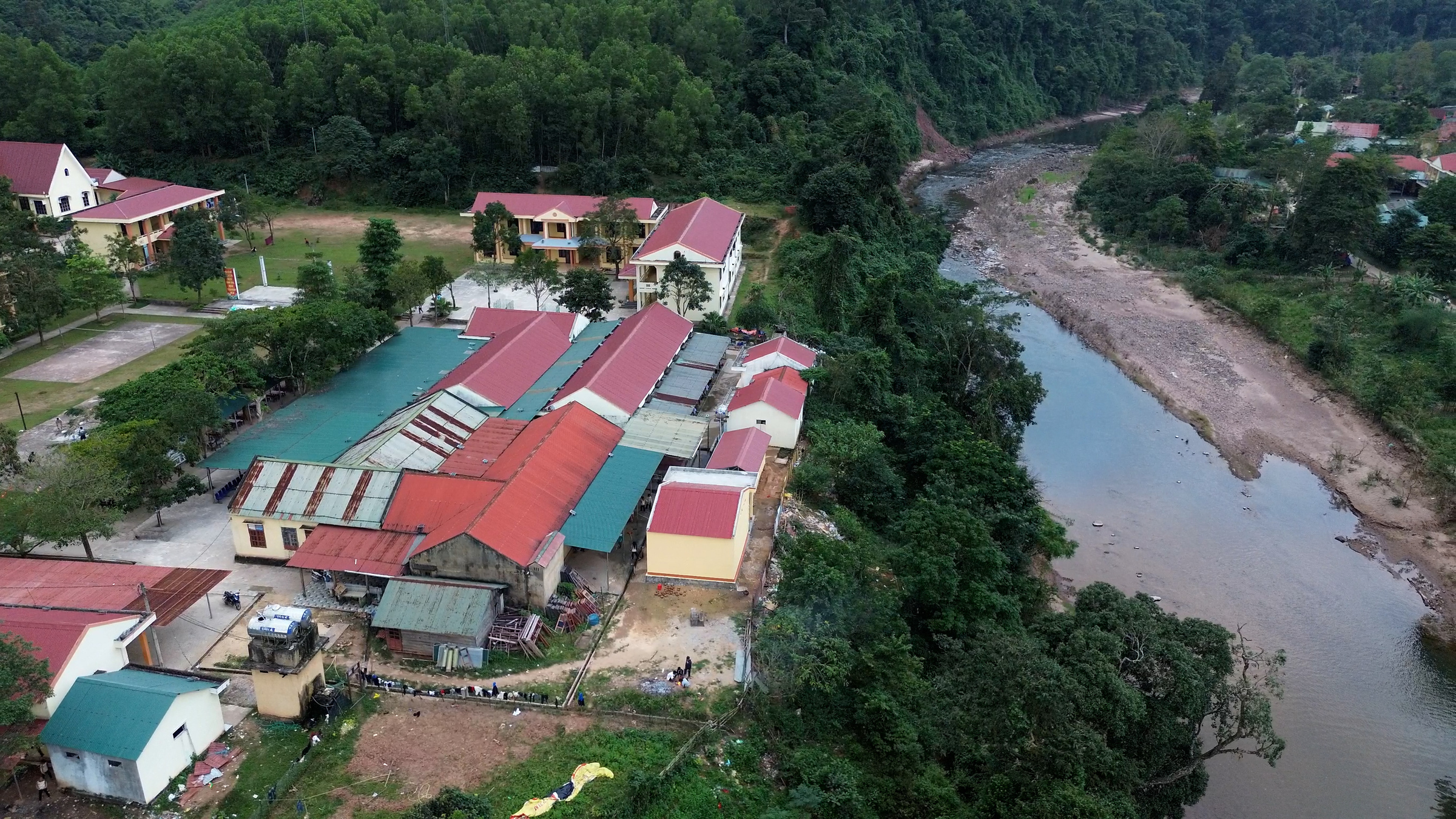
Despite being much better off than at home, Dinh Chat and his friends at Bo Trach Ethnic Boarding School still face many daily challenges. The school is deep within rocky mountain ranges, making all material transport, construction, and repair funding difficult. The school had a toilet facility, but it was severely degraded, often clogged, and constantly lacked water, though it was repurposed as a bathroom.
When the school received a standard sanitation facility and bathroom from Hy Vong Fund, Opella Vietnam, and the Enterogermina probiotic brand, the children eagerly awaited using them every day.
 |
 |
Sanitation facilities and bathroom at Bo Trach Ethnic Boarding School.
Previously, Dinh Chat and his classmates had to bathe in the stream and use the old, frequently broken toilet. Despite the teachers' care and sufficient food, his life still had many inconveniences. He often developed rashes or stomach aches from holding his urine due to too few restrooms. Because of the clogging, the toilet odor permeated the rooms, affecting his study and rest time.
 |
Dinh Chat goes to bathe in the stream near the school.
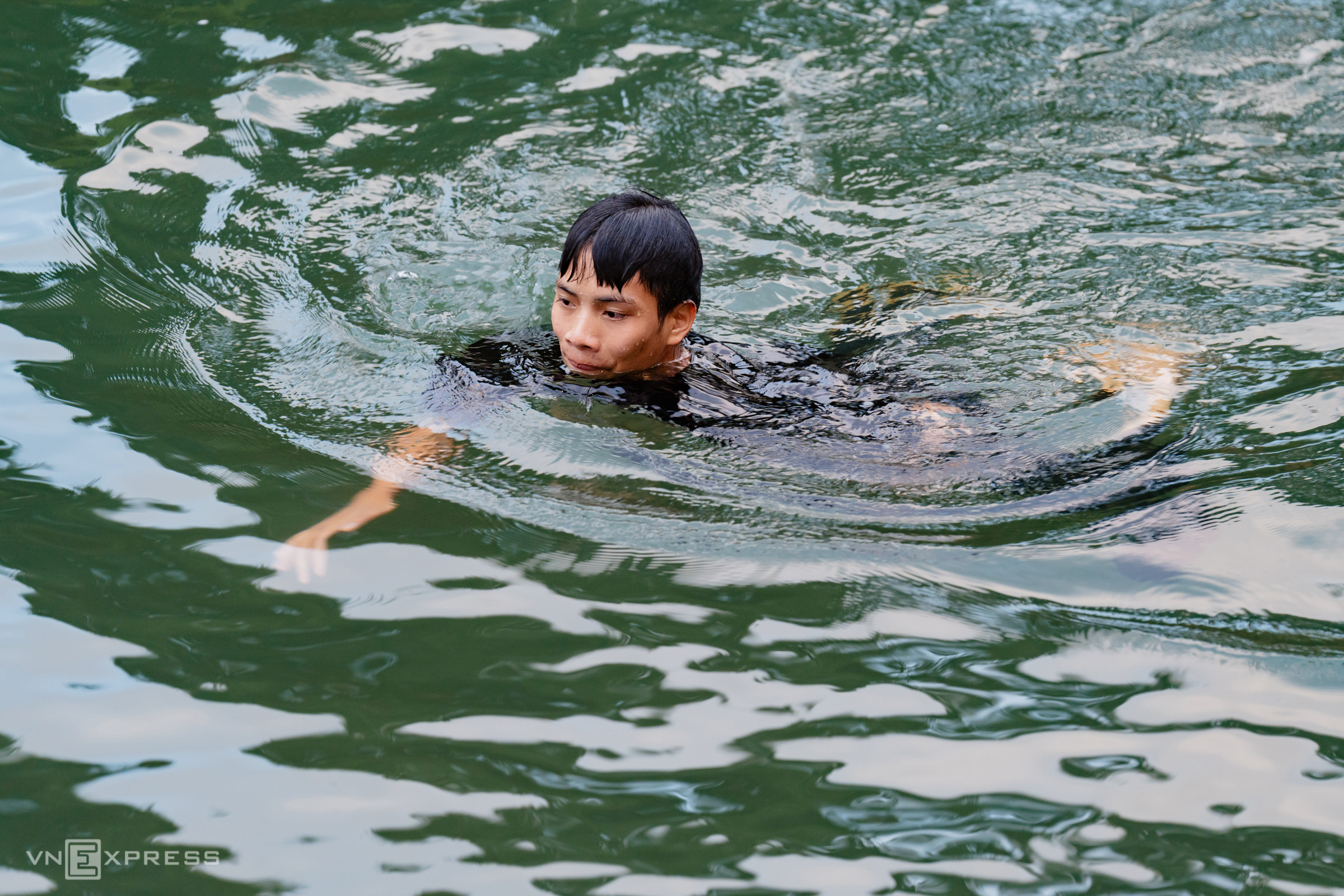
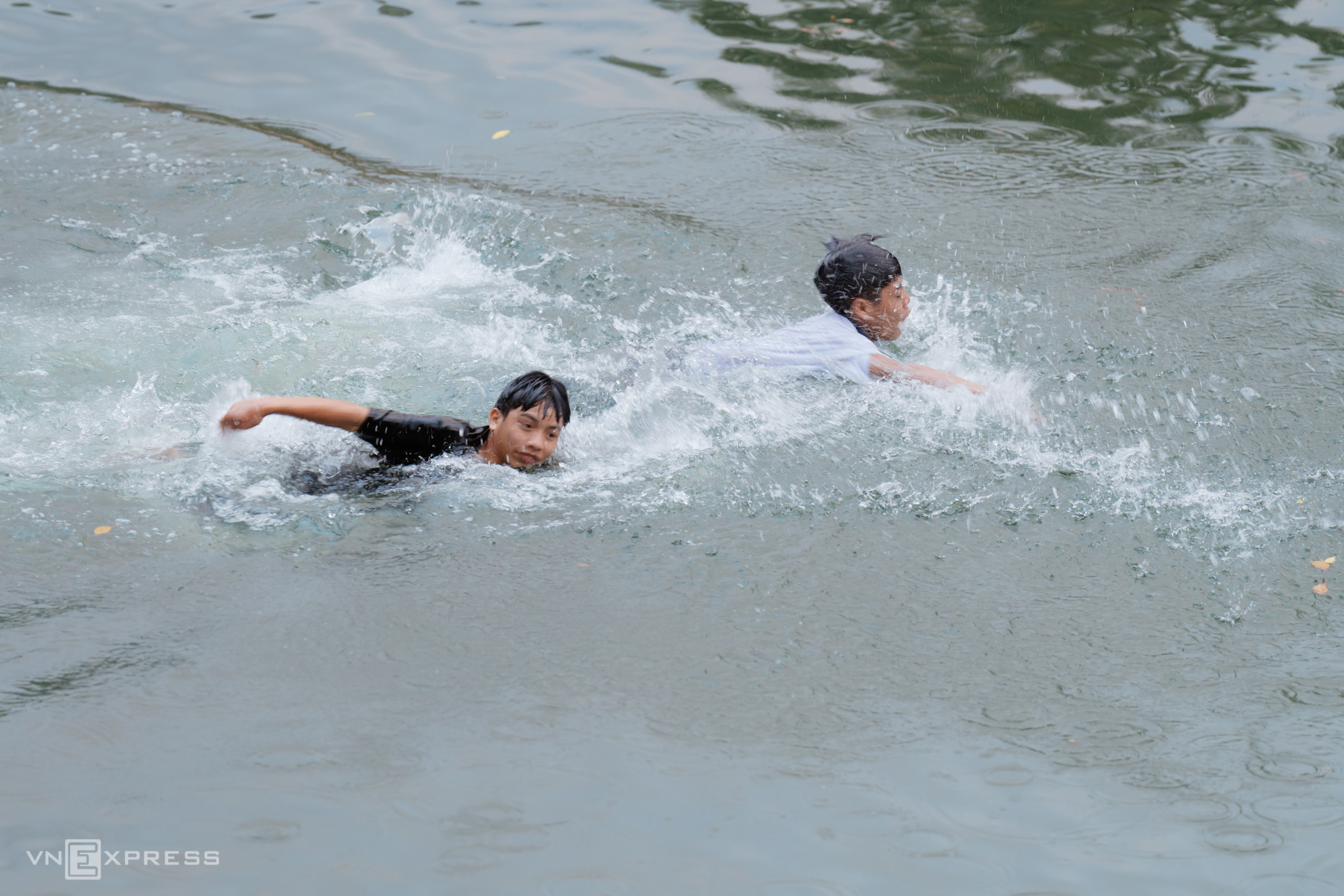
Dinh Chat bathes in the stream with his friends.
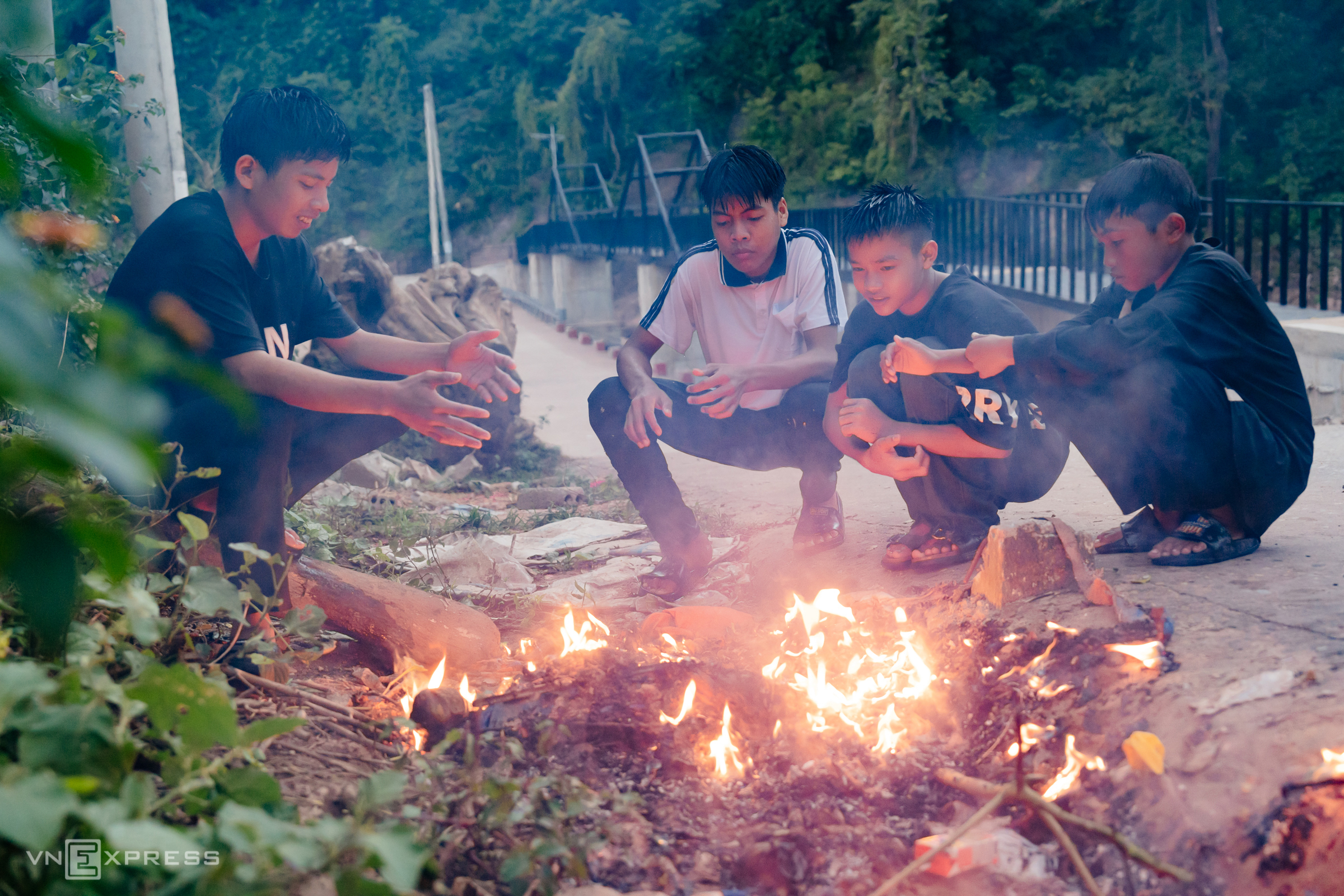
After bathing, Dinh Chat and his friends warm themselves by a fire before returning to school.
On the day of the School Hygiene Festival, the handover event, Dinh Chat woke up early to be the first to use the new bathroom.
"I still like bathing in the stream because I can swim. I'm a good swimmer. But in winter, I used to have to burn leaves and dry branches on the bank to warm up after bathing. It helped, but the smoke smelled bad, and walking far in wet clothes was still cold. When I bathed in the stream too much, I would often get stomach aches. Now that there's a bathroom, I can bathe and go straight back to my room," the boy said.
 |
Dinh Chat wakes up early to use the new bathroom first.
Mr. Nguyen Van Hao, the school's vice principal, also shared that students previously faced difficult living conditions. Whenever water needed to be pumped, the school had to use a generator. Early this year, the area finally received a power grid system and solar panels. With deteriorating infrastructure and limited water, very few students could bathe at school.
"In winter, to maintain personal hygiene, the children still had to go to the stream to bathe and wash. They are children, so they are still happy to swim, but the teachers feel very sad and worried about them getting sick, so we try to improve things little by little," Mr. Hao said.
 |
Dinh Chat's skin easily breaks out in rashes.
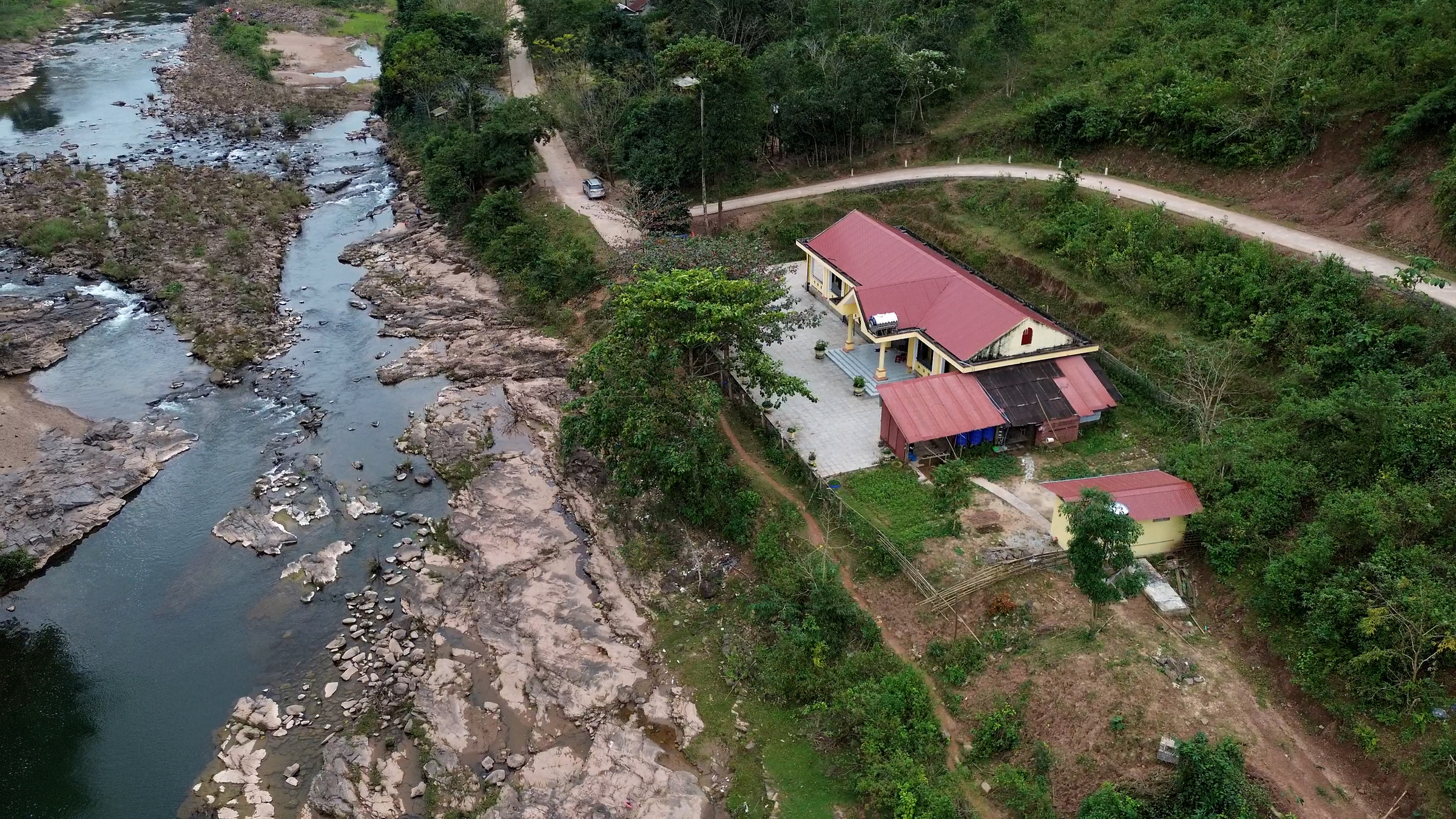
Despite such hardships, the material conditions at Bo Trach Ethnic Boarding School remain a dream for the children at Ban But Sub-school. This location had never had a toilet. Before receiving the facility from Hy Vong Fund, teachers had to take the children to a stream for personal hygiene.
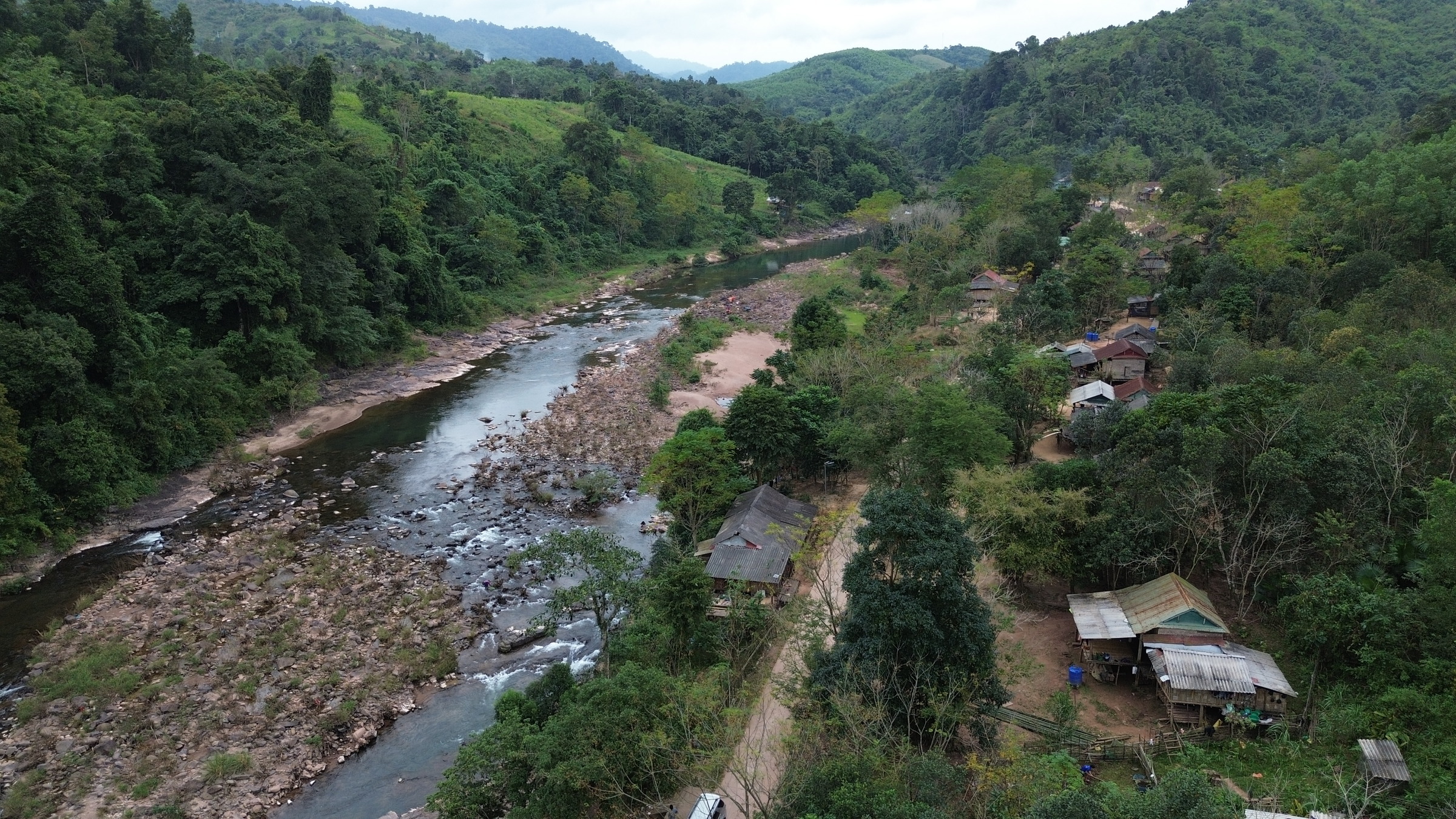 |
The stream near Ban But sub-school. Photo: Ngoc Ngoc
After surveying schools in Quang Tri, the project provided Ban But Sub-school with a new sanitation facility, meeting Ministry of Education and Training standards. This aims to help the children access a more civilized lifestyle, change their habits, and thereby improve their overall health, especially digestive health.
"Before, we had to go to a stream quite far from the school, and washing the children was very inconvenient, especially for young ones in 1st-2nd grade. Now that we have a toilet and sinks, the students are cleaner, and the teachers have an easier time," Ms. Ha said.
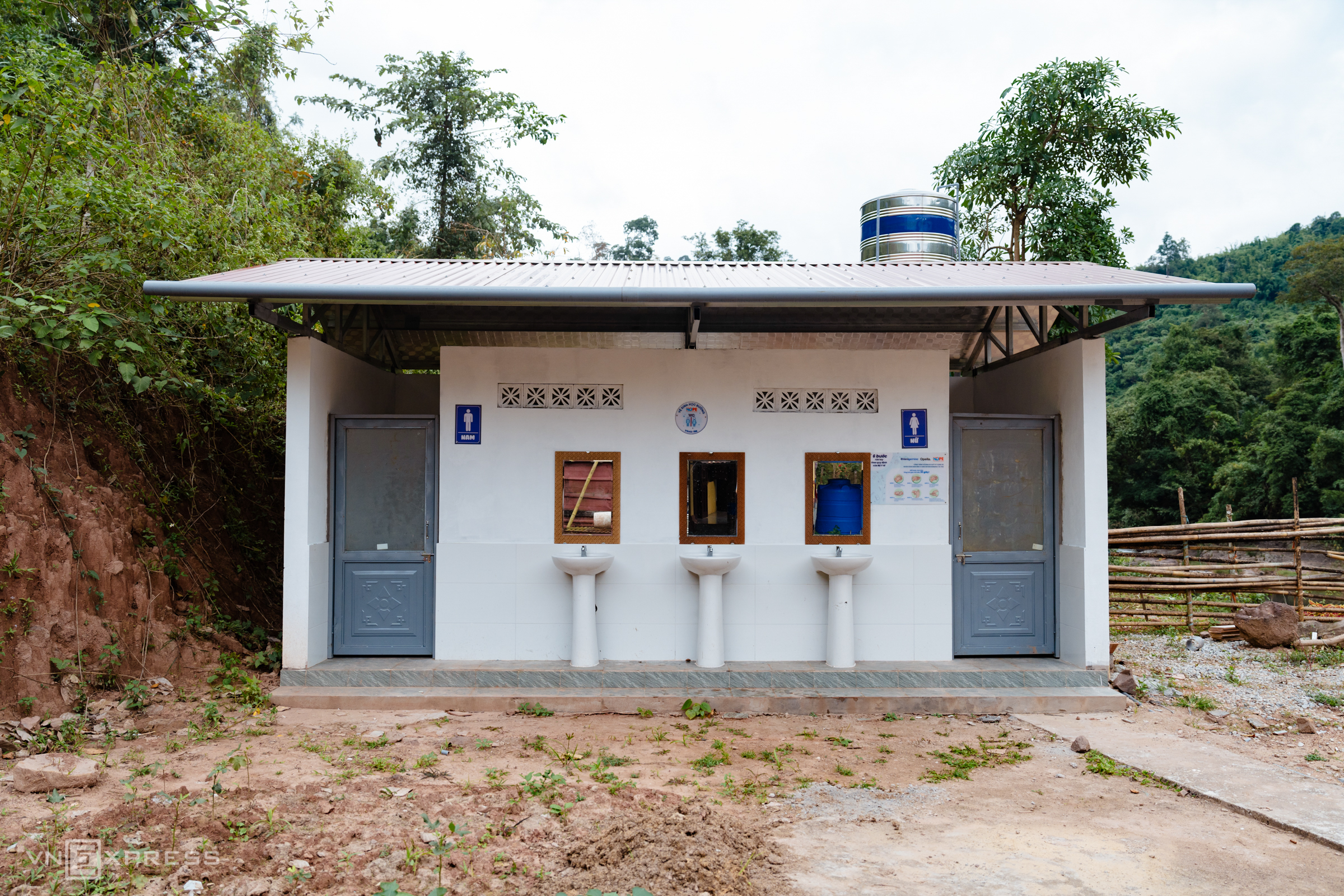 |
New sanitation facility at Ban But sub-school.
The facility includes four compartments, meeting Ministry of Education and Training standards, with separate sections for boys and girls, handwashing basins, and standard sanitary equipment to ensure capacity.
In addition to providing physical facilities, the project also coordinates educational activities to raise students' awareness of school hygiene. Accompanying guide materials are compiled to foster proper hygiene habits from school to family and community.
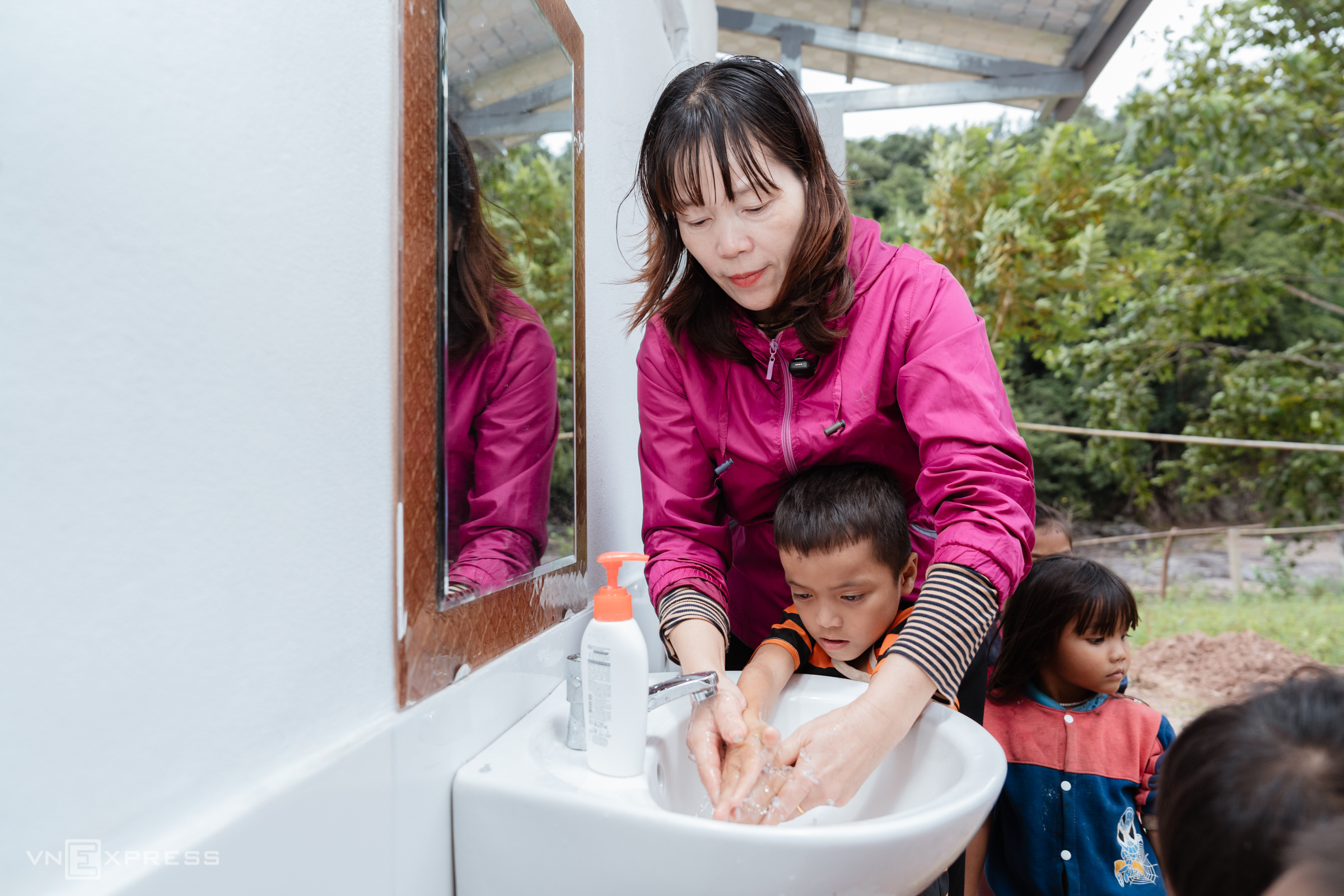 |
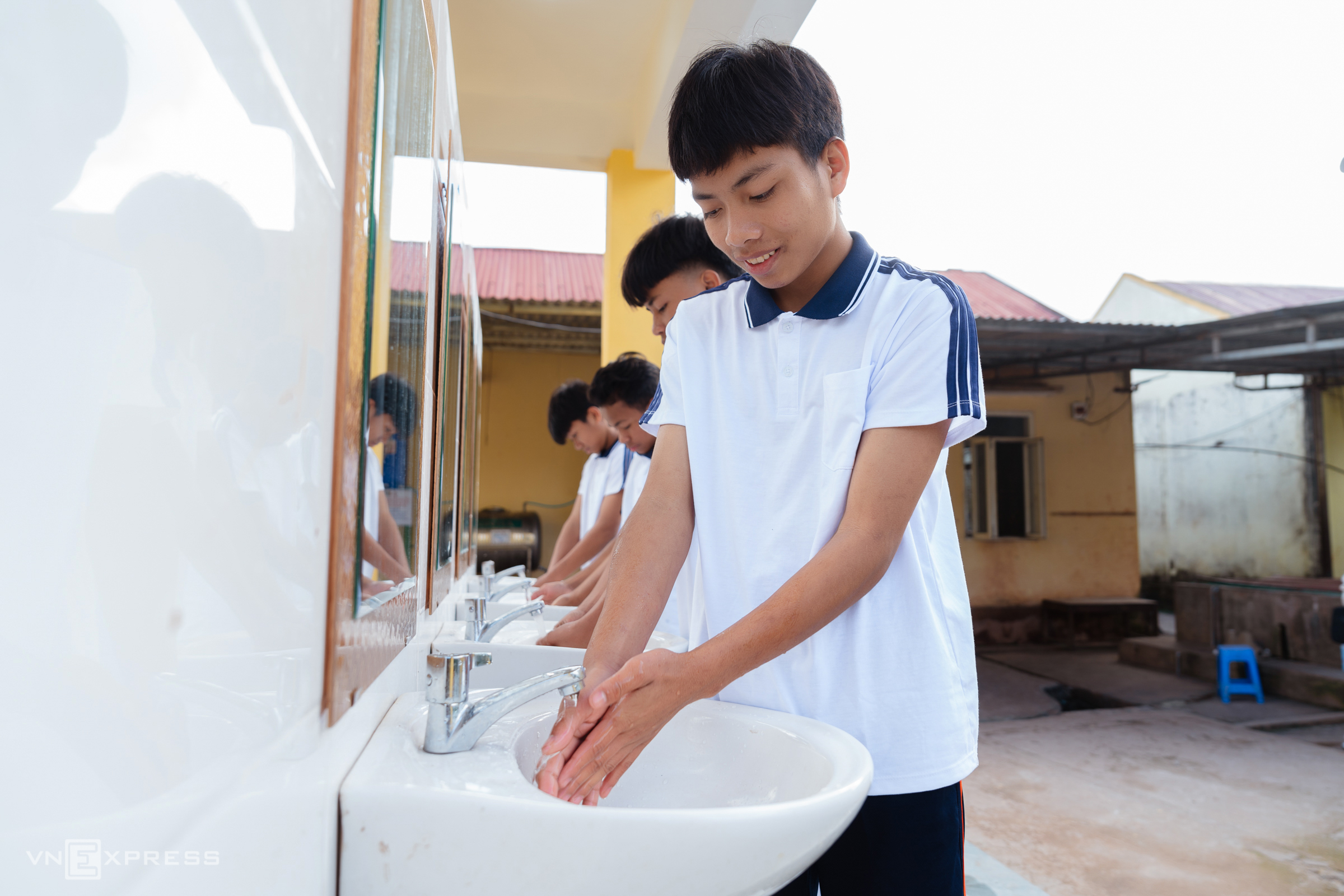
Ms. Thuy Ha teaches students how to wash their hands correctly to ensure intestinal health.
On the first day with the new sanitation facility, unlike the excitement of the older students at Bo Trach School, the children in Ban But were bewildered and a little nervous. They did not know what this building and its fixtures were. The three teachers held each child's hand, guiding them on where to sit, how to flush, and how to use the tap and wash their hands correctly.
"For the students here, every corner of this sanitation facility was new. While being guided by the teacher, many children showed clear nervousness, but when asked if they were happy, every one said 'yes' because they no longer had to go far or brave the rain to the stream," Ms. Ha recalled.
The new facilities at Bo Trach Ethnic Boarding School and Ban But Sub-school are part of a project to build 20 sanitation facilities and one bathroom. The project is sponsored by Hy Vong Fund and Opella Vietnam, along with the Enterogermina probiotic brand, in Bo Trach district, Quang Binh (formerly, now Thuong Trach commune, Quang Tri).
2025 marks the 4th year Opella Vietnam has partnered with the School Hygiene project, implemented by Hy Vong Fund, aiming to improve learning environments for children. The unit has co-built 80 sanitation facilities, directly supporting over 26,500 students and teachers in Son La, Ha Giang, Yen Bai, Lai Chau, and Quang Binh (now Quang Tri).
Ms. Mai Thi Thanh Huong, External Relations Director of Opella Vietnam, shared that one of the company's priorities is to focus on hygiene and clean water, as well as ensuring digestive health for children nationwide. This is why the collaborative activities this year between the two units have expanded to include building bathrooms for children in highland areas.
"In the future, we commit to accompanying Hy Vong Fund on projects related to hygiene and clean water," Ms. Huong affirmed.
To join forces with Hy Vong Fund, readers can learn more here.
 |
Content: Nhat Le - Photos: Tung Dinh - Video: Ngoc Ngoc