Recently, Chinese media reported numerous incidents involving thermos flasks. For example, a man in Heilongjiang was injured when his flask exploded after he filled it with hot water and a cleaning agent. Separately, a girl in Fujian suffered damage to her right eye when a flask lid burst open after several days of brewing red dates.
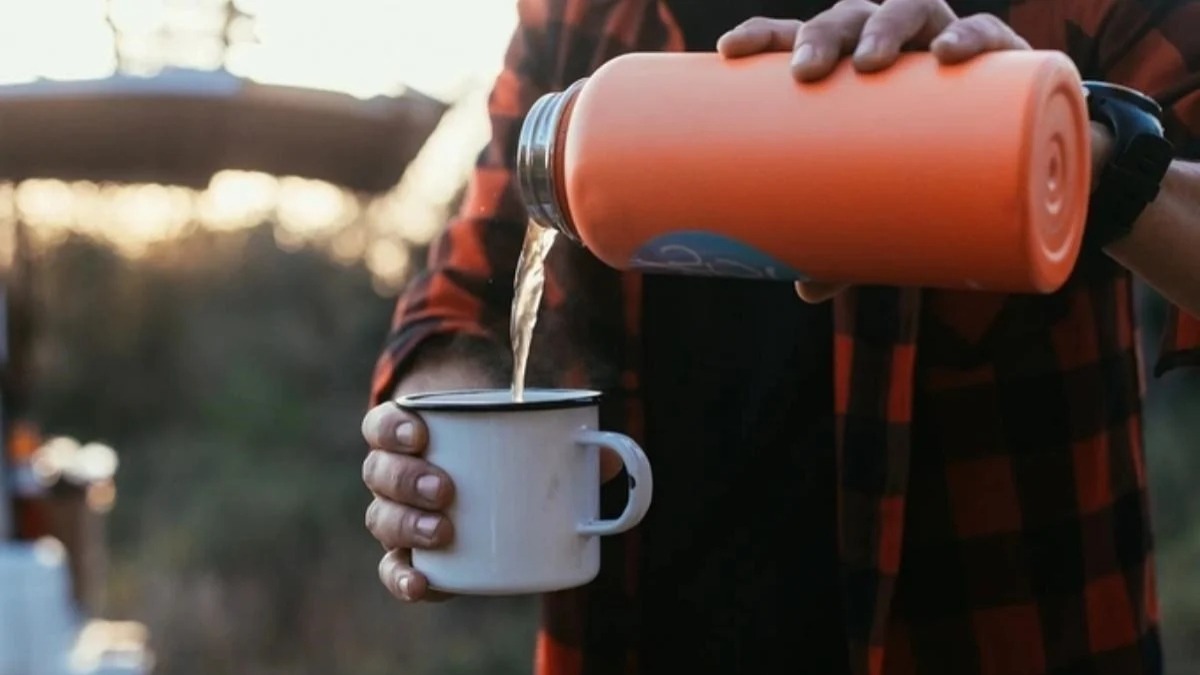 |
Photo: Pexels |
Experiments conducted by the Chinese fire and rescue agency identified three key factors that turn this common household item into a potential hazard.
Red dates, goji berries, fermented foods
Many people routinely brew red date or goji berry tea, or store soup in thermos flasks. However, within a sealed environment and at a suitable water temperature, microorganisms in these foods multiply quickly, producing large amounts of gas, specifically carbon dioxide.
This fermentation process causes the pressure inside the flask to rise significantly. When a user opens the lid, the sudden release of pressure can cause hot liquid to spray out, resulting in burns, or the lid to pop off forcefully, leading to mechanical injuries.
Effervescent tablets
Effervescent vitamin tablets react immediately upon contact with water, releasing a large volume of gas. Thermos flasks are designed to be airtight to prevent heat loss. If an effervescent tablet is added and the lid is immediately sealed, the accumulated compressed gas, especially when combined with shaking the flask, can cause the metal casing to crack, break, or even explode.
Cleaning agents
When cleaning a flask, some descaling chemicals react with water or metal residue, also producing gas. If the lid is screwed on too tightly during soaking and cleaning, the trapped gas will accumulate to a critical level, potentially causing an explosion.
According to Mei Qiguang, a physics teacher in China, the core reason for these incidents lies in the thermos flask's sealed structure combined with internal gas generation. To ensure safety, he advises against closing the lid or shaking the flask vigorously when cleaning it with chemical agents.
Beyond the explosion risk, nephrologist Yan Zonghai warns that the warm environment inside a flask is an ideal breeding ground for bacteria. Nutritional beverages such as milk or coffee, if kept for too long, can spoil, leading to nausea and diarrhea.
Experts also advise limiting the storage of strongly acidic liquids, such as fruit juice and carbonated soft drinks, in metal flasks. This helps avoid the risk of corrosion and the potential release of heavy metals, which can be harmful to health.
Minh Phuong (According to Ctwant, Yahoo)