Marbling, also known as intramuscular fat, appears as thin white streaks interweaving within lean muscle fibers. This integration of fat into the meat's structure helps the lean sections retain cohesion, creating a distinct flavor and richness when cooked.
According to chef Vu Nhat Thong from Eric Vu cooking class, marbling is a key factor for steak quality. Fat contains compounds that enhance flavor. When seared, high temperatures melt the marbling, allowing it to permeate the muscle fibers, delivering a rich flavor that lean meat alone lacks.
Beyond the meat's natural juices, the melted marbling creates a fatty film that coats the palate. This sensation enhances the perception of juiciness, making it feel more succulent for longer compared to meat with only natural water content.
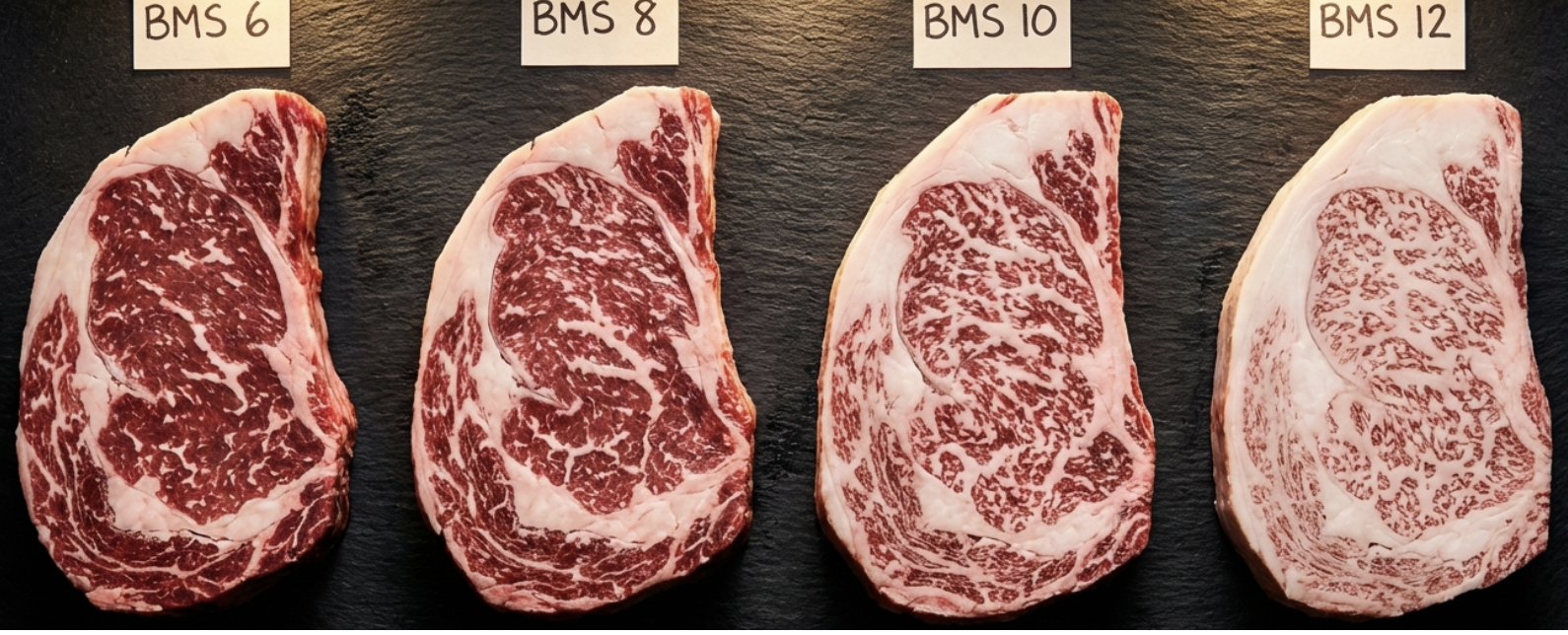 |
Marbling characteristics by grade: grade 6 offers tender meat with rich flavor; grade 8 increases richness; grade 10 (snowflake pattern) meets premium standards with intense richness. At the highest level, grade 12, marbling accounts for over 50% of the meat's structure, providing a melt-in-your-mouth richness like foie gras, classifying it as a rare, top-tier cut. Photo: *Wagyucompared*.
Consumers can visually assess and select beef based on three common marbling grades:
- Grade one (stardust pattern): Sparse, tiny fat flecks distributed on the surface. The meat has a leaner profile and is more affordable. This type of meat suits everyday dishes like shaking beef, stir-fried beef, or for those with fat-restricted diets.
- Grade two (intricate network): Thicker marbling lines interweave, forming a network that balances the red of the meat with the white of the fat. This is an ideal standard for steak at restaurants or home dinners, offering a balance of tenderness and rich flavor.
- Grade three (snowflake pattern): Dense, even marbling distributed across the surface, creating a marble-like pattern (typical of Wagyu A5). When cooked, this meat achieves melt-in-your-mouth tenderness and richness, perfect for premium dining experiences.
Chef Vu Nhat Thong advises that when selecting beef, consumers should prioritize observing the marbling distribution rather than just its weight or color. A cut with interwoven marbling consistently yields superior cooking quality compared to a lean cut with a large block of fat concentrated in one area.
Bao Nhien