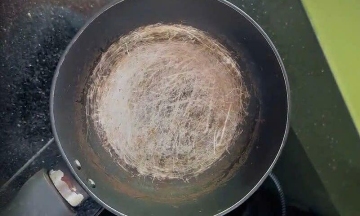
Crispy crust limits oil absorption
When food is placed into a pan of oil heated to approximately 170-180°C, a Maillard reaction occurs on the surface, creating a golden-brown color. The high temperature causes water in the outer layer to evaporate quickly, forming a dry, crispy film.
This film acts as a barrier. It retains the internal moisture, preventing the food from becoming dry and tough, while also limiting oil from the pan from seeping into the food's interior. Despite being cooked in a high-oil environment, the actual amount of fat absorbed by the food remains low.
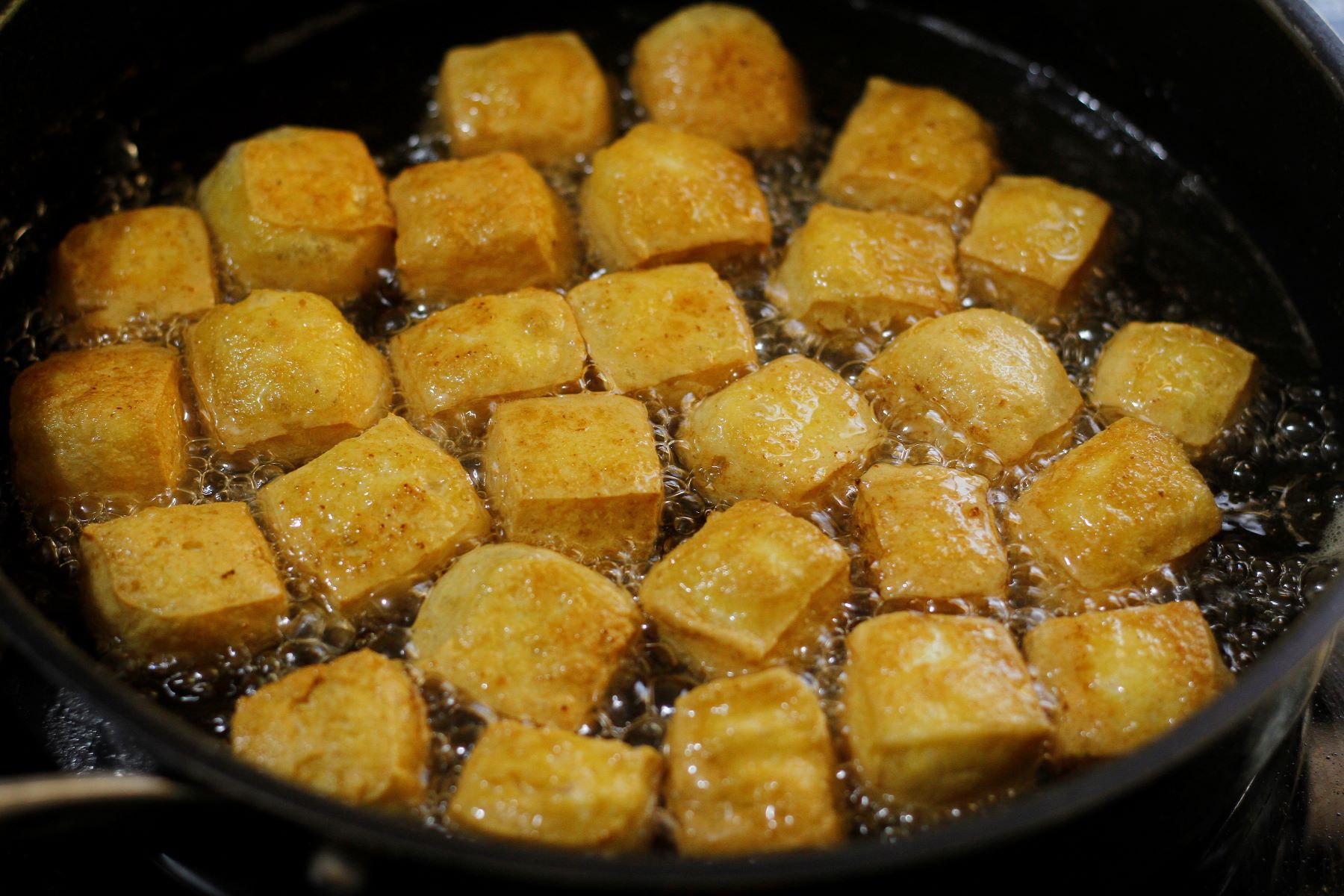 |
Dau gion hon khi duoc ran ngap dau. Anh minh hoa: *Bui Thuy*
Low temperature causes food to absorb oil
When frying with less oil, the temperature in the pan fluctuates constantly. Each time food is added, the oil temperature drops. For ingredients with high water content, such as meat, fish, or tofu, a low temperature is insufficient for surface water to evaporate rapidly.
Consequently, the food cannot form an immediate crispy crust. While waiting for it to cook, oil has the opportunity to penetrate deep into the fibers of the meat or vegetables, making the dish soft and retaining a large amount of oil.
Deep-frying technique for less oily results
Many chefs' experience indicates that temperature control is a crucial factor. To achieve this, the cook needs to heat the pan, add oil, and wait until testing with the tip of a wooden chopstick shows small bubbles forming.
Before frying, food needs to have its surface moisture blotted dry with paper towels to prevent oil splatter and reduce oil absorption. When frying, divide ingredients into small batches to maintain a stable temperature. The deep-frying method ensures that food receives even heat on all sides, cooks quickly, and requires less turning, minimizing breakage. After removing from the oil, food should be placed on a wire rack or absorbent paper to eliminate any excess oil remaining on the surface.
Bui Thuy