For Hanoi food connoisseurs, bun rieu cua dong is a culinary delicacy embodying refinement. A bowl of authentic northern bun rieu does not boast an abundance of meat but captivates with its balance. It features the natural sweetness of hand-pounded paddy crab, the delicate sourness of fermented rice vinegar, accented by the aroma of spring onions and a touch of fragrant shrimp paste.
Traditionally, Hanoians meticulously prepared bun rieu, starting with ingredient selection. Fresh paddy crab was hand-pounded in a stone mortar, carefully filtered for clear water, and simmered gently until the crab meat formed soft, fluffy cakes. The crab roe was set aside, then sauteed with rendered fat and shallots to achieve a rich golden hue. The broth entices diners with its vibrant tomato red and the light, clean sourness of fermented rice vinegar, an indispensable ingredient that defines this dish's identity.
Accompanied herbs and vegetables also serve as a key identifier. An authentic northern bun rieu bowl is served with finely shredded lettuce, mixed with Vietnamese balm, perilla, and coriander. This restraint in ingredients creates an elegant character, encouraging diners to savor the rustic flavors rather than simply eating to feel full.
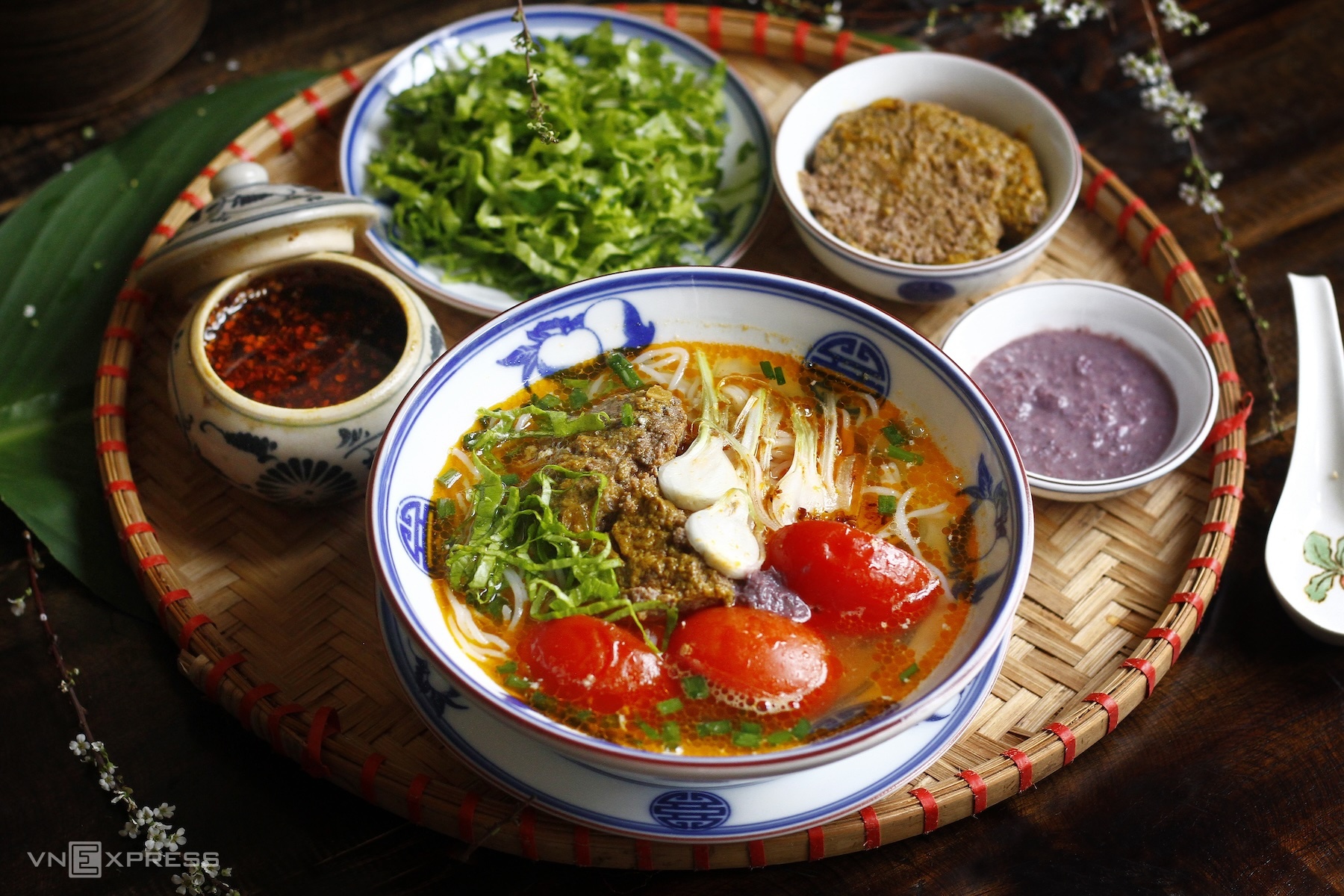 |
Hanoi bun rieu cua. Photo: Bui Thuy |
The generosity of Saigon bun rieu
Following the migration southward, bun rieu underwent a remarkable transformation to integrate with the lifestyle and tastes of the new land. A bowl of Saigon bun rieu is a vibrant symphony of colors and ingredients.
Unlike the northern version's "rustic" appearance, the southern bun rieu broth is often richer, featuring a subtle sweetness and an eye-catching red hue from annatto oil. The crab paste (rieu cua) is not served alone; it is typically mixed with ground pork and egg, then pressed into thick, firm patties.
Notably, the concept of 'toppings' in Saigon is extensive. A 'full' or 'combo' bowl often includes: pork blood curd, Vietnamese pork sausage, fried tofu, pork hock, and sometimes even snails, dried shrimp, or squid. The sourness comes not only from tomatoes but also from tamarind, creating a mellow yet deep flavor. The accompanying plate of raw vegetables also showcases this generosity, featuring shredded morning glory, banana blossom, bean sprouts, and various aromatic herbs.
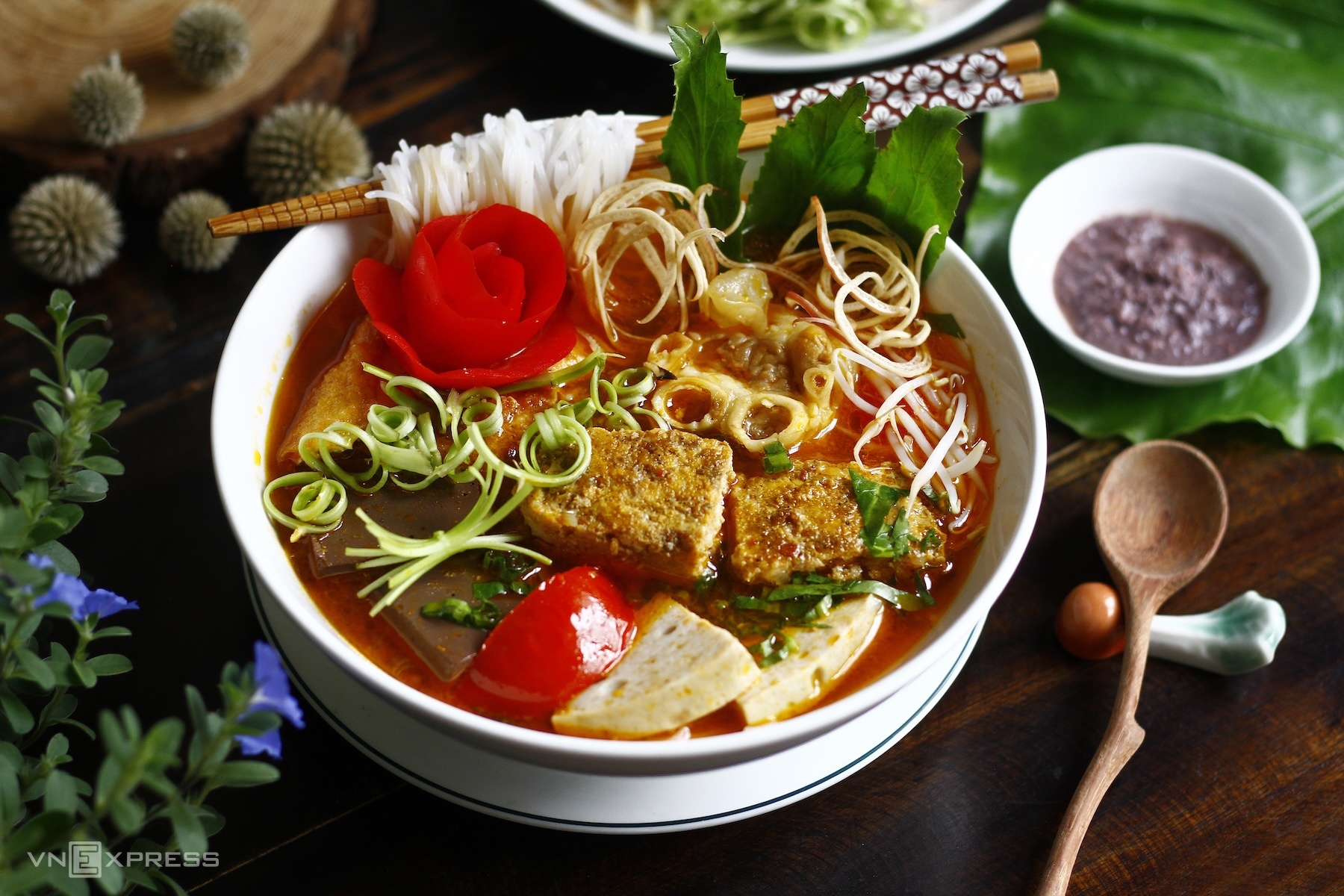 |
Saigon bun rieu cua. Photo: Bui Thuy |
Cultural exchange and identity
The distinctions between these two versions extend beyond cooking methods, reflecting differing lifestyles. While Hanoians consider bun rieu a light breakfast or lunch, Saigonese often view it as a substantial, energetic main meal, meant to be filling and robust.
Today, culinary boundaries are blurring. In Hanoi, some bun rieu establishments now offer additions like pork sausage, beef, or cartilage to cater to younger generations. Conversely, in the heart of Saigon, certain eateries still preserve the delicate northern flavor. This evolution demonstrates that traditional dishes remain vibrant, dynamic, and adaptive. Regardless of its variation, bun rieu holds a special place in the hearts of Vietnamese people.
Bui Thuy