As colleagues rushed to leave early on the afternoon of 31/12 to prepare for their journey out of the capital, Thuy Minh, 27, was calmly finishing her work in her hometown of Nghe An. Having lived in Hanoi for 10 years, Minh was all too familiar with the difficult journeys out of the city before holidays. Her memories included digital maps glowing red with congestion and overcrowded buses.
"Often, the 10 km journey from Cau Giay to Nuoc Ngam bus station took half the time it took for the bus to travel over 300 km from Hanoi to her hometown," Minh recounted. On one occasion, it took the shuttle bus three hours to exit the capital's gateway. Booking ride-hailing services during peak hours was impossible, even at three times the normal fare. The scenes of waiting and jostling turned a usual four-hour trip into a grueling 7-8 hour ordeal.
This year, Minh requested a day off early. On the evening of 30/12, the bus station was uncrowded; she boarded her bus on time and arrived home in under four hours. On 31/12, instead of struggling on the road, Minh chose to work remotely from the peaceful surroundings of Nghe An. "Sacrificing one day of leave for a comfortable sleep on the bus, rather than being stuck in traffic and exhaust fumes, is a worthwhile investment," she stated.
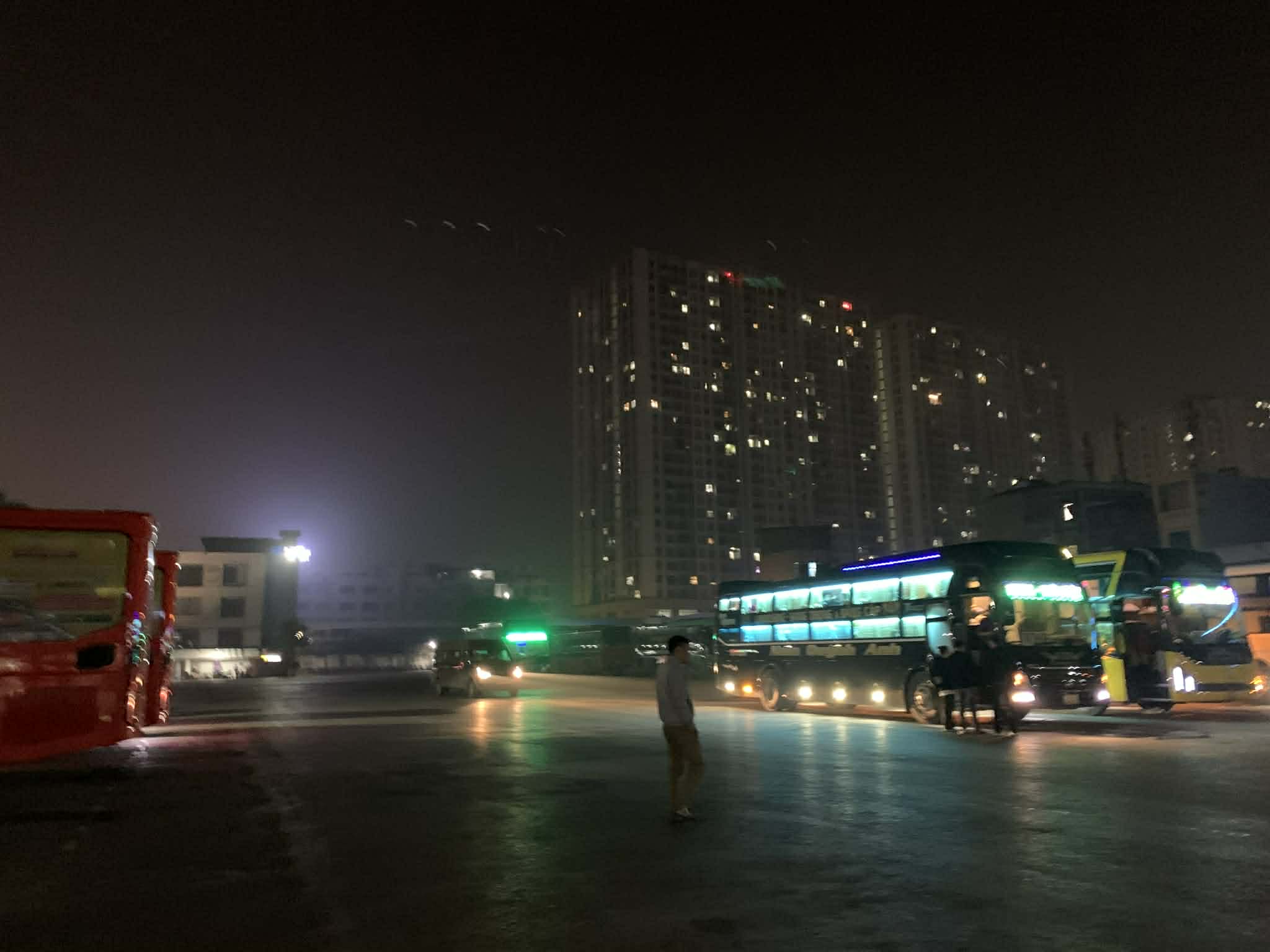 |
Nuoc Ngam bus station, Hanoi, on the evening of 30/12, was empty, allowing Thuy Minh to quickly board a bus home, unlike the crowded scenes of other holidays. *Photo: Courtesy of interviewee* |
Despite many people proactively leaving early, traffic in major cities remained intense. From 15h on the afternoon of 31/12, crowds began to pour out of Hanoi's gateways. Roads like Lang, Le Van Luong, Khuat Duy Tien, and the elevated Ring Road 3 were paralyzed. Peak congestion after 18h worsened at many central roads extending to the city exits. At bus stations, sleeper bus tickets for short routes like Hanoi - Ha Tinh had "sold out" last week, with many accepting auxiliary seats or lying in the aisles to get home on time.
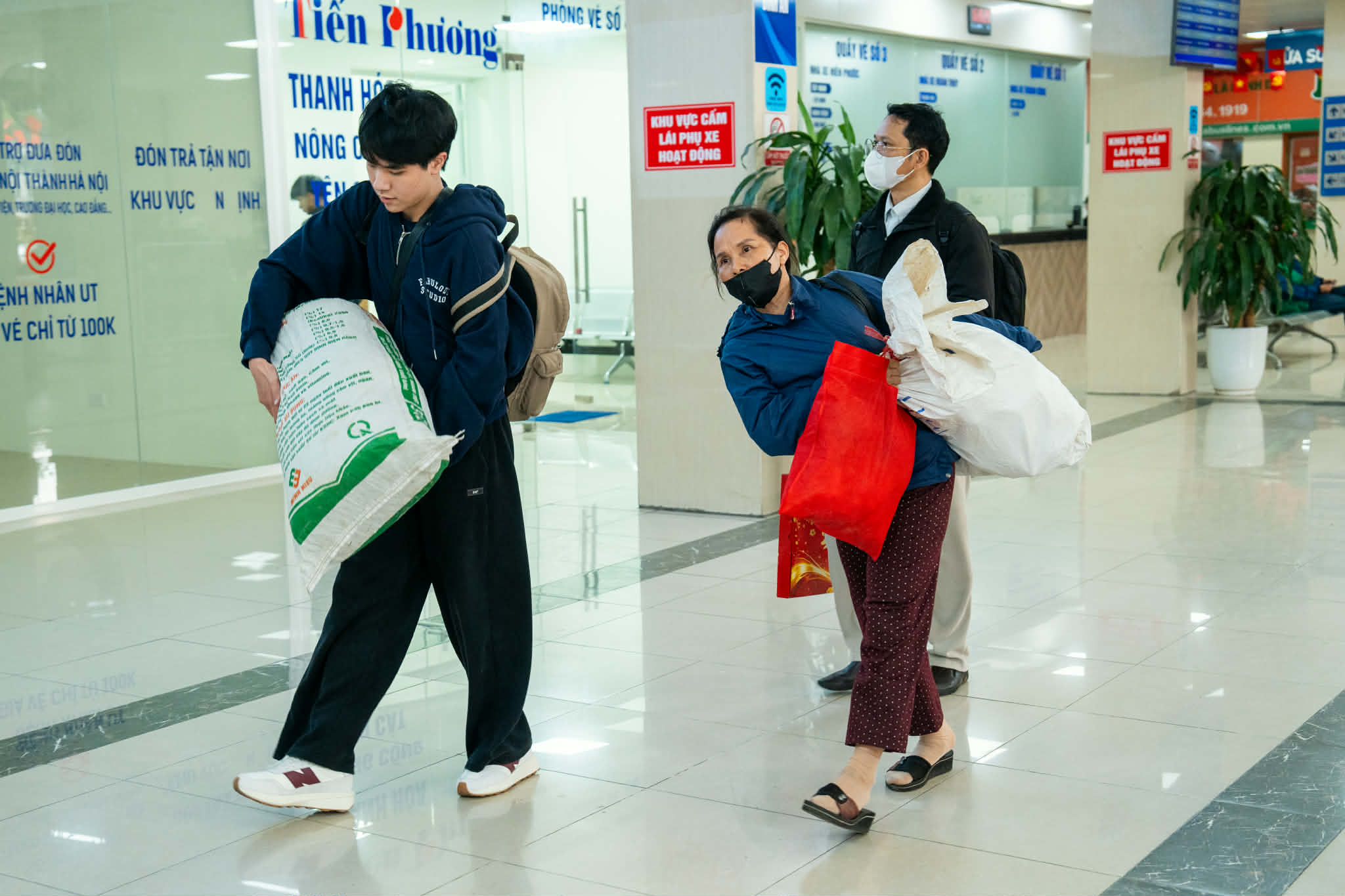 |
People carrying belongings to Giap Bat bus station, Hanoi, to return home for the New Year holiday, on the afternoon of 31/12. *Photo: Tung Dinh* |
Unable to leave early due to work schedules and children's schooling, Thach Thao, 25, residing in Giang Vo ward, Hanoi, chose to travel by private car and leverage technology. Thao's haunting memory from previous departures on the last workday was her family being stuck at Thanh Tri or Vinh Tuy bridge. Her three-year-old daughter would cry from the stuffiness, and she and her husband would be faint from hunger, having missed dinner. This year, they decided to depart at 22h on the evening of 31/12, when traffic began to thin.
Instead of the traditional route of entering the expressway from central Hanoi, her husband chose to detour via provincial road 379 towards Ecopark, passing through Hung Yen before joining the expressway to Hai Phong. Although it added a few tens of kilometers, it ensured smoother traffic. He also constantly updated Google Maps and checked traffic cameras on the iHanoi app to avoid congestion points. "Better to take a detour and keep moving than to stand still," Thao remarked.
In TP HCM, Tran Quy, 25, chose to depart for Bau Bang, Binh Duong, in the early morning of 1/1. Quy had experienced harrowing journeys from Tan Binh district to the city's gateways. A 60 km stretch once took her over two hours, struggling through the Mien Dong bus station area and Binh Trieu bridge. "Sometimes, standing still in the heat, I felt like I could doze off and wake up without having moved an inch," Quy recalled.
Learning from experience, she opted for an "early to bed, early to rise" approach. After work, Quy went home to rest, then rode her motorbike in the early morning. This strategy helps her avoid "ghost traffic jams"—when everyone rushes out in the late evening or the next morning, turning what was once considered a clear period into a new peak congestion time. A VnExpress survey revealed that congestion not only occurred during pre-holiday rush hour but also extended into the morning of the first holiday. For instance, during a previous holiday, at the An Phu intersection and Mai Chi Tho street (Thu Duc City), a line of oto once stretched over 5 km, waiting to merge onto the expressway.
Besides those who left early, many families chose to postpone their travel entirely. Mai Phuong, 40, residing in Nam Tu Liem ward, Hanoi, booked a car to Thanh Hoa for midday on 1/1. "A four-day holiday is long enough; there's no need to torture ourselves fighting for every meter of road during peak hours," she shared.
The race isn't limited to the departure. To avoid a similar scenario on the return day, Thuy Minh and Tran Quy both plan to request an additional morning off on 5/1, accepting a half-day delay to the new work week for peace of mind.
 |
Severe traffic congestion on Mai Chi Tho boulevard, TP HCM. *Photo: Gia Minh* |
To reduce gateway congestion during Tet 2026, on 29/12, the Hanoi Department of Transport just issued a new traffic diversion plan. Starting 1/1/2026, the city will pilot banning trucks over 10 tons from passing through the Mai Dich – Ho Tung Mau intersection and the elevated Ring Road 3 entrance (from Thang Long Avenue – Pham Hung – Khuat Duy Tien) during peak hours. This regulation will apply throughout the New Year holiday, Lunar New Year, and the Binh Ngo spring festival season.
Nga Thanh - Quynh Nguyen