In late 2025, a sleeper bus caught fire on the Jaisalmer-Jodhpur national highway in Rajasthan. Many passengers had to jump from the moving vehicle to escape. The accident left over 10 people with severe burns.
Prior to this, India had experienced many similar incidents. In October 2022, a bus on the Yavatmal - Mumbai route crashed into a trailer, killing 12 people. In July 2023, a bus collided with a median on the Samruddhi Expressway, resulting in 25 fatalities. In November of the same year, a bus traveling from Jaipur to Delhi caught fire near Gurugram, killing 2 people and injuring dozens.
Sleeper buses originated in the UK in the 1930s, initially serving touring bands. In 1966, India's transport sector began operating its first sleeper bus route between Bengaluru and Hubballi. Currently, India has approximately 200,000 sleeper buses in operation. Bengaluru city alone sees nearly 1,000 such trips daily. This type of vehicle attracts passengers due to its affordable fares and the convenience of overnight travel on long journeys.
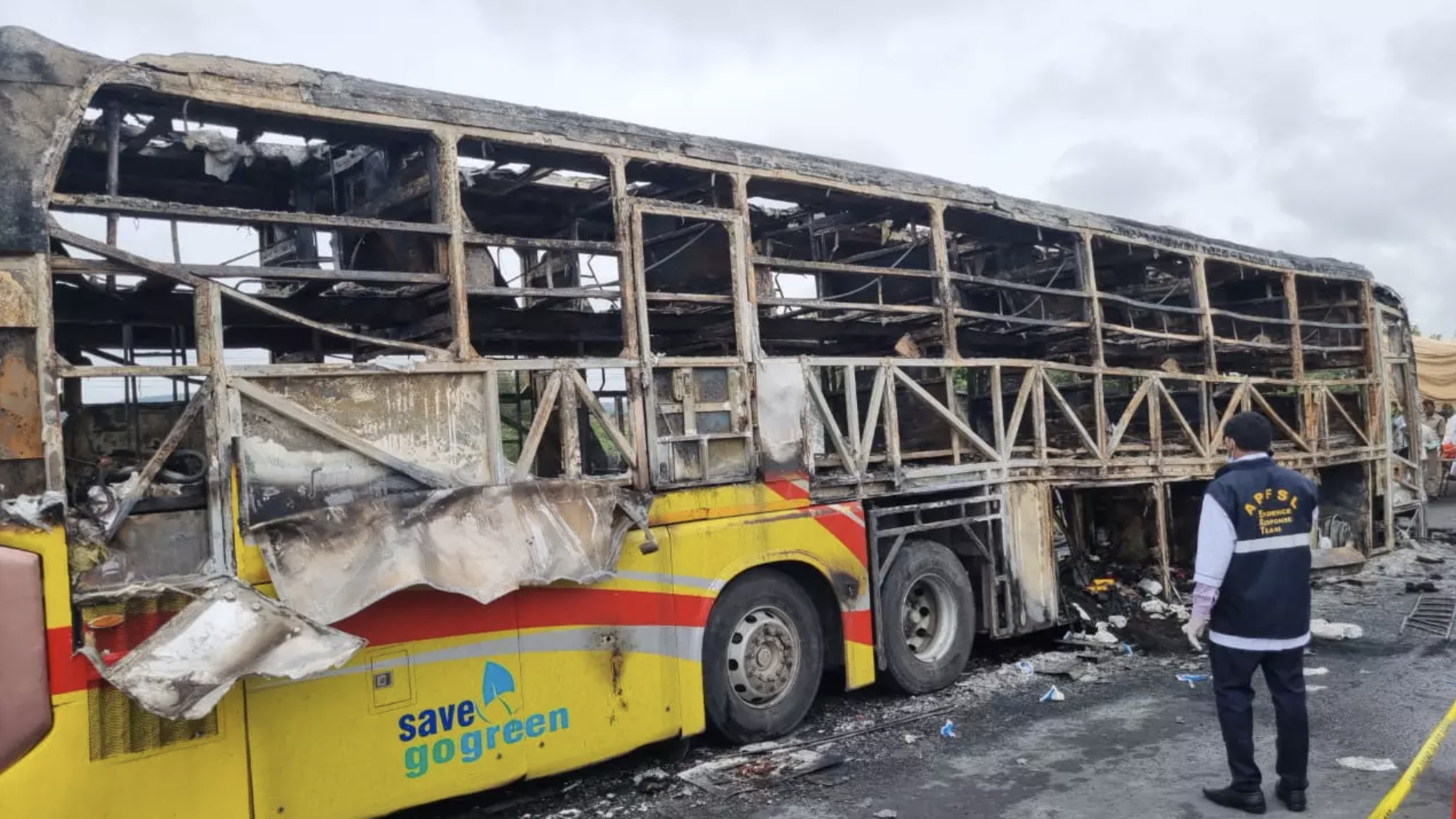 |
A bus fire in Kurnool, Andhra Pradesh in October 2025 killed 11 people. Photo: DC |
Despite their popularity, these vehicles pose many risks. Experts have identified several main causes.
Design obstructs escape routes
Sleeper buses in India often feature 30-40 bunk beds, with each compartment measuring about 1,8 m long and 0,8 m wide. Experts note that passengers gain comfortable sleeping space at the cost of narrow aisles, barely wide enough for one person to move. Passengers can easily become trapped inside during an incident.
The vehicle's height, ranging from 2,4-2,7 m, compounds the risk. When a bus tilts suddenly, passengers find it difficult to reach emergency exits or windows. Rescue personnel take significant time to climb to reach victims, slowing evacuation and increasing the fatality rate.
Li Dusheng, Head of Brand Department at Zhongtong Bus (China), stated that the cramped space combined with doors jammed after a collision reduces passengers' chances of survival. Additionally, blankets and pillows made from flammable materials can cause fires to spread rapidly.
Drivers prone to drowsiness, passengers slow to react
Most sleeper buses in India operate long-distance routes, spanning 300-1,000 km, primarily at night. The dark, quiet environment can easily lead to driver fatigue and drowsiness.
Newer buses are equipped with drowsiness alert systems that monitor steering wheel angle, vehicle position, facial movements, and pedal operations to detect distracted drivers. However, the effectiveness of this technology relies entirely on proper installation and real-world monitoring processes.
A 2018 survey by India's Ministry of Road Transport across 15 states revealed that 25% of drivers admitted to having fallen asleep at the wheel. Many international studies indicate that the probability of drivers losing alertness on highways is highest between 0-6h.
The first two minutes of an incident are critical for survival. Awake individuals have a higher chance of escaping than sleeping passengers. Those on upper bunks face the greatest risk due to difficulties in maneuvering to find an exit.
This situation demands prompt reform of management procedures by authorities. Traffic engineers propose that regulatory bodies cease the modification of old vehicles. Transport operators should widen aisles, reduce the number of beds, mandate the use of fire-resistant interior materials, and equip vehicles with emergency exits, fire extinguishers, and smoke detection systems. Vehicles operating night routes must have a minimum of two drivers.
V. Umashankar, Secretary of the Union Ministry of Road Transport and Highways, described the unsafe condition of sleeper buses as "extremely serious". Analysis of recent accidents has exposed numerous systemic flaws, from manufacturing and quality control to law enforcement.
"Regulatory agencies are determined to revoke licenses and permanently ban individuals who violate regulations to fully protect passenger lives", he said.
Recognizing the risks, many countries have eliminated or restricted this type of vehicle.
In China, sleeper buses emerged in the 1990s to serve migrant workers traveling inter-provincially. A series of accidents, notably a bus fire in Ha Nam province (41 deaths) in 2011 and a collision in Thiem Tay province (36 deaths) in 2012, forced authorities to intervene.
In March 2012, China's Ministry of Industry and Information Technology and the Ministry of Public Security of China issued a directive suspending the production and sale of sleeper buses. The two agencies demanded the complete removal of these vehicles from the transport system within 6 years. China's Ministry of Transport also issued regulations requiring drivers on long-distance routes to make mandatory stops at stations between 2h and 5h.
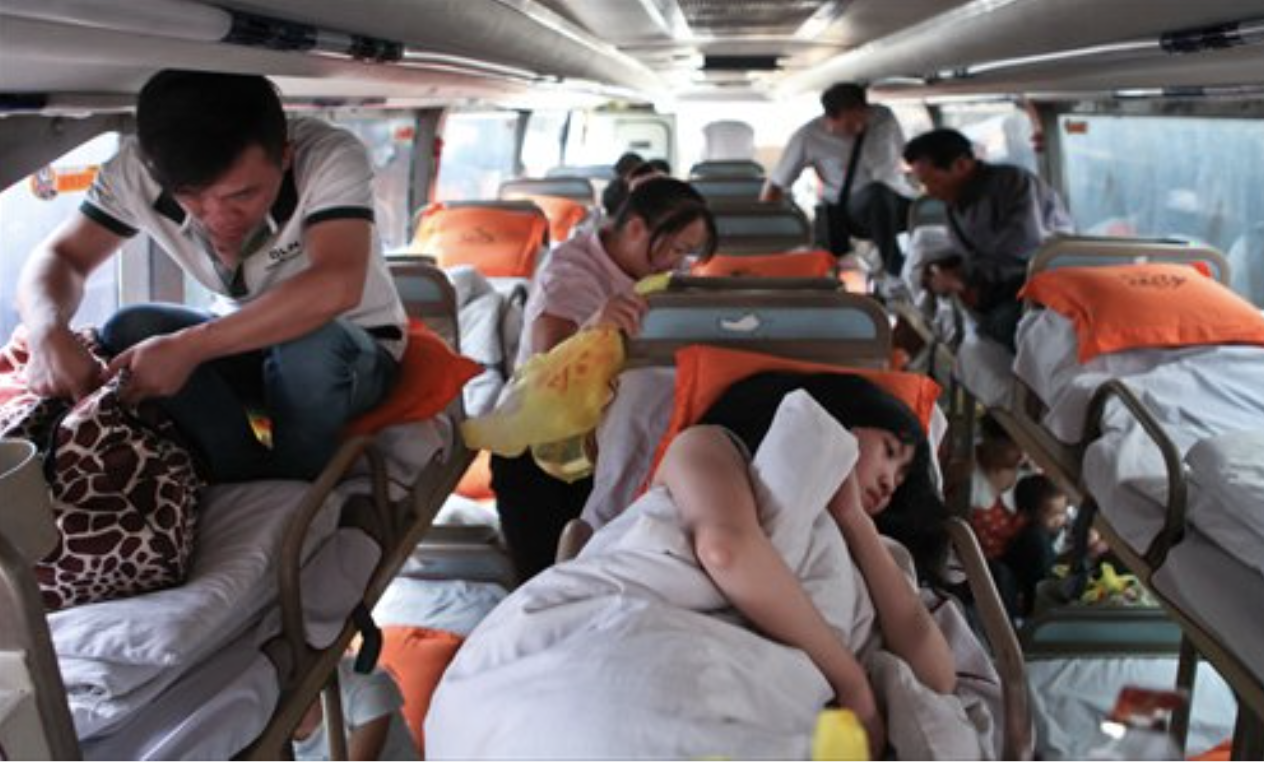 |
Passengers on a double-decker sleeper bus at Shanghai's Central Long-Distance Bus Station in 2012. Photo: CFP |
In Europe, the UK banned standard sleeper buses in 2000, only permitting specialized tourist coaches that meet stringent safety standards.
Germany imposed regulations in 2006, requiring all passengers to sit upright and wear seat belts throughout their journey, despite protests from transport companies.
Minh Phuong (According to Bhaskar English, Deccanchronicle, Chinadaily)