Modern Japanese sushi is often associated with high-end restaurants and expensive seafood. However, this dish has humble origins, serving Japan's working class centuries ago due to the following factors.
Origins in fermented fish preservation
The earliest form of sushi, known as "Narezushi", originated from fishermen's need to preserve fish. They cleaned fresh fish and fermented it with salt and cooked rice. This process took many months but preserved the fish for a long time without refrigeration.
Initially, people usually discarded the sour fermented rice, keeping only the fish. Later, people facing food shortages began eating both the fermented rice and the fish to maximize their food source.
By the 19th century, the introduction of rice vinegar brought significant change. Chefs mixed rice vinegar directly into the rice to achieve the desired sourness, reducing fermentation time and storage costs. Consequently, the dish's price dropped sharply.
Utilizing local seafood
The term "Edomae sushi" refers to dishes made with seafood caught directly from Tokyo Bay. Menus at the time utilized abundant, inexpensive ingredients such as: goby, sillago, sea bream, and flounder.
Chefs preserved ingredients using techniques such as: marinating in vinegar, salting, boiling, and basting with sauce. Additionally, common diners also consumed inexpensive fillings such as: fried egg, rolled omelet, or rice rolls with dried gourd.
Meeting the demand for fast urban meals
In the early 18th century, Edo's (modern-day Tokyo) population exceeded one million people, consisting mainly of migrant workers, artisans, and porters. Cramped apartments without kitchens fueled the demand for food from mobile stalls.
In 1819, chef Koizumi Yohei created hand-pressed sushi ("nigirizushi") and opened a street stall in the Ryogoku area. Customers would stand and eat a few pieces directly at the stall before returning to work. After eating, they wiped their hands on the shop's curtains. The dirtier the curtains became, the more popular the establishment proved to be.
Large portions for satiety
During the Bunsei era (the 1820s), each piece of sushi cost 4-8 mon (equivalent to 120-300 yen today). This price was affordable for a craftsman's daily wage of 500-600 mon.
To help manual laborers stave off hunger, chefs shaped sushi pieces as large as rice balls, two to three times their current size. Diners only needed to eat two to three pieces for a meal.
Later, sushi gradually transitioned from street food to restaurants, becoming an accompaniment to sake. To prevent diners from feeling too full while drinking, chefs reduced the dish's size to the standard, bite-sized pieces seen today.
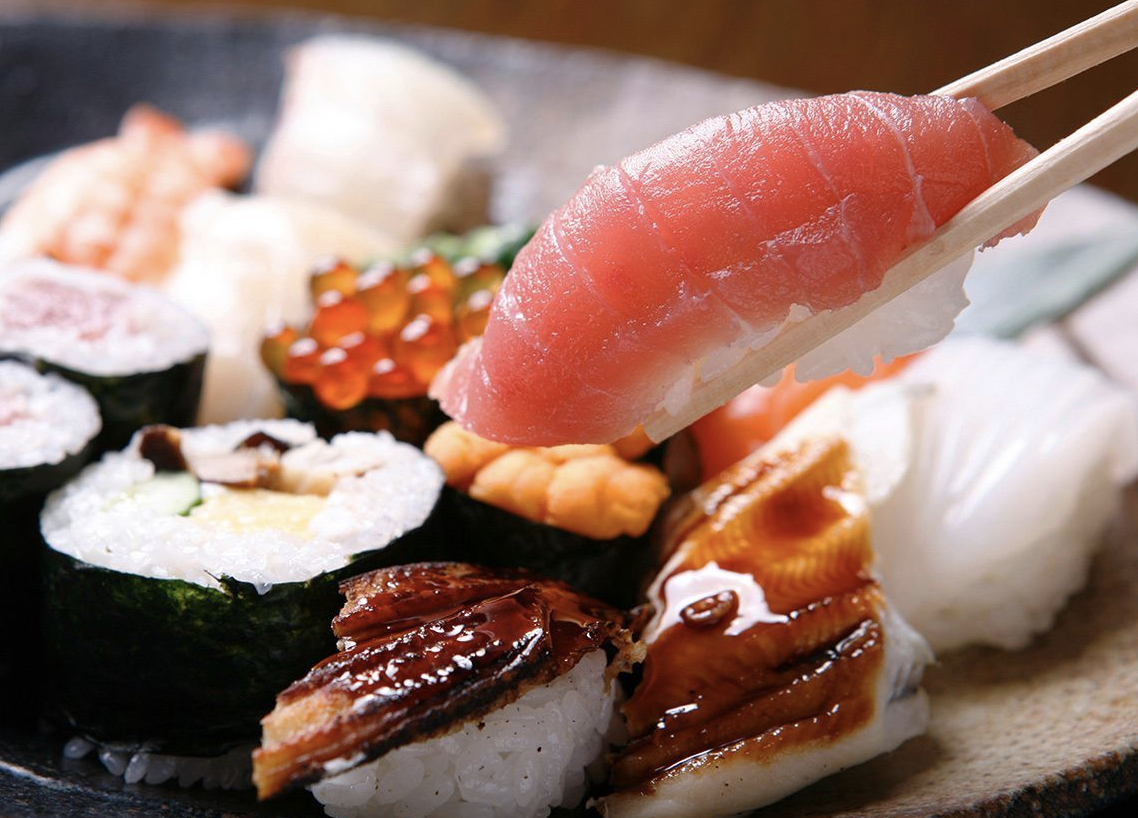 |
Sushi, a popular dish in Japan. Photo: ナス/PIXTA
Minh Phuong (According to Nippon, Note, Japanupmagazine, OE)