Many home cooks often add salt immediately when putting bones and cold water into a pot, believing it helps the bones become more flavorful from within. However, according to culinary experts and the chemical principles of cooking, this step should be avoided if you want a clear and naturally sweet broth.
Preventing natural sweetness
The goal of simmering bones is to extract proteins, collagen, and amino acids to create natural sweetness (umami). This process needs to occur slowly.
If salt is added from the beginning, the change in osmotic pressure causes proteins on the surface of the bones and meat to contract quickly. This tightened protein layer acts as a barrier, trapping the sweet and nutritious compounds inside instead of dissolving into the water. As a result, even after long simmering, the broth lacks deep sweetness.
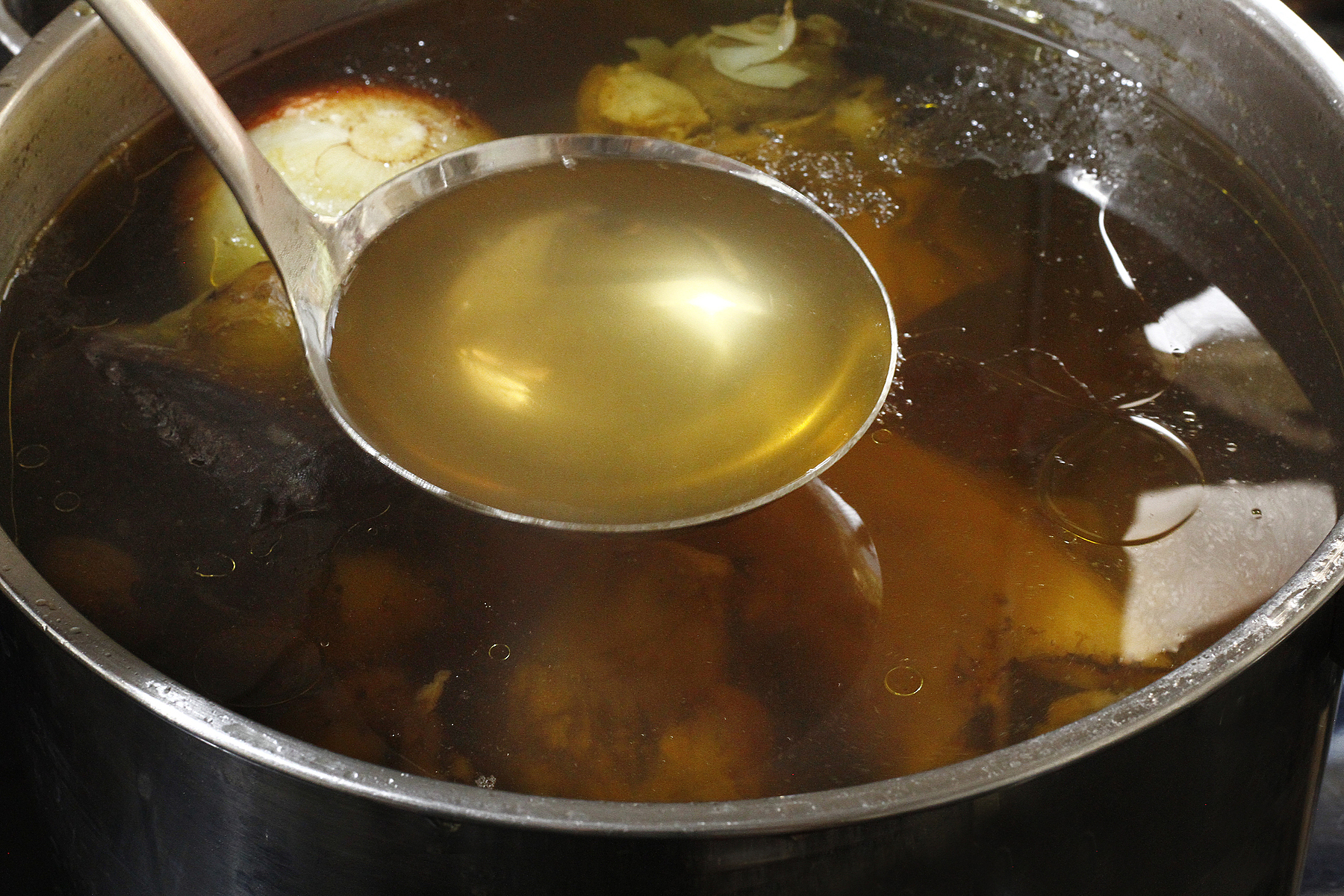 |
Hanoi beef pho broth. *Photo: Bui Thuy*
Causing cloudy broth
Clarity is a crucial standard for broth used in pho and vermicelli dishes. During heating, impurities and blood proteins in the bones rise to the surface as foam.
Salt catalyzes protein precipitation. If salt is present too early, tiny protein particles coagulate quickly and disperse throughout the water instead of forming larger clumps that are easy to skim off. These suspended particles are difficult to filter out, making the broth an opaque, off-white color and feel less refined when consumed.
Difference from braising and stewing
Many wonder why braised or stewed dishes require early salting. The difference lies in the purpose: Braised dishes need seasonings to penetrate the ingredients, making the meat and fish flavorful and firm. Conversely, simmered dishes require nutrients from the ingredients to be released into the liquid. Therefore, the seasoning techniques for these two methods are completely opposite.
Optimal salt timing
The ideal time to add salt is when the simmering process is almost complete.
Initial phase: Simmer bones with cold water, maintaining a low heat to skim off all foam. Do not add any seasoning.
Middle phase: Add vegetables or aromatic ingredients (roasted onions, ginger) to enhance the aroma.
Final phase: Once the bones are tender and the broth is sufficiently sweet, strain the clear broth, then season with salt and fish sauce. This method allows precise control over the saltiness and preserves the pure flavor of the broth.
Furthermore, for a perfect broth, remember to thoroughly wash and blanch the bones before simmering to remove excess blood; avoid vigorous stirring and always keep the lid slightly ajar to prevent aeration that causes cloudiness.
Bui Thuy