"The National Assembly's approval of the amended Resolution 98 grants the city a golden opportunity. We must make the most of our time and act decisively to ensure this opportunity does not slip away," said Ho Chi Minh City Party Secretary Tran Luu Quang at the second conference of the Ho Chi Minh City Party Committee's Executive Board, first tenure, on the afternoon of 15/12.
The one-day event, with expanded participation from leaders of departments, agencies, and communes, focused on discussing socio-economic development tasks as Ho Chi Minh City prepares for the 2026-2030 period, following its merger into a megacity.
Resolution 98, effective from 1/8/2023, allows Ho Chi Minh City to apply 44 specific mechanisms and policies in areas such as infrastructure investment, finance-budget, construction planning, attracting strategic investors, and organizational structure. The implementation period is five years, and it is now almost halfway through.
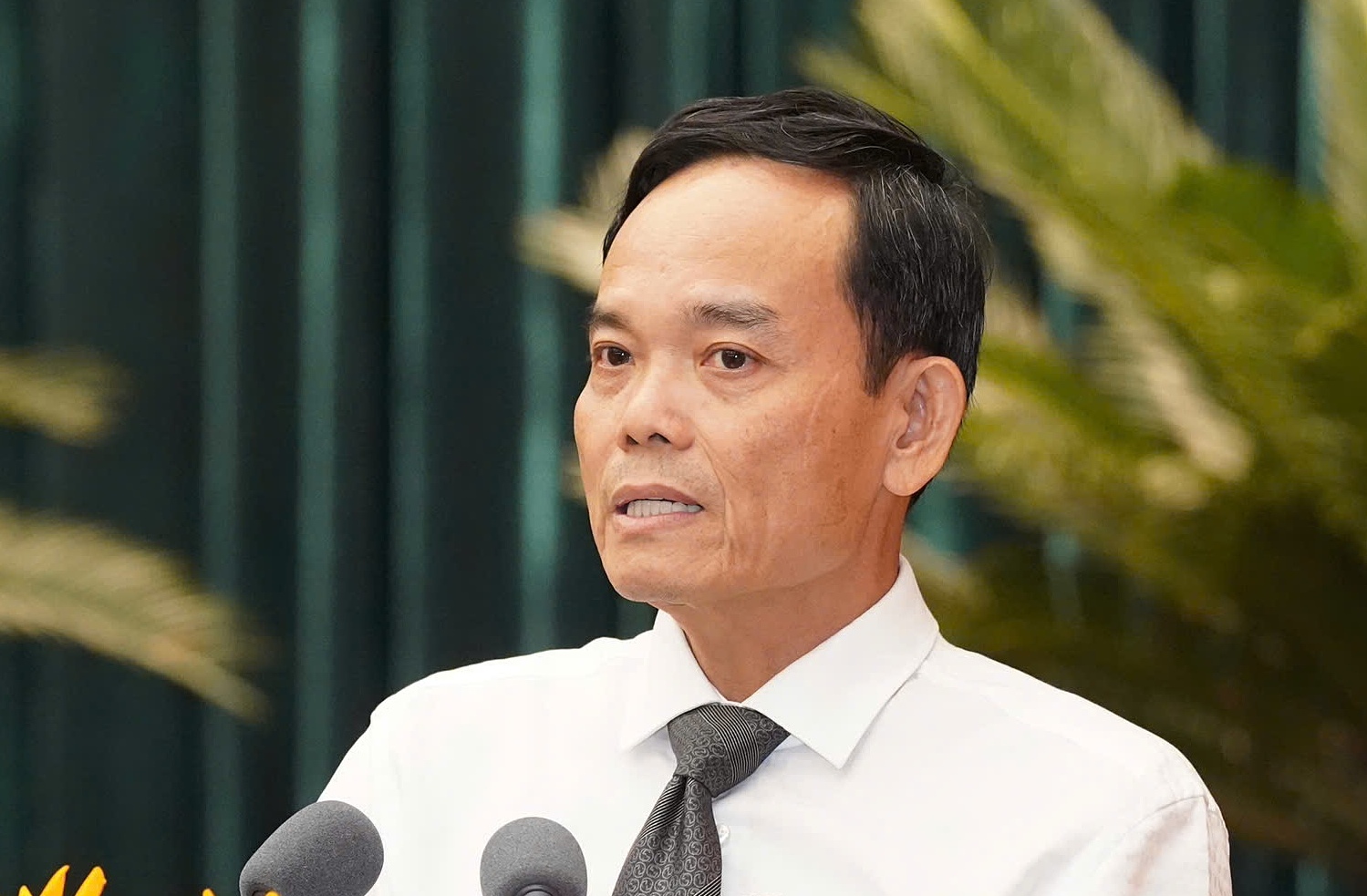 |
Tran Luu Quang, City Party Secretary, speaks at the Ho Chi Minh City Party Committee's Executive Board conference on the afternoon of 15/12. Photo: An Phuong
Four days prior, the National Assembly approved a resolution to amend and supplement specific development mechanisms for Ho Chi Minh City, featuring policies deemed "unprecedented". These include: enhanced decentralization in planning and land management; urban development oriented towards public transport (TOD); attracting strategic investors; and establishing a free trade zone.
According to Quang, the city must consider the worst-case scenario where the amended resolution has an effective period similar to the current Resolution 98, meaning the city would only have about 2,5 years to leverage the new mechanisms. "We must act immediately from early 2026, creating clear changes and results," he stated.
The head of the City Party Committee requested the Ho Chi Minh City Party Committee and People's Committee to promptly develop a detailed implementation plan. During implementation, any issues within their authority should be boldly proposed.
"The city will courageously apply regulations to resolve issues; if beyond authority, they will be compiled and submitted to the Central Government," Quang said, emphasizing that this is an opportunity for Ho Chi Minh City to regain its pioneering role with innovative models and approaches.
For key projects, public investments, BT (Build-Transfer) projects, and strategic initiatives, the City Party Secretary called for clear assignment of responsibilities, with accountability extending until completion. He also urged the Ho Chi Minh City People's Committee to review and inventory all public assets, land, and houses within the area. This data should be digitized into a database to facilitate investor access and public oversight.
"Land and public assets are significant resources for the city's development. We must not allow land to remain enclosed and vacant," he said, requesting priority for land funds for education, healthcare, green spaces, and BT projects.
He also proposed that the Ho Chi Minh City Party Committee and People's Committee research and implement a mechanism to reward communes and wards with budget bonuses in the following year for effectively completing important tasks, such as compensation and site clearance. Concurrently, the city administration needs to establish urban green space development targets, considering this a long-term solution to improve the environment and reduce air pollution.
From a research perspective, Dr. Truong Minh Huy Vu, Director of the Ho Chi Minh City Institute for Development Studies, suggested that if the amended Resolution 98 is fully realized, the city could achieve 10-11% growth by 2026.
This scenario is linked to the implementation of 12-15 projects with a total capital of 5-10 billion USD, breakthroughs in infrastructure and public investment disbursement, the formation of an international financial center, and enhanced regional connectivity with Binh Duong and Ba Ria - Vung Tau. Conversely, if implementation is slow or incomplete, growth might only reach 8,59% (conservative scenario) or 9-10,5% (favorable scenario).
In addition to the amended Resolution 98, the conference also discussed solutions to reduce pollution, traffic congestion, flooding, and prevent drug abuse, following directives from General Secretary To Lam.
Le Tuyet