The Boeing 787 aircraft departed Noi Bai (Hanoi) at 12:00, landing at Tan Son Nhat (TP HCM) after 14:00. Following preparations, the aircraft took off from TP HCM at 15:00, arriving in Long Thanh (Dong Nai) about 40 minutes later. The test concluded with the aircraft departing Long Thanh at 18:00, returning to Tan Son Nhat at 18:40, as flight number VN5002.
This technical flight aimed to practically test and evaluate the entire system supporting flight operations. This included navigation, communication, and air traffic control; aircraft reception and coordination procedures; runway, taxiway, and apron lighting systems; as well as the coordination among operational, security, and air traffic control units at Long Thanh.
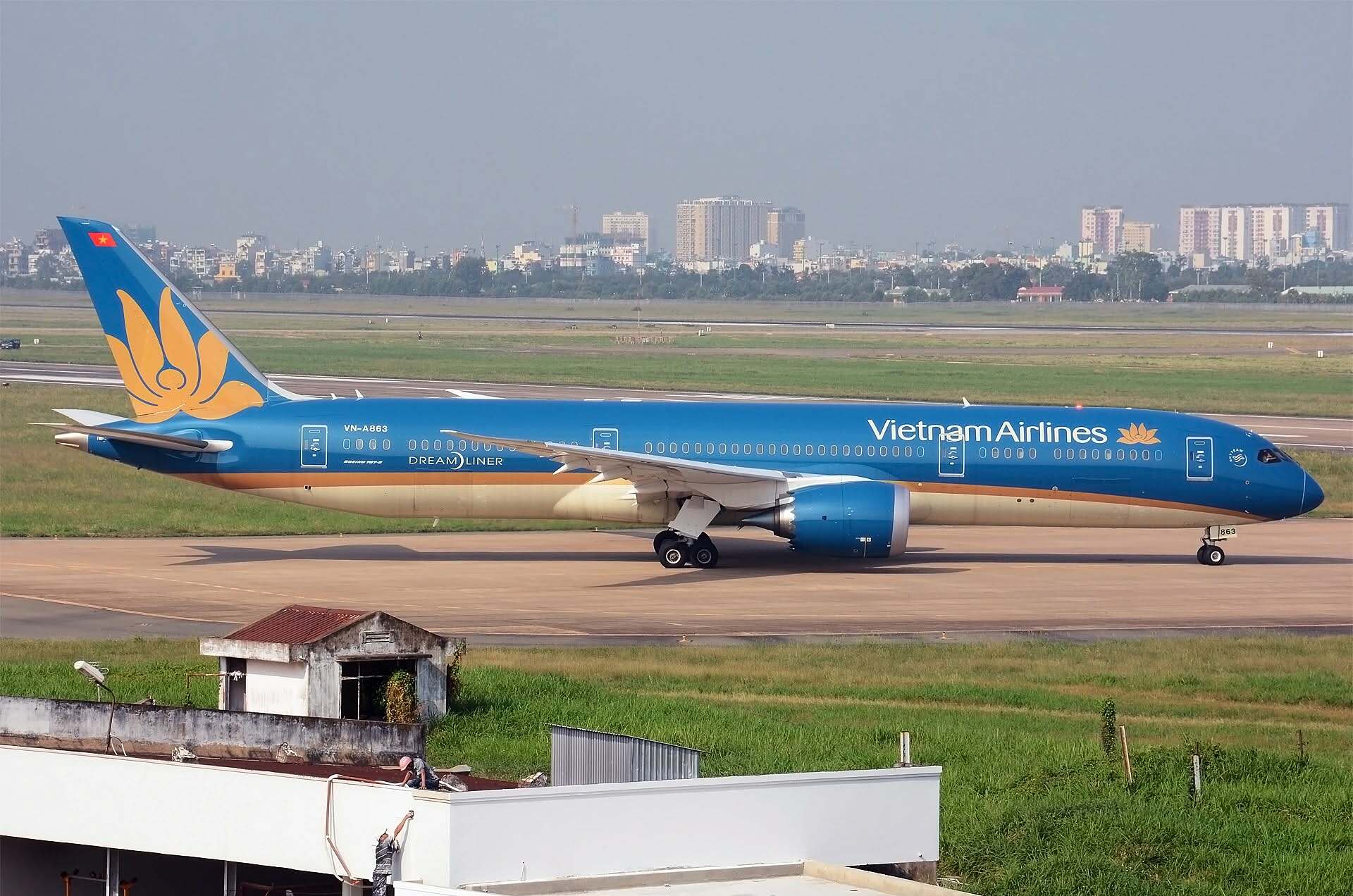 |
The aircraft used for the technical flight at Long Thanh this afternoon. *Photo: Duy Huynh* |
The aircraft used was a Boeing 787-9, currently the largest wide-body aircraft operated by Vietnam Airlines, with a maximum capacity of about 340 passengers. The flight carried only the flight crew and technical staff.
According to Airports Corporation of Vietnam (ACV), all flight operational infrastructure at Long Thanh, including runways, taxiways, and aprons, meets International Civil Aviation Organization (ICAO) standards. Additionally, the instrument landing system (ILS)/distance measuring equipment (DME) and aeronautical beacons operate stably in all weather conditions.
Upon landing, a marshalling vehicle guided the aircraft along taxiway D24, moving past an area where fire trucks sprayed water as a welcome before entering the apron. During taxiing, the flight crew maintained low engine power to minimize impact on the surrounding area. Lookout personnel were stationed throughout to ensure safety.
After parking, ground service personnel implemented test scenarios, including positioning a passenger boarding stair at the middle door to check aircraft boarding and deplaning procedures. Upon completing the tests, the flight crew received instructions and performed operational steps according to the established plan.
Before the flight, units conducted a minimum 90-minute inspection of all equipment systems; established safety zones and equipment sensitive areas; and notified relevant parties. Safety checks for runways, taxiways, aprons, foreign objects, birds, and obstacles were performed 10 minutes before each flight on 15/12 and 19/12.
Additionally, unscheduled inspections will be conducted if unusual conditions are detected by the control tower or flight crew. Safety monitoring is continuously maintained throughout the technical and official flights.
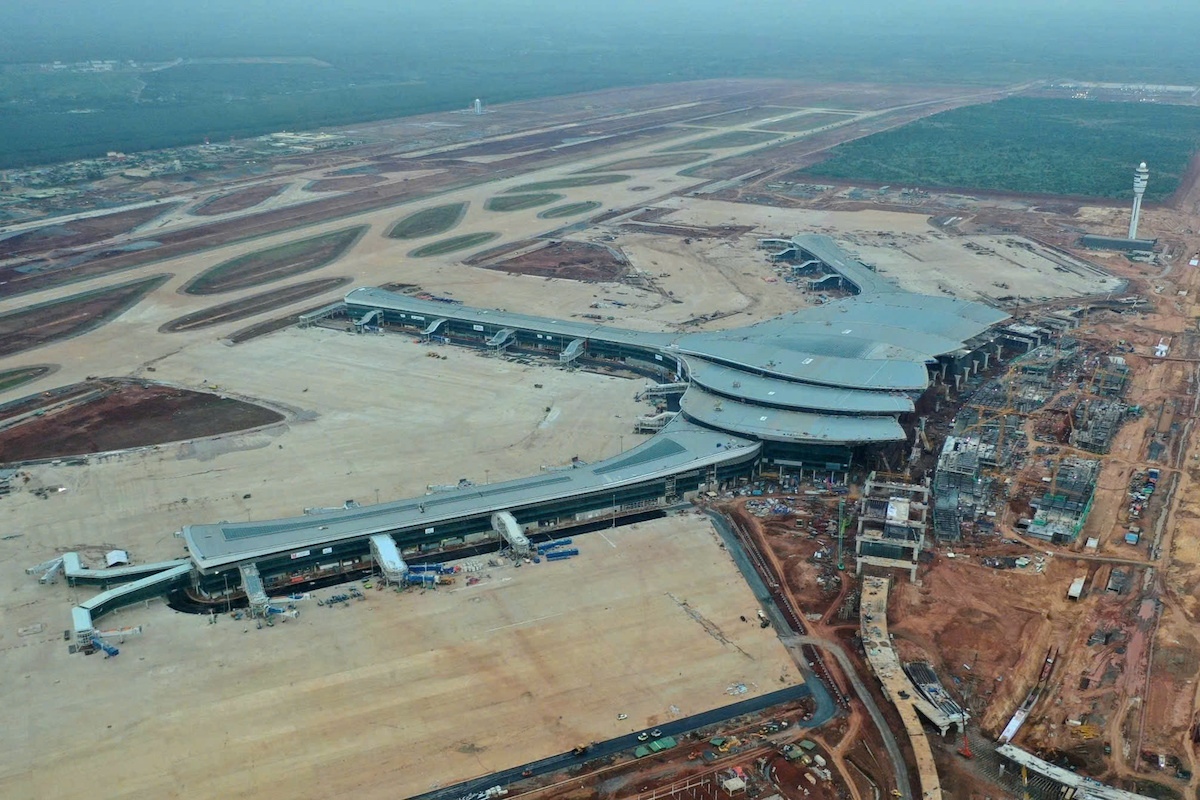 |
Long Thanh Airport has largely completed facilities to receive its first aircraft. *Photo: Phuoc Tuan* |
To cope with adverse weather, Tan Son Nhat Aeronautical Meteorological Center will promptly update information on hazardous phenomena and transmit it to operational coordination units on 15/12 and 19/12.
Previously, ACV collaborated with various units to complete calibration flights from 26/9 to 2/10, preparing for the reception of the first flight.
On 19/12, in addition to the Vietnam Airlines flight, two flights from Vietjet Air and Bamboo Airways are also expected to land at Long Thanh, approximately 5 minutes apart. According to the Ministry of Construction's plan, official flights will only proceed once the technical flights fully meet safety and operational requirements.
Long Thanh Airport's first phase spans 1,810 hectares, commenced construction in 1/2021, and has a designed capacity of 25 million passengers and 1,2 million tons of cargo annually. Commercial operations are projected to begin in mid-2026.
*By Phuoc Tuan - Giang Anh*