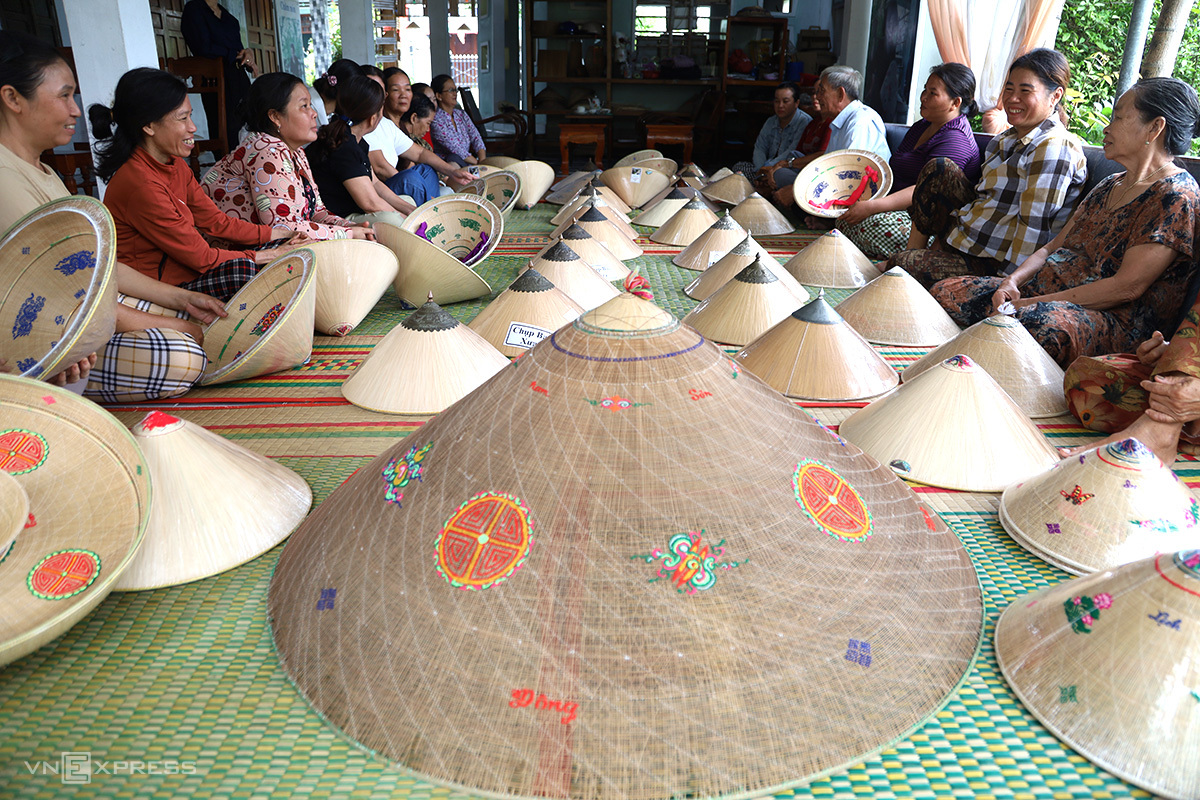
On a mid-september morning, at his home in Phu Gia village, Xuan An commune, Do Van Lan, also known as Sau Lan, commenced an advanced class on horse hat making for 20 local women. The class, which lasts three hours, is offered free of charge.
He guides the learners through creating patterns, selecting materials, and stitching the hats – a process involving a needle and thread to connect layers of leaves to the frame. After the lesson, he and 12 workers continue to select bamboo strips, smooth leaves, and meticulously stitch each thread to fulfill orders from both domestic and international customers.
According to local artisans, the Phu Gia horse hat craft originated in the 18th century and is now over 300 years old. The product is historically linked to horse riders and the Tay Son army in the ancient Binh Dinh region.
The hat features two fixed straps on the sides, with a chin strap threaded through them, ensuring a secure fit for riders. Historically, the hat was also associated with the elite. At weddings, brides wore the hat while riding in palanquins, and grooms wore it while riding horses. The hat's apex could be adorned with copper, silver, or tortoiseshell, intricately carved with patterns reflecting social status.
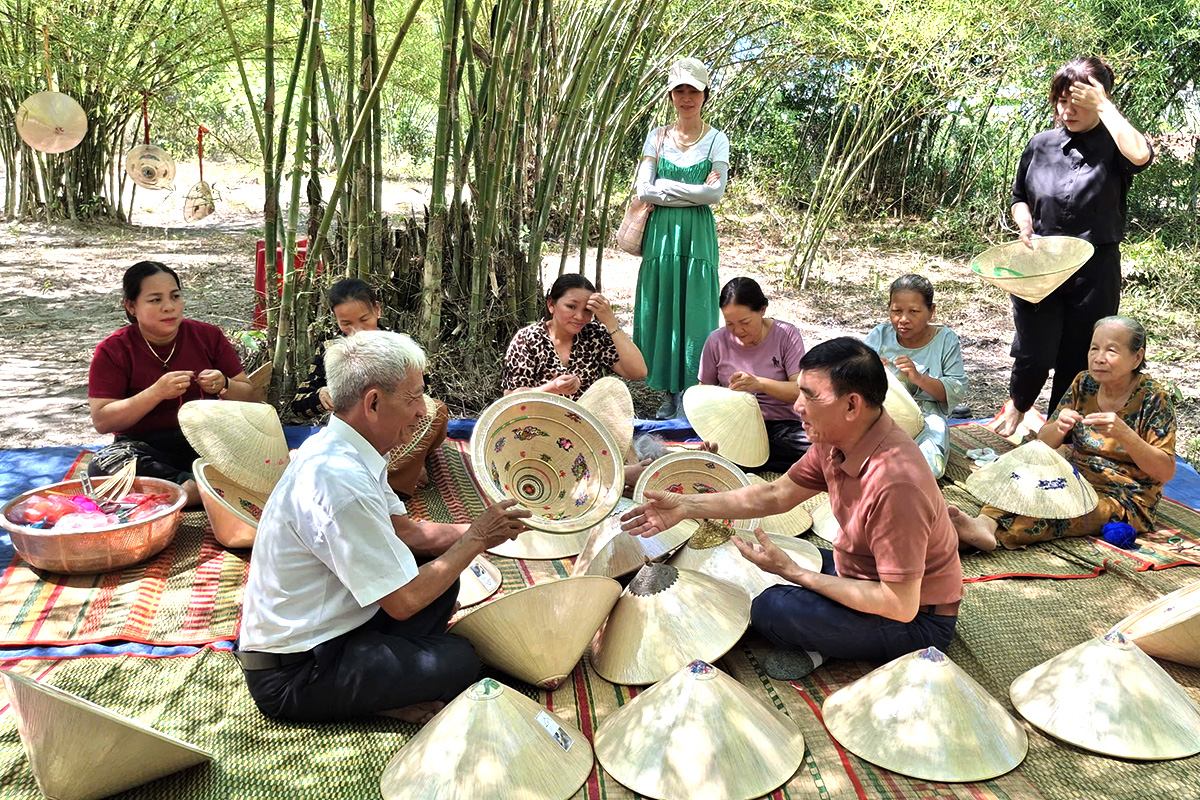 |
A horse hat making class at Do Van Lan’s home. Photo: Tran Hoa
Lan's family has practiced this craft for five generations. At 13 years old, he learned simple steps from his father. Three years later, he could complete one hat independently, becoming one of the youngest artisans in the village at that time.
According to him, the horse hat making craft is categorized into three skill levels: beginner, skilled, and refined. Newcomers typically require three to five years to master basic steps, but achieving true refinement takes decades. "Only after working for a long time do you know which bamboo strip is suitable, which leaf is perfect, and how to place the needle for a beautiful finish", he shared.
To complete one hat, an artisan must go through many steps. Giang bamboo is split, dried, soaked, and then stripped into fibers to be woven into sheets. These bamboo sheets are placed on a mold, with bamboo strips erected around the frame and tightly secured from the brim to the apex.
Ke leaves are cut, sun-dried, dew-dried, oven-dried, and straightened before being cut into individual pieces. Wild pineapple roots are combed to extract fibers for thread.
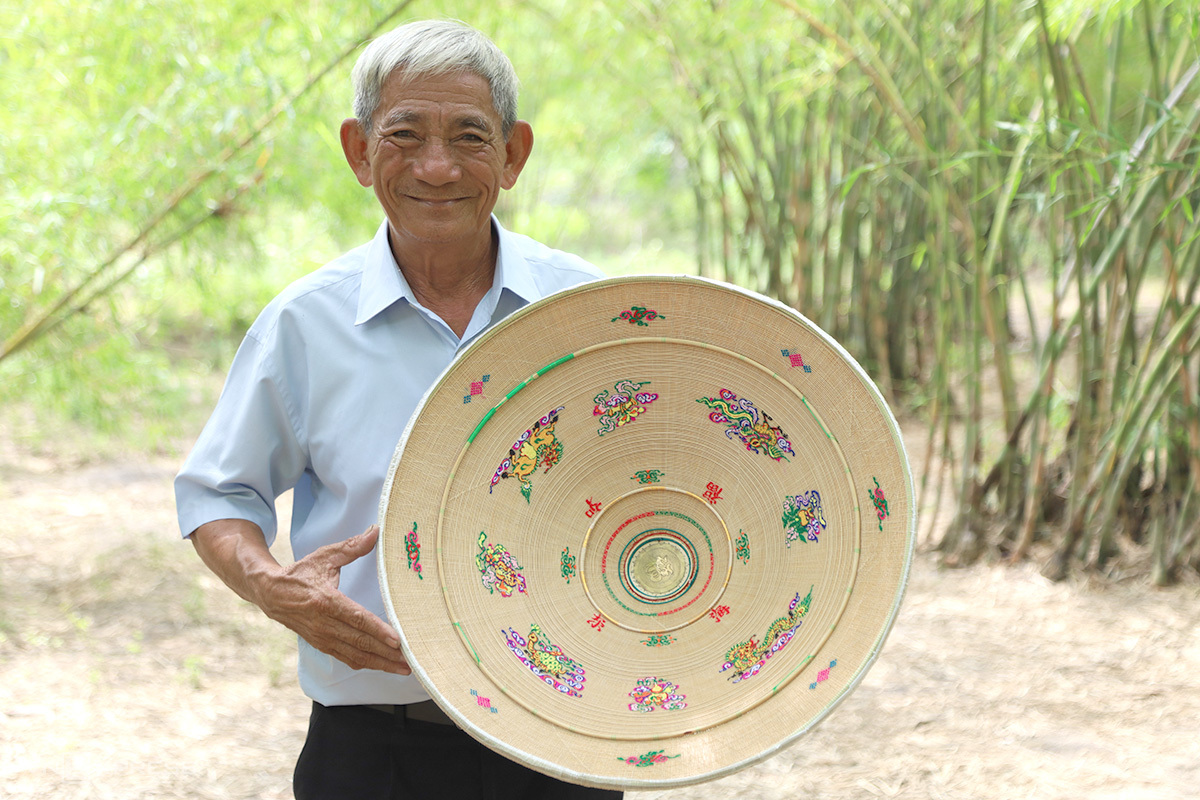
The most challenging step is stitching the leaves. The needlework must be small, even, and strong enough, yet the stitches should not be visible. Afterward, artisans embroider patterns using five-colored threads, commonly featuring motifs like dragon, unicorn, tortoise, phoenix, or apricot, orchid, bamboo, and chrysanthemum. Each hat takes four to five days, sometimes up to one week, to complete.
 |
Do Van Lan with a finished horse hat. Photo: Tran Hoa
Despite the intensive labor required, the low income discourages young people from pursuing the craft. At Lan's workshop, 12 workers complete only about two hats daily. After deducting costs, each person earns 70,000-80,000 VND.
Standard hats are priced at 70,000-150,000 VND, while high-end traditional ones range from 1.5 to 6 million VND. Hats adorned with silver or tortoiseshell caps and elaborate carvings can fetch 8-10 million VND, depending on materials and craftsmanship.
All four of Lan's daughters have followed in his footsteps. Each month, he conducts two classes, from basic to advanced, without charging tuition fees.
"As long as young people are dedicated, I am ready to pass on everything I know", he stated, emphasizing that preserving the craft requires not only passion but also market demand to ensure artisans can earn a living from their work.
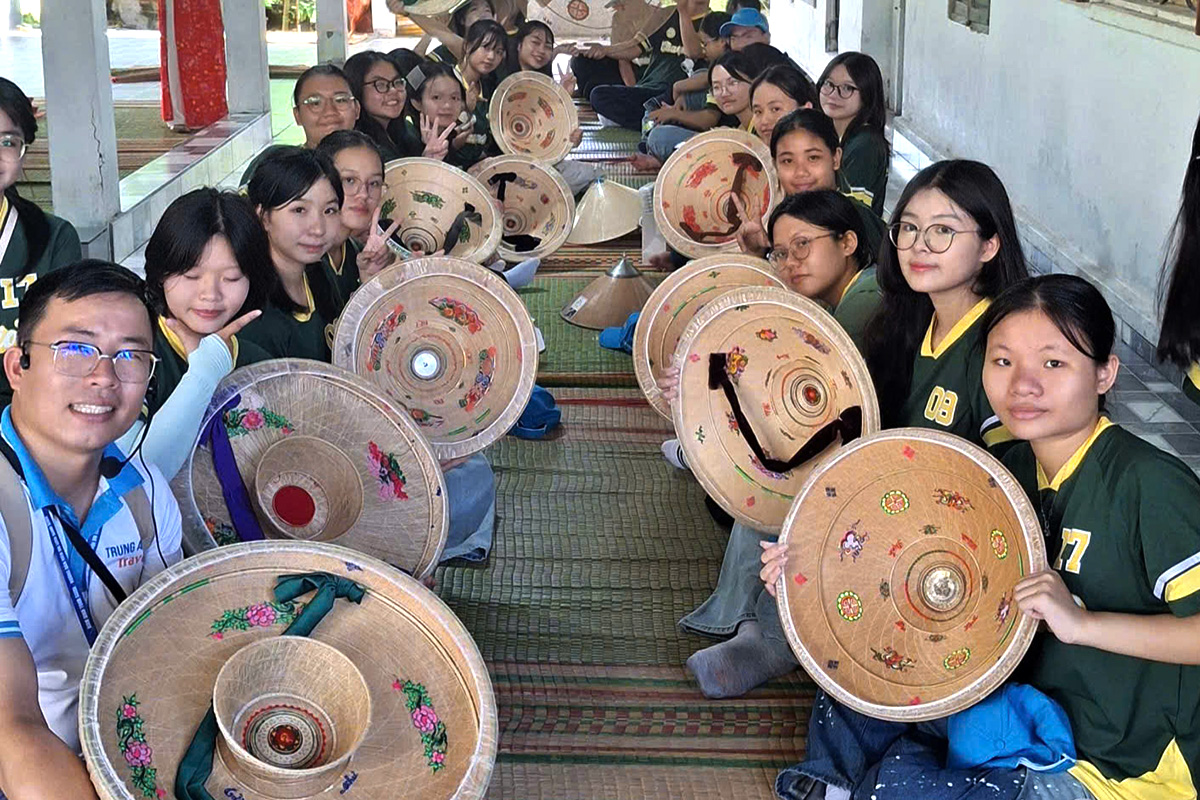
Since 2013, he has collaborated with tourism businesses, bringing tourists, students, and university students to Phu Gia village to visit and experience hat making. His products have also attracted buyers from England, the United States, Canada, India, South Korea, Australia, and the Netherlands.
He also creates large hats, up to 3 meters in diameter, for decorating restaurants, hotels, and tourist attractions. These orders generate additional employment for locals, with daily wages of 300,000-500,000 VND. "I want to highlight and promote the exquisite essence of Phu Gia horse hats", he said.
 |
Artisan Do Van Lan instructs people on how to make horse hats. Photo: Ngoc Oanh
 |
Students experience horse hat making at artisan Do Van Lan’s home. Photo: Ngoc Oanh
According to the People's Committee of Xuan An commune, approximately 300 households are involved in horse hat production, with 260 of them residing in Phu Gia village. Some families in neighboring villages handle specific steps, then transfer the raw products to specialized artisans for pattern work and completion.
In 2020, Lan's products received OCOP 4-star recognition. Four years later, the Phu Gia horse hat stitching craft was listed as a national intangible cultural heritage.
In August, the People's Committee of Gia Lai province approved a project for the preservation and promotion of heritage values linked to community tourism. For phase 2026-2030, the project is expected to require over 37 billion VND to transmit the craft, digitize data, develop products, and establish experiential activities for tourists.
At 77 years old, Lan still sits at his hat frame every day. Outside, bundles of giang bamboo dry under the sun; inside, products gradually take shape with each stitch.
For him, preserving the horse hat is not just about retaining a traditional product, but also maintaining the skilled hands that can create it. Therefore, after more than six decades of dedication, he continues to pass on his knowledge to anyone eager to learn.
Tran Hoa