Hanoi is currently clearing land for 1.428 projects, including major transport infrastructure such as four bridges over the Red River (Hong Ha, Me So, Van Phuc, and Ngoc Hoi); completing ring roads; and expanding national highways one and six. This generates over 10.000 tons of construction waste daily, four to five times the normal amount. This waste includes concrete, brick, stone, mortar, metal, wood, plastic, glass, excavated soil, and sludge.
Unlike household waste, construction waste is considered a secondary resource because most of its components retain value after proper sorting and processing. After crushing, screening, and treatment, waste can become aggregate for road foundations, leveling material, non-fired brick production, concrete, and components for construction.
According to Nguyen Van Hoan, an expert from the Institute of Cement and Concrete (Institute of Building Materials), about 80% of urban solid waste is landfilled, with only about 17% recycled as crushed material for leveling or road subbase. This rate is far lower than the potential use for this type of waste, which includes earth, rock, and broken bricks.
Using recycled materials helps reduce the exploitation of stone, river sand, fill soil, and other minerals used as building materials. "Given the increasing scarcity of sand and stone, this is a valuable resource", Hoan stated.
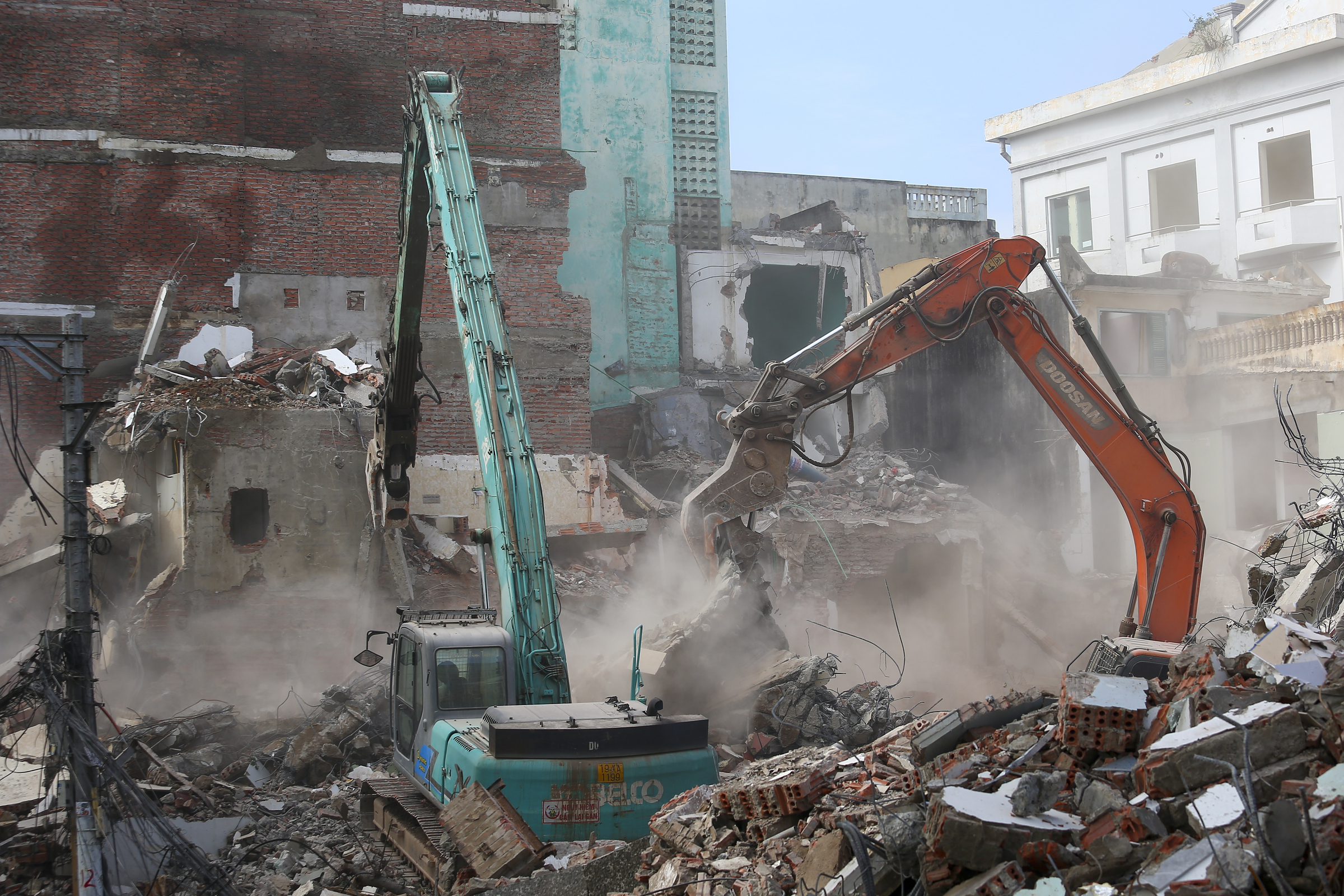 |
Demolition projects in Hanoi generate thousands of tons of solid waste daily. Photo: Pham Chieu |
Currently, recycled aggregate used for road subbase, the lowest value application, sells for 70.000 to 100.000 VND/ton. Recycled granular aggregate and crushed sand cost 150.000 to 200.000 VND/m3. If Hanoi were to recycle 10.000 tons of construction waste daily for subbase, it could generate at least 0,7-1 billion VND.
Studies show that recycled materials are about 20% cheaper than natural materials. The recycling rate for construction waste can exceed 90% of the input volume; asphalt concrete and cement concrete, specifically, can be reused almost 100%, according to Associate Professor Doctor Tong Ton Kien, Deputy Director of the Institute for Research and Application of Tropical Building Materials (National University of Civil Engineering).
Importantly, recycled materials replace natural resources that are becoming increasingly depleted. In Hanoi, numerous ongoing projects require large quantities of yellow sand, construction sand, and fill soil. For instance, the Ring Road 4 project for the Capital Region needs about 6 million m3 of fill soil and a large volume of construction sand and stone. Production from Hanoi's material quarries is insufficient, forcing contractors to purchase materials from quarries in Phu Tho province, which increases transportation costs.
Technology to transform waste into value
Recognizing the potential of solid construction waste, the construction sector has spent years researching and testing recycled building materials, establishing a system of standards. Initial studies began in 2007, conducted by Doctor Le Viet Hung (Institute of Building Materials, Ministry of Construction). In the first stage, the team focused on assessing the feasibility of crushing and screening construction waste for recycling into input materials for mortar and concrete.
In 2012, a pilot production project, "Improving technology for recycling demolition waste into aggregates for construction", successfully implemented an industrial-scale recycled aggregate production line. This line produced recycled aggregates from demolition waste (concrete, brick walls). Small aggregates were used to produce non-fired bricks, while large aggregates up to 40 mm were used as a substitute for crushed stone in concrete production.
At the National University of Civil Engineering, Associate Professor Doctor Tong Ton Kien, Deputy Director of the Institute for Research and Application of Tropical Building Materials, noted that during the 2012-2016 period, the university's research team conducted numerous in-depth studies on using recycled aggregates as crushed stone and sand to produce structural mortar and cement concrete. From 2019-2021, the team continued to pilot the production of precast reinforced concrete components from concrete waste in the laboratory. The results indicate that recycled materials can be used in construction projects.
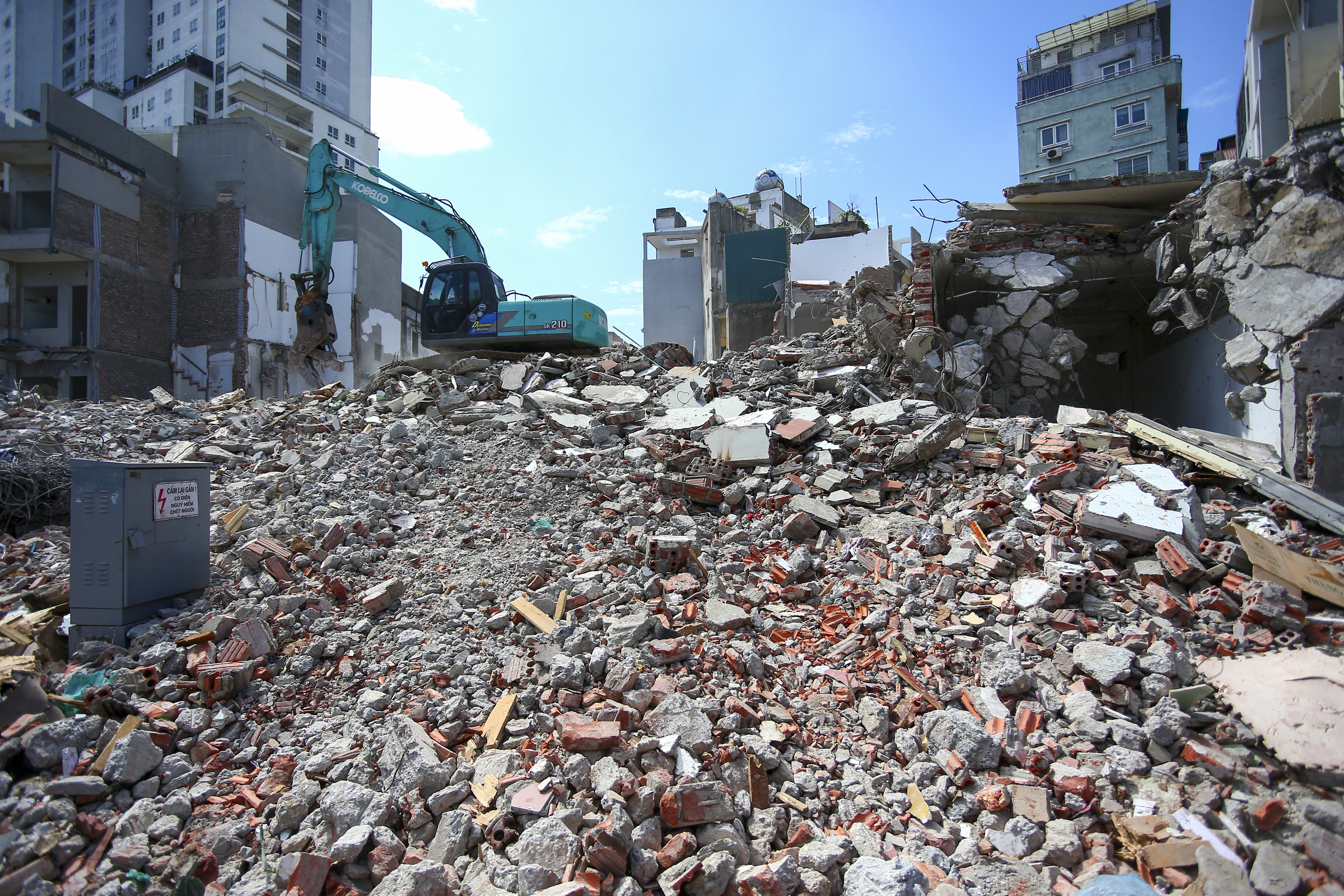 |
A mountain of construction waste on Van Kiet Street, Hanoi, 5/2026. Photo: Pham Chieu |
To integrate recycled aggregates into practical use, ministries and agencies have issued a system of standards. In 2023, national standard TCVN 13694 was introduced, specifying recycled material gradations for urban road subbase layers. TCVN 11969:2018 defines recycled coarse aggregate for concrete. The Ministry of Science and Technology also approved many standards related to leveling materials, recycled asphalt concrete, mixture design, and construction during the 2020-2025 period.
However, according to Nguyen Van Hoan, an expert from the Institute of Cement and Concrete (Institute of Building Materials), Hanoi's current challenge is not in processing technology. Some businesses are ready to invest in modern recycling lines, even possessing mobile crushing equipment for on-site processing. The issue lies in the unstable demand for recycled products. Many investors and contractors remain hesitant about the quality and durability of these products.
Hanoi, like most localities, lacks specific planning for solid construction waste or designated collection and processing sites outside river dikes, making project implementation difficult for businesses. Waste processing units with a capacity exceeding 500 tons/day must conduct environmental impact assessments, obtain approval for impact reports, and secure environmental permits, automatic monitoring systems, which creates obstacles for businesses.
Production costs also deter some businesses from investing. Most construction waste is currently mixed with concrete, brick, soil, metal, and sludge. When brought for processing, businesses incur additional labor and sorting costs. According to calculations by Global Production Service Joint Stock Company, the cost of producing recycled subbase material is about 100.000-110.000 VND/ton, including equipment investment, production labor, and sorting fees.
How to harness construction waste resources?
To address the construction solid waste issue, Associate Professor Doctor Tong Ton Kien suggests that localities first need to plan dedicated land for processing areas and recycling collection points. With appropriate reception infrastructure, processing this type of waste is not overly complex. Next, mandatory regulations for on-site construction waste sorting are needed, clearly defining the responsibility for transfer to licensed processing units. Waste generators must fully cover processing costs.
Another crucial solution is to stimulate the recycled materials market. Vietnam currently has a policy framework that encourages this, but it is not yet specific or attractive enough for businesses to invest boldly. According to Kien, stronger incentive mechanisms are needed for businesses producing recycled materials, along with the development of large-scale processing centers with a minimum capacity of 500-1.000 tons per day to ensure economic efficiency.
Additionally, public procurement policies should drive the market. Projects using State budget funds should mandate a certain percentage of recycled materials in construction. This is especially suitable for large urban areas, where natural materials are scarce and must be transported long distances, while the demand for building materials is substantial.
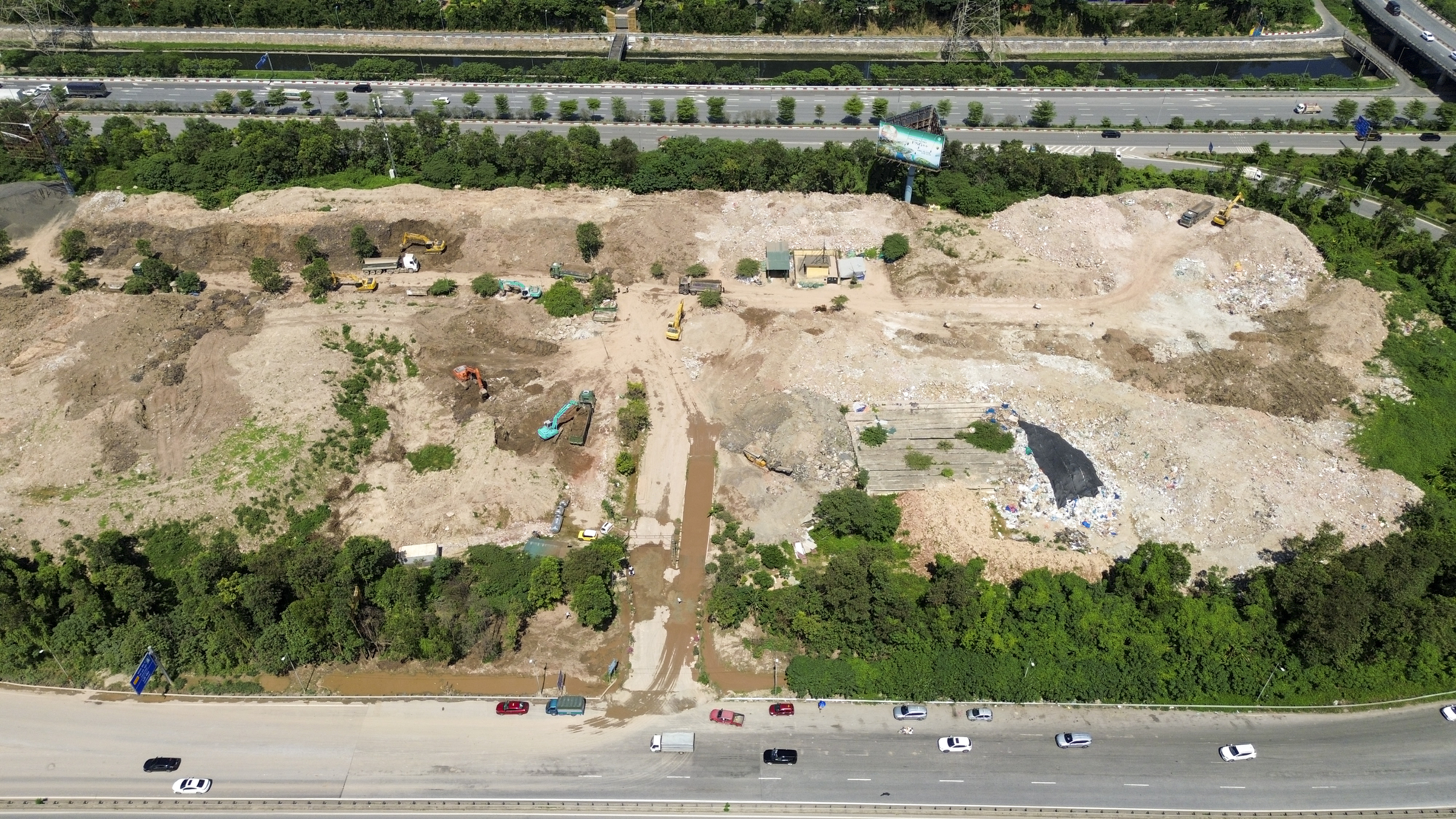 |
A construction waste crushing point near the Phap Van - Cau Gie interchange. Photo: Pham Chieu |
Citing experiences from Japan and the United Kingdom, Kien explained that cities often plan numerous construction waste reception points. For sorted materials, recycling facilities even subsidize transportation costs or pay collection units. Conversely, unsorted materials are sent to specialized facilities for sorting and recycling before reuse.
Furthermore, the State could explore implementing carbon credit mechanisms for recycled materials to acknowledge emission reduction value, creating an additional revenue stream for businesses. Parallel to this are programs supporting research, innovation, and technology transfer to enhance the efficiency of construction waste recycling, aiming for a circular economy in the construction sector.
Expert Nguyen Van Hoan believes Hanoi must simultaneously expand reception site planning, tighten control over illegal dumping, mandate on-site sorting, and gradually integrate recycled materials into public investment projects. Otherwise, in the next 5-10 years, the city will face significant pressure regarding landfill sites, environmental pollution, and a shortage of natural materials like sand, stone, and leveling soil.
Doan Loan