The Ha Noi People's Committee has issued a plan to implement the city's resolution on night economy development. By 2030, the city aims for the night economy to become a significant driver of the capital's service economy, contributing approximately 5% to the Gross Regional Domestic Product (GRDP) and steadily increasing its share of budget revenue.
Around 7-10% of the labor force in urban service sectors will participate directly or indirectly in night economic activities. Nighttime spending by tourists is expected to reach 25-30% of total expenditure, helping to extend the average length of stay to 2,5-3,5 days.
To achieve these goals, the city will develop and operate key night economy models with exceptional support policies, categorized by area with distinct functions. The cultural - heritage night economy zone will include Hoan Kiem, Cua Nam, Ba Dinh, Son Tay, and Soc Son, areas rich in cultural heritage potential.
The entertainment - modern night economy zone encompasses Tay Ho - Tay Ho Tay, My Dinh, and Dong Anh. The creative night economy zone will be linked to cultural industries, featuring creative spaces, theaters, cinemas, and museums. The resort - cultural experience night economy zone will focus on suburban areas and craft villages, such as Bat Trang, Ba Vi, and Huong Son.
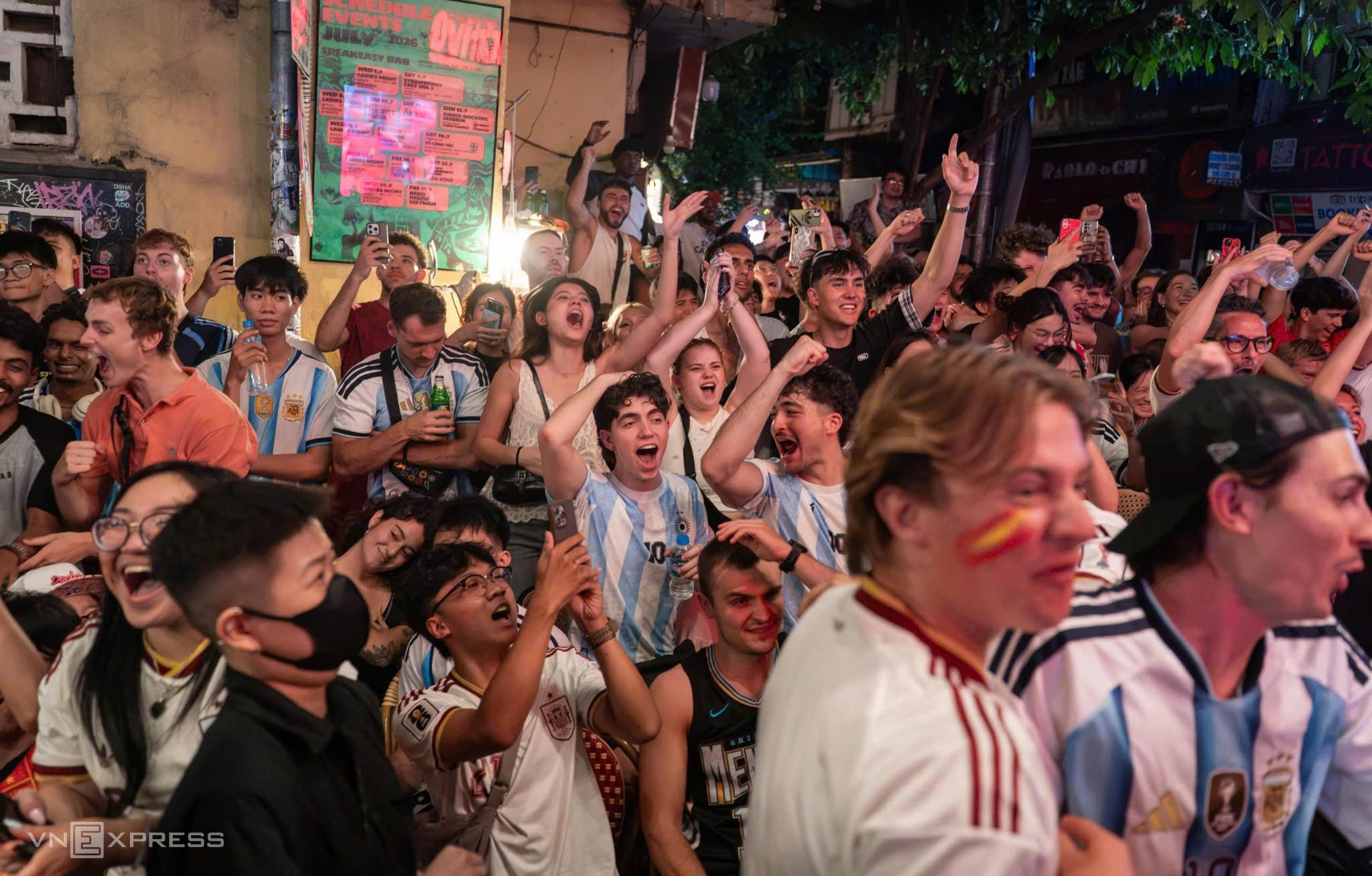 |
Hundreds of local and international fans stayed up all night to cheer on the 2026 World Cup final in Ha Noi's Old Quarter, early morning 20/7. Photo: The Bang |
The city will establish night economy routes with iconic nighttime products and events, connected to the cultural heritage, art, cuisine, and distinct urban spaces of the capital. Examples include the Thang Long - Tu Tran experience route and culinary streets like Tong Duy Tan and Ta Hien.
Ha Noi will also organize and effectively operate cultural industrial centers and creative cultural spaces to develop the night economy. These include the Dong Xuan - Bac Qua area, Cua Nam ward, Tay Ho, Dong Anh, the commercial and cultural development area of Bat Trang ancient village's ecological museum, and the Vietnam National Village for Ethnic Culture and Tourism.
Night economy areas will receive investment from the city to upgrade infrastructure and promote digital transformation. For transportation, the city will extend the operating hours of elevated railway lines, such as Cat Linh - Ha Dong and Nhon - Ha Noi Station (once completed), on weekends and holidays. Additionally, subsidized bus routes will be organized to separate night entertainment complexes.
Urban artistic lighting systems on streets, bridges, parks, and public spaces (West Lake, Hoan Kiem Lake, and along the Red River) will be invested in to create unique nighttime environments. Convenient services for night economy participants will be added, such as chauffeur services, home cleaning, and home care.
The city will implement soundproofing measures, green belts, and aesthetic sound insulation at the interfaces between entertainment areas and residential zones. A network of mobile night medical stations will be established, operating from 20h to 4h with basic equipment to handle medical emergencies.
A digital map of Ha Noi's night economy will be developed, allowing users to search for locations, operating hours, service types, crowd levels, parking spots, connecting transport routes, ongoing events, safety information, and tourist support.
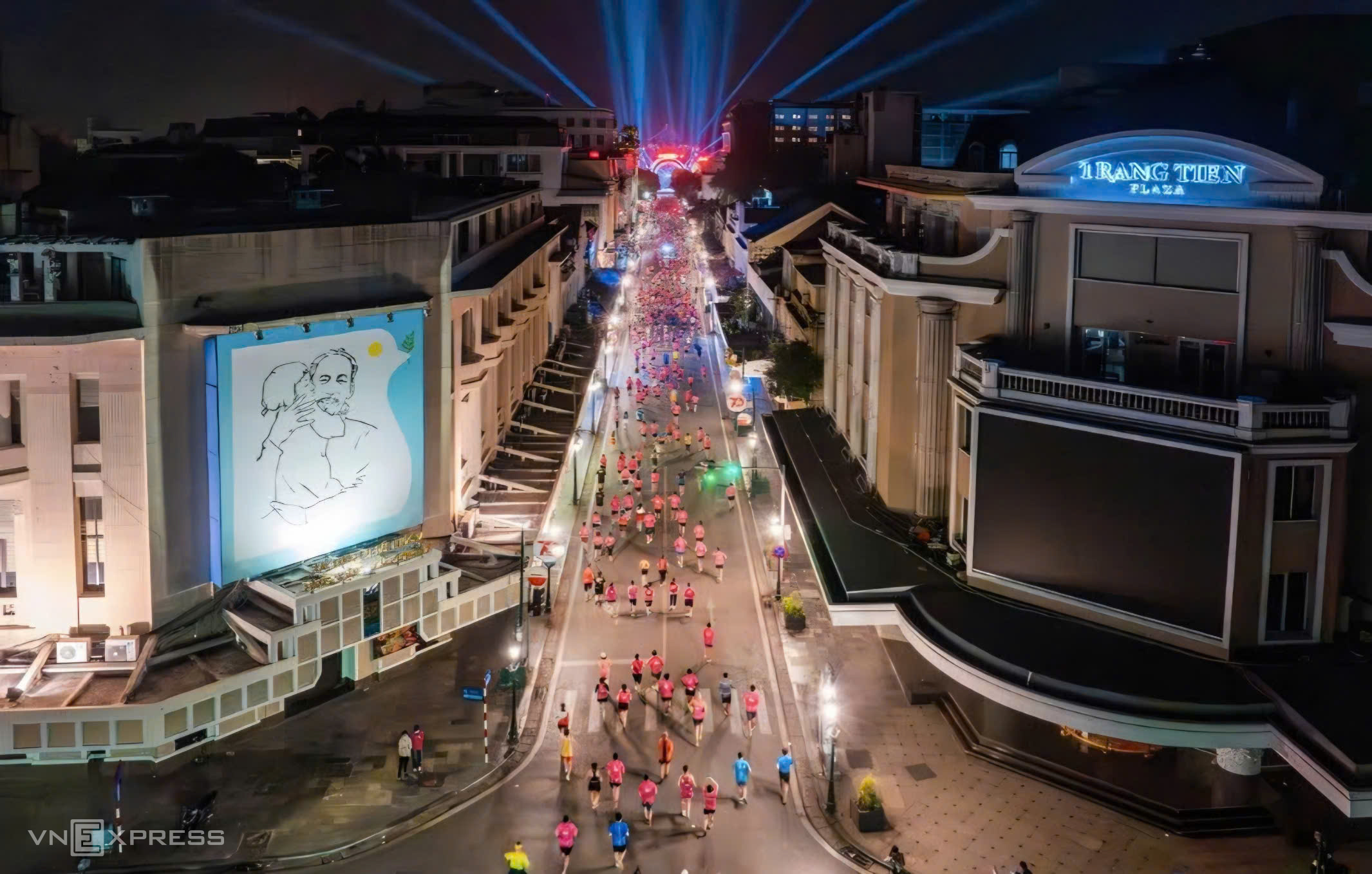 |
Athletes participating in the 2024 Ha Noi night run (VnExpress Marathon Ha Noi Midnight) run on Hang Bai street, Hoan Kiem ward. Photo: VnExpress Marathon |
Ha Noi has also outlined a list of night economy development models and products with implementation roadmaps. These include many creative, community-oriented products for urban youth. Specifically, the city is exploring the organization of controlled night entertainment service zones. Authorities will review and select areas with suitable infrastructure to establish night entertainment zones operating late (after 24h or 24/24h) within licensed areas, offering services such as karaoke, dance clubs, bars, pubs, clubs, and electronic games, while ensuring security, order, and cultural integrity.
Additionally, the city will build and operate Creative Night Hubs, launching three key creative cultural spaces at Dong Xuan - Bac Qua market, the Cua Nam ward cultural industry center, and the Gia Lam locomotive factory creative complex.
To meet the needs of young people aged 15-30, who make up 40% of the urban population, the city is studying e-sports models in suitable areas. It will implement a combined night sports complex model with clear zones: indoor (billiards, e-sports, indoor golf, sports poker) and outdoor (pickleball, tennis, running).
Ha Noi will host an annual international night run with marathon (42 km), half marathon (21 km), and 10 km (fun run) distances.
Furthermore, the city will develop quality heritage - cultural - art products. This includes implementing "Thang Long Memories" project models, a series of night heritage products using digital technology, and organizing the annual Ha Noi Night Arts Festival.
Previously, the draft resolution proposed specific timeframes. For example, 18h to 24h was designated as the main operating time, serving the needs of residents and tourists. The 18h to 2h timeframe applied to commercial and cultural development areas, pedestrian streets, tourist zones, and areas planned for night economy development.
The 18h to 6h timeframe was to be considered for limited application in certain areas, streets, or separate service complexes, meeting strict standards for infrastructure, security, order, and urban management.
However, the implementation plan does not specify exact timeframes, instead assigning relevant units to "develop flexible conditional timeframes."
According to the city's assessment, Ha Noi has formed some night economy models in recent years, such as pedestrian streets, night culinary spaces, night tours, and art performance programs. However, these activities have not developed commensurate with their potential, lacking connectivity and failing to form a synchronized, highly competitive ecosystem.
Ha Noi previously allowed hotels of 3 stars and above throughout the city, along with some restaurants and bars in the Hoan Kiem Lake area, to open until 2h on weekends. In 2020, the locality also developed a pilot project for night economy development with a direction to remove time limits for certain service types, but it was not implemented.
Vo Hai