During the Ministry of Agriculture and Environment's regular press conference on 1/4, Mr. Nguyen Xuan Hai, deputy director of the Environment Agency, acknowledged significant vulnerabilities in the nation's environmental monitoring system. This admission follows the prosecution of dozens of individuals for manipulating monitoring data.
The scandal came to light in late March when the Environmental Crime Prevention Police Department (Ministry of Public Security) prosecuted Mr. Hoang Van Thuc, former director of the Environment Agency, along with several defendants. They face charges related to irregularities in automatic air monitoring projects. Investigators determined that businesses paid approximately 35 billion VND in "kickbacks" to secure contracts and inflate equipment prices. An inspection of over 300 monitoring stations revealed nearly 160 stations showed signs of data manipulation, altering figures to conceal pollution levels.
Mr. Nguyen Xuan Hai emphasized that data manipulation is primarily the responsibility of the system's operating units, which include businesses acting as emission sources. He added that technical supervision and post-inspection efforts have not kept pace with practical demands, particularly given the rapid increase in automatic monitoring stations and the large volume of data generated.
"This is not a legal loophole but an issue in task implementation", Mr. Hai affirmed.
 |
Mr. Nguyen Xuan Hai speaking at the press conference on 1/4. Photo: Gia Chinh |
Despite these issues, the monitoring system continues to operate continuously, transmitting data directly to local authorities and the Ministry for oversight. However, Mr. Hai noted that in some cases, the system has not promptly detected intentional interference, as its primary focus has been on monitoring environmental parameters and operational status.
Following this incident, the Environment Agency announced plans to implement additional control layers to ensure the monitoring system's transparency. The primary focus will be on controlling system access and configuration, particularly for data loggers and transmission software. Concurrently, remote monitoring and abnormal data analysis will be enhanced to detect early signs of interference.
Inspection efforts will become more proactive, encompassing unannounced checks, cross-referencing, and comparing data with independent sources, especially at facilities exhibiting unusual signs. Simultaneously, the regulatory body will refine technical regulations to enhance security and ensure data integrity.
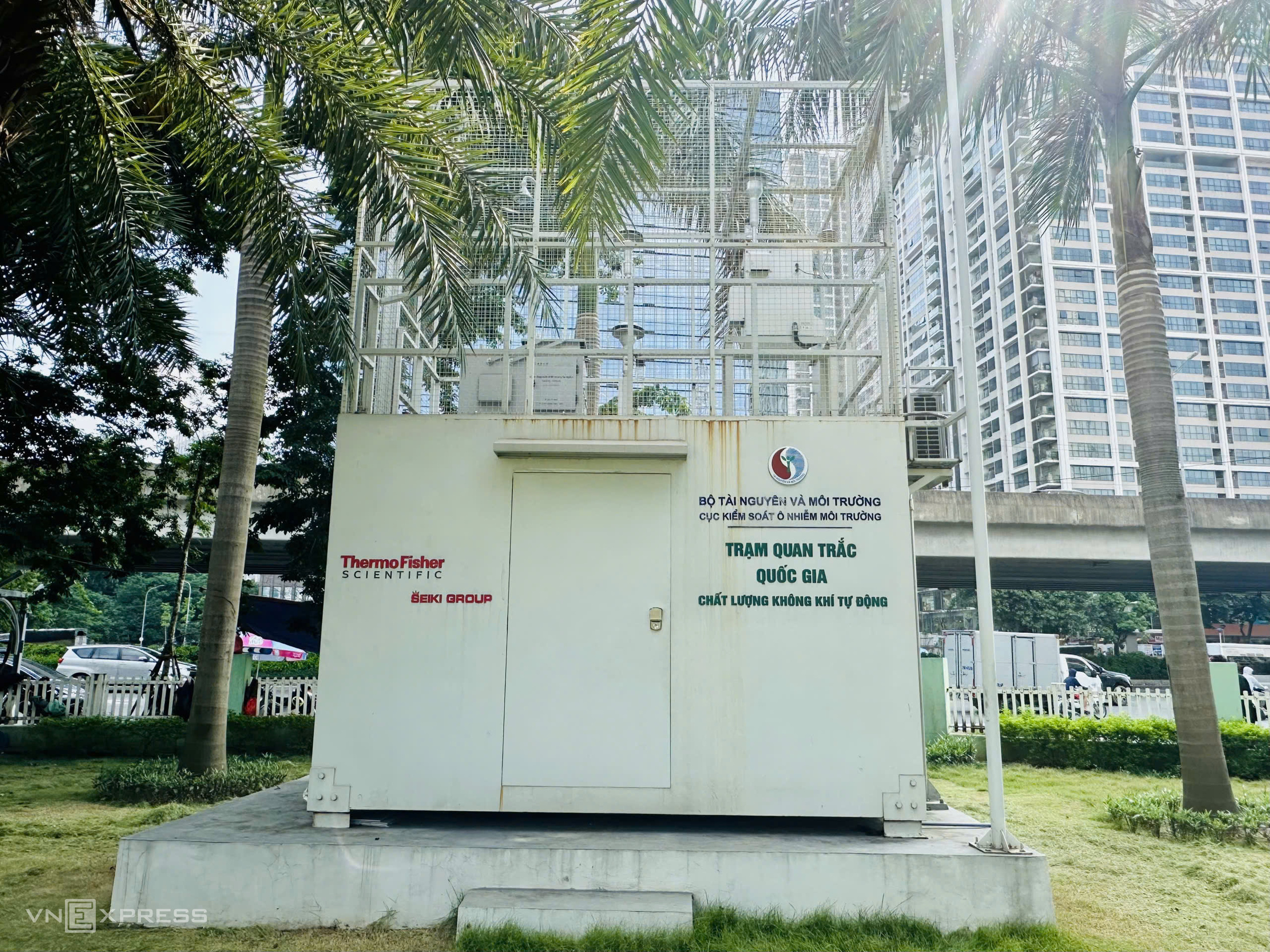 |
An air environmental monitoring station in Hanoi. Photo: Gia Chinh |
Gia Chinh