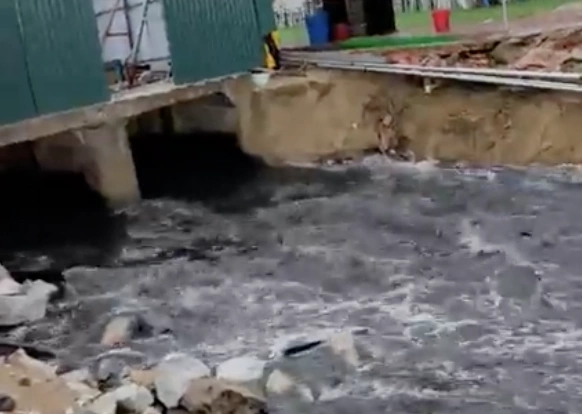
On the morning of 9/7, the fallen soldiers' remains recovery team, operating under the Ho Chi Minh City Command, expanded its excavation efforts at the park. They dug a trench, 2 meters deep and 10 meters long, connecting to a 30 square meter pit where 11 sets of remains had previously been unearthed. The team encountered moist soil and an underground water source, necessitating pumping operations to drain water before they could proceed with the recovery.
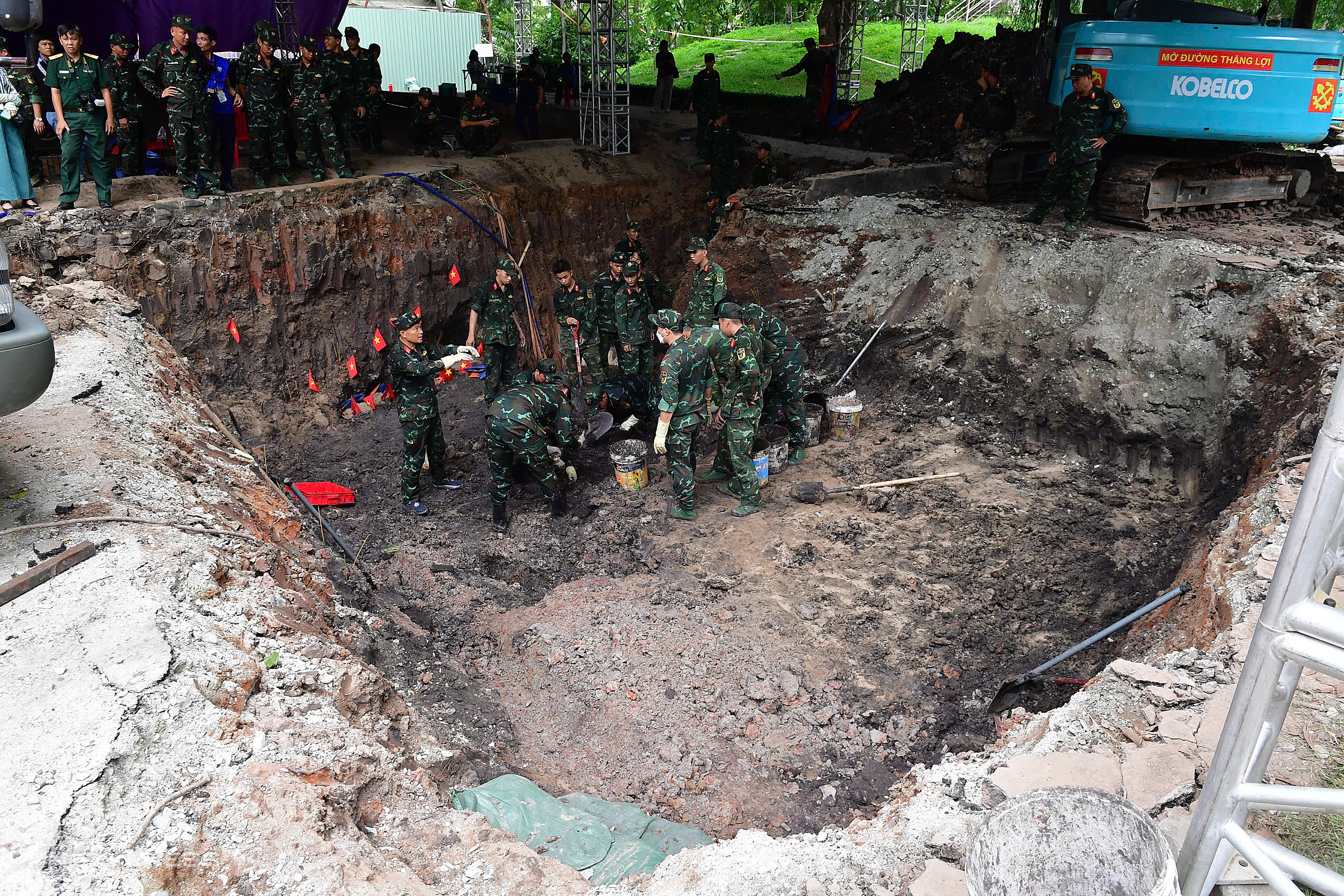 |
A trench, 2 meters deep and 10 meters long, where five sets of fallen soldiers' remains were discovered in the park. Photo: Thanh Tung
By the afternoon of the same day, after removing approximately 50 cubic meters of soil, officials discovered five sets of remains. These remains lay side by side, wrapped in ponchos, which were made from parachute fabric used by the liberation army. Among the findings were two artifacts, including a damaged wallet. DNA samples were collected from all the remains for forensic identification.
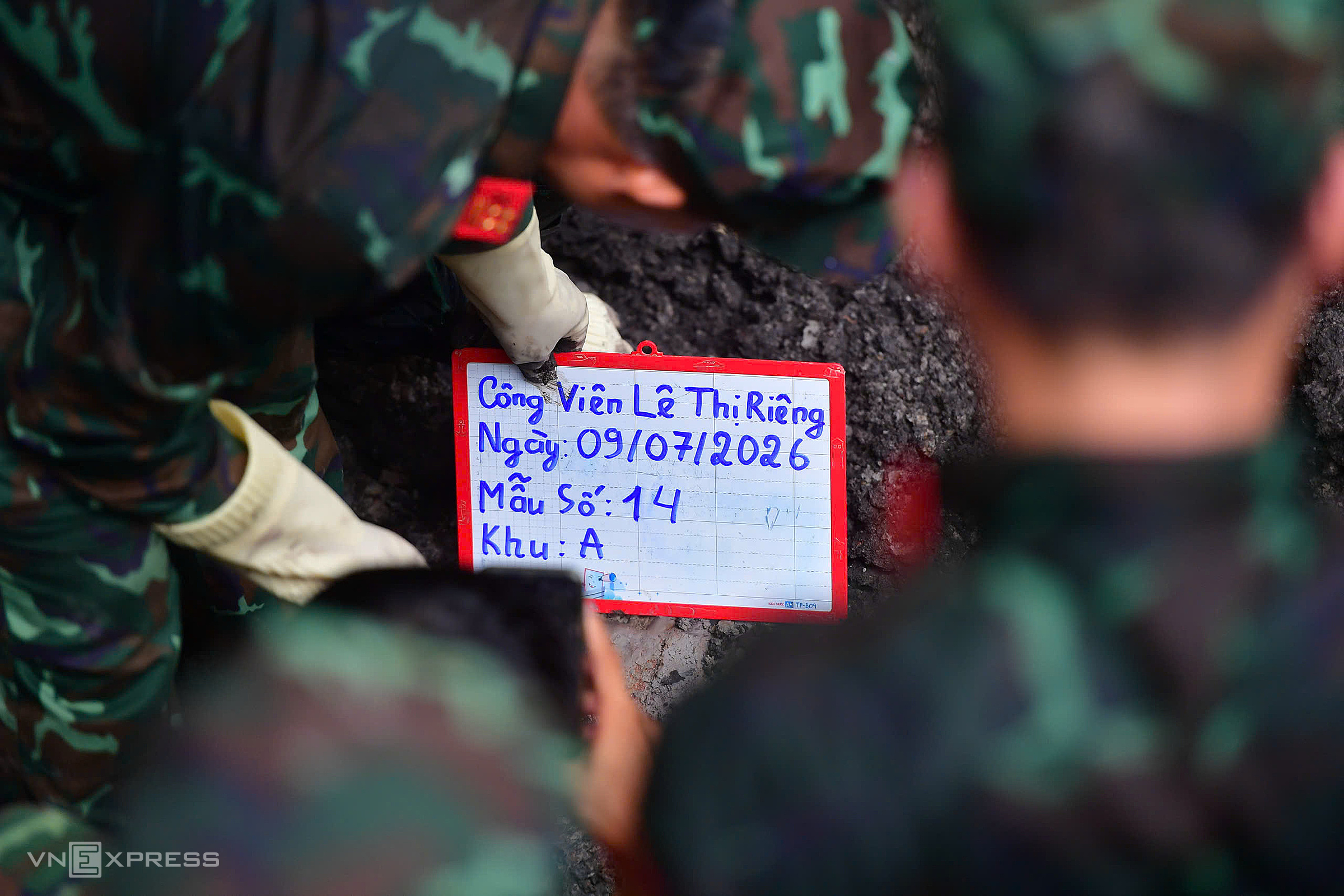 |
The recovery area at Le Thi Rieng Park. Photo: Thanh Tung
Doctor Tran Van Ban, who personally collected the samples, noted that one set of remains was relatively intact, still wrapped in a poncho. The jawbone indicated that wisdom teeth had not fully erupted, suggesting the fallen soldier was likely 16-17 years old at the time of their death.
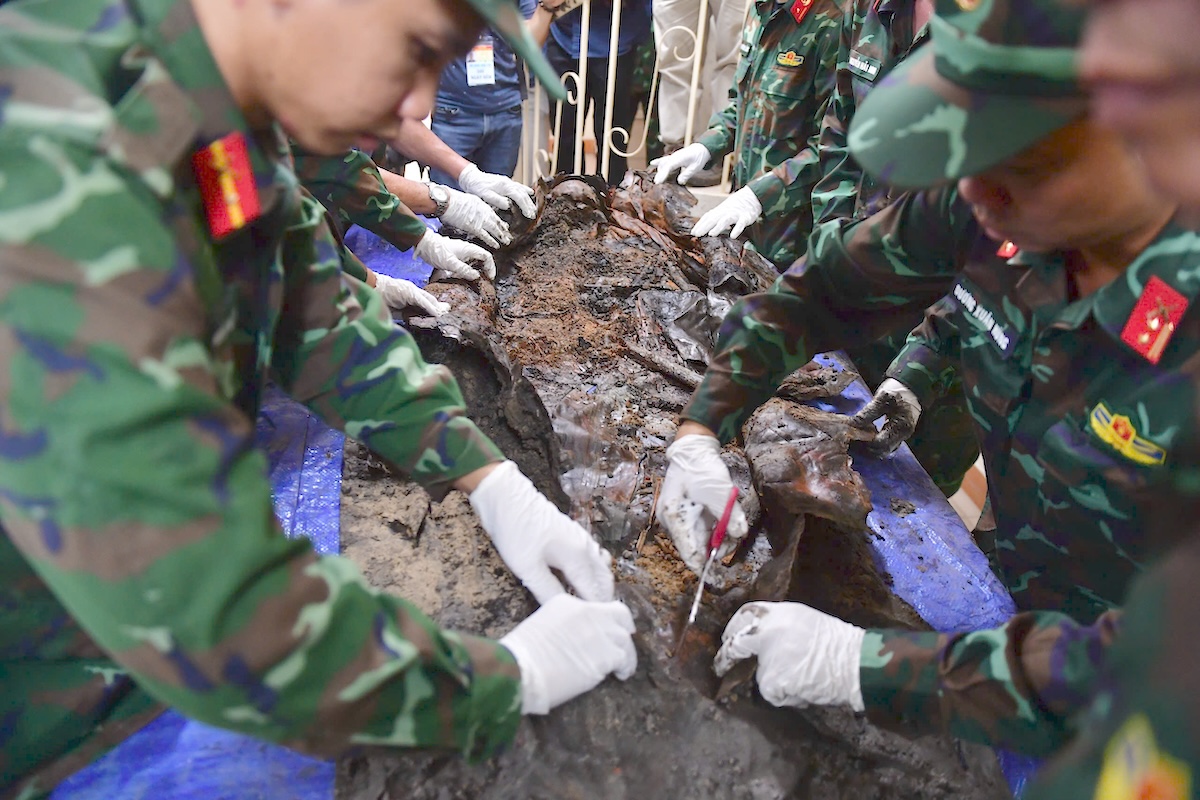 |
The recovery team discovered one set of remains covered in a poncho (parachute fabric) used for rain protection. Photo: Thanh Tung
Since 4/7, officials have excavated approximately 50 square meters adjacent to the park's memorial house. In less than a week, a total of 16 fallen soldiers' remains have been recovered. Notably, one set of remains was accompanied by documents identifying the individual as Huynh Van Quen. Initial verification indicates that fallen soldier Quen was a member of Long An Battalion one, who fought in the battle of Chu Y bridge (in what were then District 5 and 8) during the Tet Mau Than 1968 campaign.
Dinh Van - Thanh Tung